
by DANIEL SWEENEY
A favorite theme in advertisements for autosound components is the "hostile environment" of the automobile, and how the particular components advertised manage to sound wonderful amidst all the hostility. The effects of the elements are frequently alluded to-the parching sun, the chill of a northern winter, the ravages of air pollution-but seldom is any mention made of that greatest of autosound cripplers, the noise that infests an automobile's electrical system.
That topic--so the industry appears to believe--is best left unexplored. For the problems of noise are so wide spread (and so little under the control of the manufacturers themselves) that to touch on the matter at all could only confuse the consumer.
In fact, most aftermarket autosound equipment, and many OEM factory-option systems, suffer from at least some extraneous noise during operation. By noise I mean electrical noise-technically, crosstalk between the audio circuits and the various other electrical circuits in the car. To be sure, automotive audio systems are also plagued with extremely high ambient noise levels, microphonic tape heads, resonating speaker enclosures and mountings, and all manner of purely acoustical problems, but most of these are inseparable from the automotive environment. The purely electrical noises are much more amenable to solutions, and are more interesting to investigate as well. Indeed, unless the audio components are themselves defective, virtually arty autosound system can be purged of electrical noise. And you as a consumer need not and should not tolerate any extraneous noise in a custom installation you have purchased.
An automobile fosters electrical noise problems in an audio system because it houses a great many electrical circuits and because it is difficult to properly ground all of these circuits and isolate them from one another. Audio signals in an autosound system, as in any electronic audio system, take the form of alternating currents which fluctuate over time with waveforms en coded in the recording medium at the sound source. Noise is created by any extraneous alternating current having no relation to the program signal, and it is always AM-amplitude-modulated.
Such extraneous currents may have their point of origin in the car's electrical system-most frequently in the alternator or ignition. Or they may come from separate audio transceiver systems such as CB radios or cellular telephones, from one of the car's mechanical systems (due to a buildup of static electricity), or, occasionally, from sources outside the car. In all cases they represent leakages into the audio circuits; they are not to be confused with distortion, where components fail to pass an input waveform accurately and spurious waveforms are generated w thin the audio circuit.
Noise in an autosound system may take the form of a steady whine; clicks and pops; high-pitched, twittering sounds known as "birdies," or a continuous ticking. The noise may be level-dependent (that is, it may rise and fall with the strength of the audio signal at speaker level), or it may be at constant volume and largely masked when the program signal is strong. Noise may be continuously present or maddeningly intermittent. It may occur only when the tape or tuner section is in use, or may be present in both modes.
Noise is more likely to intrude in systems containing a multitude of components, simply because there are more points at which the noise may enter the audio system. But all autosound systems are vulnerable to noise, even those that are factory-installed.
Noise may enter the signal path at any point, from the antenna right up to the speaker cables. The earlier in the signal path the noise enters, the more severe it will be at speaker level be cause the noise will be amplified along with the signal at each gain stage in the signal path.
Noise may enter the system directly through the positive power leads from the battery; it may be induced by powerful magnetic fields from electrical cables running adjacent to audio cables or components; it may be radiated through the air in the form of radio-frequency interference; it may enter through ground loops formed by false grounds, hovering above true ground potential, or it may take the form of crosstalk between or among audio components in the system.
For every noise problem in a car, there exists a specific remedy based upon generally held engineering principles. The trick is to identify the source of the noise. Identification tends to be the major task in noise suppression simply because of the wide variety of electrical systems to be found among different models of cars, and because of the varying immunity to noise even among cars of the same make and model.
Techniques of suppressing noise in automobile systems evolved by trial and error. Theory could explain both the nature of electrical noise and the circumstances in which it could occur, but the actual, physical sources of noise within a car had to be discovered by a painstaking isolation of components within a system while evaluating the effects on noise level, by shielding potential noise generators, and by instrument testing of the car's electrical circuits.
A number of manufacturers and installers, many of whom did ground breaking work in noise suppression, provided me with considerable assistance in writing this article, among them Charles Apcar, of Apcar Engineering in Los Angeles, Cal.; Roger Holdaway, founder of Speakerworks, an autosound retail chain in Orange County, Cal.; Larry Frederick, recently of Proton; Steve Mantz, president of Zed Audio, a manufacturer of high-end automotive electronics, and finally, the technical-services staff at Alpine-Luxman. I might add that Holdaway and Apcar, among the most respected installers in California, pioneered techniques of high-end installation during the late '70s. Holdaway is also a manufacturer of automotive loudspeakers and enclosures.
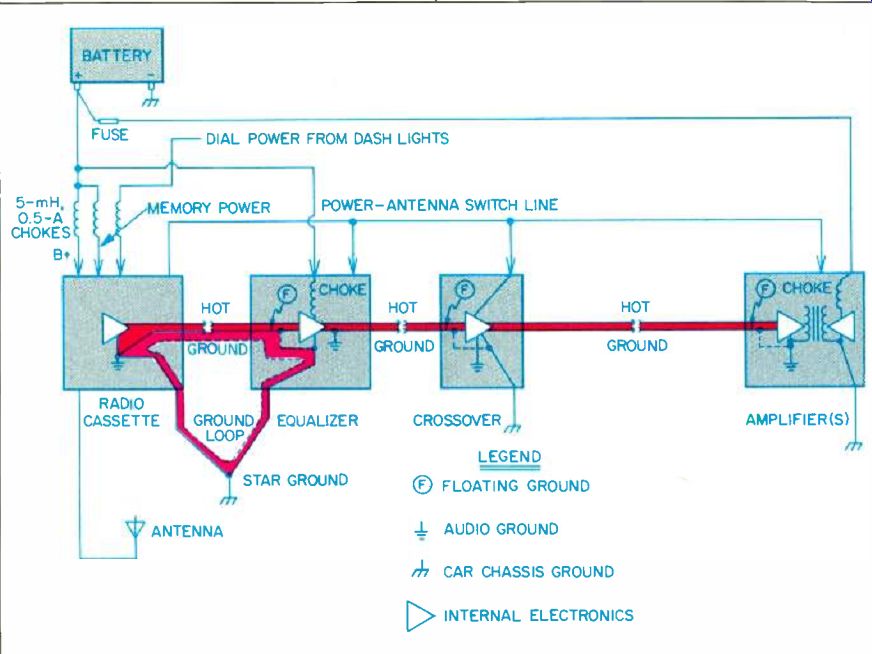
----- Fig. 1-Signal, power, and ground paths in a complex car-audio installation. Note the use of external suppressor chokes on components with insufficient internal suppression, and the use of the power-antenna switch line to power the crossover and provide turn-on signals for the equalizer and amplifier (a measure not all components require). The equipment's floating-ground configuration eliminates ground loops which would occur if the input grounds ran as per the dotted lines in the crossover and amplifier. Note how the transformer in the amplifier's switching power supply allows isolation of the signal from the chassis ground.
(Courtesy of Zed Audio.)
=================
CASE STUDY: MERCEDES
Any high-end component auto-sound system has a large potential for serious noise problems, and the one installed in this Mercedes 500SEC sedan is no exception. The system is biamplified and utilizes a total of five stereo amplifiers-four 20-watt-per-channel AudioMobile SA-452 amps to power the four tweeters and midranges, and one 50-watt-per-channel AudioMobile CXE-2 amp to drive two Isophon subwoofers. It is also equipped with an AudioMobile SP-300 preamp/equalizer. The multi-amp configuration and the custom built speaker enclosures make this an esoteric system by autosound (or even home) standards.
Biamplified systems are especially vulnerable to noise because of the multiplicity of ground points and the wide physical separation between the grounds of the cassette deck/tuner and preamp/equalizer in the front of the vehicle, and the grounds of the amplifiers and electronic crossovers in the trunk. Several feet separate the ground points in the front of the car from those in the back, and at that distance some voltage drop is inevitable. However, if the series resistance in the chassis between front and rear grounding points is under 0.1 ohm, a significant ground-loop problem should not exist.
An audible ground loop did not exist in this installation. The installer, Charles Apcar of Apcar Engineering, had checked ground potentials during the installation. When the car manifested noise problems after the components were in place, he checked grounds one by one, from the tuner to the power amp, until he was satisfied that a ground loop was not the point of entry for the noise.
Generally, the actual sound of noise while a system is in operation will provide a good deal of evidence of its cause. In this case, the noise, a faint whirring sound of variable pitch, was easily identifiable as alternator-generated. The noise level was not particularly high and was frequently masked by program material. Nonetheless, it was entirely unacceptable in a quality installation, and Apcar was determined to eliminate it.
Alternator noise almost always enters a system through a ground loop or through the positive power lead. It is very seldom induced, and never radiated. Apcar had already ruled out ground loops, and he deduced that the power leads from the battery were the likeliest source of the noise.
The next task was to identify the precise power lead transmitting the noise; Apcar surmised that the lead to the cassette tuner was the most probable offender. The power sup plies in the other electronics constitute a fairly effective barrier to a.c. on the power line, so the head unit was virtual y the only component capable of passing interference from the positive side.
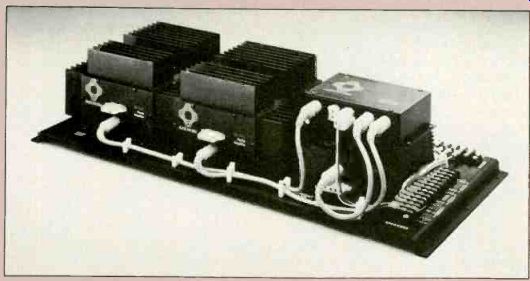
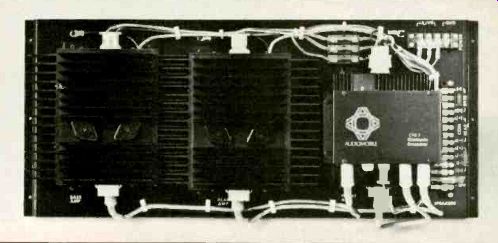
Fig. B1--Two views of a typical amp rack, from AudioMobile, dismounted; note connector cables and power leads. Despite shielding, such cables can pick up noise by induction from adjacent power cables.
Apcar installed a passive filter across the power lead near the power input of the tuner/cassette deck, replaced the wiring, and took the car on the road for a field test. The noise problem was entirely eliminated.
Apcar specializes in exotic cars and expensive European sedans, and he finds many such vehicles to be plagued with stubborn noise problems. He emphasizes that two cars of the same make and model will not necessarily have the same immunity to noise, and he emphasizes that the business of installation involves ceaseless experimentation.
=================
=================
CASE STUDY: CHRYSLER
Roger Holdaway, founder of the Speakerworks chain in Orange County, Cal., specializes in esoteric audio installations, and he has consistently sought to advance the art of mobile audio systems. A speaker manufacturer as well as an installer, he subjects his more ambitious systems to a battery of instrument tests to achieve optimal phase and frequency response, and all systems are guaranteed to be free of electrical noise.
Holdaway stresses that immunity to noise is gained by preventive installation. Big installations such as the one described here are very labor-intensive, and noise suppression applied after the components are in place is simply not cost-effective.
The car is a 1984 Chrysler owned by David Black, director of marketing for Alpine-Luxman, and the system is, naturally, all Alpine. It includes a 7347 cassette deck/tuner, three 3502 power amps delivering 80 watts per channel, one 80-watt 3518 power amp, and three 3650 electronic crossovers. Speakers are custom made from Alpine components. An Alpine 8120 security system and an Alpine cellular telephone complete the ensemble.
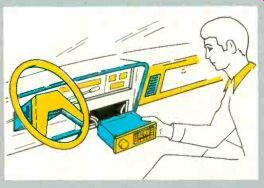
Fig. C1---To check on whether noise is being induced into the receiver, pull it from its mountings while it remains connected, and listen for a drop in noise level.
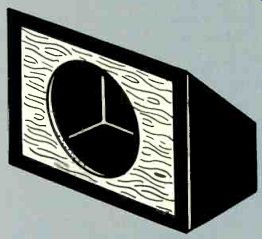
Fig. C2---Rendering of a custom-made Alpine woofer enclosure used in Speakerworks' Chrysler installation.
Late-model Chryslers are considered especially noise-prone vehicles, but installer Pat Holdaway (Roger Holdaway's son) simply took his usual precautions and installation of the system was effected with no undue difficulties.
During the installation, audio wiring was run near the doors, and away from the central wiring loom, to pre vent induced noise. All grounding points were tested with an ohmmeter.
Another noise-detection tactic did not prove necessary in this vehicle.
When induced noise is suspected in the cassette tuner, the installer simply pulls the unit out of its mountings with connectors still in place, and listens for a drop in the noise level. If such a drop occurs, induced noise is obviously present, and appropriate shielding can be placed over the cassette tuner.
This installation, by no means the most elaborate to come out of Holdaway's shop, required about 120 man-hours of labor. Preventive installation kept noise problems from ever surfacing.
==================
All of the above indicated reservations concerning current texts on noise suppression, and suggested that a wider understanding of the noise problem among consumers might help to raise the level of installation among autosound specialists.
The basic techniques for noise suppression in a car are simple. For noise induced by magnetic fields, one em ploys magnetic shielding, physically separating the inductor from the vulnerable audio component. For noise entering through the power leads, one uses simple filters, consisting of chokes and capacitors, to block alternating current. And for noise entering through grounds, one determines a true ground of very nearly zero voltage potential for each ground lead, and then secures the ground lead at that point-or avoids the problem altogether by using audio components whose signal grounds "float" above the power grounds.
But before we examine individual noise problems, a word is in order on automotive electrical systems-which are problematic in themselves-and on how audio systems relate to them.
The fundamental reason a car has an electrical system is to power the ignition system and the running lights.
Air conditioners, cigarette lighters, idiot lights, warning bells, and audio systems are secondary. In the design of an automobile, little consideration is usually given to whether an audio system will perform optimally.
The car's electrical system contains an alternator which produces alternating current (of widely varying frequency and thus unsuitable for powering audio systems), and a large-current, low-voltage battery for storing an electrical charge. The battery provides the power source for the automotive audio system. In general, the direct current provided by the battery is poorly filtered and contains a considerable a.c. component. The car battery is a far cry from the theoretically perfect, ripple-free power supply.
The battery itself may be used as a power supply for the active stages of components in a low-powered audio system. But in most of the more sophisticated systems, the amplifiers, and sometimes the preamp-equalizer, will contain separate, switching power supplies. These power supplies chop the direct current from the battery into a high-frequency alternating current which is stepped up to a high voltage via a transformer, then rectified again into direct current.
As Figure 1 illustrates, electronic audio components draw their power from the positive battery terminal in virtually all cars manufactured today. In most cases the positive power lead is attached directly to the battery; such a connection is far preferable to tapping into power leads of other electrical equipment. Power grounding is referenced to the negative terminal of the battery (obviously, a true earth ground is impossible in a car). All power grounds, without exception, ultimately lead back to the battery.
Running each component's grounding wires directly back to the battery is not a practical proposition. The installer, therefore, is forced to find an electrical ground that is physically remote from the battery yet part of the battery circuit and at nearly the same voltage potential as the negative terminal. Most commonly, the steel chassis of the car is used as a ground for audio components. The chassis is so massive that its electrical resistance is generally very low, and when a heavy-gauge wire is run from the negative terminal of the battery to the chassis, the circuit is closed.
Still, not all points on the chassis will be at absolute zero potential, and as little as a 0.1-ohm difference between two ground locations on the chassis will be enough to create an audible ground loop.
An alternative method of grounding audio components is to use a grounding strip, generally a very heavy-gauge copper wire to which all ground leads are attached, and which itself is affixed to the negative terminal. The scheme is rarely successful, however. Perhaps something on the order of welding cable would do the job, but the internal resistance of any standard audio cable far exceeds that of a typical car chassis and usually leads to serious ground-loop problems.
This brief description of the automotive electrical system should indicate that the car's audio system does not enjoy a clean circuit. Noise has very easy access to the audio system, and noise, as we shall see, is present in abundance.
The worst noise-makers in an auto mobile are the ignition system and the alternator. Alternator noise is the more widespread, and is present to a greater or lesser degree in most vehicles; I will return to this problem in a moment.
Ignition noise, generally radiated in the form of radio-frequency interference, emanates from the spark plugs.
It is manifested in a rapid, continuous ticking sound which increases with engine speed but does not change pitch.
Ignition noise enters a system principally at two points-the antenna and the tape head. (In some cases, low-capacitance antenna cables may also pick up interference from the ignition system, but this is rare.) The ignition system generates interference in the AM frequency range, so if the antenna is the point of entry, the noise will be manifested only during AM reception.
A simple but effective way of checking for radiated noise is to listen to a cheap, portable AM radio placed near the engine. Any r.f. problems should be readily apparent.
Generally, the car's hood effectively prevents radiated noise from a typical ignition system from reaching the antenna; however, cars with nonmetallic bodies such as Corvettes and Fieros are extremely transparent to ignition noise, as are cars whose hoods are ungrounded. In the case of cars with nonmetallic hoods, external shields may have to be placed over the engine cylinder head.
Tape heads, the second principal portal for ignition noise, are especially vulnerable because they are specifically designed to generate electrical currents by induction and to transmit low-level signals. In some cases, noise will be radiated into the tape heads; in other cases, noise will be induced by magnetic fields from electrical cables passing very near the heads. The car's electrical devices are, of course, powered by direct current, but as we have seen, the direct current from the battery may carry a considerable a.c. component, sometimes enough to in duce audible interference.
All tape decks on the market contain magnetic chassis shielding, but occasionally it is inadequate. If that is so, the installer must encase the chassis, except for the faceplate, in mu-metal or some other non-permeable substance.
The shield itself must be properly grounded or it will be entirely ineffective. Tin foil is utilized in many "quick and dirty" or trial installations, but it is not recommended.
The other main type of noise in auto-sound systems, alternator noise, may enter through the positive power leads, through ground loops, or occasionally through the chassis of a component. In the last instance, induction through adjacent power cables is generally involved. Of the three, ground loops are the most common points of entry. In all cases, alternator noise is manifested as a whining sound which rises in frequency with engine speed.
If alternator noise is passing through the battery, it may be fairly easily filtered out of the system by inserting chokes between the positive terminal and the power inputs of the audio components (see Fig. 1). The battery itself is a giant capacitor, and a choke placed in series with it makes a very effective filter.
Alternator noise on the positive side of the electrical system is commonly caused by improper output filtration of the alternator itself, by such alternator defects as damaged rectifier diodes or a malfunctioning voltage regulator, or by the battery providing less than optimum filtering action.
The last point requires some explanation. As a battery ages, its internal resistance rises and its effectiveness as a filter component diminishes accordingly. Increasingly, the battery passes alternating current into the car's electrical system, and an increasing amount of supplementary filtering is required at both input and output.
It should be noted that many audio components manufactured today have filters at the power input just to keep alternator noise from entering through the positive side, and some automobiles have factory-installed power-lead filters to serve the same purpose. But the installer cannot always depend upon either to be entirely effective. Finally, we should note that the switching power supplies in many audio components are generally effective in keeping noise out of the circuit on the positive side, though if poorly designed, such power supplies may themselves send appreciable amounts of switching noise back into the battery.
Ground-loop problems are a little more intractable because they hinge on the design of the audio components themselves. Ground loops can occur only when a.c. grounds and d.c. grounds impinge on each other at some point. In an automobile, the d.c. ground is the power ground leading back to the negative terminal at the battery; the a.c. ground is the audio signal ground. In many cases, and perhaps most, the ground potential for the signal ground of a given component will be referenced to the preceding component in the signal chain.
That is, the negative ground return will be to the output of the preceding component in the signal chain, and not directly to the battery. In such cases the signal ground is called a floating ground because the ground potential "floats" above the ground potential of the d.c. electrical circuit. Ground re turn for a floating ground will usually be effected via the outer shield of a coaxial interconnect cable.
The advantages of a floating audio ground are obvious. The signal is effectively isolated from noise and interference-so long as the ground really floats. At the point where it ceases to float, the door is open for unwanted noise intrusions.
In an automotive audio system, that door usually opens between the first two components in the signal chain.
But the problem can occur whenever the signal input of one component is grounded to the chassis (the d.c. ground) and also draws a d.c. ground potential from the preceding component. A closed loop is formed between the two interconnected components, with current running (as illustrated in Fig. 1) through the a.c. ground return, down through the chassis ground of the first component, and back to the second component's input. Small but significant voltage potentials may be present in both the a.c. and the d.c. ground returns. These potentials are sufficient to cause appreciable current flow and audible noise. Any alternator noise leaking through to ground will modulate the voltage in the ground loop and will be amplified in the power amplifier.
Ground loops cannot occur if the signal ground floats. Where signal and power grounds are common, a ground loop can be stopped if the power ground of the amplifier and the power ground of the preceding stage are effectively at the same voltage potential, with essentially zero impedance be tween them; hence the importance of checking the voltage potentials of all power grounds.
Ground loops are less likely to occur if the same physical location on the chassis is used for multiple ground leads, though electrical potentials can sometimes vary at physically proximate points on the chassis. Soldering the ground leads to the chassis is the most effective means of making a connection, though heat dissipation through the chassis renders soldering extremely difficult. Whatever technique is used for grounding, contacts must be scrupulously cleaned before they are connected, because high-resistance contacts would obviously defeat the purpose of the grounds.
Considerable investigation may be required to find the best grounding points on the chassis. Body panels or the engine block should never be used for ground points.
In addition to the ignition system and alternator, three other significant sources of noise exist in a car. The first of these is induced noise entering through the audio cables. According to both Holdaway and Apcar, cables powering appliances in the car may induce noise in adjacent audio cables-even speaker cables-and thus audio cables should be routed away from the primary "wiring loom" running down the center of most cars.
Another source of noise is the so called secondary radiator. Certain metal parts in the car may have impedance, characteristics and physical dimensions such that they function as antennas for radiated noise both from within and from without the car. Noise from such sources is quite rare, how ever, and when it occurs it may easily be eliminated by grounding the secondary radiator to the chassis.
Components themselves may generate noise internally. For example, the switching power supplies in amplifiers often share a common ground with speaker leads, noise from the power supply may contaminate the audio signal, and motors in tape decks may induce noise into the tape heads. But such problems are purely a result of poor component design and, as such, are beyond the capacity of the installer to correct.
The electrical motors that drive wind shield wipers, power windows, and the like are another occasional source of noise in automobiles. When these motors' wire brushes become worn, they spark, and the sparks radiate noise like spark plugs. Here again, the antenna and the tape heads will be the primary points of entry.
Finally, noise may be radiated from sources outside the vehicle, such as other automobiles with noise problems of their own. However, such noise makers are outside the scope of this article and are very difficult to deal with in any event. The installer may reasonably be expected to suppress noise generated by the vehicle itself. He should not be held responsible for fending off every interference coming through our vastly overcrowded airwaves.
The above discussion has been in tended as a commentary on the techniques employed by competent installers, not as a guide to those who wish to install their own systems (though the basic principles would serve the self-installer in good stead). My own view is that installation of high-performance autosound systems should be left to professionals unless the car is thoroughly expendable. Reputable installers carry insurance covering accidental damage to a vehicle. You, on the other hand, are on your own should you inflict structural damage on your car--a not-infrequent occurrence in installations by inexperienced persons.
Should you desire to undertake auto-sound installation as a hobby, one practical text on the subject of noise is available from Metra, a manufacturer of autosound accessories. However, no text is entirely comprehensive, simply because vehicles themselves change and evolve, and carry ever more abundant sources of electrical interference with each succeeding model year.
(Audio magazine, May 1985)
Also see:
MUSIC ON THE MOVE: The Keys To Car Stereo (May 1986)
Car Stereo Noise: A Process Of Elimination (May 1987)
= = = =