The Lighter
Side--POP REVIEWS -- Linda Perhacs discovered ... Noel Coward-ahhhh! and
JAZZ REVIEWS -- Vintage Earl Hines ... Yusef Lateef, virtuoso
POP REVIEWS
reviewed by: MORGAN AMES R. D. DARRELL JOHN GABREE JOHN S. WILSON
* symbol denotes an (exceptional recording )
LINDA PERHACS: Parallelograms. Linda Perhacs, vocals and guitar; rhythm accompaniment. Steve Cohn, Leonard Rosenman, and Linda Perhacs, arr. (Dolphin; Morning Colors; Chimacum Rain; eight more.) Kapp KC 3636, $4.98.
Considering the total lack of meaningful new talent on records. I put this new album on the turntable with no hope.
With its first note I knew I was wrong.
Indeed, rarely does one hear such an immediate impact of talent.
Linda Perhacs' album was sensitively and unobtrusively produced by Leonard Rosenman, himself a distinguished com poser in films, TV, and contemporary serious music. Mr. Rosenman informed me that Miss Perhacs was a dental hygienist and he first met her when she cleaned his teeth, after which she asked if he'd listen to a tape. It took Mr. Rosenman some time to get around to playing her tape, but when he did he recognized its value at once and took the tape to Harry Garfield at Universal, who quick ly signed her.
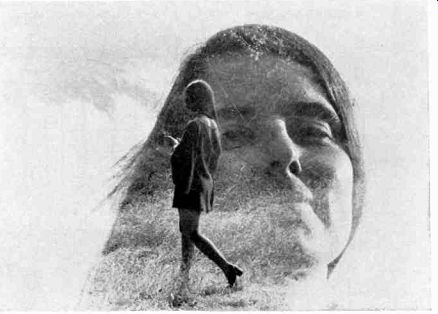
In this age of compulsive social con science. Mr. Rosenman is particularly fond of Miss Perhacs' talent because of its irrelevance. She has a pure and beautiful young voice. She writes pretty songs. That's about it-except that she uses these gifts exquisitely.
Guess what? Pretty music suddenly is oddly popular. The Carpenters broke a hole in the wall of the hard-beat market with two hit singles in a row. Close to You and We've Only Just Begun. The Fifth Dimension's new hit is nothing more than a pretty ballad. All of this may bode well for Linda Perhacs, who sings and writes of wistful, rainy places.
Her images are lovely, sometimes festive, sometimes innocent--"The liquid taste of leaf and rock, the timing to a slower clock. . . ."
Miss Perhacs is very much a product of today, as are artists such as Joni Mitchell and James Taylor-though she sounds like neither. Nor has she had any formal musical training. All she has is a flawless musical ear, natural sophistication and taste, and a sweet sense of words. She is a modern folk artist, in the purest sense.
This album is certainly a hopeful signal for the year's record market, if you want to look at it that way. I do. I recommend it warmly. M.A.
THE NOEL COWARD ALBUM. Noel Coward, vocals; Peter Matz, piano and arr. (Teach Me to Dance Like Grandma; What's Going to Happen to the Tots; Alice Is at It Again; thirty-seven more:) Columbia MG 30088, $6.98 (two discs).
Ah, it's been too long since I've sat down and listened to a gratifying overdose of Mr. Noel Coward. This is a superb representation of him-forty brilliant songs in all. Mr. Coward views everything-men, women. children. life itself-from his own uniquely suited, trim-waisted, incredibly facile viewpoint. The result is that the more deadly one of his songs really is, the more brilliant and hilarious it seems.
My favorite is an intricate ditty called I Went to a Marvelous Party (taking place on the Riviera, of course), "which was in the fresh air, and we went as we were, and we stayed as we were, which was hell." One outlandish party incident follows another so quickly that one can hardly keep up, and each verse ends quite perfectly with Noel Coward's comment, "I couldn't have liked it more." Fantastic as the song is, its true charm is that Mr. Coward was present at this marvelous party and he is telling us about it.
The album is a gold mine, rich with Noel Coward's perfectly rhymed word salads, often blue, always charming. And let us not forget what a fine melodist he is.
M.A.
BOB DYLAN: New Morning. Bob Dylan, vocals, guitar, and keyboards; rhythm accompaniment. (If Dogs Run Free; Winterlude; Three Angels; nine more.) Columbia KC 30290, $5.98. Tape: CR 30290, 3 3/4 ips, $6.98; CA 30290, $6.98; 1 CT 30290, $6.98.
Well, what do we say about Dylan--Winter-1971
He's not a god. He's not who he was a few years ago. Who is? A fire is sparked, it blazes wildly, it slows to a steady glow, eventually it cools.
Bob Dylan is now a songwriter of still interesting natural instincts. He still comes up with the occasional arresting idea, the captivating line. But Bob Dylan is not a Force in the way he once was and everyone knows it.
I have never been able to tolerate Bob Dylan's singing (though he has an able, if erratic, time sense). His ear has al ways been, to put it kindly, sluggish. His songs are the thing-they always were.
If there were no Dylan legend, this album would be greeted as a competent, if not inspired, offering from a country-oriented folksinger-writer. How you respond to it is a matter of your own emotional relationship to his music. This is not an album I'll keep.
M.A.
FRANK ZAPPA: Chunga's Revenge. Frank Zappa, vocals and guitar; rhythm accompaniment. (Road Ladies; Tell Me You Love Me; The Clap; Sharleena; six more.) Bizarre MS 2030, $5.98.
CAPTAIN BEEFHEART AND THE MAGIC BAND: Lick My Decals Off, Baby. Captain Beefheart, vocals; rhythm accompaniment. (Peon; Bellerin' Plain; Petrified Forest; Flash Gordon's Ape; eleven more.) Straight 6420, $4.98.
Frank Zappa continues to go his own highly original way with "Chunga's Revenge," his most thoroughly realized al bum in some time. All the usual Zappa material is here: avant-garde jazz and classical elements combined with rock of every period. There are several first rate instrumentals, especially the three part Nancy and Mary Music, which is excellent despite being taken from a live performance. Zappa's rock impersonations include Rudy Wants to Buy Yez a Drink (an assault on the abuses of the musicians' union) and Would You Go All the Way? (a question for every patriotic girl). The sidemen include the ubiquitous Ian Underwood on various saxes, pianos, and organs; Jeff Simmons on bass; George Duke on keyboards and trombone; and Aynsley Dunbar on drums. Zappa, as you may have discovered long ago, is a very serious man.
Captain Beefheart, although he enjoys the approval, artistic and financial, of Zappa, is not nearly as good. He lacks all of Zappa's subtleties and his easy humor. Nor is Beefheart nearly as accomplished a performer or composer. In fact. Lick My Decals Off, Baby is as strained as its title. Beefheart's writing and performing-he sounds a little like Dr. John, the Night Tripper-are very repetitious. Stick with Zappa or go back to Beefheart's first album, which was much better. J.G.
RUTH WHITE: Short Circuits. Ruth White, Moog Synthesizer. (Satie: Gymnopedie No. 1; Grieg: Butterfly; Scarlatti: Tempo diballo; eleven more.) Angel S 36042, $5.98. Tape: El 4XS 36042, $6.98.
Want to hear a really terrific idea? Record Rimsky-Korsakov's Flight of the Bumblebee on a Moog, using sound waves to simulate the buzzing of a real bee. Don't you love it? Think what hap pens to Verdi's Anvil Chorus. Couldn't you die? Excuse me, but the point of using electronic instruments would seem to be to express new, experimental music specifically designed for them. Who wants to hear reluctant, unnecessary life pumped into classical that need a rest or, at the least, a master's touch? The Ridiculous Award of the year goes to Miss Ruth White for her immaculate sincerity, rumored humor, and abysmal misjudgment in thinking that this was a fun album idea.
M.A.
MARC BENNO. Marc Benno, vocals, guitar, and piano; rhythm and instrumental accompaniment. (Good Year; Try It Just Once; Family Full of Soul; Hard Road; Nice Feelin'; four more.) A & M SP 4273, $4.98.
RY COODER. Ry Cooder, vocals, guitar, mandolin, and bass; rhythm and instrumental accompaniment. (Alimony; Do Re Mi; Available Space; Pig Meat; Police Dog Blues; six more.) Reprise 6402; $4.98.
TOWNES VAN ZANDT: Delta Momma Blues. Townes Van Zandt, vocals and guitar; rhythm accompaniment. (FFV; Only Him or Me; Tower Song; Rake; Nothin'; five more.) Poppy PYS 40,012, $4.98.
More than ever I am convinced that it is the individual performer. not the group, that will dominate the early Seventies. Here are three more reasons why.
Marc Benno has a nice rock-and-roll voice, the kind that remains impersonal in a group context but which shines here despite a certain thinness. Actually, the shallowness of Benno's voice, and the fact that it is not up front but off behind the band, gives this album a "basement tapes" quality that contributes to its effectiveness: a relaxed jam session among friends (some friends: among the side people on this album are Booker T. Jones, Ry Cooder, Jim Horn, and Rita Coolidge). Benno's songs are weak, but they show promise and there are mo ments of real strength throughout (the album ends strongly with Hard Road, his tribute to rock-a-billy, and a very funky Nice Feelite). A satisfying album.
Ry Cooder, who is famous as a side man (with the Stones, among others), is the latest to step from the studio into the spotlight. It doesn't really feel like it's his album, but that doesn't keep it from being one of the warmest and most entertaining LPs in months. It was produced by Van Dyke Parks and Lenny Waronker and, though Parks is credited with arranging only one tune (orchestration is by Kirby Johnson), he seems to have dominated the proceedings. The record is full of lush but mocking voicings and little musical jokes and, even though he is singing and playing lead guitar and apparently having the time of his life, there is a sense of Cooder's being a sideman on his own album-the employee of Parks and, maybe, Kirby Johnson. The material is well chosen, from One Meat Ball and Randy Newman's Old Kentucky Home through blues by Leadbelly, Sleepy John Estes, and Blind Willie Johnson (the only exception is Woody Guthrie's Do Re Mi, which is given an insensitive reading). Anyhow, good work from all concerned-a very special album.
"Delta Momma Blues" is Townes Van Zandt's fourth album and in some ways his best. Van Zandt is a very straight forward songwriter and if his tunes aren't especially catchy, they usually deserve a hearing when he does them himself. He has a very uncluttered vocal style rather like Paul Clayton's. His albums are never mind-blowers, but they are the work of a serious, intelligent, and hard-working musician and they are all worth owning.
J.G.
TOWER OF POWER: East Bay Grease. Tower of Power, hard rock band. (The Price; Social Lubrication; Knock Your self Out; three more.) San Francisco SD 204, $4.98.
BIG BROTHER AND THE HOLDING COMPANY: Be a Brother. Big Brother and the Holding Company, hard rock sextet. (Keep On; Joseph's Coat; Some day; Mr. Natural; Funkie Jim; five more.) Columbia C 30222, $4.98. Tape:. El CA 30222, $6.98.
Because of their size (ten men) and the similarity of their lead singer Rufus Miller to David Clayton-Thomas. Tower of Power will probably be frequently compared to Blood, Sweat, and Team.
Not too frequently, I hope, because it isn't a useful comparison. Tower of Power is a much funkier band than BS&T, much closer to the blues, and much, much more satisfying to listen to.
Although Miller's vocals probably are meant to gain instant admission to new audiences (and I hope it works), I prefer the sound of both Mimi Castillo and Rick Stevens, especially the latter whose Sparkling in the Sand is the best cut on the album. Stevens' vocals bring the same breath of fresh air that Steve Katz' do on BS&T albums.
Tower of Power compares favorably with the competition-already as good, I think, as Blood, Sweat, and Tears, Ten Wheel Drive, and Vehicle and considerably more direct and less pretentious than any of these. The trouble with this kind of music of course is that you immediately begin making comparisons to older musicians, and with Tower of Power I found myself thinking frequently of King Curtis-but the group is well on its way toward banishing this sort of association. Perhaps their most innovative element is the excellent back-up vocals of Stevens, Dave Garibaldi, and Steve Kupka. "East Bay Grease" is the best release yet from Bill Graham's new label.
I wish I had more nice things to say about the new album by Big Brother and the Holding Company. They are such a likable band. But there is no getting around the fact that "Be a Brother" is a disappointment. For one thing, the addition of Nick Gravenites for half the vocals contributes nothing: Sam Andrews is a much better singer. Most of the writing is only so-so. The playing is clean for the most part but diffuse, as if they don't really have any idea who they are as a band. It looks like Big Brother and the Holding Company will he legendary a while longer, more for what they've played live (and where) than for what they've gotten down on records.
-J.G.
JAKE HOLMES. So Close, So Very Far to Go. Jake Holmes, vocals; rhythm accompaniment. (So Close; A Little Com fort; Population; So Very Far to Go; Her Song; five more.) Polydor 24 4034, $4.98.
BADFINGER: No Dice. Badfinger; rock quartet. (Love Me Do; Without You; Blodwyn; Better Days; It Had to Be; Watford John; six more.) Apple ST 3367, $4.98.
These albums have nothing in common other than the fact that I wanted to be sure you knew they had been issued.
These performers' last releases are among the few records I go back to over and over again. Though the new albums are not quite as good, they are both worth attention, especially by listeners who have dug Holmes and Badfinger before.
Jake Holmes is a singer-songwriter who combines cabaret with Nashville.
The radio stations around New York have been playing So Close and it is easily the best song on the LP-a fortuitous meeting of melody, lyric, and performance. As for the rest; the lyrics are quite impersonal. drawn more from the vocabulary of song than from life and often extremely male-chauvinist-oriented (especially I Sure Like Her Song, which would raise howls of pro test if it were aimed at any other group), although some of the tunes are quite pleasing. Holmes's singing continues to improve and the support of Putnam, Myrick, Buttrey, and the other Nashville cats is as solid as usual. I submit, however, that an average of 13:28 per side is an insufficient offering on a record that costs $4.98 plus tax.
Badfinger is that Beatles-like band that caused a commotion with their first album last year. Now they are back with more of the same-happy good time rock well played, well produced, and welcome amid the piles of pretentious guff that make up most of each month's releases. Remember rock-and roll? You could dance to it and it was fun to listen to. Return with this group now to those happy days of yesteryear. Badfinger is nice to have around.
J.G.
ROBERT FARNON AND TONY COLE: Pop Makes Progress. Tony Cole, tenor sax and clarinet; orchestra. (There Will Never Be; Wives and Lovers; Yesterday: seven more). Chapter One CPS 39001. $4.98.
Any Robert Farnon program to come along nowadays, even one under a hitherto unheard-of British label (distributed by London), will be bought unheard by the devout fans of the most undeservedly neglected master arranger of our era. Such connoisseurs will over look the misleading title here (the idiom is jazz, not pop, progressive or otherwise) and the lack of information about the anonymous routine sidemen who ac company the noted-at least abroad soloist. His sax and clarinet improvisations are mostly floridly rhapsodic, some times imaginatively inventive, and al ways impressively bravura--especially in Simon's Mrs. Robinson and Scarborough Fair, Bacharach's Wives and Lovers, the Lennon-McCartney Yesterday, and Farnon's own characteristically poetic and eloquent Blue Theme. Throughout, the Chapter One recording is unremarkably competent with rather more reverberation than is customary in these days of multichannel technology.
Those who already know and admire Farnon will be glad to have this latest, if relatively minor, addition to his too sparse discography. But for a first intro duction to his unique genius I suggest passing this disc up in favor of one of his finest: his symphonic suite based on Gershwin Porgy and Bess excerpts (Lon don Phase 4 SPC 21013 of 1966).
R.D.D.
OMSK RUSSIAN FOLK CHORUS. Gyorgy Pantyukov, dir. (Song of Yermak; Flax; Beyond the Meadow; thirteen more.) Melodiya/Angel SR 40148, $5.98.
To a sophisticated Muscovite I imagine that a touring chorus from the mid-Siberian city of Omsk would be about as much of a draw as a vocal ensemble from Oshkosh would be to a concert-going New Yorker. In each case the expectations of mildly exotic novelty would be curbed by the fears of a lack of programmatic substance and a likelihood of executant amateurishness. And in fact the present selections are mostly lightweight la few real folk and traditional songs, but mostly those of the ersatz variety). Even few of the soloists sound professionally trained (Valentina Bocharova and Yekaterina Sonina are notable exceptions); the men lack any impressively "Russian" subterranean basses, while the girls sometimes sound as shrill and gauche as those of a Broadway flop's chorus line. Judging by the jack et photograph, there are twenty-eight women, twenty men, and five accordionists in the group, but in the strong, candidly closely miked recording it never sounds that big. The stereoism. if any. is minimal: in fact, I'd bet that this is monophony pure and simple.
Yet, for all the aesthetic and technical shortcomings there is an infectious if naïve enthusiasm here that sometimes transcends them--as in Beyond the Meadow, Vesnyanochka, and the concluding batch of exuberant Omsk Ditties.
And, again judging by the jacket photo graph. the girls from Omsk should be seen as well as heard-an opportunity likely to be available in some American cities this season during the ensemble's first tour of this country.
R.D.D.
=================
JAZZ
EARL HINES: Quintessential Recording Session. Earl Hines, piano. (My Mon day Date; Off Time Blues; Just Too Soon; Chimes in Blues; Chicago High Life; Blues in Thirds; Stowaway; Panther Rag.) Halcyon 101, $4.98 (Halcyon Records, P.O. Box 4255, Grand Central Station, New York, N.Y. 10017).
Earl Hines was twenty-two when on Dec. 7, 1928, he cut eight solos for the fledging QRS label, which dumped the resultant four records on the market in a single day and promptly went out of business. By then Hines had made the records that became the basis for his high repute in jazz-the small-group sides with Louis Armstrong. The poorly distributed QRS sides, his first records on his own, quickly became rarities until Atlantic reissued them early in the Fifties and, within the past year, Milestone put them back in circulation once again on 2012 but in mono only.
In 1970 Hines undertook to re-record the QRS session. The results, on this disc, are absolutely remarkable. One can expect an artist to mature. But can one anticipate that a pianist-whose originality and virtuosity were of such a caliber at twenty-two that he had already carved a firm place for himself in the jazz hierarchy-will continue to grow artistically and to retain his physical facility at sixty-four to such an extent that he could improve on his early definitive performances? Fortunately, by 1970 Hines had for gotten most of the pieces he had played in 1928-all his own compositions. At least. he had to refresh his memory On several of them by listening to those original recordings. Consequently, each number, with the exception of Monday Date, which has been part of his repertory over the years. was a fresh exploration and even Monday Date shows no signs in this performance of having fallen into set patterns. He approaches all of these pieces as though he were discovering them for the first time. Whether they are better than the originals is beside the point. They are different and they are superb Hines. In the case of Chimes in Blues, this new version is one of his most brilliantly realized solos.
J.S.W.
YUSEF LATEEF: Suite 16. Yusef Lateef, flute, oboe, soprano and tenor saxophones, pneumatic bamboo flute, C-flute, bamboo flute, bells, and tambourine; Barry Harris or Joe Zawinul, piano; Eric Gale or Earl Klugh, guitar; Selwart Clarke, viola; Kermit Moore, cello; Chuck Rainey or Bob Cunning ham, bass; Neal Boyar, vibraphone; Jimmy Johnson or Al Heath, drums; Sweet Inspirations, vocals; Cologne Radio Orchestra, William S. Fischer, cond. (Nocturne; When a Man Loves a Woman; Symphonic Blues Suite; three more.) Atlantic 1563, $5.98. Tape: SR 81563, $6.95; 51563, $6.95.
Yusef Lateefs command of woodwinds is put to brilliant use both in the short pieces on this disc and the extended Symphonic Blues Suite which takes up one side. On several of the short pieces, he overdubs himself into an ensemble a practice which is extremely effective on the lovely Buddy and Lou, in which the darker strains of his flute are mixed with the pure, singing cry of his oboe, balanced with the cutting twang of Eric Gale's guitar. And his slow, gorgeously elevating soprano saxophone on Down in Atlanta is the core of a tremendously moving piece, with the voices of the Sweet Inspirations drifting gently through the distant background.
Lateef's Symphonic Blues Suite is an interesting and exploratory series of movements on which his quartet is in filtrated by the Cologne Radio Orchestra. There is relatively little of the massed ensembles that one might expect from a large orchestra of this type. The focus is generally Lateef-on tenor or flute and Barry Harris, his pianist, with the strings and woodwinds roaming around and through them. Six of the seven movements are brief, almost impressionistic sketches in which Lateef manages to say a great deal with direct, compact statements. But the high point of the suite is the third movement on which Lateef plays what might be considered the definitive Lester Young solo-as sparkling a tribute to Young's brilliance as a saxophonist could offer-and Barry Harris builds a marvelous solo that develops from some ad lib poking among the keys into darkly moving blues.
As a teasing added attraction, Lateef has included at the end of one side of the disc a brief, unaccompanied guitar solo by sixteen-year-old Earl Klugh that is amazing for its maturity and assurance.
J.S.W.
SAL MOSCA AND PETER IND: At the Den. Sal Mosca, piano; Peter Ind, bass. (Sal's Line; Scrapple from the Apple; Groovin' High; three more.) Wave 2, $5 (Wave Records, 11 Swakeleys Drive, Ickenham, Middlesex, England).
A charming sound from the recent past returns on this disc, a collection of recordings made at The Den in New York's Duane Hotel in 1959 when Sal Mosca and Peter Ind were working there as a duo. Both Mosca and Ind were part of the group of young musicians who were disciples of Lennie Tristano in the Fifties.
Mosca's playing has some of the more typical Tristano characteristics--the long lines that rise and fall as though they were breathing while they flow along in almost seamless patterns. Because there is always a sense of movement in Mosca's playing, he never gets caught in the brooding bog that trapped many pianists of that period.
These are quiet, relaxed, unpretentious performances that make for relaxed, casual listening, supplemented by the intimate and naturalistic setting suggested by the atmospheric hum of audience conversation in the background.
JOHNNY HODGES: A Memory of Johnny Hodges. Johnny Hodges, alto saxophone; Shorty Baker, trumpet; Quentin Jackson, trombone; Jimmy Hamilton, tenor saxophone and clarinet; Don Byas, tenor saxophone; Raymond Fol, piano; Wendell Marshall, bass; Butch Ballard or Sonny Greer, drums. (Mood Indigo; Perdido; Time On My Hands; eleven more.) MJR 8107, $5 (mono only) (available only by mail from Master Jazz Recordings, Box 579, Lenox Hill Station, New York, N.Y. 10021).
This set of strong, full-bodied Hodges performances--ranging from jump tunes (Hop, Skip, and Jump) to ballads (Sweet Lorraine), which inevitably jump too when Hodges applies his swinging phrasing to them--was made in Paris in 1950 with a small group of Ellingtonians but has never before been released in the United States.
The sheer power and beauty of Hodges' playing dominates the set, although there are also numerous examples of the clean, penetrating drive of Shorty Baker's trumpet, some rich samples of Don Byas' tenor, and a more pungent presentation of Jimmy Hamilton's clarinet and tenor than he generally got in the full Ellington band.
The performances are in the tradition of the Ellington small group sessions of the Thirties and Forties, the melodies singing in the same fashion, the riffs jumping with Ducal joy. The pianist sit ting in Duke's customary chair is Raymond Fol, a Frenchman who remains shrouded in the rhythm section most of the time, although he takes a solo on Mood Indigo that manages to be completely in the spirit of the group without being overly Ellingtonian. By coincidence, during the Ellington band's stand at the Rainbow Grill in August 1970, just a couple of months before this record was released, Fol filled in for the Duke for several nights when the pianist was laid low by a virus.
The consistently unique quality of Hodges is summed up in startling fashion when this 1950 "memory" of Hodges is compared with his last record, "Three Shades of Blue," made twenty years later on the Flying Dutchman label. He was, apparently, never in anything less than top form.
======================
in brief
BUDDY GUY, JUNIOR WELLS, AND JUNIOR MANCE: Buddy and the Juniors. Blue Thumb BTS 8820, $4.98.
The long awaited reunion of Buddy Guy and Junior Wells takes place under relaxed conditions. A good idea that doesn't work. Their first is still their best: "Hoodoo Man Blues" (the Junior Wells Blues Band, Delmark DS 9612, 7 West Grand Avenue, Chicago, Ill. 60610). J.G.
BREAD: On the Waters. Elektra EKS 4076, $4.98. This is the only rock group I've ever thought of as romantic. Its leader is David Gates, a fine Los Angeles arranger, who proves that he is an equally adept singer and songwriter. The music is soft, simple, melodious. Highly recommended. The album includes Bread's hit, I Want to Make It With You.
M.A.
CAROLE KING: Writer. Ode 7 SP 77006, $4.98. As a performer, Carole King can't seem to discover who she is, which is unfortunate since she is one of the more talented people in the record business.
Although "Writer" is more polished and sophisticated, the earlier album (in which she had a rock group called City) is preferable. It is hard to know what to make of lyrics that stray this far from reality. J.G.
ANNE MURRAY: Snowbird. Capitol ST 579, $4.98. Tape: 1111 8XT 579, $5.98; 4XT 579, $5.98. The Canadian reincarnation of Gale Garnett. Eight years ago we would have called Miss Murray a folksinger, and as a folksinger she's O.K. So is her hit, Snowbird. The album was recorded partly in Toronto, and the rhythm section sounds stiff. Over-all, artist and album ride the top edge of mediocrity.
M.A.
MERRY CLAYTON: Gimme Shelter. Ode 7 SP 77001, $4.98. Merry Clayton was the background vocalist on the Stones's Gimme Shelter and countless others. This is nothing like the masterpiece the publicists would have you believe. J.G.
CLYDIE KING: Direct Me. Lizard (Ampex) A 20104, $4.98. Tape: Oil M 2004, 7'/2 ips, $6.95; M 82004, $6.95; M 52004, $6.95. Clydie King is a busy L.A. studio singer. She is also a knockout r & b solo artist, as this debut album shows. The music is explosively sung and ably produced and arranged. I hope it hits.
M.A.
THE SAVAGE ROSE: Your Daily Gift. Gregar GG 103. $4.98. The Savage Rose has strayed away from Thomas Koppel's quirky music, which made their first album such a delight, to something more like ordinary rock-and roll. Though the band is very polished, lead singer Annisette gets very tiresome.
J.G.
LIVINGSTON TAYLOR. Capricorn (Atco) SD 33-334, $4.98. Tape: ea M 8334, $6.95; M 5334, $6.95. Livingston Taylor sounds so much like his brother James that it's alarming.
Since James is possibly the best pop solo artist in the country, Livingston is obviously worth equal attention. Maybe there's some kind of talent gene loose in the family. Anyway, I find the similarity between the brothers fascinating instead of infuriating.
-M.A.
JIMMY L. WEBB: Words and Music. Reprise 6421, $4.98. Jim Webb wrote Wichita Lineman, By the Time I Get to Phoenix, etc. If you think this is a silly album, you shudda heard his other one. No way.
-J.G.
WAYLON JENNINGS: Singer of Sad Songs. RCA Victor LSP 4418, $4.98. Waylon Jennings is one of the best country singers and this record is awful. What is this-junk that was left over in the can? The engineer must be the drummer's manager. A horrible mess.
J.G.
GEORGE HAMILTON IV: Down Home in the Country. RCA Victor LSP 4435, $4.98.
George Hamilton IV pursues his Reader's Digest-style of country singing in another pleasant, albeit bland, set of better-than-average tunes. Skeeter Davis makes a guest appearance. Nice.
J.G.
-------------
(High Fidelity)
Also see:
LETTERS TO THE EDITOR and TOO HOT to HANDLE (Feb. 1971)