A BEGINNER'S GUIDE TO HI-FI---Selecting equipment intelligently is something anyone can do. By ROBERT N. GREENE .
All you need is:
- a clear idea of your own requirements
- a properly directed use of your time and energy
- a little old-fashioned common sense
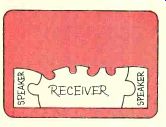
--- You might start with a receiver (or an amplifier plus a tuner) and a
pair of speakers.
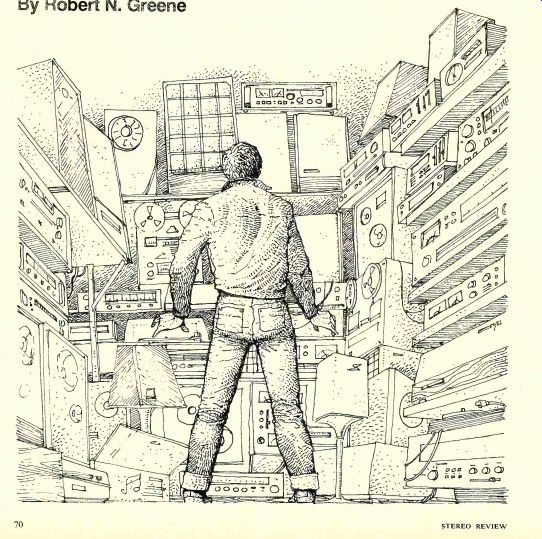
CHOOSING audio equipment isn't the easiest thing in the world, especially for the novice. Be cause there are usually no clear-cut rights and wrongs about it, many people need help when it comes to deciding what equipment to plunk their money down for. Can we help? Yes. Can we make your selection for you? No, be cause there are no easy answers. But we can give you some guidelines on how to buy, we can alert you to things to look for and warn you about things to watch out for.
Part of the problem is that there's al most too much technical information available about hi-fi equipment, probably because the hi-fi world is com posed largely of hobbyists who enjoy the same technical jargon that the novice finds bewildering. We can't make anyone an expert with a few well-chosen words, but we can pass on some practical information that, combined with common sense, can make selecting equipment a lot less intimidating. And for those of you to whom much of the following lecture may seem very elementary, please bear with us; we might just come up with one or two new ideas helpful to you too.
To start with, let's puncture a couple of balloons some of you may be carrying around unknowingly in the back of your mind. The first is that there's something magical or mysterious about audio equipment or the stores and people who sell it. There isn't. Receivers, speakers, and all the rest are only merchandise manufactured to be sold for profit, and the primary function of the audio salesman is to sell that merchandise. Is this intended to warn you that the industry is out to fleece the un wary? Not at all, but when you're spending money on anything it's best not to have too many stars in your eyes (but please keep a few-it's part of the fun!). Just bear in mind that the rules of judicious "consumerism" apply to audio as much as to any other buying.
Another balloon that may need pop –
----Robert N. Greene has worked professionally as head of customer relations with an audio-equipment manufacturer; he has also done custom installation and hi-fi service work.----
ping is the one with BEST printed on it in bright red letters. Even if you're lucky enough to have unlimited funds available, the quest for that elusive quality can lead into a blind alley: there is no "best." While a $1,000 amplifier, for example, may be of better quality and greater performance capability than a $250 one, it might well not be preferable in your particular circum stances. And even with all other things being equal, you'd have trouble getting any two experts to agree on the "best" unit for a given situation; their personal prejudices will lead them in different directions. In short, setting out to find any single, objectively "best" item of equipment is unrealistic. All we can try for is that which is best for our own purposes.
One more preliminary point: we'll be concerned in this discussion solely with separate audio components. Consoles, "compacts," and the like certainly have their appeal, but it is components that are looked upon as "defining" high fidelity, and we're concerned here with how you can get the most accurate sound for your money.
Getting Ready
Since our stated intent isn't instruction on what to buy but how to buy, our first suggestion is that you not go into an audio shop right away. Experienced or not, you might not yet be ready to face shelves full of equipment. All those dials and knobs and switches can overwhelm even the hardiest shopper among us, and this is exactly what we're trying to help you avoid. The more comfortable you are once you do get into the store, the better your chances of ending up with a system suited to your requirements. The logical first step, then, is to figure out in advance what those requirements are as well as the limitations you'll have to work with in meeting them.
Money: If you're thinking of high fidelity equipment that will do reason able justice to present-day records and FM broadcasts, you really have to pre pare yourself for a minimum investment of at least $300 to $500. And the figure for what might be considered a notably good system increases to $1,000 or more pretty rapidly. These are realistic price ranges to figure on in advance. The potential maximum is anybody's guess, but most of us can't work at those rarefied levels anyway nor, we hasten to assure you, do any of us have to.
How much cash you'll be putting into this enterprise is of course up to you, but it's prudent to set at least a ballpark limit and stick to it as closely as possible; don't let yourself get carried away when you're in the presence of all that enticing equipment. The fact that you've established a general dollar figure will also be helpful to a salesman or anyone else you may enlist in helping you make a selection. Don't, incidentally, be above asking for help from friends and acquaintances. But even here be a bit wary: this is the kind of hobby that tends to breed "experts" who may be far from that; just be sure that those you listen to have some kind of reasonable credentials.
Space: There are two kinds: the equipment installation space and the space to be filled with sound. The latter refers to the size of the room in which you'll install your system-information your salesman or other advisor should be aware of also. More on this later; for the moment we'll just suggest that you note down room dimensions, including ceiling height.
Space for the equipment itself is a nuts-and-bolts matter that won't deter mine the sound of your system, but it can influence your choice nonetheless.
Some components are fairly sizable, and they tend to look smaller in the store than they actually are, so measure carefully just how much space you can make available. A matter of one inch of shelf depth, width, or height that you don't have could very well put a number of units out of the running for you-and no matter how great the component, a seventeen-inch anything ...
------------- [and then add a turntable (it may, or may not, come with phono cartridge already installed).]
... won't fit comfortably into sixteen inches of space. And don't forget, you have to allow at least two inches behind each unit for plugs and wiring. As for height, allow for a free flow of air around all electronic equipment; even some small units generate a bit of heat that should be allowed to escape. Large units can get quite hot and must be allowed to ventilate themselves.
Space must also be allowed for accessibility to record players and tape units. And remember that some of these have hinged plastic covers that take up quite a bit of space when flipped up. You can see why it's a good idea to take a tape measure with you to the audio shop.
Technical Requirements
Now to the business of your technical requirements: what you want and/ or need from a stereo system. Here are some basic considerations:
1. Functions: Basically, there are three "program" sources from which a system can reproduce sound: radio, records, and tape. You can have any or all of these in the same system. In any case, you'll require an amplifier, either separate or part of a receiver, to power the loudspeakers. For FM radio reception you'll also need a tuner; this can be a separate piece or it can be built in with the amplifier, the result of this un ion being the receiver. If for any reason you don't want radio, then you've saved the price of a tuner, and the same naturally applies to a record player and tape machine.
Of course, you can start with any one of these sources and add the others later; if you're working cn a limited budget this could permit starting with higher-quality basics-amplifier and speakers-and just one program source, the others being added as finances permit.
2. Listening-room size and acoustics:
The amount of space you have to fill up with sound-and how loud you want that sound to be-to a great extent determines the amount of amplifier output power you'll require. The efficiency of the speakers (the amount of sound that comes out for the amount of power that goes in) is of course another factor. If your listening room is acoustically "dead" (lots of sound-absorbing drapes, carpeting, and soft furniture), the power required from your amplifier will be somewhat greater. In this case speakers with a greater high-frequency output potential (which can be turned down if required) may also be desirable since the highs get soaked up by sound absorbent materials more readily than the bass does.
If, on the other hand, your room is very small and you install a system that would almost fill a ball park with sound, you'll probably be paying for more power and loudness potential than you could ever need or use. Since amplifiers produce less distortion when run below their maximum output, it is desirable to have much more power available than the minimum required, but carrying this to excess can be un economical and may even, conceivably, endanger your loudspeakers. (In cidentally, you can also damage your speakers by use of an underpowered amplifier that you are driving into over load in an effort to get it to play loud enough.) A very rough rule of thumb seems to be that in an average-size room, with speakers of average efficiency, background music takes about 2 watts on peaks, normal loud listening may require 20 watts, and for disco levels 200 watts may not be enough. 'These figures refer to the amplifier's output on short-lived loud peaks.. Music practically never requires sustained outputs at these levels. (An amplifier's inability to deliver a signal that exceeds its power capability is not crucial unless the excessive signals are frequent and very strong. In that case, distortion and possible damage to your speakers can result.) Speaker manufacturers generally provide some information on the power requirements and capacities of their products, and your audio salesman can help with advice on what equipment will suit your acoustic environment (re member our earlier suggestion to note down your room size).
3. Your listening habits: Have a very good idea in mind of what kind of music you are going to be listening to. Pop ballads and chamber music are one thing; heavy rock and full classical orchestra are quite another. And as for disco sound, well. . . .
Beginning Your Selection
Let's assume that you've now begun to form some idea of the nature of your basic audio requirements. It seems reasonable to assume also that you've seen a certain amount of product literature and advertising, if only that scattered throughout this magazine. Advertisers quite sensibly want to convince you that their products are better than all the others. Result: probable confusion and possible panic. How can you begin to choose what's right for you amid this welter of conflicting claims? (Note the phrase, "right for you," rather than "best," and keep in mind our earlier comment on that.) Well, it should help calm you somewhat to learn that you've already begun.
Selecting an audio system is, like any other selection, largely a process of elimination. Our earlier comments were aimed at exactly that, so you've already effectively narrowed the field of choice considerably. Just remember that most of the equipment available in the marketplace, regardless of quality, simply isn't suitable for your purposes.
And another thing to help ease your mind: even though there's a fair amount of money involved, choosing Brand A as opposed to Brand B or C isn't really a matter of life and death.
This is a competitive field, so an electronic component of a given price from one company is not going to be worlds apart from a similarly priced unit from another. Performance tends to be fairly comparable in a given price range, and manufacturers' reputations count a great deal with them; you needn't, in other words, worry about their being out to cheat you.
But, even so, how do you complete the process of elimination if you're un able to do it on your own and lack friends capable of real guidance? This ...
------ A cassette tape deck-for both playback and recording-probably ought to be the next step.
... "most of the equipment available in the marketplace, regardless of quality, simply isn't suitable for your purposes."
... is where we come to choosing a dealer-he's the necessary link between your audio dream and its realization.
Of course, if you've heard any negative comments about any store it gets dropped from your list immediately.
It's now up to you to take the time for some searching around to draw your own conclusions about the remaining candidates.
(In this discussion we're really ad dressing ourselves to those living in an area with a selection of stores. If you're in a location where you must shop by mail, the same basic principles apply., and we would remind you of the usual cautions about mail-order purchasing as well.) If you've done any investigating at all, you've already learned that most dealers offer discounts of one sort or another from "suggested list prices." This may be most economical and at tractive, but common sense should lead you away from the discount that looks too good. A very large discount may leave the dealer with too small a profit margin for him to put much-or any time into helping you make a selection or to provide any sort of after-sale service or consultation.
Conversely, if you can determine that a large discount is based on a unit's being discontinued, or "dumped" in an effort to raise quick cash, it could be you're onto a good thing. Audio equipment doesn't generally undergo radical improvement in relatively short time periods--it's more of an evolutionary process. Last year's model could there fore prove to be an excellent purchase.
Salesmen, as we noted earlier, are there for the primary purpose of selling, but most of them are knowledge able about at least the equipment in their stock (it is simply unreasonable to expect any one person to know every thing about all equipment) and how to match it to your needs and pocketbook.
If, however, you get the feeling a sales man is pushing too hard in one special direction, particularly if it's away from equipment well recommended by other sources, be cautious. He may very well be directing you toward his honest personal preference and it just happens that he holds a minority opinion; that ...
-----------------

SPEAKER-LISTENING TECHNIQUES
KNOWING how to listen is a learn-by-doing skill that comes only with experience. It cannot be quickly imparted-and certainly not by the printed word. What we can pass on, however, are some hints about what to listen for so that you will have at least a fighting chance of evaluating what you're hearing rather than just being overwhelmed with sound.
1. The sound you buy should be something with which you're going to be entirely comfortable in the long run. The speaker that is the most sonically "exciting" in the store may, because of the same factors that originally turned you on, become unbearable after only a few weeks of home listening.
2. Carry your own records or tapes with you to the store. Even if they don't happen to be the best in the world, they probably represent the kind of music you generally listen to, and they will certainly establish at least one constant element in a situation otherwise filled with unfamiliar variables.
3. Don't try to compare too many different speakers at one sitting, and keep the speakers being auditioned within your price range (though you might listen to just one pair of expensive and highly esteemed models as a possible reference).
4. Avoid the speaker that has too much bass, seductive as that "big" bass may be. You should be well aware of bass when it's actually present in the recording (a bass, drum being struck, for example) but not when it isn't. Try listening to a number of male radio-announcers' voices on FM.
A few may sound boomy, depending on the actual voices and the stations' equipment, but they shouldn't all sound boomy. And bass sounds, when they do occur, in the music, should be tight and hard, not "mushy."
5. Listen closely to high frequencies-cymbals will do nicely. You should be able to hear the metallic shimmer, but if it sets your teeth on edge, something is not right.
6. If record-surface noise or tape hiss are overly evident, the speaker probably has an irregularity in its frequency response. An accurate speaker will reproduce whatever noise there is in the source material but will not exaggerate any of it. The other side of this is the speaker that doesn't show up any flaws but makes every thing pleasantly bland-fine if all you want is low-level background music, but not otherwise. (This could also be an indication that the dealer has, for whatever reason, improperly adjust ed the high-frequency controls on that speaker.)
7. Choral music is good test material-given a high-quality recording: you should be able to hear "x" number of individual singers, not just a blur of voices.
8. Brasses shouldn't be right there in your lap, nor should voices sound unduly nasal or honky; these conditions indicate overemphasis in the mid-frequencies.
9. Very important: price is by no means an infallible indicator of quality; a unit that costs, say, $100 may well be better designed-and, consequently, sound more accurate-than one costing double or triple that amount.
10. Don't get hooked on the idea that since you don't have experience you can't tell what you're hearing anyway so it doesn't matter. Once you get your system home you '11 be amazed how fast your ears become "educated--and how much you'll start hearing that you may not have heard before. That's when your in vestment of time in pre-buying home work and of effort in equipment selection will pay off.
---------
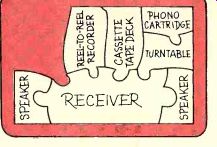
------- More serious recording ventures at home and abroad will require
a reel-to-reel recorder.
... doesn't necessarily make him either wrong or unethical-in fact, he may in deed be more honest than some other salesmen you've met. But, on the other hand, he may be trying to sell off a back room full of off-brand lemons.
Unless you're in a position to walk into a store with a list of model numbers on which you've already decided, it's wise to stay away from stores in high-traffic areas that rely on fast turn over of customers, for the salespeople in such places simply may not have the time to spend with those needing help.
And if you require much of a sales man's time, try to get to the store at other than peak business hours so he won't be forced to rush you.
Look for a dealer with a fairly broad range of brand names that you recognize (the names advertised in this magazine, for instance). There are also shops set up to cater to the audio cognoscenti, but though these give good service, they also generally handle rather expensive equipment and rarely discount. The dealer who limits his line for profit purposes will sometimes have a number of convincing-sounding (usually spurious) reasons why the lines he doesn't carry aren't any good ("poor performance," "unreliable," "doesn't meet stated specifications," "company doesn't honor warranty," and so forth). But, at the very least, his policy places an arbitrary limitation on your field of choice. With the dealer who vigorously promotes obscure brand names, however, exercise the greatest caution. Unknown brands often prove to have unknown repair facilities when servicing becomes necessary.
In your searching around you'll probably find some prearranged equipment packages being offered at prices lower than the total would be if the components were purchased separately. While these can be excellent buys (and incidentally relieve you of the problem of making up your own pack age), at times they are not. The pack age price may be low because some one of the units isn't up to the quality level of the others. A system, like a chain, is no stronger than its weakest link, so check out the individual pieces. (You might consider investing a couple of bucks in a copy of the new 1978 Stereo Directory & Buying Guide [available for $2.50 on newsstands or from the Ziff-Davis Service Division, 595 Broadway, New York, N.Y. 100121; it's a handy reference that describes just about all the current equipment and gives the prevailing "list" prices.) When you think you have about decided on some unit, be sure to check its warranty and how it is implemented.
Some dealers sell you a sealed box, bid you good-bye, and won't know you if you return with an unfortunately defective unit. As mentioned earlier, this can be the result of a very large discount, but it is not an inevitable consequence.
There are dealers offering both service and discount, though perhaps not quite so large a discount. It's up to you which you want or can afford. (For the novice, it's often worth sacrificing some discount for a larger degree of service before and after the sale.) Certainly, working with a dealer who can put a bad situation to rights for you quickly through replacement or repair is to be desired. The next step down would be the dealer who will at least re turn a defective item to factory or warranty station for you. This is a more complicated and time-consuming situation, but it will save you packing up the unit and shipping it off yourself. And remember that if return to the factory or warranty station is required, it could be weeks before you see your equipment again.
If you know from the outset that you're going to be entirely on your own should the worst come to pass, either in or out of warranty, it could possibly determine what brand of equipment you choose. All things being equal, manufacturers having authorized repair facilities close enough for you to bring in your defective unit would logically be more appealing than those requiring cross-country shipment.
Where to Start
Let's say that you're now up to the point where you have to begin thinking about the equipment itself. Unless you're going to buy a prepackaged system already put together by a dealer, it's entirely up to you how to go about this. The most logical starting point is the component having the greatest influence on the overall sound of your system. This is the loudspeaker-the component that, audibly and measurably, is the greatest variable in a sound system. The loudspeaker provides you with an excellent opportunity to make a bad choice, whereas with most of the ...
---------------
Recommended Reading
THE books listed below are mostly on an introductory level. If they are not available in your local book store, hi-fi shop, or library, they can be ordered directly from the publishers at the addresses given. Remember to include all local sales taxes when ordering.
Hi-Fi in the Home, John Crabbe, 271 pp., illus., hardcover, $8.75 plus 81¢ postage. Transatlantic Arts, Inc., North Village Green, Levittown, N.Y. 11756.
The Rolling Stone Guide to High Fidelity Sound, Len Feldman, 160 pp., illus., paperbound, $4.95 plus 55¢ postage. Straight Arrow Books, 745 Fifth Ave., New York, N.Y. 10022.
Official Guide to High Fidelity, Institute of High Fidelity, 175 pp., illus., paperbound, $2 postpaid. The Institute of High Fidelity,, 489 Fifth Ave., New York, N.Y. 10036.
Master Hi-fi Installation, Gordon King, 148 pp., illus., paperbound, $5.45 postpaid. Hayden Book Co., Inc., 50 Essex St., Rochelle Park, N.J. 07662.
The Reproduction of Sound, Ed gar Villchur, 100 pp., illus., paper bound, $2 plus 35v postage. Dover Publications, Inc., 180 Varick St., New York, N.Y. 10014.
---------
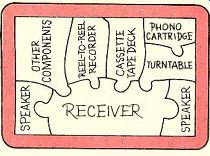
---------- and from then on the sky's the limit: expanders, noise suppressors, frequency equalizers, etc."
... selecting audio equipment intelligently isn't something that only engineers or advanced audiophiles can do."
other components you are not likely to go terribly wrong if you stick to name brands. In addition, the choice of speaker will have a bearing on other characteristics of the system--the amplifier-power requirements, for example--and to a certain extent the overall quality appropriate for other components such as the turntable.
These days, when a dealer puts together a package system, the only component he can realize a sizable profit on is likely to be the speaker, since the standard-brand amplifiers, receivers, and record players are likely to be deeply discounted. Speakers are "blind" items, in that there is no FTC rule (as there is for amplifiers) that re quires a manufacturer to state his specifications in such a way that you can make valid comparisons between brands. Furthermore, there is no way to tell from the outside of the speaker cabinet the relative cost or quality of the drivers installed inside it.
Well, you can at least trust your ears, can't you? No, not really-particularly when you don't have a chance to listen under carefully controlled conditions.
And, in any case, the novice buyer seldom has any idea of what specifically to listen for during speaker demonstrations. Ideally, a speaker should be "ac curate," meaning that it should not add to (or subtract from) the bass, treble, or mid-range tones engraved in the record grooves. Boomy or screechy speakers are sometimes impressive on first hearing in a showroom, but they are not likely to be very satisfying in the long run in your home.
A loudspeaker's accuracy of reproduction is not a subjective matter, and if all loudspeakers were absolutely ac curate, they'd all sound alike-assuming they were playing in the same location in the same environment. However, this being a somewhat less than perfect world, speakers display a variety of tonal characteristics, some of which are closer to accuracy than others. This is where "taste" comes into the picture-in your choice of which sonic aberrations are the least disturbing to you-but keep in mind that sound preference isn't all a matter of taste. Experienced listeners tend to agree on which speakers are good (ac curate) and which aren't. You should also remember that since the room in which the speakers are used literally becomes part of the acoustical system, it will introduce some variables in speaker performance. Most speaker systems have controls permitting a degree of adjustment of such variables.
All of this is by way of telling you that you must hear, compare, and decide on speakers for yourself. Since room acoustics have a profound effect on sound, the ideal would be to audition them in the room at home where they are going to be used. Failing that, the next best thing (not for comparisons between speakers, but just to orient yourself to the sound of different installations) would be critical listening to the systems of friends. Perhaps you could arrange to borrow a pair of speakers and a receiver-even for just an afternoon can be a great help. This would enable you to begin getting a "fix" on your home listening environment and
-----------------------
"How to" Reprints (1) How to Correct Your Room Acoustics (2) Guidelines to Speaker Shopping (4) Loudspeaker Power Requirements (8) How to Choose an Amplifier (10) Speaker Myths (How to Avoid Bad Choices) (12) How to Select an FM Tuner (16) How to Buy a Cassette Deck (18) How to Buy a Receiver (19) How to Buy a Phono Cartridge
Reprints are $1 each except No. 16, which is $1.50. Please order by number. A complete set of all nine reprints is available for $7.50 as No. 100S.
Order from STEREO REVIEW Information Center, Consumer Products Division; 595 Broadway, New York, N.Y. 10012. ("How to Buy a Turntable" was covered in the November 1977 issue. Back copies of that issue are available for $1.50 from Ziff-Davis Service Division al the address given above.)
------------------------
... how it interacts with loud speakers-or at least with the model of loudspeaker you have borrowed.
Extracurricular Research
When you've finished with this be ginners' guide, flip back to this month's equipment test reports. These will help to acquaint you with the nature of at least a few of the units available in a given price range as well as providing some specifics on particular units worth investigating. If you don't care to wade through the technical data, just read the "comment" portion of the re view. This will give you a good idea of how the test lab felt about the unit. Notice that not all the products reviewed are given uniformly high marks-a careful comparison of the comments will indicate that some units are clearly more highly thought of than others. A stamped, self-addressed long envelope and 250 sent to STEREO REVIEW, Dept. TRI, One Park Avenue, New York, N.Y. 10016, will bring you an index of all the test reports that have appeared in this magazine since 1965 as well as information about how to get copies of whatever back issues are available.
And something else that will help you: on this page you will find a list of articles (available as reprints) that go into more detail about how to buy specific kinds of components (cassette decks, receivers, and so forth) and on the facing page are some recommended books for further study.
Now that you've read all this, where does it leave you? We hope with the well-established conviction that selecting audio equipment intelligently isn't something that only engineers or advanced audiophiles can do. All you need is a clear idea of your own requirements, a properly directed use of your time and energy, and a little old fashioned common sense. These, of course, are available to virtually all of us, and they are quite enough to steer any buyer to a system he'll enjoy all the more for knowing that he "did it all himself."
++++++++++++++
Also see:
AUDIO "BREAKTHROUGHS"--New technology promises much for the future of hi-fi, PETER SUTHEIM
Technical Talk, Julian D. Hirsch
I Remember Mono--An Audiobiography
Source: Stereo Review (USA magazine)