Reviewed by CHRIS ALBERTSON; NOEL COPPAGE; PAUL KRESH; PETER REILLY; STEVE
SIMELS; JOEL VANCE
WILLIE ALEXANDER: Willie Alexander and the Boom-Boom Band (see Pop Beat, page 53) RECORDING OF SPECIAL MERIT ASHFORD AND SIMPSON: Send It. Nicholas Ashford (vocals); Valerie Simpson (vocals, piano); Eric Gale (guitar); Ralph MacDonald (percussion); other musicians. By Way of Love's Express; Let Love Use Me; Send It; Top of the Stairs; Waited Too Long; and three others. WARNER BROS. BS 3088 $6.98, M8 3088 $7.97, M5 3088 $7.97.
Performance: Together
Recording: Very good
Nicholas Ashford and Valerie Simpson spent years of opening nights backstage before emerging, in 1973, to show the public that they could perform their songs as well as any body else, if not better. Before then, their greatest triumph had been to write and produce the Motown album that launched the spectacular solo career of former Supremes lead singer Diana Ross. That was back in 1970. While Ross became closely identified with some of the best songs on that album, most notably Ain't No Mountain High Enough and Reach Out and Touch Some body's Hand, more than a flicker of recognition surrounded the youthful duo responsible for those memorable tunes. But even that was ...
------------
Explanation of symbols:
= reel-to-reel stereo tape
= eight-track stereo cartridge
= stereo cassette
= quadraphonic disc
= reel-to-reel quadraphonic tape
= eight-track quadraphonic tape
Monophonic recordings are indicated by the symbol
The first listing is the one reviewed; other formats, if available, follow it.
-----------
... not the beginning of one of pop music's most stable and productive collaborations. Back in the mid-Sixties, these Wunderkinder made up two-thirds of the team that wrote Let's Go Get Stoned, an offbeat hit for Ray Charles.
Although Simpson sallied forth with an al bum of her own, called simply "Exposed," on Motown's Tamla label in 1971 and soon followed it with another solo venture, it was not until the two began performing and re cording together that the full force of their talents was manifested. Evidently, all those years of waiting in the wings only served to mellow them. On "Send It," their fifth album for Warner Bros., Ashford and Simpson demonstrate that they have sharpened their art to a keen precision. By working and living together for so long, they have come to function musically almost as one. Their voices mesh so neatly that a solo taken by one flows naturally into the musical comment of the other. Simpson's piano serves throughout to underscore the gospel flavor of their offerings.
They have a knack for taking a simple phrase, repeating it, embellishing it, and building it up to a peak of compelling intensity, something most apparent here on the title track and By Way of Love's Express.
The album rolls along with admirable consistency, though a long instrumental called Bougie-Bougie seems a little out of place. But Ashford and Simpson must have intended it to be there, for this set is utterly their own, from the conception through the writing, performance, and production. P.G.
THE BEATLES: Love Songs. The Beatles (vocals and instrumentals). Yesterday; I'll Follow the Sun; I Need You; Girl; In My Life; Words of Love; Here, There and Everywhere; Some thing; And I Love Her; If I Fell; I'll Be Back; Yes It Is; Michelle; and twelve others. CAPITOL SKBL-I171 1 two discs $11.98, 8X2B-11711 $11.98, 4X2B-11711 $11.98.
Performance: Classic
Recording: Very good
There are two Beatles audiences: one is the generation that grew up with them, of which I am a member; the other is the generation immediately following, which has grown up on the Beatles legend. This retrospective album of their ballads, like "Rock and Roll Music," which was a package of their aggressive screamers, is meant for the second audience.
To first-generation Beatles nuts, the value of the retrospectives is mainly to replace the original albums, all still in print, which have suffered vinyl fatigue from constant playing.
What neither "Love Songs" nor "Rock and Roll Music" conveys is the wonderful variety of the Beatles' songs and performances on any of their original albums. Part of the excitement and charm of Beatles albums was how a screamer would be followed by a delicate love song and then move on to one of John's vicious and berserk character portraits or one of Ringo's occasional music-hall vocals. Compartmentalizing the various aspects of the Beatles' immense talent does some thing of a disservice to it.
It is best to hear the Beatles on their original albums, where all their baffling magic is most powerful and persuasive. Not that they didn't write fine love songs-they wrote some of the best in the annals of pop music, many of which are present here-but to take these songs out of context of the body of the Bea tles' work is to approach and recall their leg end on a scientific, mathematical, bookies' odds basis-and that, first- and second-generation fans, just ain't right. J.V.
DAVID BOWIE: Heroes. David Bowie (vocals, keyboards, guitar); Robert Fripp (guitar); Brian Eno (synthesizer, keyboards); other musicians. Beauty and the Beast; Joe the Lion; Heroes; Sons of the Silent Age; Black out; and five others. RCA AFLI-2522 $7.98, AFSI-2522 $7.98, AFK1-2522 $7.98.
Performance: Compelling
Recording: Deliberately murky
Bowie's new album is a more commercial extension of his previous effort with Brian Eno. Which means that if you can penetrate the Roxy Music-like atonal drones glopped onto every song, not to mention Robert Fripp's characteristically dense guitar work and Bowie's latest trick of filtering his vocals to sound as computerish as possible, you're going to hear what are basically well-construct ed, attractive little pop tunes. Is it worth the effort? Probably. The title track, in fact, is undoubtedly the finest thing Bowie has ever done, a truly tender love song with a long melodic line, an arrangement that recalls Brian Wilson's most eloquent studio achievements, and a vocal from Darling Dave that is remark ably unaffected and believable. The rest of the stuff is nowhere near as good, but there is a strangely compelling beauty to the murki ness of it all. Definitely worth a listen.
S.S.
LEONARD COHEN: Death of a Ladies' Man. Leonard Cohen (vocals); Jesse Ed Davis, Phil Spector (guitars); other musicians. True Love Leaves No Traces; Iodine; Paper-thin Hotel; Memories; and three others. WARNER BROS. BS 3125 $6.98, C) M8 3125 $7.97, M5 3125, $7.97.
Performance: Schmaltz-lover's delight
Recording: Likewise
Ah, the texture of Phil Spector's production: somewhere between pea soup left out on a cold day and Jello (imitation grape, I should say, not to put too fine an edge on it) left out on a hot day. Leonard Cohen's songs (or, as the credits call them, Cohen-Spector's songs) are like the Leonard Cohen songs of old-flat out transfixed by the subject of sex and vaguely dark and threatening in tone.
Cohen aspires to be a poet and to get song lyrics as poetic as possible and still let them be song lyrics. If you can take a Byronesque style in these streamlined times, Cohen does get in a provocative couplet now and then. He needs production, too, as his simple kind of melody and his sharply defined (stylized) vocals are a little thin by themselves. But Spec tor has outdone the Phil Spector of old here with dense and often opaque orchestration.
Some parts of the album sound more like a circus act than Leonard Cohen trying to communicate something subtle, if not arcane, about sex. (Spector's antics are also a far cry, come to think of it, from Cohen being blunt about sex-which is another way Cohen is about it.) A couple of places here, of course, Spector's treatment works pretty well, particularly in the title song. But more often it pushes Cohen toward self-parody.
-N.C.
NATALIE COLE: Thankful. Natalie Cole (vocals); instrumental accompaniment. Lovers;
Our Love; Nothing Stronger Than Love; Annie Mae; and three others. CAPITOL SW-11708 $6.98, C) 8XW-11708 $7.98, 4XW-11708, $7.98.
Performance: Good
Recording: Good
--------------------
Elvis Costello
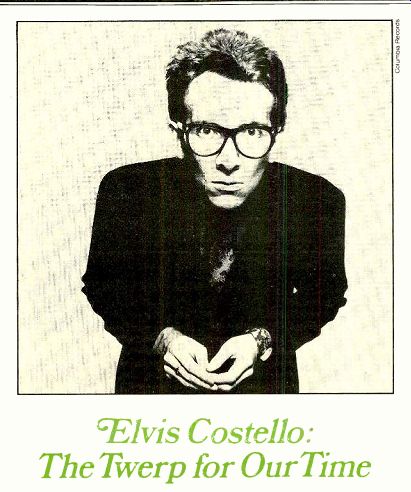
CONSIDERING that the pop idols of the Seventies have, by and large, presented themselves as preening narcissists, transvestite exhibitionists, and (lately) self-mutilating nihilists, it's somehow heartening to find that the writer and performer of the toughest, freshest, most intriguing rock-and-roll album of an unusually lively season steps onto the world's stage as the definitive Twerp for Our Time. That Elvis Costello, whose debut al bum on Columbia is "My Aim Is True," can affect a look that is closer to Woody Allen than to the departed King of Rock whose name he has had the effrontery to appropriate is, of course, merely what's going to get you to notice him. Fortunately, though, it's his music that's going to keep you hooked, and for once the music counts for more than the image, charming though it is.
Describing Costello's music in terms of influences is fun because they're such canny ones. But ultimately it does him an injustice, for (and this is something he shares with his namesake) the influences are so thoroughly digested, even at this early stage in his career (he's a wet-behind-the-ears twenty-two). One could say that at times he sounds eerily like Bruce Springsteen as well as like Nick Lowe, who produced Elvis' albums; that his songs-range from basic, blues-flavored rock to early Sixties pop-rock to country-flavored ballads gorgeous enough to have been written by the Eagles; that he gets exceptionally rich-sounding backing from a basically stark instrumental lineup (there are next to no overdubs); and that his lyrics, which he claims are motivated solely by "revenge and guilt," are the most cruelly, tellingly misanthropic broadsides since middle-period Dylan. And yet, though all that is true, it doesn't come close to catching the feeling of the music, of conveying to you just how distinctive and intelligent the songs on "My Aim Is True" actually are.
You'll simply have to listen, I suppose. So check out the remarkable misterioso mood summoned up by Mystery Dance and Waiting for the End of the World, the insinuating sexiness of a ballad titled Alison, the straight-ahead rock-and-roll panache of Less than Zero, or the sheer craftsmanship of an exhilarating Merseybeat Cowboy number called (The Angels Wanna Wear My) Red Shoes.
What you'll hear is the work of someone who comes as close to being the Compleat Rock Star as anyone within recent memory-driven, funny, and totally original. As one of Columbia's flacks has so uniquely put it, if he didn't already exist, someone would have had to invent him.
-Steve Simels
ELVIS COSTELLO: My Aim Is True. Elvis Costello (vocals and guitar); other musicians. Welcome to the Working Week; Miracle Man; No Dancing; Blame It on Cain; Alison; Sneaky Feelings; Watching the Detectives; (The Angels Wanna Wear My) Red Shoes; Less Than Zero; Mystery Dance; Pay It Back; I'm Not Angry; Waiting for the End of the World. COLUMBIA JC 35037 $7.98, 0 JCA 35037 $7.98, JCT 35037 $7.98.
-----------
----------
Puzzling Don McLean
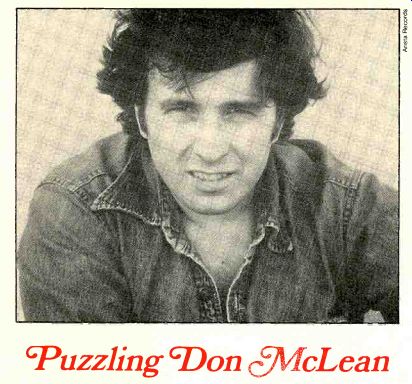
HE's still a puzzlement, this Don McLean.
His work over the past several years including such really fine things as American Pie and Wonderful Baby (two songs that show him at his dichotomous peak: the mordant satirist and the arch romantic)-entitles him to a place in the front rank of the younger creative generation in pop music, right up there with Janis Ian, Jimmy Webb, and Randy Newman.
The others, however, are all solidly established with defined and loyal audiences.
McLean unfortunately still seems to be most identified as "that guy who wrote American Pie," and he appears content to let it rest at that. He avoids the hurly-burly of the pop world with all the disdain of a Robert Frost at a convention of greeting-card versifiers.
Nothing wrong with that, really, and the distancing probably does lend extra enchantment to his love songs, but he has also become woefully out of touch with what's happening today.
It's 1978 now, and would you believe that on "Prime Time," his new album, McLean is still railing about General Motors, the Pope, and the CIA (Color TV Blues)? Or that his picture of suburban life is still that faded Six ties cartoon of little old ladies dropping like flies from muggings while everyone else wanders around in a schizophrenic daze? He ends Color TV Blues with the spoken line, "You know, just because you're paranoid doesn't mean that they're not trying to get you," which is another old cliché that tries to excuse a lot but explains absolutely nothing, McLean's barbs are now as dated as denunciations of Nihilists, Free Love, and the Purple Gang.
If the satire has melted down to tapioca, it is, thankfully, the only part of McLean's work that is no longer of interest. On "Prime Time" there are two beautiful love songs, When Love Begins and The Pattern Is Broken, that are both filled with the wistful gentleness that is uniquely his. Lovely, lovely. There is his quite wonderful virtuoso banjo playing on Down the Road/Sally Ann and Redwing. Excellent, excellent. There is his dramatic, deeply felt The Statue, about the Statue of Liberty-what it promised and what actually happened. Interesting, interesting. There is the wit and fun of Building My Body ("One look says I'm a stone disgrace . . ."), in which a macho male chorus lends a belching accompaniment. Hilarious, hilarious. You see, it's still a Don McLean album, which immediately puts it into a special category. He is unique, and he is vastly talented, and, rare among his contemporary performers, he does have a genuinely attractive voice-light, easy, and somehow very elegant. He also did all the arrangements here, and they too have that special quality of nonchalant grace that is so much a part of everything he does.
GET this album, because for all its flaws and occasional dead ends it's the work of a real pop creator. And there aren't too many of them around in any era.-Peter Reilly
DON McLEAN: Prime Time. Don McLean (vocals, banjo, guitar); vocal and instrumental accompaniment. Prime Time; The Statue; Jump; Redwing; The Wrong Thing to Do; The Pattern Is Broken; When Love Begins; Color TV Blues; Building My Body; Down the Road/Sally Ann; When a Good Thing Goes Bad; South of the Border. ARISTA AB 4149, $6.98.
"an attractive voice, light, easy, and elegant . . ."
------------------------------
This one's a step back for Natalie Cole. She sounds strident, harsh, and overly self assured, with a rambunctious vocal grin that kills such ballads as Lovers and even her own Keeping a Light. One of the worst influences around is that of Liza Minnelli, who always has seemed plugged into her very own energy source and whose leap into all-media super-stardom seems to have given other young performers of her generation the idea that super-energy is a prerequisite to being an entertainer. It's an idea that has apparently taken hold of Ms. Cole, and for her it is a large mistake. Up until now she's been outlining a style that nicely mixed vitality and sensibility.
By giving up most of the latter and putting in its place only empty fireworks, she's doing herself damage. C'mon, Natalie, simmer down.
- P.R.
RECORDING OF SPECIAL MERIT
JOHN DENVER: I Want to Live. John Denver (vocals, guitar); Hal Blaine (drums); James Burton (guitar, dobro); other musicians. Singing Skies and Dancing Waters; To the Wild Country; Bet on the Blues; Thirsty Boots; It Amazes Me; and five others. RCA AFLI-2521 $7.98, 0 AFSI-2521 $7.98, AFKI-2521, $7.98.
Performance: Very good
Recording: Very good
This is a quietly spectacular rendering of one still not very public aspect of John Denver, which is to say that the album is laid back and very melodious. It isn't exactly free of Rocky Mountain homilies and images-he sings of Dancing Waters, Wild Country, and so forth-but it is much less "political" (in a cultural sort of way) than most recent Denver al bums. In fact, it reminds me of his first two, made when he really was a simple kid from Texas with a head for tunes and a frank, wide eyed admiration for people like Tom Paxton.
He does all right by Paxton's Bet on the Blues and Eric Andersen's Thirsty Boots, a deft choice, and, whatever you think of his lyrics, Denver can write a melody. Melody and sources like Paxton and Andersen were the main things about his first couple of Innocent Period albums, and "I Want to Live" has the same kind of charm about priorities. Although they're a little vague in spots, Denver's lyrics sound a lot less than usual like the Rocky Mountain Chamber of Commerce in their language, if not always in their subject matter.
Denver also profits from the backing of some fine studio cats (including Elvis' and Emmylou's James Burton) instead of the rhythm-guitar-heavy road band on the last several al bums. A couple of these arrangements are a bit cute, but a fair amount of compelling stuff happens too. Mostly what the album's about, though, is John Denver's attitude toward life, and people who thought they already had him nailed on that might listen to this and be pleasantly surprised. N.C.
RECORDING OF SPECIAL MERIT
ELECTRIC LIGHT ORCHESTRA: Out of the Blue. Electric Light Orchestra (vocals and in strumentals). Turn to Stone; It's Over; Sweet Talkin' Woman; Across the Border; Night in the City; Starlight; Jungle; Believe Me Now; and nine others. JET JTLA-823-L2 two discs , $11.98, 0 JT-EA823-L2 $11.98, JT CA823-L2 $11.98.
Performance: Excellent
Recording: Excellent
The Electric Light Orchestra was responsible for Telephone Line, one of the best-made and most pleasing singles of 1977, and in this two-record set they offer some dandy follow-ups.
"Out of the Blue" is not an "album" so much as it is a collection of potential singles. There are seventeen selections, each performed with the craftsmanship and sass that distinguish ELO under the direction of Jeff Lynne, who is responsible for the music, lyrics, lead vocals, and production. Among the standouts in this delightful package of bonbons are Turn to Stone, Birmingham Blues, Night in the City, and the hilarious, dopey Jungle, which features an insert by ,the student bodies of Spratley's Dancing Academy tapping their collective toes off. First-rate pop.
- J. V.
FOUR TOPS: The Show Must Go On. Four Tops (vocals); instrumental accompaniment. The Show Must Go On; I Can't Live Without You; Save It for a Rainy Day; Love Is a Joy; and four others. ABC AB-1014 $6.98, 8020-1014H $7.95, 5020-1014H $7.95.
Performance: Cohesive
Recording: Good
These four r-&-b stalwarts from Detroit are entitled to some sort of recognition, if only for their endurance in the swiftly moving soul-stream. Stylish modes have come and gone Since 1963, when they signed with the fledgling Motown firm and charted their most notable hits, among them Baby I Need Your Loving, I Can't Help Myself, and Reach Out, I'll Be There. But the Four Tops are veterans in the better sense of the word. The musical cohesiveness that has set them apart from the very beginning is as apparent here as on any thing else they've done to date. There are no surprises, for they sound much as they did years ago, though all the rough edges have been smoothed away. The Tops' arrangements are more sophisticated, but they retain the charm of one of those old street-corner groups-twenty-some years later and all dressed up in custom-made tuxedos. They are at their best here on up-tempo rockers such as The Show Must Go On and You'll Never Find a Better Man. A satisfying performance.
- P. G.
NONA HENDRYX. Nona Hendryx (vocals); instrumental accompaniment. Winning; Everybody Wants to Be Somebody; Once Again; Too Late to Run; Leaving Here Today; and four others. EPIC PE 34863 $6.98, 0 PEA 34863 $7.98, PET 34863 $7.98.
Performance: Cunning
Recording: Good
One of the most interesting things about Labelle's break-up is the divergency of musical courses being pursued by the three former members of that campy group. While lead singer Patti Labelle's solo album dipped into traditional funk with unexpected shakiness, Nona Hendryx's debut album is confounding in a different way. Having written such staples of the old group's fare as Can I Speak to You Before You Go to Hollywood, Hendryx comes on here as a proponent of straight-ahead rock, playing up the characteristics that separate it from its cousin, black soul music.
The shape of the songs Hendryx presents defers just a bit to fundamental r-&-b, but primarily as it has been transformed by British rock and its American derivatives. The harshly exciting, ragged edge to the guitar voicings, complemented by her vocals, is rockish rather than soulish in texture. This might well stir up some dissatisfaction among former Labelle fans, but it might also open the door to acceptance by those whose ears are selectively tuned to rock nuances. During its better days, Labelle was a crossover group. Perhaps Hendryx has merely cast her lot with the less familiar side of their old musical equation. P.G.
RECORDING OF SPECIAL MERIT
TOMMY JAMES: Midnight Rider. Tommy James (vocals, guitar); vocal and instrumental accompaniment. Midnight Rider; Still Got a Thing for You; Double or Nothin'; What Happened to the Girl; Keep It in the Groove; and three others. FANTASY F-9532 $6.98.
Performance: Excellent
Recording: Excellent
Despite his many pop hits with the Shondells in the Sixties and as a solo performer in the early Seventies, Tommy James has been consistently underrated as a craftsman in both songwriting and singing, unfairly dismissed as a "bubblegum" entertainer by rock-media na bobs, and ignored when wails of sympathy are raised for rock musicians battered by the music industry. He began his career singing mostly the usual teen love complaints as signed to him by his label, but in only a few years he was deeply involved in writing, arranging, and producing his own material. The 1969 album "Crimson and Clover" showed him to be a mature artist, and it was commercially successful as well. Nevertheless, personal and professional difficulties in the past several years seemed to have put his career and reputation in limbo.
" Midnight Rider," his second album for the Fantasy label, is a welcome sign of recovery. James still has the same light but husky tenor, excellent phrasing, and total absorption with a song that he always had. Of the eight selections on the album, he wrote four (some of these in collaboration with members of his former band, the Shondells), and they are all sturdy, well-crafted examples of straight-ahead pop. The other four are by veteran Jeff Barry, who is older than James but writes in the same style. Most of the tracks on "Mid night Rider" are about love, a subject James approaches these days with a cool passion that only now and then breaks into a vibrato cry. The production, by Barry, is solid and polished. While the album sometimes recalls the halcyon days when James was first establishing his artistic independence, there's nothing on it that isn't contemporary-especially Keep It in the Groove, with its exciting poly-rhythms, James' own Double or Nothin', which sounds like a comeback single, and Bobby, Don't Leave Me Alone, an eight-minute pop mini-concerto.
If a music career is a kind of contract between an artist obliged to give his best and an audience that recognizes and responds to it, "Midnight Rider" proves that Tommy James is keeping his part of the bargain.
J. V.
JONI MITCHELL: Don Juan's Reckless Daughter. Joni Mitchell (vocals, piano, guitar); instrumental accompaniment. Overture/ Cotton Avenue; Talk to Me; Jericho; Paprika Plains; Otis and Marlena; The Tenth World; Dreamland; and four others. ASYLUM BB-101 two discs $7.98, ET8-101 $7.97, TC5-101 $7.97.
Performance: A little too abstract
Recording: Very good
At first this may seem another of those difficult Joni Mitchell albums of the "Hissing of Summer Lawns" ilk, fraught as it is with zonky and unexpected, if not alien, sounds and dotted with those chords that exist only in Joni Mitchell music. The words of a given piece are fairly easy to track, but even then it takes a lot of work on your part to hear the thing as a whole.
The album starts with what Joni calls an overture (actually a moody little montage of chords, awfully short and awfully quiet as overtures go), which suggests more of a narrative quality than I can find in it. It sounds like a parade of her latest ambitions for "the popular song," but a parade constructed more for herself than for the rest of us. There is narration-from her own viewpoint, in the third person, and back in the first person in character after the manner of Randy New man-and there is exploration, especially in the nonverbal parts. In Paprika Plains, there is composition: it runs 16 minutes and 19 seconds-one whole side-making it by far her longest "song" to date, and it is an ambitious now-symphonic, now-jazz piece, intelligent but also rambling and arcane. It makes a slick, quick change from Tom Scott's jazz band to classical orchestra and back again, leaving me-again-unable to hold onto the feeling that the piece is a whole and not just a clever grafting job.
The title song has the most interesting lyrics (you have to allow for the fact that I'm still, unfashionably, political), although its melody doesn't amount to much. But there are ideas scattered throughout the two-disc program, and it is not entirely a humorless abstraction Joni Mitchell devised just to please herself.
Her way of satirizing herself is related to her way of describing life in general; she's trying to strike, savagely if necessary, into the sub surface of decisions and behavior. "You spend your sentences like they were currency," one of her characters tells a close mouthed friend. Then she says, "Talk to me.
I'm always talking." Then she goes "pikwark, pikwark" like a chicken squawking. She's trying to move the popular song beyond prettiness-or at least conventional ideas about prettiness-and the album is rich, like a complicated painting. I'll play it a lot more times and keep finding new stuff in it-but I still think that too much of it is pitched at the head and not enough at the solar plexus.
- N.C.
RECORDING OF SPECIAL MERIT
RICK NELSON: Intakes. Rick Nelson (vocals, guitar); Stone Canyon Band (instrumentals); other musicians. You Can't Dance; One X One; I Wanna Move with You; Wings; and six others. Eric PE 34420 $6.98, PEA 34420 $6.98, PET 34420 $6.98.
Performance: Believable
Recording: Excellent
If someone had told me in 1958 that I'd ever be praising a Ricky Nelson record, I'd have flattened that unlucky but accurate prognosticator, for I was convinced then that I couldn't stand Ricky Nelson-or any other teenager, except, on rare occasions, myself.
But we've both changed. His voice and taste have matured, and the important thing about him that hasn't changed is his knack for finding a tune that's catchy. Now, even in 1958 I was fair enough about it to admit that I admired Nelson's ear for a catchy tune. The lyrics he sings nowadays are more mature, but a good percentage of the tunes are still catchy. And his back-up, the Stone Canyon Band, reflects the same combination you can hear in Nelson: signs of independent thinking along with clear tracings of roots in the middle of commercial pap-rock. For me, Nelson's career seems a triumph of where one has got ten to over where one came from, and I like to see that in a peer. There's good, clean music here, with my favorite parts coming in One X One, which has a fine, slow, catchy melody that shows some very nice stuff you probably didn't suspect Nelson could do with his voice.
Nelson wrote only two of the songs, so he's still mainly following his ears. Long may they endure. N.C.
RECORDING OF SPECIAL MERIT
ESTHER PHILLIPS: You've Come a Long Way, Baby. Esther Phillips (vocals); Joe Beck (guitar); Randy Brecker (trumpet); Ron Carter (bass); other musicians. Love Addict; You've Been a Good Ole Wagon; Somewhere Along the Line; In a Soft and Subtle Way; and four others. MERCURY SRM-1-1187 $6.98, MC8-I-1187 $7.95, MCR4-1-1187 $7.95.
Performance: Gutsy
Recording: Good
The title of this album and the exceptionally attractive cover photo announce that Esther Phillips, one of the most individualistic artists around (although she has been unevenly represented on disc), has made some changes for the better. She has shifted record companies, moving from Kudu, a CTI subsidiary, to Mercury, and, more important, she is re-exploring the powerful roots that nurtured her way back when she was known as Little Esther, an r-&-b child prodigy on the old Johnny Otis road show.
She has, indeed, come a long way from that incubation period. She is quite likely the most natural exponent of the blues among us today.
Blessed with an immediately recognizable vinegary voice, she can whine and wail her way through gutbucket blues and old-fashioned r-&-b more fluently than any of her modern colleagues. Yet she has been too frequently miscast, dabbling with material that constricts her innate sense of style. Further more, she has been hampered by arrangements that clash with her basic sound.
On this album, Phillips is still restricted by some of these old obstacles, but she manages to sail above them with more freedom than has been apparent of late. She is always at her best doing material associated with her idol, the late Dinah Washington. That rule holds here as she revives Queen Dinah's memorable ballad Somewhere Along the Line. Her reading of You've Been a Good Ole Wagon, one of Bessie Smith's staples, is lustily delightful.
There are, certainly, low points here. If I Loved You is a disco disaster, and the up-beat rendition of My Prayer, an old, old oldie, gets off to a limp start but picks up steam mid course. This whole set might have been improved by the inclusion of more blues and less pop. Gifted as Phillips is, it's a shame she ever has to sing anything but the blues. P.G.
ALAN PRICE. Alan Price (vocals, key boards); instrumental accompaniment. Rain bow's End; I've Been Hurt; I Wanna Dance; Let Yourself Go; I'm a Gambler; Is It Right; and five others. JET JT-LA809-H $6.98, EA809-H $7.98, CA809-H $7.98.
Performance: Civilized
Recording: Good
Alan Price is sort of a cross between Randy Newman and Bobby Short, which is to say that while he shares Newman's ironic perspective on things, his outlook is tempered by a genial, night-clubbish urbanity. Comparing Price's soundtrack for the film 0 Lucky Man! with his more recent work, including this al bum (the first to be released in America in quite some time), it appears that he writes better when he has some large central concept to work around. There is nothing like that here, but some of the individual insights are pretty strong. The Thrill is probably the best cut, and the most representative of Price's gifts: it is a wry cabaret song about the intoxicating joys of the seamier sides of the rock scene. The other songs are never less than intelligent and well crafted, but I'm hoping for more from the sequel to 0 Lucky Man! that is scheduled to arrive sometime this year. S.S.
RECORDING OF SPECIAL MERIT QUEEN: News of the World. Queen (vocals and instrumentals). We Will Rock You; We Are the Champions; Sheer Heart Attack; All Dead, All Dead; Spread Your Wings; and six others. ELEKTRA 6E-112 $6.98, ET8-112
$7.98, TC 5- l 12 $7.98.
Performance: Very good
Recording: Very good
I've admired Queen's precision of execution and their technique, and if their albums have tended to sound the same, well, that's the way of hard rock. This time out, though, Queen seems to have gone to some lengths to ensure variety in each cut. There certainly is a diversity of arrangements and attitudes on the al bum. We Will Rock You has an amplified drum effect that sounds like the entire population of New Delhi chewing on betel nuts, and Sheer Heart Attack is as powerful a straight-ahead, hard-rocking performance as you're likely to hear. All Dead, All Dead is a cool ballad, and My Melancholy Blues is done as a spoof of torch singing. Quite impressive.
-J.V.
LOU RAWLS: When You Hear Lou, You've Heard It All (see Best of the Month, page 79) RECORDING OF SPECIAL MERIT PAUL SIMON: Greatest Hits, Etc. Paul Simon (vocals, guitar); vocal and instrumental accompaniment. Slip Slidin' Away; Stranded in a Limousine; Still Crazy After All These Years; Have a Good Time; Duncan; Me and Julio Down by the Schoolyard; and eight others. COLUMBIA JC 35032 $7.98.
Performance: Excellent
Recording: Very good
Once in a very great while, a "greatest hits" package actually does represent a performer's artistic peaks as a performer, and that is the case here. I suspect that Paul Simon would rather be thought of as a writer than a singer, and he consciously adopted a literary attitude toward his music back in his early neo-folk days with Art Garfunkel. Now, in his maturity, he has honed his writing to come up with highly interesting although often unresolved vignettes and character portraits of losers, Candides, and ambivalent heroes.
In person, Simon seems both cautious and fatalistic, which would account for the prevalent attitude of his songs toward the world and human relations. Most of the ones in this collection-including his current single, Slip Stidin' Away, about the futility of effort-deal with people who try too hard, have stopped trying, or are rewarded without trying at all.
These ways of the world apparently fascinate and vex him at the same time, producing the artistic tension that can result in works of superior craftsmanship. But the lyrics' specific meanings are not always clear, and the actions of the characters are not always fully explained. Perhaps this harks back to the intellectual poets of Simon's youth (he is thirty six), who were deliberately vague. Like them, I suspect, Simon is a frustrated romantic who feels out of place in a world that has long ceased to appreciate or support poets in general and romantics in particular. And, as poets have grown increasingly unsure of their audience, Simon-and others like him who would have been published poets had they not turned to pop music as a vehicle-find themselves in the baffling position of being enormous artistic and commercial successes with out ever being sure that their large audiences understand them at all. This tends to make closet romantics bolt the door from the inside.
Paul Simon doesn't bolt the closet door-he swings it open to peep out once in awhile but, Lord, it must be lonely in there.
J. V.
RECORDING OF SPECIAL MERIT
ROD STEWART: Foot Loose and Fancy Free. Rod Stewart (vocals); Phil Chen (bass); Gary Grainger (guitar); John Jarvis (keyboards); Carmine Appice (drums); other musicians.
Hot Legs; You're Insane; You're in My Heart; Born Loose; You Got a Nerve; and three others. WARNER BROS. BSK 3092 $6.98, C) M8 3092 $7.97, M5 3092 $7.97.
Performance: Very good
Recording: Good
Rod Stewart's getting pretty, ah, veteran among your surviving hard-rock stars from the Golden Era. He still hangs in there pretty well, though. A knack for delivering catchy singles has served him well, and lately he's been balancing his albums a lot better. This one, in fact, is set up something like a vintage Rolling Stones record: something a little gross, like Fat Legs, to get your attention; some no-nonsense rock; a slow, pretty one; a "re-definition" of an oldie; a sexual innuendo here and there; and so on. And it works. The singles-and-filler feel is gone, even though there are three or four strong singles bids here. "Foot Loose and Fancy Free" does suggest that Stewart may be fixed on a type of song that might tend to keep his audience the same age while he grows older-but then that's not nearly as low an aim as a lot of other performers are taking. In any case, Stewart has standards about doing rock right; that's why he's got so much seniority.
-N.C.
TALKING HEADS: 77. Talking Heads (vocals and instrumentals). Uh-Oh, Love Comes to Town; New Feeling; Tentative Decisions; Happy Day; Who Is It?; No Compassion; and five others. SIRE SR 6036 $6.98.
Performance: Fair
Recording: Good
There's been a lot of babble lately about punk rock, more euphemistically known (at least in some circles) as "New Wave" music. It has been extensively (and expensively) promoted by the major media as the Next Big Thing in rock. Yet, despite all the coverage (which tends to focus on the zany costumes and weird life styles of the bands and their audiences), it has still to be demonstrated that punk/New Wave is either musically or commercially important.
Artistically, the point of punk/New Wave music seems to be intensity rather than content. It tends to be blitheringly simple technically, played by bands where musician ship is not at a premium but is, rather, suspect; the more amateurish the band, the closer it seems to be to what punk rock is sup posed to be about.
Still, the media push has convinced a few commercial labels that a vast audience is waiting to be tapped. Sire Records, a medium-size independent in New York that has a distribution agreement with Warner Bros., is heavily into punk/New Wave, and one of their most highly touted bands is Talking Heads. To some extent, Talking Heads is atypical, since the quartet-composed of three former art students and a recently added keyboardist-is not deliberately sloppy or offensive and prefers to eschew the "punk" label. Nevertheless, they sound as amateurish as the rest and their material is just as vapid and clumpy; the songs are in the Bob Dylan tradition of all words and no tune. Worse, the lead singer has at best a mediocre voice and keeps trying to hit notes that he can't. Talking Heads is apparently sincere, but though they try hard it is doubtful that this album would ever have been released without the punk hype.
J. V.
----------------------
Dolly ;Porter
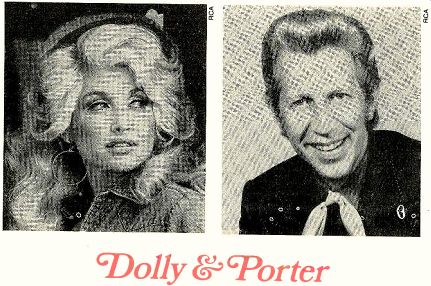
JUST when it looked as if Dolly Parton was going to be conceded the title "Queen of Country Music" (thanks in part to the lobbying of some pop music critics), Dolly kicked over the traces, as the fellow says, and before you could say Porter Wagoner-established herself as the undisputed Queen of Limbo.
I'm not here to say "tsk tsk" about that, or to put anyone down for venturing into the state I've spent a good percentage of my own life in. But the trouble with limbo as some thing to talk about is that it's apparently a unique state for each person. It's even a different state for Dolly in her latest album, a thing with a disco (!) cover called "Here You Come Again," from what it was in the preceding one, "New Harvest, First Gathering," with which she plunged into the Big L. Com-
`Dolly 6 paring the two, you can get a sense of her direction inside the state of limbo but not in the old ground-transportation imagery in which you can invoke the classic American music metaphor of traveling down the road. What you get in this case is the relative positioning of two spots, Dolly appearing and disappearing in one and appearing in the other as if she'd been beamed (up or down) Star Trek style.
And a country boy trying to deal with that metaphor in the case of a woman who is still many people's country singer, new harvests be hanged-well, a country boy in that situation hankers for some solid ground to rest on for a minute. Fortunately (especially if you like your fortune embossed with a little irony), the same month that yielded "Here You Come Again" also let out an album called "Porter" from Dolly's old mentor, pal, duet partner, and number one fan, Porter Wagoner. Put this album-the ambiance of it as much as the music-into the equation and you may conclude, among other things, that the two latest Dolly Parton albums are successive whacks at a single, painful project: cutting the cord. (Kindly take it that I'm stopping just short of predicting that whatever thread re mains won't need a third whack, and that Par- ton's next album will profit from her having the worst of the trauma, and the energy drain it involves, behind her.) To say that hanging out with Linda Ronstadt and Emmylou Harris and other celebrated pop singers has turned her head, and as a result she's gone pop in a blind, awkward rush like a naive country girl going to the big city, is to suggest that Dolly is more gullible than the evidence indicates-the best evidence being the music she has produced. I think the essential thing in her so-called crossover at tempts is that she is trying to accommodate personal growth, that she does feel her talent hemmed in by some of the conventions of country ("Porter" demonstrates, among other things, how another kind of country performer's love of these conventions can sustain him), and that tracking her own identity
-;Porter for her own information is essentially more important to her than the money, or even the acclaim, from a new or additional market.
Of course, she did put people with Cher and Olivia Newton-John connections into business-handling roles around her, and she did do certain things on these last albums I wish she hadn't. In "First Harvest," she went cryptic on us lyrically, and on some songs she went the production-number route more reminiscent of the TV variety show than anything else. She wrote songs building up to variations on the Hallelujah chorus, letting the arrangers pull out all the stops. And then, in what seemed almost an act of penance, she included a clearly country up-tempo story song, Applejack (I don't wish she hadn't done that simply because the song is so charming itself).
Applejack had back-up vocals from every old country stalwart she could find-Roy Acuff, Kitty Wells, Minnie Pearl, Wilma Lee and (the late) Stoney Cooper-and in the credits Dolly said, "These people are the best. They are my greatest inspiration." The new album has what appears to be a market-researched plasticized-look dancing Dolly on the cover, and its title song could be called disco-
influenced. It also makes a rush, at one point, back to the old country conventions with Me and Little Andy, which has Dolly going into her little kid voice (and I do wish she wouldn't do that). But the production isn't quite as hyped in "Here You. Comep Again" as it was in "New Harvest," and I Eke to think it's be cause Parton's starting to get life in limbo sorted out enough to listen more to herself and less to her advisers.
In "Porter," Wagoner shows, as he has be fore, that making records is a separate enterprise from being a musician or an entertainer.
Knowing how to hire musicians is important here, and he hired some good ones, some of the sharpest- Nashville studio sidemen. He also picked out a smattering of old and new songs that go together well (only one of which he wrote, although he does write a lot better than he sings or than his road band plays), and he demonstrates once again that he knows how to make albums. Behind that, though, lies the fact that he knows exactly what folks he's making albums for .
The nature of Parton's new adventure means she can't be so sure about that. Her system, given necessarily vague instructions about what kind of melody to write, still man ages to turn up a real one and more often than not a substantial one (especially in Cowgirl and the Dandy and As Soon As I Touched him, which you might call her "liberated" songs since they make the semi-bold assertion that a country girl has a sex drive). Lyrically she's continuing to explore this new ad venture, in veiled and not-so-veiled ways, and she's simply more articulate about it in "Here You Come Again" than she was in "New Harvest." Her talent seems to know what it's about even while her arrangers and those tampering with the visible part of her career ask her to try on first one image and then another.
All Dolly has to do now is ignore limbo (a state that, ignored, goes away, however difficult it is to ignore), along with most of the advice people give her, and make. an album for an audience of one named Dolly Parton.
Porter seems able to do that in his own case without having to go anywhere, but it is the nature of some of us that we have to go some where. I think Dolly's about ready to follow her own head.-Noel Coppage DOLLY PARTON: Here You Come Again.
Dolly Parton (vocals, guitar); Dean Parks (guitar, banjo); Al Perkins (steel guitar); David Hungate (bass); Jim Keltner (drums); other musicians. Here You Come Again; Baby Come Out Tonight; It's All Wrong but It's All Right; Me and Little Andy; Lovin' You; Cow girl and the Dandy; Two Doors Down; God's Coloring Book; As Soon As I Touched Him; Sweet Music Man. RCA APLI-2544 $7.98, 0 APS I-2544 $7.95, APKI-2544 $7.95.
PORTER WAGONER: Porter. Porter Wagoner (vocals, guitar); Jim Colvard (guitar); Pig Robbins (piano); Bobby Thompson (banjo); other musicians. Don't This Road took Rough and Rocky; Hand Me Down My Walking Cane; Childhood Playground; The Funky Grass Band; Walking in That California Sun shine; I Haven't Learned a Thing; The Arizona Whiz; Ruby Jones; Crumbs from Another Man's Table; Old Log Cabin for Sale. RCA APL 1-2432 $7.98, APS I-2432 $7.95, A PKI-2432.
-------------------
124
DIONNE WARWICK: Love at First Sight.
Dionne Warwick (vocals); orchestra, Michael Omartian arr. and cond. Early Morning Strangers; Since You Stayed Here; Love in the Afternoon; A Long Way to Go; and six others.
WARNER BROS. BS 3119 $6.98.
Performance: Classic "modern"
Recording: Good
Dionne Warwick sounds and looks wonder fully well here in this determined rehash of her past successes. The songs have changed but the arrangements, performances, and casually sexy style have not. If you'd never heard her before, hearing her even in such slight things as Livin' It Up Is Startin' to Get Me Down would convince you she was sensational. Which she most assuredly was in the mid-Sixties. Unfortunately, it's been a long time since then, and nowadays she resembles some lovely stationary "modern" object, such as the Seagram Building or the Lexicon 80, that is much admired and a comfort II its mere presence. Lurking beneath this conscious appreciation, however, is the itch to murmur, "C'mon, Dionne-let's get on with P.R.
BOB WELCH: French Kiss. Bob Welch (vo cals, guitars, bass); instrumental accompaniment. Sentimental Lady; Easy to Fall; Hot Love, Cold World; Mystery Train; and eight others. CAPITOL ST-11663 $6.98, 0 8XT-11663 $7.98, 4XT-11663 $7.98.
Performance: Piffle
Recording: Okay
Bob Welch ran the Fleetwood Mac show for a couple of albums before the arrival of fellow California cuties Lindsey Buckingham and Stevie Nicks. His departure from the band was not mourned, at least around my house, because his contribution had been to write some of the most insipid, cliché ditties imagin able. Unsurprisingly, for his first solo album he's still writing them. There's lots of lyrical pining for ethereal girls with "ebony eyes" and lots of meandering melodies. A notable exception is the remake of Sentimental Lady, the only tolerable tune Welch ever concocted;
the arrangement is slightly lusher than it was when Fleetwood Mac did it, quite pop in fact, and Welch's undistinguished, watery singing is admirably propped up by Buckingham, Christine McVie, and Mick Fleetwood-who I suppose stopped by to show that there are no hard feelings. So far as I'm concerned, they needn't have bothered. S.S.
HANK WILLIAMS, JR.: The New South (see Best of the Month, page 78) WISHBONE ASH: Front Page News. Wish bone Ash (vocals and instrumentals). Mid night Dancer; Right or Wrong; Heart Beat;
714; Come In from the Rain; Diamond Jack;
and four others.
MCA
MCA-2311 $6.98, 0 MCAT-2311 $7.98, MCAC-2311 $7.98.
Performance: Very good
Recording: Excellent
Wishbone Ash performs their own material here, once again giving graduate lessons admittedly a bit dry and intellectualized-in impeccable rock technique. The best track on this album is Right or Wrong, with its thun derous opening chords and smoldering guitar work by Martin Turner, Laurie Wisefield, and Andy Powell. Turner, who composed much of the stuff here, is the lead vocalist, and his grating, hard-edged readings provide a fine balance for the perhaps slightly overrefined instrumentals. Wishbone Ash treats rock as if it were a classic form-which by this time I suppose it is. Not that this performance is precious in any way; rather, it suggests the rock equivalent of the Juilliard Quartet's examination of one of the "attributed-to" works of Pergolesi. An interesting album. P.R.
TAMMY WYNETTE: One of a Kind. Tammy Wynette (vocals); instrumental accompani ment. One of a Kind; Love Survived; Sweet Music Man; What I Had with You; and six others. EPIC KE 35044 $5.98, 0 EA 35044
$6.98, ET 35044 $6.98.
Performance: Good Recording: Very good It's too bad Kenny Rogers' Sweet Music Man got a little overexposed before Tammy Wynette got out the version here, for hers is, finally, one that was worth recording. In general, Wynette and producer Billy Sherrill have taken a turn toward simplicity on "One of a Kind," if not quite toward hard country. The effect is pretty good, in any case, with the sound behind her a lot cleaner kind of neutral than the old overdressed backings were. Wynette has some choruses she can really bear down on, as she did in the original Stand By Your Man. This one's a keeper. N.C.
RECORDING OF SPECIAL MERIT
NEIL YOUNG: Decade. Neil Young (vocals, guitar); Crazy Horse (vocals and instrumentals); Emmylou Harris (vocals); other musicians. Down to the Wire; Burned; Mr. Soul; Broken Arrow; Expecting to Fly; Sugar Mountain; I Am a Child; The Loner; Cinnamon Girl; and twenty-six others. WARNER Bros. 3RS-2257 three discs $11.98, C) 3R8-2257 $11.98, 3R5-2257 $11.98.
Performance: Fascinating
Recording: Variable
As a friend of mine recently observed, Neil Young may be a bozo, but he's such a great bozo. Consider his history. Once he was the most meticulous of pop craftsmen, the master of the overdub (he informs us that it took a hundred takes to get Broken Arrow right).
Now he churns out albums that make Dylan's sloppiest sound over-rehearsed. For a while, he pretty much defined pop-star flash (remember those buckskin jackets?). When he got bored with that, he went one-on-one with James Taylor in the "Brooding Troubadour Who Makes Freshman Girls Weep" sweep stakes. These days he does major tours clad in battered Bermuda shorts. Once his most representative albums were like "Harvest" lush, vacuous, and huge sellers. These days they're more like "Tonight's the Night"--stark, challenging, and difficult to listen to.
Yet, for all that, Neil remains the only Sixties artist nobody calls burnt-out or irrelevant.
"Decade," his remarkably comprehensive new greatest-hits collection, demonstrates that what many of us mistook for profound change over time was nothing of the sort, but simply a case of our inability to see the total artist, rather than just the facets, as the years went by. There's something here for almost everybody: the sharply drawn portraits of the L.A. scene and precursors of country-rock (Mr. Soul and I Am a Child) that he offered with the Buffalo Springfield; the heavy-metal clamor and guitar duels (Down by the River) that still define his live style; the commercial hooks and production genius of songs like Helpless; the gentle humor of his love/car song Long May You Run; the still compelling indignation of his Kent State protest opus Ohio. Even gaucheries and embarrassments like A Man Needs a Maid are included here, which proves that he's not afraid to make an ass of himself in public. We also get a few previously unreleased items, the most memorable being the original version of Love Is a Rose. If you missed it on "Zuma," "Decade" contains what is in my opinion Neil's master piece, Cortez the Killer, a mysterious, almost epic song that evokes visions of ancient empires and raises startling questions about male/female relationships.
All in all; this is a superb overview of the work of an artist who at his best makes most of his contemporaries sound faintly puerile by comparison, and at his worst is still an endearing foul-up. Catch him while you can. S.S.
COLLECTIONS RECORDING OF SPECIAL MERIT
FLAT PICKING GUITAR FESTIVAL. David Bromberg, Richard Lieberson, Michael Au-
men, Dick Fegy, Tom Gilfellon, Eric Thompson (guitars); other musicians. Paddy on the Swingpipe; Soldier's Joy; Hippodrome Reel; Shebeg An She Mor; Beaumont Rag; Dusty Miller; Alabama Jubilee; and nine others.
KICKING MULE KM 206 $6.98.
Performance: Teaching by example
Recording Clean
You should allow for the factor that flat-picking is one of my favorite things. I find this album intriguing, and I can while away a lot of time trying to figure out how these pickers do some of these wild things. The material is from various provinces of secular music, so it is not particularly heavy with down-home stuff, and the performers get the damnedest variety of sounds from striking strings with a plectrum grasped between thumb and forefinger that you ever imagined. Particularly note worthy is how well some of these guys play with second guitarists, the team of Eric Thompson and Jody Stecher being most notable among those. The album sheds left and right all those preconceived notions about what the flatpick ought to do. I think I'd find it a pleasurable instrumental recording even if I were more casual about the subject; what I'm more sure of is that, given a few more recordings like this, never be motivated to know beans about finger-picking.
N.C.
---------------------
----------------
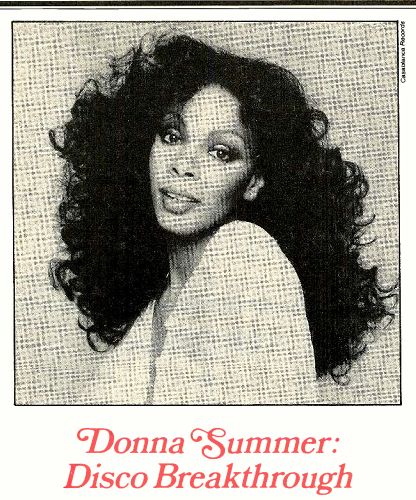
Donna Summer: Disco Breakthrough
ONCE upon a time, a disco queen with pop impulses got together with some electronic rock musicians out of Munich and made a two-record album. They wrote some good songs with strong melodies and listen-to me words that tell a story, put them to a solid disco beat, and arranged them with electronic keyboards, a Moog, and layers of rock. And, wonder of wonders, it all came out terrific.
I'm talking about Donna Summer's new "Once Upon a Time" album, and if you don't believe that those seemingly incompatible strands can be woven together, then prepare to be converted. When Miss Summer announces that she's "gonna dance, dance the night away" (Queen for a Day), the rock, the disco, and the pop come careening together out of one of the dandiest up-tempo disco sides ever cut.
Or listen to the opening of Dance into My Life, a very danceable song ornamented with talking electronics, twenty-first-century computer conversations, and other snatches of the seemingly random bleeps and blips of German electronic rock. There's also Faster and Faster to Nowhere, which combines a very strong disco rhythm with Psycho-like strings and a super-intense delivery by Miss Summer. And then there's Working the Mid night Shift, with an almost boogie-woogie electronic piano syncopated against a plaintive melody that just may be the album's best.
Clearly, when so many elements are mixed together, one or another is bound to dominate from time to time. Disco purists will be un happy with some of the songs here, rock fans with others. But that's the astonishing strength of the whole thing. This is really a breakthrough album, an answer to all those who have been claiming that disco is all of a sameness. Here is proof positive that it's not true. (Did we ever, by the way, need proof that all waltzes do not sound alike?) ONE more thing: if you still wonder whether the sexy Miss Summer can really sing, listen to her soar through the gospel-blues of A Man Like You or her variations on the chorus to Sweet Romance. Pick up "Once Upon a Time" and live happily ever after.
-Edward Buxbaum
DONNA SUMMER: Once Upon a Time. Donna Summer (vocals); instrumental accompaniment. Once Upon a Time; Faster and Faster to Nowhere; Fairy Tale High; Say Something Nice; Now I Need You; Working the Midnight Shift; Queen for a Day; If You Got It Flaunt It; A Man Like You; Sweet Romance; Dance into My Life; Rumour Has It; I Love You; Happily Ever After.CASABLANCA NBLP 7078-2 two discs $11.98.
" . . proof positive that disco is not all of a sameness"
-----------------------------
DISCO
RECOMMENDED DISCO HITS
CERRONE 3: Super-nature. ATLANTIC/ COTILLION SD 5202 $7.98.
GREGG DIAMOND: Bionic Boogie. POLY DOR PD 16123 $7.98.
EARTH, WIND & FIRE: All 'n All (see Best of the Month, page 76).
MELBA MOORE: A Portrait of Melba. Buddhah BDS 5695 $7.98.
PHILADELPHIA CLASSICS: MFSB, O'Jays, Three Degrees, and others. EPIC PZG 34940 $7.98.
(List compiled by David Mancuso, owner of the Loft, one of New York City's top discos.)
-----------------
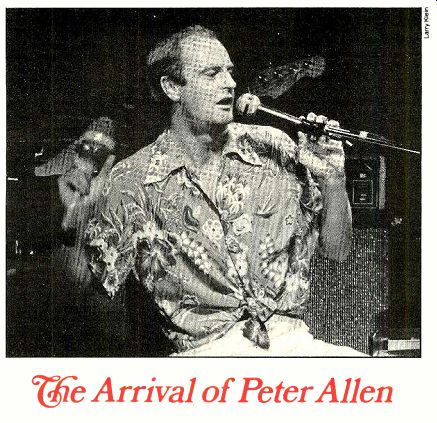
The Arrival of Peter Allen
FEELIN' good. Feelin' real good. Just heard the new "It Is Time for Peter Allen," and the news is that it is time for a celebration.
The Australia-born Allen has arrived (the double meaning of the album title is happily accu rate) not only on his own, but also as the closest parallel English-language pop now has to the great French chansonniers. Like them (the two best-known currently are probably Jacques Brel and Charles Aznavour), he assembles his art from his own subjective world, from his own touchable, recognizable feelings in their full range, leaving cosmic opinions and weighty judgments to other, more lugubrious talents. His words and the music (much of it here by Carol Bayer Sager) are filled with wit and loving, impertinence and awe, but most of all with a joyous wonder at the stubborn perdurability of humankind.
The chansonnier he most reminds me of-and this is a very personal pleasure-is the great Charles Trenet, who is probably most famous in this country as the composer of La Mer but whose total work is an ecstatic compendium of the small, universal moments of life. His work is all illuminated by a compassionate sentiment, a wry humor, a delirious rapture in being, and always, always a rakish finger flick at the pompous, the uptight, and the killers of dreams. Allen has the same ability to stay lightly, but often movingly, in a two-way communication with his feelings and with his audiences.
The album is live, most of it apparently re corded at Avery Fisher Hall in New York but with some tracks added from appearances at the Bottom Line there and the Roxy in Los Angeles. It opens with Love Crazy, a captivatingly hokey song with an irresistible beat that sent me, for one, box-stepping around the room snapping my fingers. When the applause dies down Allen tells the audience that he's glad to be in New York and that he's just returned from playing L.A., where his favor ite review called him 'a deft performer, with his cute little songs.' "I thought that summed up my career pretty well," he comments dryly. (His speaking voice, incidentally, has a weird resemblance to that of Jackie Vernon, the dead-pan comic.) He then launches into She Loves to Hear the Music, his bittersweet ode to a music-biz groupie who is watching her real life sail by as she gets deeper and deeper "into" music and musicians. He does it better here than on his previous recording of it, and it sets up the mood for the nostalgic
Everything Old Is New Again and the ambivalent, worldly wise Interesting Changes. Side one closes with Allen's greatest commercial hit to date, I Honestly Love You. After apologizing--"Sorry, Olivia couldn't make it to night"--he goes on to give it a superbly eloquent performance.
Sides two and three have all sorts of goodies on them, including run-throughs of two standards Allen sang in his old Australian piano-bar days, As Time Goes By and The More I See You, and a song he wrote about his grandfather, Tenterfield Saddler (Tenterfield is the place, saddler the profession), that beautifully evokes a time, a place, and a mood that are obviously very special to him. It is on side four, however, that he crests, deluging his delighted audience with three gigantic showstoppers.
THE first is I Go to Rio, which has a quasi-Latin disco beat, frantic lyrics, an exuberant, rhapsodic vocal performance, a lot of Allen's barrelhouse, ragtime, what-have-you piano playing (nowhere on the album does he play at all elegantly, but man, can he pound out a beat!), and the kind of disciplined abandon that made the great moments in the Astaire-
Rogers films so unforgettable. I've played it again and again and I still can't seem to hear enough of it. Along with Trenet's La Route de Joie, or perhaps Je Chante, it is one of the most altogether happy things I've ever heard on records.
Next is Quiet Please, There's a Lady on Stage, a song he says he wrote at a time when he didn't even know that he was a songwriter.
It is about, and for, Judy Garland. In particular it is about those last grim days when she was on the final snap of the roller coaster that was her life, the time when she was appearing before audiences that were either indifferent to her suffering or waiting like ghouls to see her fall apart in front of them. But Allen's song is much more than a plea for the audience to "clap your hands together/And help her along/All that's left of the singer/Is all that's left of the song . . ." or a reminder that she was a great star "long before your consciousness was raised." It is a tribute to a great entertainer who understood very little about herself except that she loved her audiences and they loved her back. As her life wound down, her fans seemed to be all that was left, and she found the courage to go out and try to reach them-because she really needed them. It is a heartbreaking song about a heartbreaking subject, but Allen performs it with a jaunty gusto, and, through a series of tension-building repeats and, finally, audience participation, duplicates the kind of every thing-breaking-loose pandemonium that Gar land herself was capable of at her peak. It is a sensational track in every way.
His final song, his bow-out here, is Audience. It is a song that gently philosophizes about the performer and his listeners and their effect on each other. It has wisdom and style and heart, and it sums up Peter Allen's work better than any review ever could. Listen to it and you'll see what I mean.-Peter Reilly
PETER ALLEN: It Is Time for Peter Allen. Peter Allen (vocals, piano); orchestra. Love Crazy; She Loves to Hear the Music; Every thing Old Is New Again; Interesting Changes; I Honestly Love You; Continental American; The Natural Thing to Do; The More I See You; As Time Goes By; Don't Wish Too Hard; Don't Cry Out Loud; Tenterfield Saddler; Puttin' Out Roots/The Sideshow's Leaving Town; I Go to Rio; Quiet Please, There's a Lady on Stage; Audience. A&M SP-3706 two discs $12.98.
----------------------
Also see:
Source: Stereo Review (USA magazine)