On this page:
- EDITORIALLY SPEAKING, WILLIAM ANDERSON
- LETTERS TO THE EDITOR
- TECHNICAL TALK, JULIAN D. HIRSCH
- GOING ON RECORD, JAMES GOODFRIEND
- THE POP BEAT, PAULETTE WEISS
- AUDIO QUESTIONS and ANSWERS--Advice on readers' technical problems
- AUDIO BASICS--On Not Testing Tape, RALPH HODGES
Editorially Speaking
By William Anderson
MINIMAX
THERE used to be one of those all-night delicatessens in my New York neighborhood that styled itself "Superette--one Latin prefix, one French suffix, and nothing in between but a mind-teasing irony. "Super" very likely means, as the dictionary has it, "surpassing others of its kind" (as in "supermarket"), but "ette" could signify either the diminutive (as in "roomette") or the imitation (as in "leatherette"), so "Superette" might therefore mean either a "big little" or a "superior imitation." Clearly a matter for the mind of comedian George Carlin.
No such problem with "cassette," however, which is just what it says it is: a "little box." Well, usually, anyway. Both Deutsche Grammophon and London Records have for some time been turning out what I am tempted to call "maxi-cassettes," boxes almost of book size designed to accommodate operas and other extended musical works that won't fit on a single cassette. They have now been joined by RCA, which has just brought out a group of eight operas (mostly reissues) in the cassette format (see review on page 98) and expects to add another nine (Julius Caesar, Norma, Lucia, Vespri, Ballo, Ernani, Rigoletto, Trovatore, and the Barber) this month.
Putting these little tapes in these big boxes is not as whimsically paradoxical as it might appear. First of all, it makes possible the inclusion of adequate notes (and, in the case of opera, librettos). In the ordinary cassette box these are either sketchy as to information and minuscule as to type size or absent altogether.
RCA's boxes are 6 1/4 inches wide and 12 1/4 inches high, almost exactly half the size of a disc jacket (though thicker, of course). This makes it possible for retailers to display them in pre-existing browser racks while discouraging pilfering (they cannot be concealed on the person without committing an affront to Na- ture). And since they are of standard disc height, the buyer can also shelve them at home (the spine is lettered) alongside his records without being too prodigal of space. But why, speaking of prodigality, is it that the recording industry continues to place these odd little bets on this minority format? IF there is one factor that has characterized successful innovations in recording technology through the years it is that of increased in formation density. In the disc format we have gone from 78 rpm to 33 1/3-rpm microgrooves in mono, stereo, and quad, at least doubling information density each step of the way, and digital techniques now just over the horizon promise more of the same. In tape we have not only been increasing information density through speed reduction (from 15 ips down through 7 1/2, 3 3/4, and 17 ), but by reducing the size of the tape as well. Digital recording, again, could contribute even more. It should therefore surprise no one that the next step down is (are) already on the market and apparently flourishing-the (unfortunately in compatible) mini- and microcassettes, de pending on whether you like your prefixes in Latin or in Greek (but whatever happened to hemi-, demi-, and semi-?). The clear-plastic "jewel box" ordinary cassettes come in measures 2 3/4 x 4 3/8 x 5/8 inches (approximately).
The new microcassettes are 1 1/4 x 2 x 5/16 inches, or almost exactly one eighth the size (tape width, oddly enough, is the same). Since the speed is only 15/16 ips, it is not yet a hi-fi medium, but improved tape formulations and/ or digital developments will take care of that, and it already has the magical ingredient of in formation density.
There is probably a physical limit to how far this trend can go: once things get down to aspirin-box size, anthropometric concerns (clumsy fingers) take precedence over all others. Even so, it is perhaps a little too soon to sell short our apparently characteristic fascination with the great beauty that is to be found in small proportions.
LETTERS TO THE EDITOR

Pre-tape Equalizing
Takes a while to get them imported furrin publications into stores here in Japan, so I just saw the September issue. I don't agree with Craig Stark (lead Q. and A. in "Tape Talk") that material to be taped should never be equalized before recording. I do use an equalizer for recording, plus another in the preamp-to-power-amp chain for all-program equalization. I have some $8,000 worth of electronics, and friends frequently drag over their moth-eaten old discs and commercially recorded tapes for me to "clean them up" onto cassettes. I find that processing through my SAE 5000 impulse-noise reducer and equalizer to the tape deck is invaluable for this kind of dubbing. I also find the pre recording equalizer useful for dubbing to cassettes for car use. After all, most automobile cassette machines and speakers can't handle the nuances that the better tapes deliver, and they certainly can't deal with dbx or even Dolby processing, so I find a bit of equalizer fiddling is essential for happy driving.
Readers who are going snap-crackle-pop with frustration at the sub-level quality of many discs on the U.S. market might be interested to know that in Japan we have two types of discs available: clean and crummy. The former are Japanese pressings from American and European masters; they account for around 95 percent of sales here. The others are direct imports, flown in all their clicky, off-center glory from, mostly, the U.S. This may help explain why Japanese audiophiles are rather glassy-eyed fanatics about their cartridges, head shells, tone arms, turntables, and lead bases: they've got an ocean of good records available that are worth investing money to play. Hey, American audiophiles move to Japan! Your ears will love you for it!
(Ms) LORA MCHENRY; Tokyo, Japan
Steely Dan
I was disappointed to find Joel Vance as signed to review Steely Dan's new album, "Aja" (in the January issue). Before reading the review I checked the initials at the end, and I knew at once that Mr. Vance would find the obscure lyrics frustrating and would won der why Fagen and Becker don't write songs like Pearl of the Quarter any more.
To me such criticism is, at best, irrelevant.
Steely Dan is not a conventional rock band, but a vehicle for Donald Fagen and Walter Becker to present themselves as composers (as they themselves admit). Both Mr. Vance and Stephen Holden (who reviewed "Royal Scam," the previous Steely Dan album, for STEREO REVIEW) are missing the point when they stress the lyrics in talking about Steely Dan. I suspect that the primary function of their lyrics is to set a mood and to tie the music more closely to the conventional song-oriented conception of rock. Sometimes the lyric is a clear-cut "story" (Everything You Did, Black Cow), sometimes merely an extension of mood (Doctor Wu), and sometimes a foil for the instrumental portions of the song (Aja, The Fez)-but without exception the sound of Donald Fagen's voice is more important than the words he sings.-"Like Victor Feldman's keyboard work, his voice is a component of the musical texture in post-"Pretzel Logic" Steely Dan albums.
TERRY TEACHOUT; Liberty, Mo.
Pipe Dreams
In January's "Going on Record," Music Editor James Goodfriend says that one might wish for an opera by Gustav Mahler and wonders why Mahler "never tried to write one." In his early years, Mahler did write an opera, called Herzog Ernst von Schwaben, which, unfortunately, he later destroyed. The libretto was by Mahler's friend Josef Steiner and the work concerned Mahler's brother Ernst, who died in 1874. Somewhat later Mahler made sketches for an opera to be called Die Argonauten and still later began one titled Rube zahl; neither of these operatic attempts is extant.
I realize that Mr. Goodfriend's point was not that Mahler never wrote an opera, but that none is available today. I too would be very eager to hear a Mahler opera, although I believe that I can imagine how it would sound, especially if it were about a beloved brother who died at the age of thirteen. It would probably be about as cheerful as Berg's Wozzeck.
SAM HOLLOMON; Cleveland, Miss.
Mr. Goodfriend replies: It would be nice if it were as good (particularly since Mahler was fourteen at the time).
James Goodfriend's wish (January "Going on Record") for a Haydn viola quintet is here by granted. If you will open your Hoboken catalog to page 298 (under the heading "Divertimentos for four or more parts"), you will find it listed as Hob. 11:2. And did you know that, like Brahms, Haydn also wrote a horn trio? Only Haydn's was for horn, violin, and cello rather than horn, violin, and piano. (This work is listed as Hob. IV:5.) In the graduate course on Haydn's chamber music that I give at the Peabody Conservatory we have a slogan, "Haydn did it first" (HDIF)-"it" referring to just about anything in the style or content of works of later com posers from Mozart to Brahms. Even Wagner: we enjoy Haydn's use of the four-note rising chromatic "Tristan" motif in his string quartets (especially in the minuet of the unfinished Op. 103).
ISIDOR SASLAV, Concertmaster, Baltimore Symphony Orchestra, Baltimore, Md.
Magnavox MX Recall
The Magnavox Consumer Electronics Company is recalling some of its MX-brand component receivers because a possible circuit malfunction could cause damage to non-MX-brand loudspeakers used with the units.
Model numbers subject to the recall are 1580, 1581, 1620, and 1630. Approximately 11,200 of the suspect receivers were manufactured and sold by Magnavox from May 1974 on, and some may still be in dealer inventories. Con sumers who have these model numbers should contact the Magnavox Consumer Affairs Department to make arrangements for corrective modifications to their equipment.
Outside Indiana, call toll free (800) 348-3863; inside Indiana, call (219) 432-6511 and ask for Department 761.
BOB JONES, Magnavox Company, Fort Wayne, Ind.
Peccant Critics
I'd like to remind STEREO REVIEW'S pop-music critics that a "review" is, according to the Random House Dictionary, a "critical article or report," while "critic" is defined as "a person skilled in judging ... musical performances." Such a person does not need to use remarks that have no bearing on the performance, such as "I am a registered Re publican given to saying 'Pshaw!' ... " (re view off Cat Stevens' "Izitso"), "It sounds like the kind of album you'd expect from a bunch of vice presidents" (review of Kenny Loggins' "Celebrate Me Home"), or ... a feat that adds a new dimension to the concept of 'cheesecake' " (review of Kiki Dee's album). Furthermore, when Joel Vance begins his "review" of "Izitso" by saying that he has "never been able to work up much enthusiasm for Cat Stevens," whatever else he says must be considered invalid since he's biased from the outset.
CHARLIE THORNHILL; Mt. Vernon, Mo.
In response to the common reader com plaint that reviewers stray from their proper subject matter, I would suggest that music, like all art, is mainly a communication of ideas. A critic may relay those ideas through a discussion of the music itself (mode), the art ist (means), or. if he pleases, the destruction of Rome by the Goths (analogy).
THOMAS TONEFF; Tucson, Ariz.
The Editor replies: Yes, and "ideas" are what a "person" has, so they inevitably have personality and "biased" subjectivity. And it strikes me that it might be rather useful to know whether the critic addressing us is a registered Republican-or a closet Marxist! Sven-Bertil Taube I was pleasantly surprised by James Goodfriend's column on Sven-Bertil Taube ("Going on Record," December 1977). I thought that I was the only person in America who knew about Sven-Bertil and his legendary father, Evert. As a youngster, I heard a lot of Evert Taube's music, since my father and uncle were Swedish sailors (in the classic sense) and many of his songs concerned seafaring adventures around the world.
A Capitol International Series album featuring Sven-Bertil Taube playing his father's songs was once available in the U.S. It was conducted, of course, by Ulf Bjorlin, with solo players and groups from the Stockholm Philharmonic. The album number was ST 10274.
R. G. KELLSON; Woodridge, Ill.
Discophobia
I am a rock fan through and through, and I will never "give in, dress up, and accept Irving Berlin's invitation to 'face the music and dance.' " I know I will never get to like it! "It," of course, is disco, and "it" perfectly describes what definitely cannot be called music in any shape or form_ I didn't always agree with Steve Simels either, but Paulette Weiss' "Discomania" (December 1977) stank. She should get back to rock-and-roll instead of "it," which has no virtues and which many hope will "go away."
K. BLAIN, Victoria, British Columbia
Direct-to-Disc
As a record buyer rather than a manufacturer, reviewer, or performer, I'd like to add some comments on the direct-to-disc controversy. I have bought a few d-to-d recordings and have found that the reduction in recorded noise or tape hiss is quite small, sometimes nonexistent, as compared with other high-quality records. The reduction in surface noise may be entirely the result of careful manufacturing and the use of virgin vinyl and have nothing at all to do with the elimination of steps between the artist's performance and the cutting of the master lacquer. However, most, if not all, d-to-d recordings are made without the compression usual with ordinary discs, and for me this has been their most out standing benefit; the dynamic range is extraordinary. (Of course, some tape-to-disc records are also uncompressed, and I'm equally impressed by their dynamic range.) As to whether the artist plays better or freer during taping or directly to the cutting lathe, this is obviously a function of the bent of the individual artist. My latest purchase, "Track-in' " by the Lou Tabackin Quartet (sold by Specs Corp.), sounds very free and unrestrained, yet some d-to-d records I have do, in fact, sound as if the performers were unduly conscious of the recording process and much too careful.
On the whole, I would say that d-to-d recordings are worth the great expense only in a very few cases, such as when they feature a favorite artist or work that you could listen to forever.
K. A. BORISKIN; Milford, Mass.
One of Editor William Anderson's main objections to direct-cut discs (October 1977 "Editorially Speaking") is the price. Why not let people like me who are "mad" enough to buy direct-cut discs at such prices go ahead and do it? Rather than being "regressive gimmickry," the appearance of the d-to-d technique is the most important thing to happen to hi-fi in recent years-that is, as long as one recognizes its drawbacks: short playing time and high price.
Moreover, the editor does not seem to understand that when taping from a source al most free of hiss (direct-cut discs), one obtains a much higher quality than when taping from an ordinary record. Thus, that Texas millionaire who tapes his direct-cut discs is not as crazy as the one who has prescription-ground windshields in his cars.
JOHAN JORGENSEN; Edinburgh, Scotland
That was a joke, son. Why avoid tape hiss in the first place if you're only going to add it to the program afterward?
Gismonti's Compatriots
We were very happy to read Chris Albertson's review of Egberto Gismonti's "Danca das Cabecas" (November 1977). It shows that someone in the States is interested in what's happening musically in Brazil. Mr. Albertson credits Nana Vasconcelos for composing Fe Cega Faca Amolada, but the song is really by Milton Nascimento and Ronaldo Bastos.
Other records by Brazilian artists available in the U.S. include "Milton" by Milton Nas cimento (A&M 4611), "Native Dancer" by Wayne Shorter and Nascimento (Columbia PC 33418), "Amoroso" by Joao Gilberto (Warner Bros. BS 3053), and "Slaves Mass" by Hermeto Pascoal (Warner Bros. BS 2980).
JERRY UDLER, RICARDO REDISCH, Sao Paulo, Brazil
Jack Jones
Rarely does one read such a fine, under standing analysis of an artist as Henry Pleasants' piece on Jack Jones in the November 1977 issue. As Mr. Pleasants discerned, the key to Jack Jones' thrilling singing is the control of his voice that he gained through study with a classical coach. On the day Jack was born, I was having a session of my own with that same excellent coach, Claude Warford.
A great many of us at that time (including Jack's father, Allan Jones, and Lanny Ross) owed our success to Warford, who taught us to use our voices as musical instruments.
Claude Warford, from his place in Heaven, must indeed be pleased at how his fine teaching has followed through from Allan Jones to Jack Jones. Moreover, Jack has a wonderful and vigorous heritage of strength and vitality.
Few people realize the demand good singing makes upon one's basic health. I had to give up my own career when it was most promising in every respect due to health problems.
H. R. EDMUND AUSTIN; Bridgehampton, N.Y.
Lester Fans
I have always regarded STEREO REVIEW'S popular-music critics as a bunch of overbearing, pompous, know-nothing cretins, and the proof of this has been piling up. Numerous put-downs of Frank Zappa and of the Eagles have been fueling my fury for a long time, but Lester Bangs' November 1977 review of "Love Gun" by Kiss is the last straw.
How could he have the unmitigated audacity to compare Kiss to Led Zeppelin or Bad Company? That is like comparing the Yucca Flats zither and harmonica ensemble to the New York Philharmonic! The members of Kiss have admitted that they have little or no musical talent.
In contrast, Led Zeppelin is the super heavy-metal group of the Seventies, and Bad Company runs a close second. Both groups are composed of excellent serious musicians who care about the music they produce.
JAMES DIGIAcomo; Montreal, Quebec
Reading the December "Letters," I was appalled to discover the distrust and malevolence some STEREO REVIEW readers have for Lester Bangs.
Lester Bangs' reviews are a source of information about new releases that is not obtain able elsewhere. His opinions are precise and to the point. His evaluations provide a guide to discovering new first-quality recordings that promise to give years of enjoyment. I have always found that if I eagerly seek out those records he has given a bad review and avoid like the plague those he has given glowing praise, I will never buy a record I will have to relegate to the back of my collection.
LARRY SYMCHYCH, Oshawa, Ontario
Audio Q. and A.
CU's Test Reports
Q. I've heard various opinions about the validity of the Consumers Union test re ports on audio equipment published in their magazine Consumer Reports. What is your feeling about them?
C. WATKINS, New York, N.Y.
A. In general, I think CU's reports are valid and perform a legitimate service. How-, ever, as you may be aware, both Julian Hirsch and I have in the past taken strong exception to some of their test procedures and results.
All test laboratories share certain problems, regardless of their particular procedures or the sophistication of the test equipment they use. In analyzing any piece of audio equipment, it is easy to come up with enough test data to fill a loose-leaf notebook to overflowing. But these data must be analyzed-insofar as is possible-for their audible significance under normal-use conditions. Many scope photos, instrument readings, graphs, and curves have a direct bearing on what a con sumer would hear the equipment doing under given circumstances, but I suspect that most of our hypothetical book of measurements would be totally irrelevant as a guide to sound quality. Irrelevant for either or both of two reasons: (1) the figures might be as much as ten times better or worse and no audible difference would be heard and (2) the test technique may be measuring a factor that has no bearing on sound quality whatsoever. A product with, say, 0.001 percent harmonic distortion falls into the first category, and you can choose-depending on your point of view among a number of other old and new "distortion" sources (TIM, speaker-phase incoherency, slew rate, Doppler, etc.) to represent the second category.
In other words, it isn't the accuracy of the data collected by the test labs that is usually in question, but rather the specific "weighting" or relative importance attached to each bit of data in the overall evaluation of the product.
Obviously, a sports-car buff is going to have a different set of criteria for a vehicle than a Pinto driver. And in many other areas of life as well, judgment of relative quality or personal preference depends in large part on mostly unexpressed predispositions, values, and assumptions. I am not going to tell an audiophile that he made a stupid purchase by paying, say, $2,000 for a given power amplifier when in my view he could have bought the same audible performance in some other brand for about half that price. The extra thousand dollars probably paid for a thick, beautifully engraved panel, industrial computer-grade components, under-chassis construction that looks like a work of art, ultraprecise power meters, and a measured performance far better than the threshold of sensitivity of the human ear. All of this has a large value for some individuals, for the same reason that a Rolls Royce or a very expensive sports car has special value for others. The analogy between the two special interests is not perfect, however, because an audiophile is likely to insist that his very expensive amplifier also sounds better than the less expensive unit. Most probably it doesn't.
The question really divides into two parts:
Does STEREO REVIEW agree with CU's techniques for gathering their "raw" audio-equipment test data and does it agree with CU's interpretation of it? The answers are "usually yes" and "frequently no."
Disc-speed Equalization
Q. A while ago I was thinking about the fact . that tape decks use different equalizations and bias for different tape speeds. Then it occurred to me that record playing must have a similar problem. The outer part of a 33.333-rpm record is moving by the cartridge at about 52 cm/sec, whereas the inner part of a record is going by at about 24 cm/sec. Now, how can a cartridge respond consistently over this range of speeds, or is there some variation in the cartridge's audio-signal output, distortion, frequency response, etc?
JERRY Di MARCO; Bozeman, Mont.
A. You are right; the tape- and record-speed situations are somewhat similar. In each case, the speed of the medium going past the "reading" device (tape head or phono cartridge) has a great deal to do with how easily high-frequency information can be stored and recovered. For many years, treble boost had been automatically applied to the audio signal in increasing amounts as the cutting head approached the inner-groove area. The technique was known as "diameter equalization," and it was used in addition to the RIAA equalization. But although it compensated to some degree for treble loss at the inner radii of the disc, it also unfortunately increased IM distortion and aggravated the usual inner-groove tracking problems.
I suspect that the record-cutting engineers as a group breathed a loud sigh of relief when hot-stylus cutting came into wide use. The technique employs an electrically heated cut ting stylus that provides a 1- to 2-dB improvement in response above 9,000 Hz. Better yet, the hot stylus provides a 10- to 20-dB improvement in the signal-to-noise ratio in the grooves from about a 6-inch to a 4-inch disc radius. So, although there is some loss, most recording companies today do not find it severe enough to risk the other problems that could well result from inner-groove frequency-compensating equalization.
Integrated vs. Power Amplifiers
A. Considering the vast improvements that have been made recently in integrated amplifier specifications, what degree of difference could be heard between a top-rated integrated amplifier and some of the separate super-power amplifiers, assuming that the reference speakers were efficient enough to be used with either the lower or higher power amps?
DAVID DUNCAN, Penticton, British Columbia
Q. This is one of those "simple" questions that when asked of ten people are like ly to produce fifteen conflicting answers. Here's mine. Assuming, as you seem to, that the separate preamplifier and built-in pre amplifier of the integrated amplifier are identical, and that the separate power amplifier and built-in power amplifier are reasonably similar, and further assuming that the amplifiers are never being overdriven (clipped), then no significant differences will be heard. however, there are too many assumptions involved here for the question-or my answer-to be terribly meaningful.
The real question behind your question is: in what significant ways might A and B (refer ring to the integrated unit vs. the separate preamp and power amplifier) not be identical? For one thing, random interface effects between any given phono cartridge and preamplifier input can result in high-frequency response variations that are immediately audible. This, of course, is not a power-amplifier factor--but it could easily be mis taken for one. It is also true that certain amplifiers react peculiarly to certain types of speaker loads. This is not a problem with the vast majority of either amplifiers or speakers, but there are some speakers employing esoteric driver elements, transformers, or auto-transformers that can cause problems with some amplifiers. And other amplifiers don't like the capacitive loading applied by some special speaker cables.
In my view, the main factor that is going to make amplifiers sound different is their power reserve-or lack of it. As has been pointed out elsewhere, with a medium-efficiency acoustic-suspension system, background music might require peaks of 2 watts, normal loud listening takes about 20, and loud disco levels easily require 200 watts and more.
When the required amplifier power reserve isn't available, the sound seems compressed and lacks openness-assuming that severe clipping distortion is not taking place. I'm aware that there are some very powerful integrated amplifiers (and receivers) available, but in general such units do tend to be lower in power than separates. What it all comes down to is this: when all things are equal, they are; and when they are not, they aren't. Does anyone care to argue the point? Audiophilia Defined A In discussions with friends, I've been trying to arrive at a definition of "audiophile." Could you provide one since I'm anxious to see how well I fit into the category?
L. BARTLETT; Los Angeles, Calif.
Q. Over the years, the audiophile's preoccupation with hi-fi equipment has been the butt of many jokes, the subject of much pseudo-Freudian philosophizing, and a contributing factor, I have no doubt, to the disruption of at least a few marriages. (There's the classic, but probably apocryphal, story of the audiophile's wife who when suing for divorce told the judge that her husband's lack of attention had driven her to low fidelity at a high frequency.) Audiophiles are frequently characterized as suffering from severe means/ends confusions, in that the means (hi-fi equipment) have be come more important for them then the ends (music reproduction). However, I find no merit in that observation, simply because the same put-down could be applied equally well to those who row boats in Central Park Lake, hunt, ride horseback, jog, or make love. All of those pastimes-and there are lots more are now also ends in themselves, when once they were solely means to a specific end.
My experience has been that audiophiles may or may not also be music lovers; I have friends who are as comfortable arguing the merits of various classical conductors as they are discussing the virtues of various semiconductors. On the other hand, we all know-or at least know of-someone who uses several thousand dollars worth of hi-fi equipment mostly to play sound-effects and Mantovani records. And, of course, there are those non-audiophiles who like music, have good equipment, and care not a bit about how it works or why-just so long as it sounds good.
All this leads me to define an audiophile simply as someone who is to some degree interested in the technical aspects of musical sound reproduction. The category could be subdivided into Novice, Advanced, and Lunatic Fringe, but that's a subject for some other time.
Because the number of questions we receive each month is greater than we can reply to individually, only those letters selected for use in this column can be answered. Sorry!
Audio Basics
ON NOT TESTING TAPE
STEREO REVIEW has not tested tapes for the past several years, and more than a few people have been asking why. Although the question is simple, an adequate answer involves some relatively complex matters.
In this month's "Technical Talk" column, Julian Hirsch reveals that a laboratory test of a component cassette deck invariably begins with a hunt for the tape or tapes that will do the record-playback performance of the ma chine justice. Those of you who have followed the evolution of the cassette format for any length of time will realize that what H-H Labs searches for (although indirectly) is a tape whose bias and equalization requirements match the bias and equalization characteristics the machine has been set up to provide. Without this close match, the potential frequency response and/or distortion performance of the tape/machine combination will not be realized, and the test will not truly rep resent the ultimate capabilities of either.
You might think that test facilities as extensive as those of H-H Labs would be able to establish the specific bias requirements of any given tape-and hence the machine that might best fit them-to a high degree of accuracy.
Unfortunately, some of the esoteric equipment required to evaluate tape in this way is rarely found outside the laboratories of tape manufacturers, and even then, although tape manufacturers can usually agree on the relative bias requirements of different magnetic products, the absolute values are frequently in dispute. This situation has in part contributed to the considerable variance in tape types that are presumably designed to utilize the very same bias and equalization settings on your cassette deck. Data from BASF (see the accompanying figure) show the wide distribution of bias settings found on the various cassette recorders available.
All this might seem to make the need for tape tests even more acute. It might also make it seem likely that the publication of at least some tape-performance data, however questionable on an absolute basis, would ease the consumer's dilemma of choice at least a little.
Perhaps yes, perhaps no. Let's set up a hypothetical tape-testing situation and see why.
A test invariably performed on cassette tapes is the evaluation of the maximum output level (MOL) available from the tape at all frequencies before excessive distortion or tape saturation (at high frequencies) occurs. Let's hypothetically evaluate two tapes, Sample 1 and Sample 2, on the basis of this criterion.
Sample 1 proves to have good but not exceptional output at low frequencies and "aver age" output at mid and high frequencies. Its record-playback frequency response, with the machine employing a given bias setting, appears to be admirably flat-out to 15,000 Hz, where it drops off rapidly. Sample 2 tests remarkably strong at low frequencies, slightly above average at mid frequencies, and well above average at high frequencies. However, a frequency-response test utilizing the same bias reveals a rapidly rising high end and a rather "over-bright" sound from the cassette as a result. Response remains strong out to beyond 18,000 Hz.
On the basis of these results, which of the two tapes would you pick for your own use? To further complicate your choice, let's say that Sample 1 and Sample 2 are totally identical examples of the same tape! How can the measured differences between them be ac-e counted for?
Easily--if we make the assumption that the two samples were evaluated on different cassette machines.
Let's say, for example, that Sample 1 was tested on one of the better two-head cassette decks and Sample 2 on an exemplary three-head machine, and that the tape itself is a generally well-designed product utilizing a rather thick oxide coating. The thick coating offers the potential for very strong output at low frequencies (coating thickness being the key factor at these frequencies), but the two-head machine, employing a record/play head with a relatively narrow gap, cannot penetrate the coating fully with the recording signal to utilize this potential. The separate wide-gap record head of the three-head deck can, and the test results clearly reveal this.
On to the higher frequencies. A thicker oxide coating makes for a comparatively stiff tape that may not provide the best tape-to-head contact under all circumstances. If we assume our cassette has a mediocre pressure-pad system, we can expect losses on the two-head machine to begin at mid-frequencies and become progressively worse at higher frequencies. The net result-a high-frequency rolloff-turns out to be beneficial in the frequency-response measurement: if the tape were making better contact with the record/ play head, the high-frequency response would rise instead of remaining flat. On the other hand, the three-head machine employs a dual-capstan tape-drive system that keeps the tape under controlled tension and doesn't depend as much on the pressure pad for good tape-to-playback-head contact. Therefore, although both machines were set up for the same bias, differences in high-frequency output and response have still crept in. And as for the extreme high-frequency response, tape Sample 2 manages to exhibit good output to 18,000 Hz merely by virtue of the three-head machine's narrower playback-head gap.
Now the real question arises: considering that these identical cassettes are completely different animals when different machines are used to evaluate them, which of the machines should be used in the actual testing? The "best" machine, assuming it is the three-head model, is not necessarily the answer. Tape manufacturers can object-and in STEREO Review's experience they have objected that their tapes are designed for optimum performance with the vast majority of cassette decks in the field, and three-head machines are certainly not numbered among the vast majority. On the other hand, if a "typical" two-head machine is chosen, the objection arises that we are testing (in part) the machine rather than the tape. Finally, either way, we cannot claim to be giving good tape-buying guidance to anyone except the few readers who have machines essentially identical to the ones used in the tests.
In the end, STEREO REVIEW has decided to advise readers to make their own evaluations of cassettes, choosing the one (or ones) that seem to give the most satisfactory results.
Buying a representative selection of cassettes for in-home listening tests should not impose an intolerable financial burden, and the "rejects" will certainly work well, if not optimally. In any case, until cassette machines be come virtually identical in all aspects of performance, it seems too much to expect that identical cassettes will perform identically on all of them:
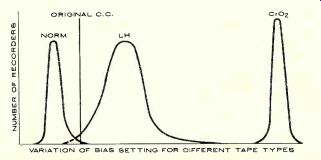
--------------- Distribution of bias settings among cassette recorders for different tape types. "Original C.C." is Philips' first bias. Note the broad "haystack" distribution for low-noise, high-performance ("LH") ferric-oxide tape. VARIATION OF BIAS SETTING FOR DIFFERENT TAPE TYPES
Tech Talk
By Julian D. Hirsch
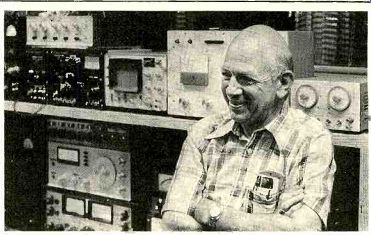
HOW HIRSCH-HOUCK LABS TESTS TAPE RECORDERS: A basic tape-recorder performance test determines the machine's playback-equalization characteristics as measured with a precision test tape and an a.c. voltmeter. This is usually shown in our test reports as a frequency-response curve. A playback response that perfectly conforms to the established standard will appear as a straight line, and any deviation from this indicates some loss of frequency fidelity in playing back tapes made on other machines. Other tests evaluate overall record-playback performance, including frequency response, distortion, signal-to-noise ratio (S/N), flutter, and various aspects of mechanical operation.
Because so much of the measured performance of a tape recorder (especially a cassette deck) is inseparable from the properties of the tape used in making the measurements, we ask manufacturers submitting machines for review to tell us which tapes they used for rating purposes and to provide test data on the particular sample they give us (together, if possible, with the actual tapes used in the tests). This is almost a necessity if we are to achieve a good correlation between the manufacturer's measurements and our own. Nevertheless, the test data and tapes we request are not always furnished.
Since most of our tape-recorder tests are of cassette machines, I will first describe the cassette test procedures in detail and later mention the few respects in which open-reel-recorder testing differs.
We test all pertinent aspects of a recorder's performance with each type of tape it is de signed to use (ferric, CrO2, or ferrichrome).
If no tape was furnished by the manufacturer, we use the recommended tape types (if avail able) from our own supplies. If, as in most cases, no specific tape is suggested in the instruction manual, we repeat all frequency-response measurements with a number of tapes to find the ones that seem to match the recording-bias level at which the machine is set. If the manual lists several recommended tapes and the suggested bias and equalization settings do not seem to produce the expected results, we repeat the tests with different switch settings, trying to find the optimum conditions. It is not uncommon (unfortunately) for us to have to make frequency-response measurements with six to ten different kinds of tape before deciding which one shows up the full potential of a given machine.
We first measure the record-playback (R/P) frequency response at recording levels of-20 dB and 0 dB (using a reference frequency of 1,000 Hz). The recorder's own meters are al ways used to determine levels for this purpose, since we are trying to evaluate the ma chine from the user's point of view. A manufacturer, who can control or measure the magnetic environment of the tape with considerable accuracy, would employ a different approach. With a two-head cassette deck, we first record a few seconds of the 1,000-Hz reference tone at a level of-20 dB. Stopping the tape, we set our General Radio frequency-sweeping oscillator to 20 Hz and simultaneously start the sweep and the tape recorder.
The oscillator covers the 20- to 20,000-Hz range in a single logarithmic sweep in about one minute. We then stop the tape deck and rewind the tape to the beginning of the I,000-Hz reference tone. We connect the playback output to the G-R graphic level recorder, whose chart motion is synchronized to the oscillator sweep (and thus to the re corded signal), and set the system gains for a suitable pen deflection from the reference tone. When the 1,000-Hz tone stops, the chart drive is started and the frequency response is automatically plotted. Following this, we make another recording, this time at a 0-dB level, and its playback is recorded on the same chart used for the-20-dB response.
Cassette recorders inherently require a large amount of high-frequency equalization (boost) during recording to achieve the desired flat frequency response in playback--so much, in fact, that the tape tends to become saturated at high frequencies even when the recording level at middle and low frequencies is well within the tape's capabilities. This causes the playback curve from a 0-dB-level recording to fall off rapidly, usually some where in the 5,000- to 10,000-Hz range. As a rule, the 0-dB and-20-dB response curves will intersect at some frequency above 10,000 Hz, and at higher frequencies the 0-dB re cording actually gives less audio output than the-20-dB recording. The area between the two curves and the frequency at which they intersect indicate the high-frequency capability of the particular recorder and tape combination. On a given machine, they tell us something about the relative high-frequency performance of different tapes and, with a given tape, they tell us something about the relative amounts of high-frequency equalization used in different recorders (and, by inference, something about the effectiveness of their recording heads).
WTH a typical cassette recorder, we have to make from five to ten such response curves with different tapes, unless the manufacturer has been kind enough to supply us with the re quested tapes (and even in that case, we usually test a number of competitive tapes for our own information). Whatever its advantages to the consumer, there is no doubt that the three-head cassette recorder has been a great boon to the tester. With a three-head machine (in which the third head is a true playback head) the R/P frequency response can be plotted in a single pass of the tape by reading the play back output as the recording is being made.
If the machine has the Dolby (or ANRS) system, as all the better ones do these days, we also test the input-output or encode-decode "tracking" of the noise-reduction circuits. Accurate level matching between re cording and playback conditions is vital to
correct operation of these circuits. A R/P response measurement is made at levels of-20 dB and-40 dB with and without the noise-reduction circuits in operation. Since all these curves are plotted on the same chart, any change in response due to incorrect adjustment or operation of the noise-reducing system can be seen at a glance. Dolby standards allow a 2-dB variation, and cassette decks typically meet this requirement.
Other measurements are made, without the chart recorder, using a single-frequency test signal. With the recorder's gain set to maximum, we measure the level of the 1,000-Hz input needed to give a 0-dB meter reading from both the line and microphone inputs.
The microphone-input overload is measured by reducing the microphone gain and increasing the input level until the waveform at the playback output begins to clip.
We measure the playback output from a 1,000-Hz, 0-dB recording using samples of the tapes for which the recorder is designed (for example, ferric oxide, chromium dioxide, and ferrichrome as applicable). The third-harmonic distortion in the 0-dB playback from each tape is measured with a Hewlett-Packard spectrum analyzer. We increase the recording level in small increments to determine what input level results in a 3 percent reference level for playback distortion. This 3 percent point is generally considered to indicate the maximum recording level for any given ma chine/tape combination. (If the recorder has a limiter, we also measure the playback distortion from recording levels of +10 and +20 dB with the limiter in use.) NEXT we record a short section of the 1.000-Hz tone at 0 dB, then reduce the input level to nothing and continue to record. During playback, we note the drop in output (ex pressed in decibels) when the tone stops.
Adding to this figure the number of decibels (above the 0-dB meter reading) that were needed to reach 3 percent playback distortion, we get the unweighted signal-to-noise (S/N) ratio of that machine/tape combination.
This measurement is repeated with two different weighting filters and also with the Dolby system in use. Both the IEC "A" and the CCIR/ARM weighting curves reduce the low-
and high-frequency signals reaching the measuring meter. Since these frequencies are less audible than the middle frequencies, the weighted S/N is supposed to be more indicative of how noisy the machine will actually sound. The IEC weighting gives the "best" overall S/N numbers; the CCIR/ARM weighting gives a reading closer to an unweighted measurement, but shows the noise reduction of the Dolby system to better advantage. We also measure the noise increase through the microphone input at maximum gain (with a 2.000-ohm input termination) relative to the noise level through the line inputs.
The ballistic properties of the recorder's meters are checked with a 0.3-second, 1,000-Hz tone-burst signal repeated once per second. When the meters are set to read 0 dB on a steady-state signal of the same amplitude, the meter indications on the burst signal will be within I percent of the steady-state value if the meters have true VU characteristics (very few do). Slow meter response and overshoot easily show up in this test.
With the exception of the flutter measurement, none of the following tests require making a recording. The flutter measurement really should be a playback-only measurement, since flutter is added to the tape both when a recording is made and again (in a random relationship) when it is played back. Over the years we have acquired a number of flutter-
test cassettes, each of which has been claimed to be "state of the art" (meaning its recorded tone is as free of flutter as possible) and thus better than its predecessors. Be that as it may, all the tapes give very different readings, and when we make a combined R/P flutter measurement (which should give a higher reading than a true flutter measurement) we frequently obtain a lower reading.
Flutter is essentially a frequency modulation of the recorded signal caused by small but rapid variations in tape speed. A flutter tape has a 3,000- or 3,150-Hz tone recorded on it and the playback from the machine is fed to a flutter meter, which is a form of FM receiver that can be tuned to the 3,000-Hz range. The demodulated FM carrier represents the flutter, which is displayed on a meter as a percentage of the carrier frequency.
Currently, most of our playback tests are made using an excellent set of test cassettes issued by TDK. Among them are cassettes with standard recorded levels to check the ac curacy of the recorder's meter calibrations (in regard to Dolby level and the actual flux level corresponding to a 0-dB meter reading).
There are also a flutter cassette and one re corded on one channel only that can be used to measure interchannel crosstalk at 1,000 Hz. Perhaps the most useful of the TDK tapes are the playback-equalization test cassettes, which check playback frequency response.
Most such cassettes we have used in the past left much to be desired in level constancy and accuracy.
The TDK AC-334, which has eleven spot frequencies from 63 to 10,000 Hz, is one of the steadiest tapes we have used, and it is re corded with time constants of 3,180 and 120 microseconds to match the playback equalization of modern recorders (many earlier test cassettes used a 1,590-microsecond equalization, which required correcting the readings in order to get the true response of a machine).
Like all other cassette test tapes we have used in the past, this one has an upper limit of 10,000 Hz. However, TDK now also has the AC-337 tape, which goes from 40 to 12,500 Hz. This has proved to match the AC-334 very closely within their common frequency range. The 70-microsecond playback equalization used for chrome- and ferrichrome equivalent tapes is checked with a Teac 116SP tape covering the 40- to 10,000-Hz range.
Other factors we test on cassette decks include fast-forward and rewind times with a C-60 cassette, accuracy and effectiveness of peak-level recording lights, headphone listening volume with 200- as well as 8-ohm phones, and accuracy in recording and playing back FM-tuner interstation hiss at an indicated -10-dB meter reading (the playback is com pared to the input signal in an A-B test and even very small departures from flatness can easily be heard).
With open-reel recorders the basic procedure is much the same, although the prevalence of three-head machines makes the R/P response measurement much faster and simpler. Moreover, the difference between the -20- and 0-dB frequency-response curves is often so slight that it cannot be measured in the audio range, in which case we also make a measurement between 20,000 and 40,000 Hz.
For playback-equalization and flutter tests, we use various Ampex alignment and test tapes. At 15 ips we are able to make only R/P measurements.
Of course, we also make recordings on every machine tested. We do not have easy ac cess to live music sources, and recording music from FM or records may not fully tax the abilities of the better machines, whether open-reel or cassette. However, such sources are adequate to reveal any handling peculiarities that would merit comment, and we believe that recording interstation random noise is comparable to many live-music recording situations in that it requires a full audio band width with negligible deviation from a flat response and no audible loss of highs from tape saturation. (It also has the advantage of being unaffected by microphone placement and other such variables common in live recording.)
I SUSPECT that some readers are surprised and overwhelmed by both the complexity of the procedures and the amount of instrumentation required for these tests. By the time we have put, say, a simple $200 cassette deck through its paces, it may have been involved with over $10,000 worth of test equipment be sides many, many hours of test-bench and use time. But if we are to provide a reasonably ac curate evaluation of a product it is simply not possible to cut corners.
Most readers are far more concerned with how well a recorder tests than with the specific techniques Hirsch-Houck Labs used to test it. However, I am pleased to have an occasional opportunity to let readers look over my shoulder, so to speak, during our test procedures. A far better understanding and appreciation of the complexities and possible pitfalls of the test process should result.
-----33 A set of typical frequency-response curves for a cassette deck. The upper graph displays the record-playback response measured with normal cassettes of the three types. The lower playback-only graph is derived using standard test tapes.
Going on Record
A LITTLE FLAG WAVING
MUSICAL nationalism, as we all know, was a movement of the nineteenth century, beginning, perhaps, with Glinka in the 1830's in Russia and Smetana in the 1850's in Bohemia. Or that, at least, is the way we learn it in the general run of books on music history and in elementary courses of study. How, then, one wonders, do we account for such things as Telemann's "Polish music" in the early eighteenth century and such obviously nationalistic pieces as Copland's Rodeo, Alf yen 's Midsommarvaka, and Rodrigo's Concierto de Aranjuez in the twentieth? Per haps the best way is by denying that national ism was a nineteenth-century movement at all.
Nationalism, or regionalism, has been a factor in musical creation since there was such a thing as musical creation. Internationalism or cosmopolitanism, its opposite, was a later creation. The first cosmopolitan notated music we know is Gregorian chant, codified at the turn of the seventh century and existing today in essentially the same form. It was an international music for this very simple reason: that in every Roman Catholic church, located in whatever country, the music performed was the same. You might exit the church to a world of troubadour songs, of Polish peasant dances, or of Gaelic harp music, none of which had anything to do with the other, but within the church you were in the presence of an international musical style.
Religion, crossing national boundaries as it does, has always been one of the great propagators of international rather than national music.
But there are international musics other than religious ones. In the nineteenth century, the mainstream of music comprised three styles, which can, in retrospect, be identified by the national names of German, Italian, and French. While different from one another in many respects, they had certain things in common, and together they constituted the accepted international style of the time. It was international basically in the sense that you could walk into virtually any concert hall or opera house in Europe (or America, for that matter), and what you would hear would be recognizably German, Italian, or French music or some mixture thereof. It wasn't that the composers of the music were necessarily German, Italian, or French (though hordes of them were), but the music was. Again, you could exit the concert hall to a world of Scots pipe music, Mexican cantos, or Norwegian folk fiddle music, but within the hall you were in the presence of an international style.
It would be fascinating to investigate why the musical world across the years moves back and forth between international styles and national ones, but it is important to know simply that it does. The nationalist movement of the nineteenth century (to revive it again in that form) was only one of the most noticeable of such pendular movements. Glinka and Smetana, among others, decided that they were Slays, not Germans or Italians with Slavic names, and they tried, with a certain success, to compose Slavic music-or, more accurately, to take the international musical style as a mere medium and to fill it with Slavic musical content.

----------------
Now, it is a truism not only of music history but especially of music history that similar things happen at different times in different places. No one sends out a broadside for general distribution saying that the Renaissance is over, let's all get busy writing this Baroque music (though some musical documents do, in fact, come close to that, and in recent decades, at least, the word does get around aw fully fast). It requires, after all, the existence of a talented composer in a particular place to pick up on that sort of idea at all.
So when Glinka and Smetana's full-blooded nationalism-and Chopin and Liszt's half hearted nationalism-made their example known, not everyone was ready for it. Grieg produced a Norwegian national music almost instantaneously, but it took the Danes and the Finns somewhat longer to produce, respectively, a Carl Nielsen and a Jean Sibelius, and in Sweden nationalism has been very much a twentieth-century phenomenon. Spanish nineteenth-century nationalism began only to ward the end of the century with Albeniz and Granados, and, though there were distinctive moments before, English music did not really shake free of its German models until the ad vent of Ralph Vaughan Williams and Gustav Hoist. In the United States, our greatest flowering of national music (there were precursors) was in the Thirties and early Forties, precisely the period during which the afore mentioned Aaron Copland wrote the afore mentioned Rodeo.
THOUGH we have been in and out of inter national styles several times already in this century, the idea of nationalism, even in its nineteenth-century sense of local color, folk song and dance material, and atmospheric titles, is still very much a living issue in many countries of the world.
None of this, however, quite explains Telemann's "Polish music," for Telemann was, first of all, a very cosmopolitan composer and, second, a German, not a Pole. But Telemann's temporary nationalism (for it is still nationalism of a sort) is of a second variety, the extraterritorial type. He had visited Po land in 1704-1707, developed a taste for the (to him, not to the Poles) "exotic" music he heard there, and incorporated its stylistic elements into certain works of his own. Needless to say, this extraterritorial nationalism was a very popular idea later on. Tchaikovsky wrote a Capriccio Italien, Rimsky-Korsakov a Capriccio Espagnol, Debussy an Iberia, Copland an El Salon Mexico, Milhaud a set of Saudades do Brasil, Ravel a Tzigane, Strauss an Aus Italien, and so on.
Far stranger, though, is the incorporation of specific details of Hungarian music in the works of composers whose music has nothing ostensibly to do with Hungary. The transference came about because of the strength of the artistic personality of Bela Bartok, whose style, built largely on a scientific study of Hungarian folk music, became of international importance.
FOR a time it was common to look down on national music as a sort of second-rate (not to say secondhand) artistic statement. That time should be past, for the national-international opposition forms, like the oppositions of melody and harmony, polyphony and monophony, form and content, classicism and romanticism, and others, one of the great fields on which the game of music is played.
The Pop Beat
LOCO, BUT NOT ROTTEN
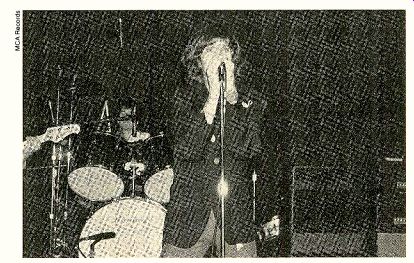
THE always-a-bridesmaid days are over for Willie "Loco" Alexander, Boston's leading New Waver. And it's about time. After years of promiscuous flirtation with band after band in the rock underground, Willie has at last found a legitimate home with his Boom Boom Band on MCA records. The three-album contract that wed him to MCA last Au gust will expand his audience beyond Boston, where he is adored. His brand of rock is a crazy-quilt of Fifties and Sixties musical and cultural odds and ends-a Ronettes quote tucked in here, a Chuck Berry riff patched in there-all delivered with a demented intensity that is appealingly puckish rather than sinister. When he squinches up his face and touches the corner of his mouth with his tongue in childlike concentration in performance, you know the man may be a little "loco," but he's not rotten.
Alexander is an oddball example of a breed of rocker we've been seeing more of lately, those steady pacers whose music has over many years earned them a living and a devoted following but not the coveted recording deal with its promise of big bucks and national recognition. Bob Seger, Steve Miller, and Peter Frampton have all finally managed to hop that fast train to fame, and now Willie intends to do the same.
In his thirty-five years Willie has done some moving around. His career might have picked up steam back in the Sixties had the British invasion not stalled so many young American groups in their tracks. A 1965 Capitol single with his first group, the Lost, never got any where. Neither did a later album with his next band, Bagatelle, nor his solo effort in 1968.
Willie joined the Velvet Underground after Lou Reed's departure, and then in 1972 experimented with the glitter scene as leader of a band called the Radio Hots, but somehow he just couldn't bring this last image into focus either.
"I put a little green stuff on my eyes, but I looked a little sickly," he said in a 1977 Punk interview. "No platforms or anything . . . a friend of mine had some but I felt like Rhonda Fleming-I kept falling all over the place." About two years ago he put out a solo single on his own label, Garage Records. Both sides, Kerouac and Mass. Ave., became hits in the Boston rock underground. He then hooked up with a band called Wild Honey, which be came the Boom Boom Band, and the group appeared on another independent single, (Roll Her Over) Hit 'Er with de Axe. This tongue-in cheek Lizzie Bordenesque send-up must have titillated an MCA talent scout, because the al bum "Willie Alexander and the Boom, Boom Band" (MCA 2323) was committed to vinyl and released in early January. It features a hard-rock rendering of the Righteous Brothers' You've Lost That Lovin' Feelin' that is bursting with energy yet displays a lyrical tenderness and the affection for this music that makes Willie so endearing. The disc also includes one of the songs that won Boston's heart, Kerouac, a simple paean to an older generation's hero made unique by Willie's mad vocals. All ten songs are idiosyncratic performances by an artist whose highly individual style was formed long before punk rock brandished its threatening safety pins over the land. Nonetheless, he has been swept into the New Wave bag along with many others whose music is actually quite varied. What makes the label "punk" appropriate for Willie is his irreverence, his raunchiness, and his frequent appearances at the few low-down clubs that would have him.
-----------
I WENT to Boston to see Willie because I had heard "Live at the Rat" (Rat 528), a two-
disc album recorded at Jim Harold's club, a notorious punk stronghold. Willie's three cuts left me wanting more, and the only way to get it was to travel because, unlike their New York counterparts, none of the Boston New Wave bands had recorded for major labels until Willie got his MCA contract.
Willie's December 6 performance (in the middle of a blizzard at the Paradise, the latest addition to Boston's New Wave club circuit) marked the public announcement of the first punk LP by a Boston group, and it was my first glimpse of the scene that gave birth to it.
Besides Willie, who covers vocals and key boards, the Boom, Boom Band consists of drummer David McClean, bassist Severin Grossman, and guitarist Billy Loosigian, whose ample technique and intelligent fills actually sound rather anti-punk insofar as true New Wavers revel in their instrumental incompetence The importance of the evening took its toll of poor Willie, who was far too tense to chat with the mobs of press and MCA executives on hand for the occasion. The tension carried through to his performance, his first in the Paradise, which was packed and noisy despite the snow. The club became a punk emporium less than a year ago, and the sound system could not take the volume. Willie's set emerged in one great sonic wad. His odd gestures and vocal mannerisms commanded attention despite the overall murk, and I couldn't help thinking that these idiosyncrasies will either make him or break him. He uses a most peculiar vocal punctuation, a kind of gurgled "go-go" sound like the feeding call of some large, slow, clumsy bird, to chop a lyric into the semblance of free-associative bits. Fortunately, the production on the al bum (by Craig Leon, record producer for the Ramones and Climax Blues Band) is infinitely cleaner, permitting Willie's delivery and original lyrics and Loosigian's guitar work to light up your life with a few colored lights Debby Boone likely never dreamed of. Unfortunately, there's no lyric sheet, but if you listen very carefully, you'll be rewarded with some wild pop-culture nuggets between the ga-ga's.
WILLIE'S honeymoon with MCA will be spent touring the country, so you can soon toss some rice in person. Or you can just take my word for it that Willie makes a beautiful bride.
Also see:
Source: Stereo Review (USA magazine)