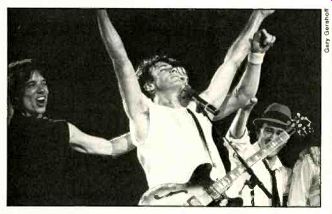
How do you get to Carnegie Hall? According to the old joke, practice, man, practice.
Or, in the case of Australian-born rocker Rick Springfield (center, doing the Sylvester Stallone impression), just land a juicy role on a hit soap opera like General Hospital and then make a couple of chart-topping albums Springfield actually played the venerable Manhattan concert hall recently, and the scene was like something out of the palmier days of Beatlemania sold-out crowds, mostly young, mostly female. But Springfield was really quite good. He has roots in mid-Six ties British pop-rock, and though he's inherited the David Cassidy teeny-bop audience, he aspires to something musically more substantial than what Cassidy used to do. A very nice show.
-S. S.
APPEAIRING in a cameo role in a soap opera is incontestable validation of a person's fame, and Rick Springfield is not the only recording artist to get this seal of approval Loverboy, a pop-rock group that records for Columbia Records, recently appeared on the CBS-TV daytime serial Guiding Light.
Band members took part in dramatic scenes with actors from the show's regular cast, and they performed their first hit, Turn Me Loose, and their more recent one When It's Over in a "notorious disco" on the show.
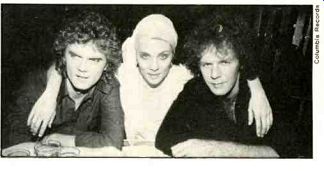
Shown below on the set of Guiding Light are (left to right) Loverboy keyboardist Doug Johnson, actress Jane Elliot, and guitarist Paul Dean. Like Springfield, Loverboy has also made a couple of chart-topping albums--"Loverboy" and "Get Lucky " Now that they've been on a soap opera and have made best-selling albums, they will probably follow Rick into Carnegie Hall Incidentally, the "notorious disco" where Loverboy played on Guiding Light is named Springfield's. Can that be coincidence?
-W. L .
A. AND. speaking of pop rock, we recently caught two other highly touted bands, the Smithereens and the Bongos, at the Bottom Line in New York.
The Smithereens are the genuine article: Rickenbacker guitars, three-part harmonies, faithful cover versions of obscure Beau Brummels songs.
In a certain sense they are as retro as can be, but they're terrific songwriters (check out their Girls About Town EP, D-Tone DT 150, released last year) and the most exhilaratingly tight live band I've seen in ages. After a dozen encounters with them, I'm still not bored. At the Line, however, they were sabotaged by abysmal sound, and while their energy and enthusiasm came through unflaggingly, it was a disappointing set The Bongos, despite a better mix, were disappointing for different reasons A product of the burgeoning Hoboken, New Jersey, rock scene (no kid ding!), they try to have it both ways, playing Sixties pop through a late-Seventies modernist perspective. Their act is appealingly cheerful, but I find them, overall, just a wee bit too arch That may explain why the New York critics like them so much. Curious out-of-towners should check out their album "Drums Along the Hudson" (PVC) and make up their own minds.
-S S
ACCORDING to the New York Times, " Greenwich Village Is Once Again a Magnet for Folk Singers." Not only is the venerable and revitalized Folk City club again featuring big names-everybody from such old neighborhood types as Eric Andersen to the Band's Rick Danko-but there is now a competitive club called the Speakeasy. Run as a musicians' cooperative, the Speak's bill of fare is resolutely acoustic (the only drums you might hear there are bongos). It has be come a clearing house for aspiring folkies loose in the Village, and there are a lot of them these days Perhaps taking a cue from the do-it-yourself approach of London's punk bands, the Speakeasy even issues a monthly fanzine, The Coop the Fast Folk Musical Magazine, and record albums. The magazine includes editorials, inter views (with lapsed folkie Roger McGuinn, for instance), and song lyrics. The recordings are made on a four-track Teac deck and sell for only $2 (no freebies even for critics); the collective has managed to re lease four discs so far, and they've all sold out and gone back for extra pressings. The roster includes promising new comers as well as such old-timers as Dave Van Ronk While the material is not really to my taste. I can't deny that the over all quality level is remarkably high. Obviously a lot of genuine talent is lurking downtown, and the records are well worth hearing. It's a worthy venture, even if the major labels so far remain unimpressed For information about ordering the records or magazine, write to the Speak easy, 107 MacDougal Street, New York, N Y, 10012.
-S S
GRACENOTES
Underground cartoonist R. Crumb is at it again this time, he's come up with an illustrated pack of trading cards (thirty-six in all) entitled Early Jazz Greats Each card comes with a Crumb portrait on the front (Wingy Mannone, Joe Venuti, et al.) and a bio on the back, just like Crumb's earlier series Heroes of the Blues, which has done healthy business (5,000 sold) Available from Yazoo, 245 Waverly Place, New York, N.Y. 10014, $7.98.
Word comes now that Plastic Bertrand, the European crooner whose ca Plane Pour Moi was the big novelty smash to come out of the initial punk explosion, is back Sugarscoop Records, a nouveau-disco label, has just re leased a twenty-minute version of the Belgian warbler's Stop . Encore, described by the Plastic One's press agent as a summer /street version of a French rap record I haven't heard such exciting news since the last Tiny Tim comeback bid. Graham Nash, appearing on Warner Cable's MTV recently, actually deigned to discuss the now-completed Hollies reunion al bum (in between hyping the in evitable new Crosby, Stills and Nash record and tour) Nash opined that the LP came out "really well" and was "incredibly well sung " Still no word on whether an American label will release the damn thing, though And finally, Donnie Van Zant, lead singer of the currently successful 38 Special, was hauled off stage by police during his group's con cert in Tulsa, Oklahoma His crime'? Allegedly toasting the audience with a sip of Jack Daniel's ( Tulsa is what they call a "dry" town). Van Zant was described as "puzzled," and he was ultimately released on a $1,000 bond The local Tulsa World, oddly enough, turned out to be a friend of rock-and roll. In a critical editorial, " Oklahoma's Greatest Newspaper" declared that "one can only wonder whether police would have been so quick to make an arrest if the performer had been Jackie Gleason " I dunno how many hits has the Great One had lately?
-S S.
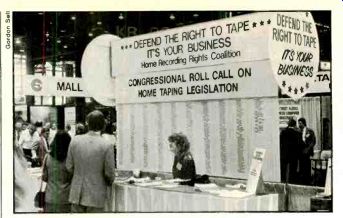
MANY representatives of the record industry blame de clines in record sales on home taping, and they have lobbied enthusiastically in favor of a proposed royalty tax on tape and tape equipment that is now under consideration in Congress. Opponents of the tax (above) at this summer's Consumer Electronics Show worked to generate lobbying pressure from the nation's audio and video retailers Just after the show the Supreme Court announced that it would review the so-called "Betamax case" concerning videotaping royal ties This has put the video issue on hold, but the record industry is still pushing hard to get a tax put on audio tape and tape equipment. You can expect to hear from the Audio Re cording Rights Coalition urging you to write to Congress to demand protection from "taxation without justification "
----------------
Disc and Tape Reviews
By CHRIS ALBERTSON NOEL COPPAGE PHYL GARLAND PAUL KRESH MARK PEEL PETER REILLY STEVE SIMELS JOEL VANCE
= stereo cassette eight-track stereo cartridge
= digital-master recording
= direct-to-disc
= quadraphonic disc
= monophonic recording
The first listing is the one reviewed; other formats. if available, follow.
HERB ALPERT: Fandango. Herb Alpert (trumpet); orchestra. Route /01; Angel; Sugarloaf; Fandango; Margarita; and six others. A&M SP-3731 $8.98, CS-3731 $8.98.
Performance Accomplished Recording Excellent Herb Alpert made his name, fame, and for tune well over a decade ago with a series of albums featuring his very fine trumpet playing, often with a chorus of other brass behind him, in a Latin-flavored repertoire.
Then it was "Herb Alpert and the Tijuana Brass."
Today it's just rich of Herb tootling away on much of the same material. He is, however, such an easy and accomplished performer and such a fine musician technically that his albums go down as smoothly as a perfect Margarita. There's nothing new or different on "Fandango," but Alpert's audiences probably wouldn't want it any other way. A few previous albums have included some experimentation, but this one returns to his commercial roots. As such it is a sterling example of popular music making at its sleekest.
P.R.
LAURIE ANDERSON: Big Science. Laurie Anderson (vocals, keyboards, violin); other musicians. From the Air; Sweaters; Walking & Falling; Born. Never Asked; 0 Superman (For Massenet); and three others. WARNER BROS. BSK 3674 $8.98, M5 3674 $8.98.
Performance Amusing
Recording Good
Laurie Anderson's 0 Superman tied with the Rolling Stones' Start Me Up for Single of the Year in a recent Village Voice critics' poll, which is a neat metaphor for the total confusion in what passes for the pop-music community these days: the two records couldn't be more dissimilar.
Anderson is the first of New York's SoHo performance artists to make a splash in the mainstream, and if you're ever seen one of her promo videotapes it's not hard to figure out why; she's got an appealing deadpan sense of humor, and she is, as they used to say, easy on the eyes. (Besides, she's a pro.
During her underground days, hers was the one SoHo act whose equipment never broke down.) What she does musically on this de but album is to take childishly simple little melodic and rhythmic figures, then overlay a kind of suburban Sprechstimme and some state-of-the-art electronic gimmickry. The effect is something like low-budget Mike Oldfield crossed with early-Seventies bubble-gum, and, in small doses at least, it's hypnotically pretty. (Overleaf)
-------------------
-Melanie
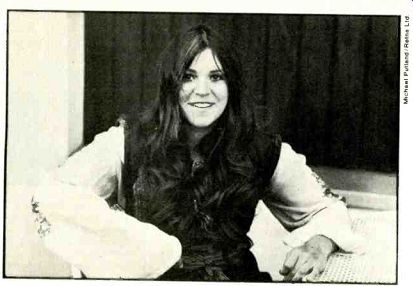
SA-HAY now, as the Fox and the Crow used to say. Melanie, one of the genuine stylists of the rock generation, with her cracking, throbbing, aching voice, is back and set against the garbage bands of the early Eighties, she is more impressive than ever. I'm not sure I can say the same for her muse; the five songs she wrote for her new Blanche/Jem album, "Arabesque," are overshadowed by Detroit or Buffalo, an excellent progressive-type rock song by Barbara Keith and Leo Feist, by Michael McDonald's simpler It Don't Matter Now, and by Chip Taylor's venerable Any Way That You Want Me. But singing is her strong suit anyway, and her writing stands up well in the larger context of today's pop.
Besides, if she keeps on finding material this good, she doesn't need to write much.
These songs were chosen partly for their impact as drama, for Melanie is quite a dramatic singer-and that's probably also why she is often backed by a rock band which is in turn backed by strings. I'm not sure the strings are a good thing, but some kind of a seamless instrumentation is. At any rate, I'm so fascinated with the vocals through out "Arabesque" that the strings don't bother me too much.
Melanie still sounds a little like Piaf to me. She still regards singing a song as a highly emotional experience, and she still puts it and herself through the wringer. And she does seem a little older and wiser, and a little less extreme about some of her vocal quirks, yet she is eternally childlike. A few more like her and the flesh-and-blood side could retrieve pop music from the clutches of the androids.
-Noel Coppage
MELANIE: Arabesque. Melanie Salka Schekeryk (vocals, guitar, piano); instrumental accompaniment. Detroit or Buffalo; It Don't Matter Now: Any Way That You Want Me; Roadburn; Fooling Yourself; Too Late; Chances; Standing on the Other Side (of Your Love); Love You to Loath Me; When You're Dead and Gone; Imaginary Heroes. BLANCHE/JEM BL 6177 $8.98, BLC 6177 $8.98.
---------------------------
Anderson is the quintessential one-joke act, of course. There's been a lot of loose talk about the satirical pungency of her lyrics, which is nonsense, and, for all its hip trappings, her stuff has the aesthetic depth and profundity of vintage David Seville. By any reasonable standard, 0 Superman was merely 198I's The Chipmunk Song. That's okay; given the ponderous solemnity of what's on the radio these days, we could use more Chipmunk songs. But my guess is that "Big Science" will seem as quaint someday as some of those Twenties Moderne pieces with titles like Soviet Iron Foundry. S.S.
THE BLASTERS. The Blasters (vocals and instrumentals); Lee Allen, Steve Berlin (saxophones). Marie Marie; No Other Girl; I'm Shakin'; Border Radio; American Mu sic: and seven others. SLASH/WARNER Bros. BSK 3680 $8.98, M5 3680 $8.98.
Performance: Uneven
Recording: Undernourished
The Blasters are being hyped in some circles as the Great White Hope of American rock-and-roll, which probably says as much about the sad state of the music as it does about the group's merits. The most irresponsible talk casts them as a new Creedence Clearwater Revival, which on the basis of this debut album is plausible only if you remember that the first Creedence album was one of their weakest.
At this stage, the Blasters seem to be simply a good, sweaty, r-&-b bar band. They're not particularly brilliant musicians, but they are genuinely soulful and have undeniable songwriting potential. The anthem American Music, for example, is a rousing and effective paean to just that, and Border Radio is touching and heartfelt in the manner of the very best country music. The rest here are mostly rockabilly ready-mades of varying degrees of effectiveness, and the album is under-produced in a manner that suggests not deliberation but simple inexperience in the studio.
In short, this is an interesting young band that may or may not have great potential.
Bear in mind, of course, that such judgments are relative. I mean, given a choice between hearing the Blasters or, say, Foreigner on the radio, I'd vote for these guys in a minute. S.S.
RECORDING OF SPECIAL MERIT
BLUE OYSTER CULT: Extraterrestrial Lire. Blue Oyster Cult (vocals and instrumentals); instrumental accompaniment.
E.T.I. (Extraterrestrial Intelligence); Dr. Music; Black Blade; Joan Crawford; Burn in' for You; Veteran of the Psychic Wars;
and seven others. COLUMBIA KG 37946 two discs, KGT 37946, 0 KGA 37946, no list price.
Performance Scorching
Recording Excellent
This two-record set brings to five the total number of live discs in the Blue Oyster Cult catalog, and it illustrates how much this is a performing band. In fact, looking back on the group's seven studio albums, it's hard to find one that can match the live sets for sustained quality, never mind energy.
"Extraterrestrial Live" may be BOC's best live album yet. It covers a wider range of the group's output than did "Some En chanted Evening," reaching back to such early classics as Cities on Flame, Hot Rails to Hell, The Red and the Black (all previously recorded live), and Dominance and Submission (which, strangely, was not).
And, of course, it draws on the superior work BOC has done since their first live LP, 1975's "On Your Feet or on Your Knees." That excellent album relied heavily on the fire and brimstone of satanic lead guitarist Donald "Buck Dharma" Roeser. "Extraterrestrial" finds the group more balanced, the songs more complete-formidable entities in their own right, not just vehicles for Roeser's riveting solos. We get a survey of the best recent work by this thinking man's heavy-metal band, including three tracks from their last record, "Fire of Unknown Origin," the by-now show-stopping (Don't Fear) The Reaper, and a rousing cover of the Doors' Roadhouse Blues, with the Doors' original guitarist Robbie Krieger lending extra authenticity to the proceedings. BOC also has a lot more electronic gadets at its disposal now and treats us to a virtuosic display of them on the towering tour de force Godzilla.
This band clearly enjoys itself and is determined to drag us along for the fun. But for all the blistering boogie and torrid chops, I think my favorite moment on "Extraterrestrial Live" is when Eric Bloom announces to the upstate New York audience that "We know Poughkeepsie is serious 6 5 about rock-and-roll." If you're serious about rock-and-roll, don't miss this record.
M.P.
CHEAP TRICK: One on One. Cheap Trick (vocals and instrumentals). She's Tight; Time Is Runnin'; Saturday at Midnight; Love's Got a Hold on Me; I Want Be Man; and six others. EPIC FE 38021, FET 38021, OO FEA 38021, no list price.
Performance As usual
Recording Good
Martin Rushent, who produces the Human League (among other tragically hip English acts), said recently that the guitar sound prominent on most American records played on the radio was really as old-fashioned as the saxophone sound on his parents' Glenn Miller records, and that the American audience was bound to wise up and reject :t. Of course, there's a certain amount of vested interest talking there, and "rock" acts like the Human League probably throw the baby out with the bathwater, but Rushent just may be right.
This unpleasant thought occurred to me while I was listening to the new Cheap Trick album, because what we have here is the same Led Zeppelin-derived metallic-guitar histrionics that have glutted our air waves and concert halls for nearly a decade.
In this particular instance there is precious little of the wit that has occasionally in the past made Cheap Trick seem a more appealing band than, say, Rush. In other words, "One on One" has no tunes, no lyrics to speak of, and lots of high-decibel bluster.
One might have expected new producer Roy Thomas Baker to alter the formula a bit, given his fondness for New Wavey key boards (note his work with the Cars), but he didn't. All things considered, this is an extremely dull record. You'd be better off with Glenn Miller.
-S.S.
RECORDING OF SPECIAL MERIT
ANGELA CLEMMONS. Angela Clemmons (vocals); vocal and instrumental accompaniment. We Must Take Our Time/ Give Me Just a Little More Time; Uneasy; When You're Through I'll Be Waiting; Giving It Away; Fill You Up; and four others. PORTRAIT FR 36828, FRT 36828, no list price.
Performance Sings like an angel
Recording Excellent
Angela Clemmons, a former church singer from Norwalk, Connecticut, has come up with a fascinating potpourri of old and new r-&-b styles showcasing her voice, which ranges from the coy cuteness of Sixties Mo town "girl" singers to robust bit controlled abandon. One thing is certain: this young woman sings so well she could make almost anything sound good. She gets deep into a song and puts it across with conviction.
Fortunately, almost all the songs here are several pegs above average in this genre, and the whole album was skillfully produced by Paul Leka to highlight Clemmons' considerable expressive abilities. Eight songs are by Michael W. Brown; their tem pos are varied but all are unashamedly pretty. Several reminded me of Stevie Wonder's less self-conscious work of a few years ago, including Uneasy, Keep It Warm for Me, Fill You Up, and the choice Sure Thing. On the other hand, Giving It Away is downright gospelish, enabling Clemmons to pay full respect to her roots. The only less than satisfactory song here is the opener, Give Me Just a Little More Time, an extended, hackneyed derivative of early Motown. Interestingly, it is the only song not written by Brown, whom Angela Clemmons should take on as her permanent collaborator. They make mighty fine music together. P.G.
-------------------
Interview
Bobby Short: "... you have to stick to your guns."
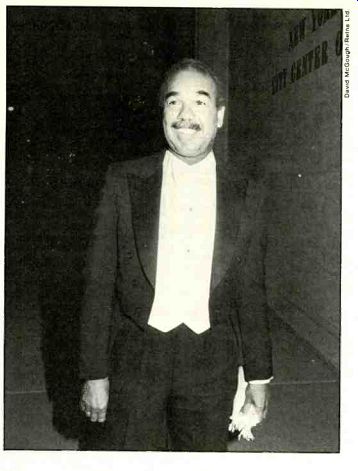
SINGER-PIANIST Bobby Short, whose new Elektra album is called "Moments Like This," explained to me recently how he had weathered the years during the tyrannical reign of "relevance" in popular music.
"About ten or twelve years ago I had so called friends who deserted me completely because I didn't 'get with it.' They'd say, 'Oh, he's very nice, but I don't want to live in the past.' I had to face that, but I'm as stubborn as can be about anything that concerns my true and inner self. I believe you have to be true to yourself and look out for yourself. That was Noel Coward and Cole Porter's great point, that you have to stick to your guns." Short was speaking from the comfort of an armchair in his cavernous apartment in one of the grandest of New York City's old-landmark apartment buildings. Bobby Short is also a New York landmark. Not to go and hear him sing and play at the Café Carlyle is rather like going out of your way to avoid the Plaza fountain or Rockefeller Center or the Metropolitan Museum of Art.
When you do hear him, whether at the Carlyle or on any of his albums (previous ones have been on Atlantic), you're immediately in touch with the great tradition in classic popular music.
"Out of 'concern' people used to tell me to go out and get a whole new act, new clothes, to Get In Style," he said, looking out his bay window onto 57th Street. "But people who say things like that are not people who are involved in what you're involved in.
They may be involved in your business, but they don't know what you know about your business. Anyway, I guess now I'm back in style, whatever that means." What that means is that for "Moments Like This" Short has made his usual superior selection of songs by the very best classic and contemporary pop composers such wonderful pieces as Body and Soul, Say It Isn't So, Sigh No More, and Memphis in June-and has sung the hell out of them. The only differences are that for this record he has a full-orchestra back-up in stead of a small combo and that he doesn't simultaneously accompany himself on the piano, having recorded the vocal and piano tracks separately.
"Very few of us are able to sit down and give full service to the vocal and the piano at the same time," he said, even though he manages it very nicely every night at the Carlyle. "For recording purposes, I thought it would be wise to separate them. That meant that I was able to take a nice rest in between, which is impossible in the saloon life. That's hard work. The audiences are spoiled; they want to hear a nice long show." Short told me, however, that he's noticed an interesting change in his audiences these days. "I'm getting a lot more young people.
They want to hear the old songs. They understand literature and music, and they're really curious about the Thirties. When they hear a lyric by Lorenz Hart or Ira Gershwin they analyze it like a piece of poetry." But Short's repertoire is not exclusively old songs. The new album, for instance, includes the Streisand-Williams Evergreen, which Short "never even knew about" until he was asked to perform it at a Golden Globe awards ceremony. "At the Carlyle I sometimes play some of Billy Joel's things, and I do like Randy Newman's work, but I don't make a big thing out of it. It's nice to be au courant, but not to the point where you are untrue to yourself. I've known most of the composers whose songs are on the new album-Coward, of course, and Porter, and I knew Duke and Hoagy. Cy Coleman is still a friend, and so is Burton Lane."
UNLIKE performers who aim at the lowest common denominator-and reach it Short says that he made his new album for himself and his audiences, and he's included songs with a broad appeal "because they're good songs." Short and his fans share an appreciation for the finer things in life.
"Women who are dressed by the best couture houses in the world and wear jewelry from Carimati and Winston come to the Carlyle, or buy my records, to hear the songs they know, songs that hark back to the time when music was one of America's greatest exports. The songs I do have been translated into every known language. Our American popular music has been one of our contributions to civilization. It's all we have, isn't it? A well-written song, a good piece of orchestration, a fine painting, a classic piece of furniture, a well-cut suit made from good cloth-the sooner one learns to appreciate that kind of fineness about living, the better off one is." If there are any beginners in Life Appreciation reading this, I'd suggest that they couldn't have a better first lesson than listening to Bobby Short's "Moments Like This." It is very fine indeed.
-Peter Reilly
BOBBY SHORT: Moments Like This, Bobby Short (vocals, piano); orchestra. Some one to Light Up My Life; Georgia Blues/ Georgia on My Mind; Sigh No More; I'm Satisfied; Evergreen; Memphis in June; Moments Like This; I Am in Love; Say It Isn't So; Body and Soul; Sometime When You're Lonely. ELEKTRA E I-60002 $8.98, EI-60002 $8.98.
-----------------------------
RECORDING OF SPECIAL MERIT
A FLOCK OF SEAGULLS. A Flock of Seagulls (vocals and instrumentals). I Ran: Space Age Love Song; You Can Run; Don't Ask Me; Telecommunication; and five others. ARISTA/jive VA 66000 $8.98.
Performance Breathless
Recording Excellent
Here's a band that seems to have everything going against it: a dumb name, an over worked formula (in this case the die-cut techno-pop that's got the kids in Europe worrying about the bomb instead of the prom), vocals so characterless they're all but anonymous, and space-age "romantic" lyrics about as compelling as the magazine rack at a Nebraska bus stop. The album's got to be a disaster, right? Wrong. "A Flock of Seagulls" teaches two important lessons: one, play anything fast enough and it will sound good, and two, a hot guitarist will cover a multitude of sins.
Almost every track on "A Flock of Seagulls" is a wind sprint. You simply don't have time to listen to what's being said, or how. Lead guitarist P. Reynolds pours out a stream of power chords, staccato riffs, echoing tag lines, crisp rhythm figures, and crackling fills. I don't think one of them is original, but I don't care. I'm sorry. When a band heats up the grooves like this, it's time to throw high-minded principles out the window. M.P.
FUNKAPOLITAN: Funkapolitan (vocals and instrumentals). Run Run Run; Illusion; War; As Time Goes By; and four others. PAVILLION BFZ 37969, BZT 37969, no list price.
Performance Rough gem?
Recording: Good
Funkapolitan is a British group that mostly thumps, handclaps, and talks its way through a repertoire of self-indulgent monotony. There is, however, some talent here, and it is displayed most effectively on Behold the Super Ace, a track whose most salient features are a good beat and an engaging rap by Simon Ollivierre. August Darnell (Kid Creole, the Savannah Band) heard Funkapolitan last year when the group appeared at Bond's International Casino as the opening act for the Clash, and his interest was sparked to the point of personal involvement. He is listed as the producer of this record, the group's first American album release, but this is in fact Funkapolitan's British debut album as remixed by Darnell. It is not difficult to understand Darnell's interest, for Funkapolitan leans heavily toward the sort of Caribbean romps he himself favors, and there is in evidence a lack of discipline with which he can certainly identify. The question is, can such a group make it in the land of Earth, Wind & Fire? C.A.
RECORDING OF SPECIAL MERIT
HERBIE HANCOCK: Lite Me Up. Herbie Hancock (vocals, keyboards, synthesizers); vocal and instrumental accompaniment. Lite Me Up: The Bomb; Gettin' to the Good Part; Paradise; and four others. COLUMBIA FC 37928, FCT 37928, no list price.
Performance Progressive r-&-b
Recording Very good
Listening to Herbie Hancock's funk productions has usually made me hungry for all the wonderful jazz things he used to do on acoustic piano back in the Sixties. Since his defection, he has often spruced up his pop sets with a track or two of jazz for us die-hards who wish he'd never learned how to make money in the mainstream. But this time around he has accomplished the next to impossible. "Lite Me Up" is a progressive r-&-b album that even I found thoroughly satisfying.
Although everything here falls safely within the range of commercial r-&-b, Hancock has invested each selection with craftsmanship and inventiveness. The care fully structured music abounds in sudden, unexpected changes and imaginative harmonic embellishments. There is also close attention to musical texture in Hancock's clever work on a battery of synthesizers, which he often uses to inject whining, blues-like comments. Among the standouts are Gettin' to the Good Part, which could easily have been given a jazz treatment with instrumental rather than vocal emphasis, and Paradise. One minor sour note, though: I wish Hancock would abandon the Vocoder, an odious electronic device that makes him sound as if he's singing with a clothespin clamped over his nose. His music needs no gimmicks.
P.C.
JETHRO TULL: The Broadsword and the Beast. Jethro Tull (vocals and instrumentals). Beastie; Clasp; Fallen on Hard Times; Flying Colours; Slow Marching Band; and five others. CHRYSALIS CHR 1380 $8.98, CCH 1380 $8.98, 0 8CH 1380 $8.98.
Performance A bit tame
Recording. Very good
Criticizing Jethro Tull's leader, Ian Ander son, for being strident or given to excesses in lyrics or performance is like finding fault with a professional wrestler for hamming it up in the ring. It's part of the act; you either like it or you don't. "The Broadsword and the Beast" isn't Jethro Tull's best album. It isn't even close. But on its own terms, it's not bad. "Broadsword" certainly has its heart in the right place, coming out four square against fear, hypocrisy, and pettiness and in favor of friendship and a firm handshake. In fact, the album's greatest shortcoming may be its ordinariness.
There's not a single outrageous song in the whole thing, just competent, occasionally insightful, and neatly arranged songs on a variety of subjects you wouldn't think Anderson would bother with-such as the subtle ways two people in a disintegrating relationship find to hurt one another or the way sitting in the typing pool for eight hours day after day can bring a girl with big dreams down to earth. If you don't mind sacrificing outrage for a few modestly acute observations, you'll like what Jethro Tull is doing here. M.P.
ELTON JOHN: Jump Up! Elton John (vocals, piano); vocal and instrumental accompaniment. Spiteful Child; Legal Boys, Princess; I Am Your Robot; Ball and Chain; and five others. GEFFEN GHS 2013, $8.98, M5 2013 $8.98.
Performance Don't jump
Recording: Good
It was only a few years ago that Elton John fever had youthful rock fans clamoring for the little man with the bizarre glasses and the thin smile. Elton was not a part of the disco craze, but when he entered that music's glittery establishments, patrons flocked around him all the same. For quite a while now, Elton John has kept a relatively low profile, but the silence has been bro ken with "Jump Up!," an album representing his debut on the Geffen label. The outrageous eyeglasses are gone, and so--I thought, as side one reached a dreary mid point-is the fire that once heated the creative juices to produce such distillations as Goodbye. Yellow Brick Road, The Bitch Is Back, and Don't Go Breaking My Heart.
However, it turns out that this album does have its moments, and most of them are on side two. So don't be discouraged by the boring opening track, a tribute to John Len non called Dear John, or by the other disappointing collaborations with Gary Osborne.
Osborne is no match for Elton's long-time songwriting partner, Bernie Taupin, who is represented here by five selections, two of which-Where Have All the Good Times Gone? and All Quiet on the Western Front-reflect the rapport of better days.
There is nothing wrong with today's Elton John that a good producer and a more interesting band couldn't remedy. C.A.
CAROLE KING: One to One. Carole King (vocals, piano); instrumental accompaniment. One to One; It's a War; Lookin' Out for Number One; Life Without Love; Gold en Man; Little Prince; and four others. AT LANTIC SD 19344 $8.98, CS 19344 $8.98, 0 TP 19344 $8.98.
Performance: Medium cool
Recording: Good
The good news is that Carole King sings better here than she used to. As for her songwriting-well, the keepers seem fewer and farther between. Although King's a pro at writing lyrics, her songs impress me in direct proportion to the catchiness of the tunes, since she tends to write forgettable lyrics about the usual subjects. Most of these melodies meander haplessly before a back-up that's on the standoffish side of cool. The tune to Read Between the Lines has some zing to it, though, and the one to Little Prince has some structural subtleties I like. These two are reminders that the better Carole King songs have come out of instinct rather than midnight oil, the latter being a little too apparent in most of the others here. N.C.
RECORDING OF SPECIAL MERIT
JIMMY LYON: Plays Cole Porter's Stein way and His Music. Jimmy Lyon (piano). Night and Day; I've Got You Under My Skin; At Long Last Love; True Love; Love for Sale; Easy to Love; and eight others. FINNADAR SR 9034 $8.98.
Performance: Stylish and stunning
Recording. Very good
When the "new" Waldorf-Astoria Hotel was built in 1931, the owners decided to name a restaurant/cocktail lounge on the premises after the famous "Peacock Alley" corridor in the old Waldorf where members of New York society used to stroll in their glittering get-ups. In Peacock Alley today there is a piano that once belonged to Cole Porter and at which, in his suite at the Waldorf Towers, he wrote some of his most .en during hits. Jimmy Lyon, who now performs regularly at Peacock Alley, used that very piano for this live recording of Porter tunes, and it seems to have inspired him to give his all. It may be hard to believe that anyone could throw new light on such familiar melodies as these, but it happens here. These are not cocktail-lounge tink lings but imaginative embellishments of Porter perennials. The kind of sophistication these songs originally represented may have gone the way of the old Smart Set, but it seemed to live again as I listened to this marvelous album. P.K.
MOON MARTIN: Mystery Ticket. Moon Martin (vocals, guitar, bass); vocal and instrumental accompaniment. X-Ray Vision; Aces with You; She's in Love with My Car; Witness; and six others. CAPITOI. ST-I2200, $8.98, 4XT-12200 $8.98. 0 8XT-12200, $8.98.
Performance Good in spots
Recording Good in spots
Moon Martin's vocal range is somewhere between a wheeze and a mumble. I still maintain that he's a more-than-competent songwriter who doesn't have any business making albums as a performer, but what the hell, somebody's buying these things.
Every time I'm about to file and forget Martin's latest effort, though, one song grabs me. On his last album it was Signal for Help; here it's Aces with You-good old-fashioned pop-rock with just the right mix of macho and schmaltz. The lyrics are juvenile, as they're meant to be (otherwise the song wouldn't work), but the melody and production are perfect. One other re deeming feature here is this witty line from She's in Love with My Car: "Ever since you've been gone/I walk around with sun glasses on." Pretty well skewers adolescent affectation, doesn't it? Unfortunately, one good song and one good line do not an al bum make. J.V.
JOHN MARTYN: Glorious Fool. John Martyn (vocals, guitar); Phil Collins (drums, piano, vocals); other musicians. Couldn't Love You More: Amsterdam; Hold On My Heart; Perfect Hustler; Hearts and Keys; Glorious Fool; and five others. DUKE DU 19345 $7.98.
Performance: Martyn rampant
Recording: Good
Once a gentle British folkie, John Martyn in recent years has come down with severe Jazz Singer Syndrome, slurring words beyond recognition, breaking up phrases unnaturally, trying to sound like an instrument, and all that. When he first started doing this, the nonverbal communication increased enough to make me hang around, but about all I can get out of "Glorious Fool" is that he's in one unspecific, vaguely outlined mood here and in another one there. The pieces simply aren't interesting enough as music to have their words thrown away. You can get away with almost any thing if you don't take it to extremes-and with practically nothing if you do. N.C.
RECORDING OF SPECIAL MERIT
THE O'JAYS: My Favorite Person. The O'Jays (vocals); instrumental accompaniment. / Just Want to Satisfy You; Your Body's Here with Me (But Your Mind's on the Other Side of Town); My Favorite Per son; One on One; I Like to See Us Get Down; and three others. PHILADELPHIA IN TERNATIONAL FZ 37999, FZT 37999, no list price.
Performance: Lustrous sound
Recording: Very good
The O'Jays' sound on this nevi set is so impressive that I just gave myself up to enjoyment of it. The group's harmony is so accurate and their blend so mellow that it doesn't really matter that these aren't the best songs I've heard lately or that some of the lyrics are downright simple-minded.
The O'Jays make the most of them all. The writing and producing credits include Kenneth Gamble, Bunny Sigler (on one track, Your Body's Here with Me), Gene McFadden, and John Whitehead, the latter two no slouches themselves when it comes to singing, and everything works here to set off this veteran trio to splendid advantage.
P.G.
-----------------
"Billy" Vera
BILLY VERA had one minor hit--Story book Children, a duet with black sing er Judy Clay-in the mid-Sixties on the Stax label in Memphis. It might have been a bigger hit, but biracial duos were then un acceptable in live performance or even in publicity photographs. Vera made a few un successful recordings, played back-up, and saw some of his songs become hits for other performers (Dolly Parton made No. 1 on the country charts with his I Really Got the Feeling). Then in 1981 his group Billy and the Beaters won acclaim with their self-titled debut album on Alfa Records.
Vera's new solo album on Alfa retains only Lon Price of the Beaters, and it displays Vera as a terrific Southern pop writer-sentimental, down-to-earth, and hilariously salacious. Vera's vocal accent suggests Dr. John without the pervasive rasp, but his phrasing is a lot freer. He sings with great skill, humor, and showmanship.
Vera and Jerry Wexler co-produced this delightful program with a minimum of flap doodle but lots of ingratiating folderol. Vera wrote nearly all the songs, either alone or in collaboration with such stalwarts as L. Russell Brown and Chip Taylor. The back-up musicians are first-rate.
Oooh is, as its title implies, a seduction song (Vera adds some spoken "endearments" and cackles). We Got It All and Down are about connubial bliss; the former finds the hero poor but happy ("A broken down TV that only gets Channel 3"), and the latter has him urging his mate to more decorum ("When we make love in the evenin'/The landlady thinks you're dyin' ").
Private Clown is a kiss-off to a vampire. I Don't Want Her has a melodic structure very reminiscent of Sam Cooke, but the subject matter is unusual; having won his lady fair, our hero is scared to death by success ("She's everything I've ever wanted/ And it's more than I can stand"). Hopeless Romantic is a bit too sentimental and melodramatic for a ballad, but Once in a Lifetime (Will Do) is more laid-back and it scores.
Of the outside material, the only real dud is I Don't Want to Go On Without You, written some years ago by Jerry Wexler and the late Bert Berns. Slow Down is the old Larry Williams rocker that the Beatles cut in the Sixties, and it's still a lot of fun.
Peanut Butter, a minor hit from the early Sixties, is a wonderfully silly parody of the dance tune Hully Gully. This album is a real treat, and I hope we'll be hearing a lot more from Billy Vera.
-Joel Vance
BILLY VERA. Billy Vera (vocals, guitar, piano); vocal and instrumental accompaniment. We Got It All; Oooh; Hopeless Ro mantic; Down; Slow Down; I Don't Want Her; Once in a Lifetime (Will Do); Peanut Butter; I Don't Want to Go On Without You. ALFA AAB-11012 $8.98.
-------------------
JANE OLIVOR: In Concert. Jane Olivor (vocals); instrumental accompaniment. Stay the Night; Pretty Girl; Carousel of Love; Daydreams; Annie's Song; Race to the End; and six others. COLUMBIA FC 37938, FCT 37938, no list price.
Performance: Studied
Recording: Stiff
In this album, recorded live at Boston's Berklee College of Music, Jane Olivor again proves handily that she can wilt any song by anybody. This time out she's left the deceased masters (Porter, Coward, Gershwin, Kern, and so on) to rest in peace and turned her taxidermic talents on the works of such hapless contemporaries as John Denver (Annie's Song), Melissa Manchester and Carole Bayer Sager (Better Days), and Dan Fogelberg (Run for the Roses). What's right about Olivor is her darkly interesting, dramatic voice. What's wrong is that she consistently refuses just to sing a song but insists on giving chalk talks on the art of it all. The recorded sound of the album is as mannered as its star. P.R.
ROBERT PALMER: Maybe It's Lire. Robert Palmer (vocals, guitars, keyboards, drums); vocal and instrumental accompaniment. What's It Take?; Some Guys Have All the Luck; Style Kills; Maybe It's You; What Do You Care; and five others. ISLAND ILPS 9665 $8.98, M5 9665 $8.98.
Performance. Spirited
Recording: Fairly good
Probably the most interesting but, at the same time, most unsatisfying thing about this album is its schizoid division between live and studio recordings. The first side consists of live takes of such Robert Palmer favorites as Best of Both Worlds and Every Kind of People. It succeeds on power more than anything else. There's little differentiation between instruments and not a single strong instrumental solo, but the overall sound is positively thunderous in the opening cut, Sneaking Sally Through the Alley, and almost apocalyptic on the closer, Bad Case of Loving You. Palmer is in great voice throughout, putting on a display of acrobatic phrasing that dips and shimmies and squeezes through the spaces between the beats.
Side two finds him still juiced up but back in his studio "laboratory," tinkering with all the current pop fads. I get the feeling he just wanted to try everything once. On Style Kills he turns all the dials to maximum gain, as if to find out how much of the song can survive. He jams some modish ma chine-age rhythms into Si Chatouillieux, and on Maybe It's You he even tries a little straight-ahead hard rock at a double-time clip along with Gary Numan's bleak key board visions (it's a long way from Lowell George).
The split between live oldies and new studio cuts gives "Maybe It's Live" an unfinished feeling. There's not enough older stuff to be a summing up of Palmer's career to date, and there's not enough new material to signal a definite change in direction. But for fans who want a little of both, this may be just right. M.P.
ROSE ROYCE: Stronger Than Ever. Rose Royce (vocals and instrumentals); other musicians. Dance with Me; Sometimesy Lady; Best Love; Still in Love; Somehow We Made It Through the Rain; and three others. EPIC FE 37939. FET 37939, no list price.
Performance Good for dancing
Recording: Good
This album is Rose Royce's attempt to "re establish" itself. Exactly what that means is not clear, since the album does not differ markedly from their past efforts. It features the same unbridled high spirits, sassy tone, and emphasis on strutting dance numbers.
Although members of the group played a greater role in production here than in the past, when they left everything pretty much in the hands of Norman Whitfield, they have not wandered far from his approach.
Rose Royce is still basically a funky party band, and a good one. Thus the best tracks here are Dance with Me. Fire in the Funk, and Talk to Me, with the ballad Somehow We Made It Through the Rain providing a bit of soft sentimentality to offset the flash and dash of the rest. P.G.
JOHN SCHNEIDER: Quiet Man. John Schneider (vocals); orchestra. Dreamin'; I Need Someone to Miss; In the Driver's Seat; Hurts Like the Devil; Quiet Man; Love Letters in the Sand; and four others. Scorn BROTHERS FZ 37956, FZT 37956, 0 FZA 37956, no list price.
Performance. Sluggish
Recording Bombastic
The question this release raises is, how can one of the Dukes of Hazzard TV boys go into the recording studio and let them treat him like a male Debbie Boone? Unlike most actors, John Schneider has a pretty good singing voice and seems to have at least an advanced amateur's ability at using it. (On the other hand, like most singers, he isn't much of an actor.) But he is plumb drownded out here by cascading strings and general heavy-handedness in the production. The thing booms out at you even if you have the volume knob barely turned on; it may be the highest-level recording, volume wise, in my burgeoning collection. And then there are those icky strings, used with all the imagination and verve of elevator music circa 1952. But if you think that's bad, you ought to hear this bunch try to rock, as on the opening cut, Dreamin', the Johnny Burnette hit of yore. It's like Frenchmen trying to play bluegrass, or as if the music and the musicians came from two different planets.
Actually, it's like the way music is routinely treated on television. Schneider really should give the real world a try.
N.C.
SPLIT ENZ: Time and Tide. Split Enz (vocals and instrumentals). Hello Sandy Allen; Six Months in a Leaky Boat; Take a Walk; Lost for Words; Haul Away; Dirty Creature; and six others. A & M SP-1894
$8.98, CS-1894 $8.98.
Performance Good, but ...
Recording. Good
Suicide, nervous breakdowns, the end of the world, and-everybody's favorite modern problem-the inability to communicate are the subjects of Split Enz's latest outing.
There is some very tricky and intricate vo cal writing here that calls for great breath control and rhythmic precision. Split Enz has set themselves some difficult tasks, and they come through very well, but I'm still disappointed with "Time and Tide." I kept waiting for one of those charmers that the band usually includes on each album-the gorgeous Iris from their last disc, for in stance-but this time they have opted for big production and a mysterious cosmic message. Grandiosity makes the album un satisfying. The worst cut is Pioneer, an instrumental that I suspect is supposed to demonstrate the inadequacy of words to convey the pain of churning innards and overtaxed psyches. It is actually nothing more than hurly-burly presented with a touch of pride that gives the game away.
Seers are seldom modest.
SQUEEZE: Sweets from a Stranger. Squeeze (vocals and instrumentals). Out of Touch; I Can't Hold On; Points of View; Stranger Than the Stranger on the Shore; Onto the Dance Floor; When the Hangover Strikes; Black Coffee in Bed; and five others. A& M SP-4899 $8.98, 0 CS-4899 $8.98.
Performance Parched
Recording Very good
Squeeze may be the best (and smartest) pop-rock band now working in the Free World, but there's no call for the kind of extravagance certain rock critics (and A&M Records) have been indulging in lately: Chris Difford and Glenn Tilbrook are not the new Lennon and McCartney or the new Gilbert and Sullivan. Squeeze is a very good, thoroughly English band that has all the right influences but is also locked into a fairly rigid formula.
Lyrically, I have no complaint whatsoever; Difford and Tilbrook have novelists' eyes for small details and a flair for language like Ray Davies' when he's on, and there's more humanity in one of their throwaway efforts than in a year's worth of Top-40 hits. Musically, however, I'm not so thrilled. They can be gifted tunesmiths (recall the earlier Another Nail in My Heart or Pulling Mussels from a Shell), but too often they seem compelled to torture a melody into as many awkward modulations and chord changes as possible, and their big vo cal gimmick-the melody line sung in a split octave (a la Lennon and McCartney)--can get awfully tiresome. Harmonies would be nice occasionally. fellas. "Sweets from a Stranger" is simply dry.
In terms of production, it's Squeeze's first with the kind of high gloss one expects from a McCartney or a Ronstadt, but there's a stained-glass feeling to it that puts me off.
There's simply too much hard work and agonized decision-making on display here for the results to be truly involving.
Granted, it's odd these days to carp about a record's being too brainy for its own good, but that about sums up "Sweets from a Stranger." Give these guys a couple of weeks lolling on the beach before letting them back in the studio, that's my advice.
S.S.
RICHARD AND LINDA THOMPSON: Shoot Out the Lights (see Best of the Month.)
RECORDING OF SPECIAL MERIT
MEL TILLIS: It's a Long Way to Daytona Mel Tillis (vocals); instrumental accom paniment. Dream of Me; The One That Got Away; It's Gonna Be One of Them Days; She's Been Doin' That for Years; Always You. Always Me; Wrong Again; and four others. ELEKTRA EI-60016 $8.98, E4 60016 $8.98, E8-60016 $8.98.
Performance: Classy
Recording: Pretty good
Even though this album's title and dedica tory note had me all set for the first stock-car-racing album by a major star and only one song turns out to be on that subject, I like it enough to play it on my own time.
Most recent Mel Tillis albums have been too slick for me, but this one has some bite to it; indeed, the instrumentals seem to be treated with a new respect, and the pickers respond the way people usually respond to good treatment.
The songs are strong too, even if they do stray off to conventional love-story themes that have nothing to do with the track. Only the title song really deals with racing; its lyrics are the musings of a short-tracker yearning for a crack at the big oval at Daytona. You can relate to the other songs even if you're not interested in racing, for they deal rather intelligently with the off-track soap opera we call life. And Tillis presides over it with the authority of an old pro, smooth as good Irish whiskey. N.C.
ROBERT WHITE: Songs My Father Taught Me. Robert White (vocals); Dick Hyman (piano); orchestra, Dick Hyman cond. My Blue Heaven; Bye Bye Blackbird; When I Grow Too Old to Dream; Shine On,
--------------
Talking Heads
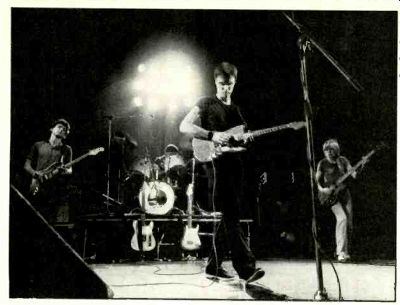
ALL new art seems ugly at first, an art critic once said in justifying Jackson Pollack or some other high-priced abstractionist, and I think the whole New Wave business has to be looked at with the under standing that rock critics sense this on some level. All critics fear being deemed reactionary, so, in looking at or listening to something new in the "different" or "strange" sense, they are susceptible to let ting the second question, "Am I being reactionary?", supplant the first, "Is this stuff art?" With rock critics, almost anything sufficiently far-out or off-the-wall tends to get automatic credence, nature abhorring, as she does, a vacuum in the Next Big Thing mentality. I have long agreed with the late Lester Bangs that New Wave is mainly a marketing ploy aimed (unsuccessfully, it now appears) at taking up where sagging disco sales left off. After several hours of sticking my head into "The Name of This Band Is Talking Heads," a two-disc retrospective from Sire, I am as convinced as ever that Bangs was right.
You do, of course, have to learn how to listen to something new, but this style has been around for half a decade now. The new Talking Heads set, recorded live at various venues (as rock critics like to call places), just about spans it, covering 1977, 1979, and 1980-1981. We've learned as much as we're going to about how to listen to it-this is, after all, the realm of pop we're talking about-and the bulk of it still sounds like nonsense. And Talking Heads is one of the better of our brave new bands. "Intellectual funk" is supposed to be the band's specialty, but to me it seems intellectual only relative to such cretins as the Ramones. On the other hand, the Heads have the funk part down pretty well; there is a whole world between the Ramones and Sex Pistols and other primitives and the Heads when it comes to getting effects out of instruments (or, for that matter, in the playing of a simple chord cleanly).
What you have here is not some radical new invention but an extension--or distortion, if you will-of various aspects of rhythm-and-blues. Now, the Talking Heads occasionally get this sort of thing into a fine groove, as in Houses in Motion, and you can get lost in the rhythms and make a kind of emotional connection with the band which is, after all, what we claim we're after as long as we can call it music. But an awful lot of this seems to be about making an intellectual connection; the music seems purposefully ugly, as if to call attention to the words-which in turn are covered up by the instrumentals. When you can make out a string of words, it turns out there's a lot of repetition involved, and it begins to appear that it turns on inflection more than con tent, and so on, until you despair of finding a bet that isn't hedged.
I FIND, now, that I like the Talking Heads' 1977 stuff best, possibly because then they did not need to top themselves. There is a freshness about that side, which seems gradually replaced by a kind of brittleness.
Although not intellectual giants, leader David Byrne and associates are reasonably bright, so I may be hearing boredom showing through. Contrived formats will do that to you.
-Noel Coppage
TALKING HEADS: The Name of This Band Is Talking Heads. Talking Heads (vocals and instrumentals). New Feeling; Don't Worry About the Government; Pulled Up, Psycho Killer; Artists Only; Stay Hungry.
Air; Building on Fire; Memories; I Zimbra; Drugs; Houses in Motion; Life During Wartime; Take Me to the River; The Great Curve; Cross-eyed and Painless.
SIRE 2SR 3590 two discs $12.98, 2SR5 3590 $12.98.
----------------
Harvest Moon; By the Light of the Silvery Moon; and seven others. RCA NFLI-8005 $6.98, NFK 1-8005 $6.98.
Performance. Corny
Recording. Excellent
As an early admirer of Robert White, a marvelous tenor who merits comparison with the great John McCormack, I thought he could be safely trusted to stick to Irish song repertoire. Robert has never forgotten, however, that his father was Joe White, the NBC radio network's celebrated "Silver Masked Tenor" of the Twenties and early Thirties.
As the title tells us, on this record White sings the songs his father taught him, and for one of my age it was rather an eerie listening experience. Suddenly, there I was, catapulted back to my childhood, when the family Victrola (or Atwater Kent radio) seemed always to be playing All Alone by the Telephone, Charmaine, and My Blue Heaven. Not content with singing these chestnuts in a voice that is far too good for them, White has also arranged with con ductor and pianist Dick Hyman to provide the kind of settings that gave this popular music of the period its special blandly senti mental appeal. It's as if the Age of Ortho phonic Sound had suddenly risen from sleep to do battle with the Digital Giant. For those young enough to be immune to the heart-tugging associations of such dusty items as Poor Butterfly, "Songs My Father Taught Me" should serve nicely as a musical history lesson-the phonographic equivalent of a Thirties movie on the Late, Late Show, except that the sound is so astonishingly clear it seems at odds with the material. At times White's own strong vo calizing seems at odds with it too, but, even so, he certainly does his pop proud. P.K.
DENIECE WILLIAMS: Niecy. Deniece Williams (vocals); vocal and instrumental accompaniment. Waiting by the Hotline; It's Gonna Take a Miracle; Love Notes; I Believe In Miracles; A Part of Love; and three others. COLUMBIA FC 37952, 0 FCT 37952, FCA 37952, no list price.
Performance. Fine singing
Recording. Very good
Deniece Williams' first albums, back in the mid-Seventies when she was produced by Maurice White and the late Charles Stepney, generated an immediate surge of excitement, but this new one is different. Here Williams has teamed with Thom Bell to co produce a set featuring consistently excel lent singing and songs that range in quality from so-so to very good. The highlight is her reworking of the golden oldie It's Gonna Take a Miracle, which sounds just as delectable here as in any of its previous incarnations-maybe even better. Love Notes, which Williams wrote with the versatile Skip Scarborough, gets off to a bumpy, repetitious start but soon breaks into a wonderful chorus. And in the poignant A Part of Love, which closes the album, Williams displays marvelous control and range of expression. But too much of what falls between these high points is undistinguished and forgettable. P.G.
HANK WILLIAMS JR.: High Notes (see Best of the Month, page 69) trombonist Vic Dickenson. This is main stream jazz at its euphonious best. C.A.
RECORDING OF SPECIAL MERIT
JOYCE CARR. Joyce Carr (vocals); Dick Thomas (piano); the Bob Vigoda Trio (instrumentals). Skylark; I Wish You Love; Yesterday; Ev'rytime; As Children Do; and seven others. AUDIOPHILE AP-148 $8.98.
Performance Silky
Recording. Good
Joyce Carr is a lady who seems well on her way to becoming something of a local legend around Washington, D.C., where she's been performing for a couple of decades. For a change, the folks in Washington know what they're talking about. Carr is an extremely fine singer with a wonderfully relaxed and easy style that in no way interferes with her meticulous attention to lyrics, her pure vocal line, or her lovely intonation.
She sounds silky and sexy without hitting you over the eardrums with it, and she never, never fakes a note or a line. Her version of the Lennon/McCartney Yesterday is perhaps the best I've ever heard. I know that her I'm Glad There Is You is. If you like Anita Ellis or Barbara Cook, then you'll like Joyce Carr. P.R.
MILES DAVIS: We Want Miles. Miles Davis (trumpet); Bill Evans (soprano saxophone); Mike Stern (guitar); Marcus Miller (Fender bass); Al Foster, Mino Cinelu (percussion). Fast Track; Jean Pierre (two versions); Kix; and two others. COLUMBIA C2 38005 two discs, C2T 38005, no list price.
Performance Disappointing
Recording Good remotes
When it became clear that Miles Davis was going to be gone from the scene for a long time, many of us felt that he would return to take jazz down a new path and make amends for the (con)fusion he started. After all, he had been one of the most influential players the music had known. But many jazz devotees had been disappointed in Miles' music since his early Seventies rejuvenation at the Fillmore East. Sure, he made some exciting sounds in the "Bitches Brew" days, and he alone should not be held accountable for the inane efforts that subsequently propelled such Davis sidemen as Herbie Hancock and Chick Corea to the surface of popdom. But he was falling into the fusion morass himself at the time of his withdrawal.
If Miles Davis felt that he was stepping off a treadmill in 1976, however, his pathetic return in 1981 reflected no progress. In fact, Davis has never sounded worse, and the man whose sidemen have included John Coltrane, Cannonball Adderley, Ron Carter, and Sonny Rollins is now reduced to playing trills and spills with a most undistinguished band. You can hear it on this new Columbia release, "We Want Miles," recorded last year at concerts in Boston, Tokyo, and New York. But brace yourself;
Miles Davis seems to be emulating the worst of the watery stuff that sprang from his wake in the past decade.
If you really admire Miles Davis, you won't want "We Want Miles," an album clearly thrown together by Columbia to sat isfy the label's own hunger for a Davis prod uct. The desperation is most evident in Jean Pierre, one of the set's most insipid selec tions, which appears in two boringly similar versions. This album will probably sell fair ly well on the strength of Miles Davis' name, but both artist and public would have been better served with a reissue from the trumpeter's glorious past. C.A.
ART FARMER: A Work of Art. Art Farmer (flugelhorn); Fred Hersch (piano); Bob Bodley (bass); Billy Hart (drums). Red Cross; Summersong; Love Walked In; Change Partners; and three others. CONCORD JAZZ CJ-179 $8.98.
Performance Fine Art
Recording: Very good
Since the early Fifties, when he first blossomed on the Prestige label, Art Farmer has been one of the perennial flowers of jazz.
He is not as visible now as when he co-led the Jazztet with Benny Golson, but these are very different days for the music he has remained faithful to. Some things never change, however, and Farmer's tasteful approach to music is one of them. He is still a master at the art of improvisation, as he proves again on this pleasant quartet album that glows with warmth. C.A.
RECORDING OF SPECIAL MERIT IRENE KRAL. Irene Kral (vocals); the Junior Mance Trio (instrumentals). Just Friends; No More; This Is Always; Passing By; Rock Me to Sleep; and six others. DRG MRS 505 $7.98.
Performance Excellent
Recording Good
The late Irene Kral was a very fine artist, with a durable, beautifully focused voice and an unerring instinct for the soaringly shaped phrase. For many years she was a cult favorite, well known only to a small group of people with superior taste in pop-jazz singing. These tracks date from 1963 and were originally released as "Irene Kral: Better Than Anything." The reissue is one of the more valuable entries in DRG Records' "Jazz Master" series. Highly recommended listening.
P.R.
RECORDING OF SPECIAL MERIT
PEGGY LEE: You Can Depend on Me. Peggy Lee (vocals); orchestra. Sugar; Gone with the Wind; My Last Affair; I'm Confessin'; I Should Care; That Old Gang of Mine: Someday Sweetheart; Don't Blame Me; Nice Work if You Can Get It; and six others. GLENDALE GL 6023 $7.98.
Performance. Lovely
Recording: Good This album contains fourteen previously un released tracks by the great Peggy Lee. When, where, or why they were recorded isn't mentioned, but why look fourteen thoroughbred equines in the mouth? It's the same Peggy Lee of legend who is heard here, with that smoky-topaz phrasing and that sinuously sexy voice. Pick anything on the record-a moody Don't Blame Me, a jauntily sarcastic Nice Work if You Can Get It, or a merely sublime September in the Rain--and you'll soon hear why all the fuss has been made about this lady's spectacular talents. In 1946 (!) Lee was voted the Best Female Vocalist of the Year by Down Beat magazine. Since all of the cuts on this new disc are being released for the first time, I suggest we enter her for a 1982 award. Lovely stuff. P.R.
RECORDING OF SPECIAL MERIT
JOHN McLAUGHLIN: My Goals Beyond.
John McLaughlin (guitar, percussion); instrumental accompaniment. Peace One; Peace Two; Goodbye Pork-Pie Hat; Some thing Spiritual; Hearts and Flowers; Philip Lane; and four others. ELEKTRA/MUSICIAN E1-60031 $8.98, E4-60031 $8.98.
Performance Extraordinary
Recording Excellent
The reissue of this long-deleted classic offers a rare second chance for every serious jazz and guitar lover-and it is a positive statement about the direction of Bruce Lundvall's new Musician label. "My Goals Beyond" (or "My Goal's Beyond," as it was originally punctuated) was McLaughlin's first acoustic album, and its personnel were the precursors of the Mahavishnu Orchestra, with Billy Cobham on drums and Jerry Goodman on violin. It also features Dave Liebman, Charlie Haden, and Airto. Side one is solo McLaughlin interpreting works by Charlie Mingus, Chick Corea, and Miles Davis as well as his own compositions. They are moving and remarkable performances.
The second side (Peace One, Peace Two) is an extended meditation inspired by and using the modalities and instruments of Indian music. Seldom has a group of jazz players moved onto new turf so confidently and brilliantly.
My old copy of "My Goal's Beyond" is among the most worn records in my collection. If you've worn yours out too, or if you missed it eleven years ago, you've just got ten lucky. M.P.
RECORDING OF SPECIAL MERIT
PAT METHENY GROUP: Offramp. Pat Metheny (guitars); Lyle Mays (keyboards); Steve Rodby (base); Dan Gottlieb (drums); Nana Vasconcelos (percussion). Barcarole; Are You Going with Me?; Au Lait; Eighteen; Off-ramp; and two others. ECM, ECM-1-1216 $9.98, M5E-1-1216 $9.98.
Performance: Excellent
Recording: Very good
After a handful of dazzlingly performed if somewhat soft albums, Pat Metheny broke through the last critical barriers with his meaty, eclectic "80/81" in late 1980. Last year's brilliant, exotic "As Falls Wichita So Falls Wichita Falls" was an even greater accomplishment musically and achieved phenomenal success commercially as well.
His new album, "Offramp," sustains this creative development and should also cap ture a deservedly large audience.
--------------
Some How My Funny Valentine crept into Mel Lewis' latest album on the Finesse label, but the rest is all fresh material from the imaginative pen of Bob Brookmeyer, the Jazz Orchestra's musical director. Written with specific soloists in Mind, the five original tracks feature Dick Oatts on alto saxophone (Make Me Smile), Tom Harnell on flugelhorn (Nevermore), Joe Lovano on tenor saxophone (The Nasty Dance), Jim McNeely on piano (McNeely's Piece), and Brookmeyer on trombone and Lewis on drums in the two-part final track (Goodbye World).
The recording was made at New York's venerable Village Vanguard, a cubbyhole of a jazz club that almost defiantly stays alive and that somehow yields fine recordings against all the laws of acoustics. Brookmeyer's charts are a joyful blend of whimsey and seriousness, reflecting an un-jaded imagination and a sharply focused historical perspective. The soloists play appropriately, and the ensemble passages are of ten exquisite (listen to the Ravelian buildup that nearly ends The Nasty Dance). It all adds up to the most interesting Mel Lewis album to date.
-Chris Albertson
MEL LEWIS: Make Me Smile and Other New Works, by Bob Brookmeyer. Mel Lewis and the Jazz Orchestra (instrumentals).
Make Me Smile; Nevermore; The Nasty Dance; McNeely's Piece; My Funny Valentine; Goodbye World. FINESSE FW 37987, FWT 37987, no list price.
----------------------------
"Offramp" doesn't scream its originality the way the expressionistic title track on " Wichita Falls" did. It returns to conventional song structures, but it breaks new ground in instrumentation and the expand ed use of percussion. Although most of the album finds Metheny playing in his distinctively cool, wet tones and fluid accents, several of the compositions on "Offramp" are far more electronic than his previous work.
Metheny plays guitar synthesizer and syn-clavier guitar, Lyle Mays synthesizer and synclavier. What they do may force you to re-examine how you feel about synthesizers, for they redefine and extend their useful limits. "Offramp" also makes greater use of Nana Vasconcelos. Where percussion was used merely to add density and detail to " Wichita Falls," it's integral here.
There's enough good music in "Offramp" to write about for pages and pages, but one composition in particular seems to distill Metheny's invention, emotion, and intelligence. Au Lait is an enchanting nocturne that's pinned down at the outset by, of all things, a feathery snare drum. Like the rest of "Offramp," it works because it's surprising, smart, and just right. M.P.
RECORDING OF SPECIAL MERIT
GUY VAN DUSER: Stride Guitar. Guy Van Duser (guitar); Billy Novick (clarinet, soprano saxophone). That Certain Feeling;
Alligator Crawl; Viper's Drag; Stars Fell on Alabama; Miss Brown to You; Snowy Morning Blues; I Can't Give You Anything but Love/Goody Goody; and five others. ROUNDER 3059 $7.98.
Performance: Excellent
Recording: Excellent
I have nothing but praise for Guy Van Duser's concept here: select some works by the major creators of "stride" piano (James P. Johnson and Fats Waller), add material by their contemporaries (Jerome Kern, Duke Ellington, George Gershwin), ever green hits from the same period (Stars Fell on Alabama, Miss Brown to You), and complementary originals (Seneca Slide, It's Not True), and then play everything handsomely on guitar with minimal accompaniment. Van Duser's performances capture all the burly bonhomie and delicate sentiment of the era he recalls. His playing is tasteful, solid, and affectionate.
I have only two quibbles. One, Van Duser's playing is not, strictly speaking, stride," because that particular piano style cannot translate to any other instrument.
Two, he plays a nylon-string guitar. While the tone may be purer than plebian steel strings, the latter's sharper percussiveness is better for attack and syncopation, which are major elements of "stride." But, quibbling aside, this is a delightful album.
-J.V.
-----------
Also see: BULLETIN
Source: Stereo Review (USA magazine)