
Reviewed by:
CHRIS ALBERTSON; NOEL COPPAGE; PAUL KRESH; PETER REILLY; JOEL VANCE
MAC DAVIS: Forever Lovers. Mac Davis (vocals); instrumental accompaniment. The Good Times We Had; I'm Just in Love; Forever Lovers; Tears in Baby's Eyes; I'm a Survivor; and five others. COLUMBIA PC 34105 $6.98, O PCA 34105 $7.98, Oc PCT 34105 $7.98.
Performance: Relaxed and affable
Recording: Excellent
After hearing his latest album, I caught the Mac Davis show on television one evening just to get a look at him. There he was, all white teeth, wearing the last word in tuxedos, grinning away, blue eyes sparkling under the mop of curly black hair as he danced along a kind of bridge pursued by a group of gorgeous girl admirers. Then he traded gags with his guests, sang some of the songs he likes to sing about the pleasures and pains of love, and struck me as just about the most affable entertainer I had seen on the air in years. Then Bob Hope came along in a golf-cart and I had to turn off the set.
Admirers of the Mac Davis vocal approach will not be disappointed in his new album, re corded in Muscle Shoals, Alabama, where life is rumored to be a relatively relaxed affair.
Here he is, with his honest drawl, his caressing baritone, and a kind of glow of health in his voice that belies the more melancholy moods of most of the songs themselves.
When he sings the more cheerful
The Good Times We Had or I Don't Want to Own You, he sounds much more at home. Yet his biggest hit is the title song of this album, Forever
----------------
Explanation of symbols:
= reel-to-reel stereo tape
= eight-track stereo cartridge
= stereo cassette
= quadraphonic disc E = reel-to-reel quadraphonic tape
= eight-track quadraphonic tape
Monophonic recordings are indicated by the symbol (61)
The first listing is the one reviewed; other formats, if available, follow it.
--------------
Lovers, the sad saga of a bride at a motel on her wedding night whose groom never returns from his walk to the corner liquor store. Any how, this is Mac: he's up there, he's hot, he has his own fan club, this is his fifth record, his personality comes across pleasantly throughout-and his voice is easy to take.
P.K.
RECORDING OF SPECIAL MERIT
JONATHAN EDWARDS: Rockin' Chair. Jonathan Edwards (vocals, guitar, harmonica);
Glen D. Hardin (piano); David Grisman (mandolin); Emory Gordy (bass); Emmylou Harris (backing vocals); other musicians. How Long; Hearts Overflowing; Favorite Song; White Line; Ain't Got Time; Hello; and four others.
REPRISE MS 2238 $6.98, M8-2238 $7.98, M5-2238 $7.98.
Performance: Smooth and steady
Recording: Very good
This album seems to have grown on me. It is similar to such a growth as an appendix-it doesn't do anything much that needs to be done, but then there's a certain luxury in that.
It is congenial, almost to the point of being smug, so cheered up itself it can't be bothered with cheering up listeners. But the sounds are so pleasant, so harmonious, so unpretentious in the matter of big ideas and yet so rich in nice, small, folkie-evolving ideas, that one tends to come around. Rockin' Chair (Gonna Get You) got me. I had to listen to it about four times before it did, which is another nice thing: the album keeps sounding better. Would that we all did. N.C.
ETCETERA STRING BAND: The Harvest Hop. Etcetera String Band. Doc Brown's Cakewalk; Georgia Echoes; With Fire and Sword; Some Pumpkins; Iola; Twinkles; and six others. MOON 200 $5.25 (from Moon Records, P.O. Box 4001, Kansas City, Kan.
66104).
Performance: The way it was
Recording: Good
We take you now to a barn dance in Kansas City, Missouri, at the turn of the century.
From 1899 to 1909, evidently, the city was a veritable hotbed of talented ragtime, cake walk, and march composers. There was Charles Leslie Johnson, who liked playing baseball better than the family piano but grew up to write the best marches, polkas and cake walks in town. There was Edward Harry Kelly, who haunted the local Elks clubhouse to compose two-steps on the piano at odd hours of the night. There was Ed Kuhn, who sold sheet music and later published pop tunes as well as composing them. And there was Arthur Willard Pryor of St. Joseph, the son of bandleader Samuel Pryor. Arthur eventually made a name for himself with a famous band of his own, became recording director at Victor Records, and lived to renounce the ragtime tunes he had composed and recorded, calling the whole genre a disease from which he was glad America had recuperated.
You can hear the tunes composed by the members of this colorful musical school, from Johnson's Doc Brown's Cakewalk to Pryor's A Coon Band Contest, on this unusual disc from Moon Records. The boys in the Etcetera String Band are rather young for the assignment, but they are dedicating their careers to preserving and performing music by Missouri's early composers. Their twangy style is rather relentless and never varies much, making it a bit difficult to distinguish a two-step from a march; apparently that's how the stuff is supposed to sound. There's nothing here to threaten the reputation of Scott Joplin, but it is an interesting, off-beat concert, with notes and photographs galore supplied in the book let that accompanies the disc. P.K.
GALLAGHER AND LYLE: Breakaway. Benny Gallagher (vocals, guitar, keyboards); Gra ham Lyle (vocals, guitar); Billy Livesay (key boards); Alan Hornall (bass); Ray Duffy (drums); other musicians. Breakaway; Stay Young; I Want to Stay with You; If I Needed Someone; Storm in My Soul; Rockwriter; Northern Girl. A&M SP-4566 $6.98.
Performance: Very good
Recording: Very good
Gallagher and Lyle are capable. of making bright, freewheeling music, but they are also given, I think, to lapses in concentration that allow one thing or another to break up right in front of you. Here, both things happen. The trouble, when it occurs, has almost entirely to do with the words. The boys obviously put some stock in lyrics; they mix their albums so one can hear them, and here they've printed them, hand-lettered, on the sleeve. But punches keep getting pulled, programs keep getting announced that aren't carried out.
Sign of the Times makes a good enough start-"I'm a multi-media man, I scoop any thing I can"-setting up a premise worth exploring, but then it just slides off sideways without landing a good punch. Rockwriter, meaning the types who review rock, sets up a juicy target, but the harpoon, flung casually, glances off harmlessly; the best lines they come up with are such as "His pen is mightier than the song" and "He is much too cool to sigh." (That last one isn't even true, is it?) You just can't keep letting them get away like that and still call yourself a word man. The other parts, though-the tunes, the arrangements, the solos, the harmonies-are all just short of dandy. And there is one song that's inordinately charming, Heart on My Sleeve, incorporating choice parts from reggae. There isn't enough, though, to make me like this one as much as I liked their earlier album, "Seeds." N.C.
JERRY GARCIA: Reflections. Jerry Garcia (vocals, guitar, keyboards, percussion); Phil Lesh (bass); Bob Weir (guitar); John Kahn (bass, keyboards); other musicians. Might as Well; Mission in the Rain; They Love Each Other; I'!! Take a Melody; and four others. ROUND RX-LA565-G $6.98, RX-EA565-H $7.98, RX-CA565-H $7.98.
Performance: Tedious
Recording: Very good
This is as dry as the dust on the toys in the at tic. Garcia seems to be saving his strength, and he's singing as if all songs had approximately the same words. In my darker moments I read it as a suggestion that he has caught something from all those anemic vocalists in the cowboy-rock bands who have been imitating him. The songs, mostly from Garcia and phantom Grateful Dead member Robert Hunter, aren't necessarily that bad, or at least they aren't that even, that uniformly low in profile. You can perhaps do a more animated kind of speculating on all this if you're familiar with the older song, Catfish John, by Bob McDill and Allen Reynolds, especially if you're familiar with a superior version of it, such as Mac Wiseman's. It is a decently quirky little number when played the way it actually goes, but Garcia has treated it the way Readers' Digest editors treat prose, cut ting the corners off the tune and self-indulgently wah-wahing away whatever traces of individuality might have survived his vocal.
Hunter's It Must Have Been the Roses receives a similar treatment, or lack of treatment. All in all, it sounds as if Garcia would really rather have gone fishing than to have done all this. However, I'd still rather listen to it than go fishing myself-it's not that dull.
N.C.
AL GREEN: Full of Fire (see Best of the Month, page 85)
LED ZEPPELIN: Presence. Led Zeppelin (vocals and instrumentals). Achilles Last Stand; For Your Life; Royal Orleans; Nobody's Fault but Mine; and three others.
SWAN SONG
---------------
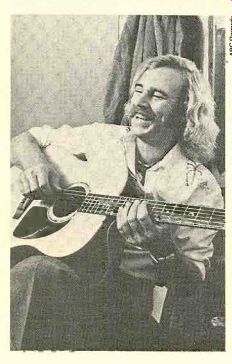
Jimmy Buffet: Lovably Unique, Uniquely Lovable
I WOULD imagine that one of the nicest things about being Jimmy Buffett is not having any Image Problem. He seems quite content to go his own way, doing pretty much what he pleases, on and off records. That what he does pleases so many, so often, so much is pleasant testimony to the fact that blithe spirits do make the best company.
There is certainly pleasure aplenty in that company in " Havana [sic] Daydreamin'," his latest disc for ABC/Dunhill.
I confess that I find it hard to resist anyone who spends so little time trying to impress me, who seemingly cares no more for the world's opinion than does the hero of his My Head Hurts, My Feet Stink and I Don't Love Jesus. It is the tale of a boozy reveler with a hangover so horrific that The End Seems Near-but he's nevertheless ready to give it another try next weekend. Buffett handles the role with all the raspy authenticity of a chick en-shack bon vivant leaning across the oil cloth of a kitchen-table confessional, unshaven, unwashed, and unrepentant. Another example of this out-front candor is the ram shackle, dusty pathos of Woman Goin' Crazy on Caroline Street. It's about one of those Blanche du Bois types one can find in almost any bar, the ghostlike aura of once splendid good looks still hovering about her, drinking too much and talking too much and flirting with a desperate, lonely urgency. It is a very sad song and a very moving one, but Buffett doesn't allow it to become stagey or melodramatic, balancing along the razor edge of a lyric that is half unblinking observation, half understanding compassion. He's writing about the world as he sees it, and at times it isn't a very pretty place.
But Buffett can celebrate the up side of life as well as the down-as in the sweetly elegiac The Captain and the Kid, an autobiographical ballad, radiating sunlit grace and tenderness, about his own warm relationship with his grandfather, a sailor who passed on his love of the sea and a sense of its mystical pull for those who journey upon it. Or, again, there is This Hotel Room, Steve Goodman's hilarious inventory of the mechanical conveniences from TV to the "Magic Fingers" in the mat tress-that are inadequate substitutes for homelier comforts.
Perhaps the best here is the title song, Havana Daydreamin', an ambiguous trip into B. Traven (you remember him--Treasure of the Sierra Madre, Death Ship) territory. The story of a mystery man, apparently a Cuban exile, waiting-waiting to contact some equally mysterious person who will pay him a large amount of money to do . . . what? Go back to Cuba to form yet another revolutionary army? To commit some sort of terrorist act? One is not quite sure, but the song, the lyrics, and the performance all have that kind of slumbering-daydreaming-menace under the blinding Caribbean sun that Traven, and Graham Greene as well, slipped so credibly between the lines of their novels.
THERE are a few Buffett bagatelles too Clichés, for example, a frumpy little song with practically no entertainment value beyond Buffett's performance of it; the one-joke-strung-out-too-long called Something So Feminine About a Mandolin; and the ambitious but grossly overproduced Big Rig. This last is not by Buffett, by the way, which may explain why it sounds so effortful and chart-straining, huffing and puffing like a winded Claude Akins. In effect, he stops being Jimmy Buffett-and what a mistake that is! When he is being Jimmy Buffett he is an enormously ingratiating entertainer who can amuse and touch and gently lead his listeners through his ideas and his feelings. What's im portant about him is his total lack of self importance; he needs an Image about as badly as Tatum O'Neal needs a face lift. That in it self is enough to make anyone govably unique and uniquely lovable on today's music scene.
-Peter Reilly
JIMMY BUFFETT: Havana Daydreamin'. Jimmy Buffett (vocals and guitar); orchestra.
Woman Goin' Crazy on Caroline Street; My Head Hurts, My Feet Stink and I Don't Love Jesus; The Captain and the Kid; Big Rig; Defying Gravity; Havana Daydreamin'; Clichés; Something So Feminine About a Mandolin; Kick It in Second Wind; This Hotel Room. ABC ABCD-914 $6.98, 8022-914H $7.98, 5022-914H $7.98.
-------------------
---------------
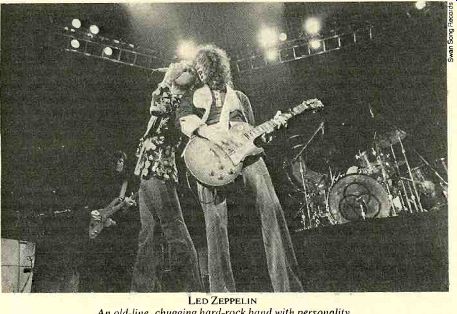
LED ZEPPELIN An old-line, chugging hard-rock band with personality.
SS 8416 $6.98, TP-8416 $7.98, CS-8416 $7.98.
Performance: Variable
Recording: Good
A few years ago, I had reason to believe Led Zeppelin might be the solution to the crab grass problem--which, as everyone knows, is America's number one problem in this Bicentennial year, easily outranking the heartbreak of psoriasis. I was doing research on the effect of music on houseplants, and the shrinking, gnarling, turning-ugly rate of my "hard-rock-listening" plants had me dreaming and scheming, I can tell you. But it turned out it was Vanilla Fudge, not Led Zeppelin, that was killing the lion's share of the plants, and now they tell me it was me, not the music, the plants were responding to, anyway.
Nevertheless, this was and still is one of your old-line, ponderous, chugging hard-rock bands, and, in view of the fact that hundreds of bands have tried to make that kind of sound, it seems rather extraordinary that Led Zeppelin has such a definite sound of its own.
That's tribute to Robert Plant and Jimmy Page, I suppose; they do the writing and provide the two main sounds, so it must be they who keep a force of personality coming through. It comes through again here, in another album that seems to me-as their al bums usually do-uneven. The worst of it may be Candy Store Rock, which sounds at most like an inane tribute to Gene Vincent, but then Achilles Last Stand surely does go on a lot. For Your Life and Nobody's Fault but Mine, though, have that good, old-time Led Zep crunch to them, reminding me that a lot of us are quite fond of this band in spite of ourselves. N.C.
McKENDREE SPRING: Too Young to Feel This Old. McKendree Spring (vocals and in strumentals); Warren Bernhardt (keyboards).
Too Young to Feel This Old; I'm in Love; (She's a Housewife) No More Rock 'n' Roll; Take It from the Heart; Clown; and five others. PYE 12124 $6.98.
Performance: Split personality
Recording: Very good
This contains a couple of almosts, a smattering of if-only's and several don't-call-us we'll-call-you's. The trouble seems to be that McKendree Spring imposes a higher standard on itself in the playing of music than it does in the writing or choosing of it. There's a degree of musicianly dryness, cases where the chord patterns are interesting enough but the melodies are not, and that sort of thing, and many of the lyrics seem to patronize the TV-addicted (not into words, man) beginning teenager.
One of the almosts is (She's a Housewife) No More Rock 'n' Roll, by Clifford T. Ward, which is almost touchingly empathetic (coming from a man) but in the end fears to go beyond what we all already knew. The playing is fairly clean and clear and as sprightly as these tunes will allow; the violins and violas of Michael Dreyfuss are integrated, not tacked on the way fiddling usually is with rock groups, and style is not one of McKendree's problems. But it seems to me that the people who would attend to such subtleties would be put off by songs that don't say anything. N.C.
MELBA MOORE: This Is It. Melba Moore (vocals); orchestra. Free; One Less Morning; Lean on Me; Brand New; Blood Red Roses; and four others. BUDDAH BDS 5657 $6.98, 8320-5657 H $7.98, 5320-5657 $7.98.
Performance: Strained
Recording: Good
It's been five years or so since Melba Moore broke through as the ingenue lead in "Purlie." Stardom seemed certain for a while there, but through a series of managerial mis calculations, a premature arterial hardening of style (she began to look, act, and sing like a fortyish Vegas veteran almost immediately after she left the show), and garish overproduction of her recordings, her TV spots, and her club dates, she seems to have drifted into that peculiar limbo of being an occasional "guest" on the tube and a "star" at second class night clubs. Her records have always been poorly done-the wrong repertoire, blasting vocal shrieks that seem to be intended as frenzied excitement, an inability to get down to the meaning of her material, and, of course, that same insensitive overproduction that mars her every appearance. This newest release is yet another attempt to dazzle, but it does that about as effectively as an old pair of sequined jeans and is as strained as the sec ond try of a high-wire walker. The arrangements and conducting by Van McCoy only add to the air of disaster. P.R.
ELLIOTT MURPHY: Night Lights. Elliott Murphy (vocals and guitar); other musicians. Diamonds by the Yard; Deco Dance; Rich Girl; Lady Stilletto; Isadora's Dancers; and four others. RCA APL1-1318 $6.98, 0 APS1-1318 $7.98, APK1-1318 $7.98.
Performance: Affected
Recording: Good
This is, without a doubt, a perfectly terrible album. Elliott Murphy's lyrics sound as if they'd been breaded in old Vogue magazines and then deep-fried in the social oil of one of the parties thrown by the record-biz Smart Set. His performances have all the grisly panache of Lou Reed doing a Dylan imitation and his songs are thick with a muddy romanticism that sounds like a Klassik Komix version of Scott Fitzgerald at his silliest. Such card board characters as the starlet who is hell bent-for-destruction (Deco Dance) and the Rich Girls ("White fox delivers/A moment and an eyelash") seem to fascinate him.
Perhaps Murphy's masterpiece is Lady Stilletto, his ode to Patti Smith. "They say she's got no shame/And as she screams about some factory/Her eyes burn with Rimbeau's [sic] rage. . . ." She "writes with a stilletto in mind/She's got just a touch of Bona parte/She's Jack the Ripper's kind/Her wounds are open for the sake of art...." Pretty classy stuff, eh? All this album really needs is a cover photo of Marisa Berenson and a short appreciation of Murphy's work by, say, Gloria Swanson or Paul Lynde (y'know, one of those intellectual types) to make it the album of the year. P.R.
OUTLAWS: Lady in Waiting. Outlaws (vocals and instrumentals). Prisoner; Breaker-Breaker; Stick Around for Rock & Roll; Freeborn Man; South Carolina; and four others. ARISTA 4070 $6.98, 8301-4070H $7.98, 5301-4070H $7.98.
Performance: Good
Recording: Clean
Good solos and solid ensemble playing mark the work of the Outlaws, a country-rock band with jazz overtones. The best track on this, their second album, is Prisoner, an interestingly constructed tune written by lead guitar ist Billy Jones, which contains the fine tag-line: "You'll be Madame Fortune, I'll be your prisoner." Set in a light jazz arrangement, Prisoner is given an exceptional performance by the band and features accomplished singing by Jones. If the rest of the material were as good as Prisoner, this would be an album to holler about. But it's perfectly respectable as it is. J.V.
PILOT: January. Pilot (vocals and instrumentals). January; Love Is; Call Me 'Round; 55° North 3° West; To You Alone; Do Me Good; Dear Artist; and five others. EMI ST-11488. $6.98, 8XT-11488 $7.98.
Performance: Mixed
Recording: Good
Being both a cat lover and an airplane buff, I was intrigued by this album's cover illustrations. The back cover, done in muted blues ...
-----------------------
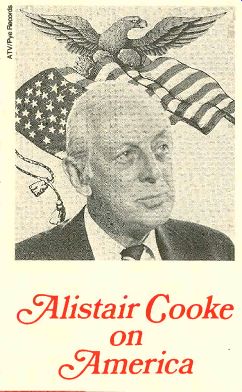
Alistair Cooke on America--The Bicentennial Corner
ALISTAIR COOKE, that indefatigably articulate journalist who is so adroit at explaining English life to Americans and American life to Englishmen, may well go down in the annals of letters, as well as of broadcasting, as the Great Clarifier of our age. ts1bt only can he make plain the most complicated of plots on Masterpiece Theater, telescoping What Has Happened So Far in the episodes of the Forsyte Saga or Upstairs, Downstairs with an almost exasperatingly relaxed, urbane aplomb, but he is probably the only commentator in the business who could sum up the en tire history and geography of the "U.S.A." in nineteen minutes and then, with the disarming tact that is his hallmark, do the same for the South-as almost a separate nation-in pre cisely the same amount of time. These exer cises in instant yet insightful clarification bring the nature and problems of the still un easily joined halves of our republic into better focus than many a laboriously compiled text book on the topic could, and they account for the first two sides of an album called "Talk About America" just released on the Pye label.
But the two-disc set, based on chapters in the book Alistair Cooke's America published by Knopf, on Cooke's BBC broadcasts, and in part on his TV series America, has even more to offer. The second disc deals with a visit Cooke made to Alcatraz in the prison's last days before it became a national park;
with an attempt-earlier than Oswald's-on the life of John F. Kennedy; with a letter the author wrote to the Governor of Idaho which resulted in that state's yielding its uniqueness as the only one in the Union not acknowledging Washington's Birthday as a legal holiday; with a visit to a home "just above the smog line" to portray a gadget-happy, chauvinistic "new Californian" in a manner rivaling Aldus Huxley's satiric forays in the same territory. Cooke's voice, the tone of which twits even as it informs, is matched so well to the style of his writing, the pace is so swift, and the wit so keen and free of malice that the en tire album is over before you're quite willing to permit the visitor on your turntable to sign off and take his departure. That is a reaction evoked by mighty few spoken-word recordings. "Talk About America" was a nominee for a Grammy Award this year. It didn't win, but it should have.-Paul Kresh
ALISTAIR COOKE: Talk About America.
Alistair Cooke (reader). The U.S.A.; The South; From "Letter from America"; Alcatraz; The New Californians; The Non-Assassination of John F. Kennedy; A Tiny Claim to Fame; A Ruined Woman. PYE 2-701 two discs $7.98.
---------------------
... hearing it reminded me of the '49 Ford I drove in those days. Most of it is not really music in today's terms but history of some sort. The worst of it has you thinking "The Great Man Clears His Throat, Volume One" may be next. Well, whatever turns you on. N.C.
PRETTY THINGS: Savage Eye. Pretty Things (vocals and instrumentals). Under the Volcano; My Song; Sad Eye; Remember That Boy; I'm Keeping; and four others. SWAN SONG SS 8414 $6.98, TP 8414 $7.98, CS 8414 $7.98.
Performance: Fairly mindless
Recording: Fairly good
Oh, this is a genuine rock band, all right. Just look at the pictures: two of the six boys pose with their shirts off and two others with theirs unbuttoned. One even looks a little like Roger Daltrey. Fair enough; the band sounds a little like the Who-and almost exactly like a couple of dozen others that sound a little like the Who. It isn't terrible, just another round of teenager-views-his-world. You'll live through it, and so, like as not, will they. N.C.
LAVADA ROBERTS: Lavada. Lavada Roberts (vocals and piano); orchestra. Neighbors; The Wizard; Watching You; Grin and Bear It; Into My Own; and five others. PYE 12126 $6.98.
Performance: Stagey
Recording: Good
Writer-composer Lavada Roberts seems to have bitten off considerably more than she can comfortably chew here. Her songs lean heavily on the irony of it all, as in Neighbors and Grin and Bear It, both efforts filled more with a kind of reportorial malice than with sat ire. She also has a habit of pounding the devil out of the piano, so that it's often difficult to decipher what she's yowling about. It all comes to a noisy, chaotic head in the last track, I'm Coming Out, one of those emerging -as-a-human-being ditties, in which she makes more passionate racket than a Rouma nian evangelist being evicted from her apart ment on a morals charge. In other words, there's a lot of sound and fury, but not too much conviction. P.R.
BOZ SCAGGS: Silk Degrees. Boz Scaggs (vo cals, guitar); instrumental accompaniment.
Lowdown; It's Over; What Do You Want the Girl to Do; Lido Shuffle; Jump Street; What Can I Say; and four others. COLUMBIA PC 33920 $6.98, PCA 33920 $7.98, PCT 33920 $7.98.
Performance: More like polyester
Recording: Very good
Boz Scaggs is a talented vocalist. He knows jazz phrasing, and at his best he can create a sense of intimacy with the listener. At his least he can be ingratiating. But there's al ways something missing from his performances. He is skillful but unemotional, a fair actor rather than a singer. After hearing three Scaggs albums I'm not looking forward to a fourth. The present effort suffers from weak songwriting (his) and noisy, burdensome arrangements. Worst of all, he mauls a fine, delicate Allen Toussaint tune, What Do You Want the Girl to Do, by taking it at a pepped-up tempo.
Scaggs' admirers consider him "special." I find him clever rather than special, and I've always had the sneaking suspicion that he's trying to pull a fast one, to convince the listener that his performances have an artistic merit they don't in fact possess. Remember what Andy said to the Kingfish: "You always bamboozlin' me. Well, I am here to tell you that you have bammed your last boozle." J. V.
SILVER CONVENTION. Silver Convention (vocals and instrumentals). Play Me Like a Yo-Yo; San Francisco Hustle; No-No Joe; Thank You Mr. D.J.; and five others. MID LAND INTERNATIONAL BKLI-1369 $6.98, BKSI-1369 $7.98, BKKI-1369 $7.98.
Performance: Good
Recording: Good
This is, I guess, a nice enough album for those who like to dance. Get Up and Boogie and San Francisco Hustle are intriguing enough to cajole even a few spavined movements out of me as I listened to it. There's no real musical interest here, but it's just fine for the limber amongst us. P.R.
ROSALIE SORRELS: Always a Lady. Rosalie Sorrels (vocals, guitar); Roma Baran (guitar); Jay Ungar (fiddle, mandolin); Tony Markellis (bass). Mehitabel's Theme; Baby Rocking Medley; Song for David; Hey Little Girl; Apple of My Eye; The Moth; and five others. PHILO 1029 $5.98.
Performance: Tough, touching
Recording: Adequate
Archy the cockroach and Mehitabel the cat and I go back a long way, but I hadn't made the connection between Mehitabel's philosophy and the latest stuff of Woman's Consciousness Raised until Rosalie Sorrels pointed it out in this album. Years ago, I think it was Sorrels who showed me the other side of this same coin of relevance, fooling me into thinking Rock Salt and Nails was as old as Barbara Allen, when in fact it had just been written by Bruce U. Utah Phillips. Today, she endures: a plain-speaking woman, a young grandmother, an old folkie, a connection between the old ballads salted away in Appalachia and this here Modern Life. Here, among other things, she pinpoints the social need (which has not died out) for "the hostile baby-rocking song," a useful substitute for belting the little beggar in the chops. Her tune for Baby Tree (words from Olive Wooly Burt), the first half of a substitute for one-two punch-outs of babes, sounds every bit as old and mountain-inbred as the traditional refrain, "This is the day we give babies away," etc. Her singing still sounds amateurish-as, say, Jean Ritchie's still does-folk in the old sense of the word. It's her personality, how tough and humane and, one comes to believe, trustworthy she is, that seems to matter. The low-budget sound of the recording (clean, but the stereo imaging is vague) just seems to enhance all that. It isn't great music, but it is approachable and personal, and it has its own something. N.C.
RECORDING OF SPECIAL MERIT
DONNA SUMMER: Love to Love You Baby. Donna Summer (vocals), orchestra. Pandora's Box; Whispering Waves; Full of Emptiness; Need-a-Man Blues; and two others. CASABLANCA OCLP 5003 $6.98.
Performance: Excellent
Recording: Good
Love to Love You Baby, in which Donna Summer seems to be having the most strenuous sort of orgasm set to music, has been a big pop hit. It made a most indelible impression on me-and I'm sure on anyone else within hearing distance-when it came on the car radio one night as I was sitting in a Mac-Donald's parking lot eating a cheeseburger while Ms.. Summer's cries and moans of ecstasy wafted out through the open window into the dark. On this album, Love to Love You Baby has been prolonged into a sixteen-minute cut that takes up all of side one, an exercise that tests not only credulity but patience. One can only wonder how long it took her to recover for side two.
Thankfully she does recover, and let me be among the first to break the good news that Donna Summer is a very, very fine performer indeed. If aural sex was the only way to bring her to our attention, then so be it, but the real point is that she is the possessor of a large, well controlled, stylishly flexible voice that can create and maintain mood and communicates wonderfully well. She does a really bang-up job (sorry about that) on Whispering Waves, sung in a high, wistful soprano that is as moving as it is lovely to listen to. In Pandora's Box, she shifts gears effortlessly into a gospel-blues style that is full of vitality and urgency.
Her next album should be the test. On that one, all of the snickering will be a thing of the past and we'll have a chance, perhaps, to en joy her in material that she can give herself to without self-exploitation. She's an artist who just might be dynamite. Okay, let's all join hands and make a wish. P.R.
WINGS: Wings at the Speed of Sound. Paul McCartney (vocals, bass, keyboards); Denny Laine (vocals, guitar); Jimmy McCulloch (vocals, guitar); Joe English (drums, vocals); Linda McCartney (vocals, keyboards). Let 'Em In; The Note You Never Wrote; Silly Love Songs; San Ferry Anne; Warm and Beautiful; Beware My Love; and five others. CAPITOL SW-11525 $6.98, 8XW-11525. $7.98, 4XW-11525 $7.98.
Performance: Tricky
Recording: Excellent
Here is an album of occasionally brilliant non sense presided over by a master of dazzle. With one exception, the material is weak and Paul McCartney's vocals are lazy or self indulgent. Yet, somehow, the thing is almost marvelous. The opening cut, Let 'Em In, is a pointless tune with lyrics that must have taken Paul about two minutes to write (they include a reference to Phil and Don Everly, from whom Lennon and McCartney got many of their ideas about vocal harmony) and an arrangement featuring a razz-ma-tazz horn section. The presentation is designed to be charmingly amateurish, with just enough mystery about it to tantalize you. Beware My Love is an excuse for some high-toned blues hollering, as was Oh! Darling on the Beatles' " Abbey Road" album. The Note You Never Wrote, the only standout tune on the album, could have been sensational if Paul had sung it, but he inexplicably assigns the vocal to group member Denny Laine.
Why, then-since Paul is merely rewriting his inferior later-period Beatles material and singing songs not suited to his voice-why is the album almost marvelous? Because, Beatle mystique aside, McCartney is a jim-dandy arranger and orchestrator. He is the only one of the ex-Beatles to possess such skills, and he can rely upon them when his songwriting lags.
You may have heard all this before, and it was 'way better the first time around, but the McCartney magic still works. J. V.
JOHNNY WINTER: Captured Live! Johnny Winter (vocals and guitar); orchestra. Bony Moronie; Roll with Me; It's All Over Now; and three others. BLUE SKY PZ 33944 $6.98, PZA 33944 $7.98, PZT 33944 $7.98.
Performance: Very good
Recording: Good
Johnny Winter's live performances here actually do capture some of the tremendous amount of excitement he can whip up when he's in the mood. He's definitely in the mood in both Bony Moronie and Sweet Papa John, where he brings himself and his audience to such a wired-up pitch that the only possible encore would probably be self-immolation.
Fine, gutsy, exciting stuff-for what it is. But what it is, let-it-all-hang-out frenzy, is yester day's roses. The times have changed but Winter refuses to. The result is a very dated, yet often entertaining, album. P.R.
BILL WYMAN: Stone Alone (see Best of the Month, page 86)
COLLECTIONS THIS IS REGGAE MUSIC, VOLUME 2.
George Dekker: Time Hard. Peacemakers: Run Come Sharp. Scotty and Lorna Bennett: Skank in Bed. Augustus Pablo: King Tubby Meets the Rockers Uptown. Arthur Louis: Knockin' on Heaven's Door. Burning Spear: Marcus Garvey. And four others. ISLAND ILPS 9327 $6.98.
Performance: Variable
Recording: Not fancy, not bad
The delightful musical culture of Jamaica as expressed through reggae is represented by ten different artists on this sampler album.
Unsurprisingly, it is wildly variable in quality. George Dekker's Time Hard, the Peacemakers' Run Come Sharp, Scotty and Lorna Bennett's Skank in Bed, and Burning Spear's Marcus Garvey are the best tracks. Time Hard complains "Every day things are getting worse," but sets the protest against a pixie arrangement; it's a pleasing, slightly puzzling study in contrasts. Run Come Sharp, sung in a thick island accent, is about a lively party and recalls the Maytal's Sweet and Dandy from the soundtrack album of The Harder They Come-which is still the definitive collection of reggae. Skank in Bed, also heavy on the ac cent, is loaded with josh and bluster and fun.
Marcus Garvey is based on the preachings of that Twenties advocate of black pride about whom history is still confused: was he martyr and prophet, a well-meaning loony, or a con man? The other six selections are no great shakes. The Heptones' Country Boy is a fair variation on the Slickers' great Johnny Too Bad; Rudie Mowatt's Love You, Baby and Third World's Freedom Song are undistinguished; Augustus Pablo's King Tubby Meets the Rockers Uptown is a mediocre instrumental despite an intriguing title; Arthur Louis' slightly rewritten version of Bob Dylan's wheezer Knockin' on Heaven's Door is still another variation on the theme of Johnny Too Bad; and Desi Young's I Don't Know Why I Love You, an early Stevie Wonder tune (also recently revived by the Stones) is a surprisingly poor song. All in all, however, this is a moderately entertaining album. J.V.
Also see:
BEST RECORDINGS of the MONTH--Vocal: Dietrich Fischer-Dieskau's new Songs of a Wayfarer (Mahler) and old Jedermann (Martin), National Lampoon's "Good-bye Pop 1952-1976," Al Green's "Full of Fire," and Bill Wyman's "Stone Alone." Orchestral: Virgil Thomson's "Music for the Films"
Source: Stereo Review (USA magazine)