POPULAR DISCS and TAPES: Jazz Flowers:
More Welcome Reissues, CHRIS ALBERTSON, Pretty Linda Ronstadt, WILLIAM ANDERSON,
Andy Pratt: Cheer Up-You're a Winner!, RICK MITZ, Compelling Millie Jackson,
PHYL GARLAND, Guitarist Mike Bloomfield JOEL VANCE, Pianist Dick Wellstood,
CHRIS ALBERTSON, Judy Collins' First Fifteen, NOEL COPPAGE
Reviewed by CHRIS ALBERTSON, NOEL COPPAGE, PHYL GARLAND, PAUL KRESH, PETER REILLY, STEVE SIMELS, JOEL VANCE
ALLSPICE. Allspice (vocals); instrumental accompaniment. Love Fire; Destiny; Give It Time; Hungry for Your Love; I Don't Know; and three others. AT-HOME AH-401 $6.98.
Performance: Promising
Recording: Very Good
According to the dictionary, allspice is a "mildly sharp" condiment made from the berry of an aromatic tropical tree. Well, the new group of that name is mildly sharp in its appeal, and at least a heaping tablespoon of the spice was provided by producer Wayne Henderson, who came up with pleasant, though unexciting, material and a battery of veteran back-up musicians.
The five newcomers (three guys and two girls) perform with exuberance, and their voices blend well, with the lead shifting among four of them. Some sing better than others; Saundra "Pan" Alexander exhibits the most talent. Allspice is funkier than the old Fifth Dimension, which employed the same sexual mix, and there are occasional jazz touches in its arrangements, mostly of the soul-crossover type. While a dash of red pepper might have heightened the flavor of Allspice's debut album, it is sufficiently tasty to stimulate an appetite for more. P.G.
BE-BOP DELUXE: Live! In the Air Age. Be-Bop Deluxe (vocals and instrumentals). Life in the Air Age; Ships in the Night; Piece of Mine; Fair Exchange; Shine; Sister Seagull; HARVEST SKB-11666 $6.98, 8XTT-11666 $7.98, 4XTT-11666 $7.98.
Performance: Heavy, man
Recording: Good remote
--------
Explanation of symbols:
= reel-to-reel stereo tape
= eight-track stereo cartridge
= stereo cassette
= quadraphonic disc
= reel-to-reel quadraphonic tape
= eight-track quadraphonic.
Tape
Monophonic recordings are indicated by the symbol Cg
The first listing is the one reviewed; other formats, if available, follow it, and five others.
----------------
Having been the sort of boy who grew up to become a Peter DeVries buff, I naturally can't help laughing at any writer who uses such phrases as "somewhere a dog barked." Imagine my reaction, then, to Mill Street Junction by Bill Nelson, the Be-Bop Deluxe. Most of its lines fall into that category-for instance, "Somewhere cathedral bells are screaming . . . As someone's dog answers a call." Piece of Mine (if you're wondering what that might mean, wonder no more) is constructed somewhat the same way, although it does reveal that Nelson has some ambition as a phrase-maker: "[She] took my love by the trigger . . . shot me like a gun." Those are the two songs whose lyrics he furnishes; the words are hard to catch by ear, since this is the sort of neo-primitive hard-
rock band that buries the vocals under electric-guitar distortion. Actually, this is a record and a half-literally, not figuratively- as the "album," in albino vinyl, is accompanied by a bonus twelve-inch 33-1/3 rpm disc called an "EP." Turns out its grooves are spaced wide apart and there's about nine minutes of music on one side and less than half that on the other. And it's mostly average rock-band stuff of ten years ago, except for Nelson's strange combination of naivete and sophistication as a writer. It's a competent job of playing neo primitive hard rock, though, if that's what you want done. N.C.
ELVIN BISHOP: Raisin' Hell. Elvin Bishop (guitar, vocals); vocal and instrumental accompaniment. Raisin' Hell; Rock My Soul; Sure Feels Good; Calling All Cows; Juke Joint Jump; Hey, Hey, Hey, Hey; Joy; Stealin' Watermelons; Little Brown Bird; Yes Sir; and five others. CAPRICORN 2CP0185 two discs, $9.98, L80185 $9.98, L50185 $9.98.
Performance: Very good
Recording: Very good
Elvin Bishop is a fine, rowdy fellow with a good-old-boy attitude toward his audiences that his band apparently shares. The cuts from this live album are from five different cities and were recorded over a period of a year.
Bishop's performances, and those of his hardy and hearty band, are commendable for their cheeriness and stamina. Being on the road is a rough way to go, but this outfit seems to make the best of it-at least they sound glad to be wherever they're playing. I am usually suspicious of live albums on the grounds that the performances are most often not as good as the studio versions of the same tunes and that one is generally released when the la bel and/or performer doesn't know what else to do. But "Raisin' Hell" really does communicate the excitement of Bishop's live performances, perhaps because the stage is really more comfortable to him than the studio and his music is meant for howlers and stompers rather than stay-at-homes. The material provides a sturdy background for some shouting and prancing, with the notable exception of Fooled Around and Fell in Love, which stands on its own. If by chance you've never caught a Bishop concert, this two-disc set is, truly, the next best thing to having been there. J. V.
RECORDING OF SPECIAL MERIT
NORTON BUFFALO: Lovin' in the Valley of the Moon. Norton Buffalo (vocals, harmonica, percussion); instrumental accompaniment. Lovin' in the Valley of the Moon;
Ghetto Hotel; Nobody Wants Me; Puerto de Azul; Hangin' Tree; Another Day; Eighteen Wheels; and four others. CAPITOL ST-11625 $6.98, CD 8XT-11625 $7.98, 4XT-11625 $7.98.
Performance: Refreshing
Recording: Excellent
Norton Buffalo was the one who took that harmonica solo in Bonnie Raitt's Runaway on her last album, "Sweet Forgiveness," which might lead harp connoisseurs to believe he has great style but that his technique is an un known factor. His first solo album suggests it's the other way around. Technically he is the best harmonica player to come along in
years; the question is, what does he sound like? This album has him sounding like a di verse assortment of harp notables, from Ste vie Wonder to Charlie McCoy to James Cot ton to the Harmonicats. The other thing it suggests, harp-wise, is that he has a much greater aptitude for filling breaks than for backing vocalists.
But the harp is not all there is to it. Buffalo's singing and songwriting are major elements, too, and as a bonus he does a cracker jack imitation of Walter Brennan in Hangin' Tree. His songwriting, like the whole album, tries to be too diverse, I think, but it has a spark to it and is almost certain to settle into something interesting. His singing has, as they say, arrived. It has a kind of wobbly to nality, the sureness of a veteran at phrasing, and enough range for any song that isn't bizarre; it is instantly recognizable. Buffalo even did some of the engineering, apparently, and somebody deserves credit for the fine, crisp sound. The album tries a little too hard to have something for everybody, but it makes it clear enough that there's a fine future in pop music for Norton Buffalo. - N.C.
ERIC CARMEN: Boats Against the Current. Eric Carmen (vocals, keyboards, guitars); David Wintour (bass); Jeff Porcaro (drums); other musicians. Boats Against the Current; Marathon Man; Nowhere to Hide; She Did It; and four others. ARISTA AB 4124 $7.98, 0 8301-4124(H) $7.95, 5301-4124(H) $7.95.
Performance: Bloated
Recording: Good
Once upon a time, Eric Carmen was a modest young man who had a knack for crafting to Paul McCartney, Brian Wilson, and the Brill Building staffers of the Sixties plus a nice little flair for the pop single. Eric is still a modest young man (who, as Churchill put it, has much to be modest about), but now he is suffering from terminal Neil Diamonditis, a particularly nasty syn drome that transforms talented purveyors of pop fluff into artistes. "Boats Against the Current" is a ghastly example of the results of the disease, consisting as it does almost solely of overblown, Angst-ridden piano-and-
orchestra epics that suggest an unholy marriage between Dmitri Tiomkin's film scores and Elton John's very earliest work when he was still pretending to be "sensitive." Oh, vestiges of the old Eric linger on. She Did It, practically the only up-tempo thing here (and the only thing that is even close to palatable), shows a strong Beach Boys influence, both melodically and in the production (Bruce Johnston, an actual ex-Beach Boy, chimes in on the vocals, which may explain it). As for the rest of the album . . . well, I never thought I'd miss the Raspberries, the group Eric fronted when he was healthy, but that's how it makes me feel. As for Eric . . . take him away, fellas. He'll never rock again. S.S.
JESSI COLTER: Mirriam. Jessi Colter (vocals, piano); instrumental accompaniment.
For Mama; Put Your Arms Around Me; I Be long to Him; Consider Me; God, I Love You;
and five others. CAPITOL. ST-11583 $6.98, 0 8XT-11583 $7.98, 4XT-11583 $7.98.
Performance: Good
Recording: Very good
Jessi Colter's singing is an acquired taste-it's improved technically, for what that's worth ...
-----------------
Pretty Linda Ronstadt
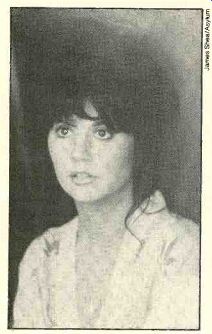
LET me read a little something to you if I may: "See the Stone Poneys. See Linda Ronstadt.
Linda is pretty. Linda sings. Linda sings like Mary. I like Peter, Paul, and Mary. Do you like Peter, Paul, and Mary? The Stone Poneys like Peter, Paul, and Mary. The Stone Poneys try to sing like Peter, Paul, and Mary. The Stone Poneys are copy-cats. I don't like the Stone Poneys. I don't like copy-cats. Do you like copy-cats? Then you may like the Stone Poneys. Have you bought every album Peter, Paul, and Mary have made? You have? You have a lot of money. Spend your money. Buy tapes of Peter, Paul, and Mary. Forget the Stone Poneys. But see Linda Ronstadt. Linda is very, very pretty."
That was Peter Reilly reviewing the Stone Poneys (Capitol ST 2666) in STEREO REVIEW in May 1967. If it transgresses slightly against the Reviewer's First Commandment--"Thou shalt review the art, not the artist" (the Second Commandment is "Thou shalt not review the audience")-it perhaps does so because there was, at the time, very little art to review. But that has all changed now: Dick and Jane are married and living in Phoenix, the Stone Poneys have been forgotten, and the little filly who sang with them has gone on to be come a consistent winner in the pop-vocal sweepstakes. She is still pretty, and that prettiness is still noticed, but not as much as her vocal artistry is. She no longer sounds like Mary Travers but like herself, a finished musician who has polished her abundant natural gifts by "tending to business" as much as Elvis ever did.
One characteristic of those gifts is her habit of pouncing on a song with the first lyric line in such a way that your attention is immediately seized. It is, I would judge, an even more effective way of getting attention than (merely!) being pretty: it seems to work even when the song she is attacking is scarcely worth the trouble-and you appreciate the effort all the more. Her latest album, "Simple Dreams," is a case in point. For me, its weakest songs are Warren Zevon's tuneful Carmelita (a very personal topology-Ensenada, Echo Park, Alvarado Street, the Pioneer Chicken stand-make it impossible for any one but provincial Los Angelenos to relate to), his Poor Poor Pitiful Me (fatally marred by a silly, set-up rhyme-"He was a credit to his gender/ ... Sort of like a Waring blender"), and Mick Jagger and Keith Richard's mock-macho Tumbling Dice (cleverness for cleverness' sake--"I don't need your jewels in my frown" ... yes, that's frown). De spite their unpromising first lines ("I hear mariachi static on my radio," "Well, I lay my head on the railroad track," and "People try to rape me," respectively), Ronstadt manages to hold your attention and make you care (a little) how they come out.
WHAT she can do with a good song, however, is just marvelous. If you want to know what happened to rock-and-roll (it's sick and living in London, according to Rolling Stone), Ronstadt tells you, not very subtly, here: they stopped writing songs like Buddy Holly and Norman Petty's It's So Easy (To Fall in Love), a lovable song lovingly performed.
The traditional I Never Will Marry is poignantly, tenderly impressive, quite enough, with Dolly Parton (!) contributing folk harmony, to give the McGarrigle sisters a turn. And who enough to close her program with an affectionate reading of that almost forgotten cow boy lament Old Paint? The first lines of these three are "It's so easy to fall in love," "They say that love's a gentle thing," and "f ride an old paint." None of them are what you would call a piece of cake in the attention-grabbing a finished musician who has polished her abundant natural gifts department, but you wouldn't dream of cut ting them off once Linda gets those first few notes into your ear. The album was mixed using a psychoacoustic something called the Aphex Aural Exciter system. I don't know just what it is, or even what it does, but I think you will notice it.
-William Anderson
LINDA RONSTADT: Simple Dreams. Linda Ronstadt (vocals, guitar); Dan Dugmore (acoustic guitar); Waddy Wachtel (electric guitar); Kenny Edwards (bass); Rick Marotta (drums); other musicians. It's So Easy; Carmelita; Simple Man, Simple Dream; Sorrow Lives Here; I Never Will Marry; Blue Bayou; Poor, Poor Pitiful Me; Maybe I'm Right; Tumbling Dice; Old Paint. ASYLUM 6E-104 $7.98, ET-8104 $7.98, TC-5104 $7.98.
---------------
...but she writes a very nice tune now and then, and a little less often she comes up with an affecting lyric. Writing is her stronger suit, and here she's done what appears to be about two-thirds of a "songs of faith" album from scratch. It not only has an odd mix of songs, but there is an interesting secular tone to the ones about God. The ability to come to the edge, lean over, and look into the Gulf of Bad Taste sometimes serves Colter well, particularly in For Mama, a strange, raw thing. A lot of her tunes sound a little tired, though, and trying to figure out what in the (pardon the expression) hell she was trying to accomplish with the overall theme is maybe a little more trouble than it's worth. N.C.
RECORDING OF SPECIAL MERIT
RY COODER: Show Time. Ry Cooder (vocals, guitar); vocal and instrumental accompaniment. School Is Out; Alimony; Jesus on the Mainline; The Dark End of the Street; Viva Sequin/Do Re Mi; Volver, Volver; and two others. WARNER BROS. BS 3059 $6.98, M83059 $7.98, M53059 $7.98.
Performance: Excellent
Recording Clean
I continue to marvel at Ry Cooder's nice sense of antiquity in his choice of material. The program on this, his first released live album, includes two Fifties r-&-b/rock-'n'-roll top-forty numbers, School Is Out and Smack Dab in the Middle, as well as a Thirties spiritual (Jesus on the Mainline), two Dustbowl ditties from the Great Depression (Do Re Mi and How Can a Poor Man Stand Such Times and Live), and a jump-dance tune and roman tic ballad from Mexico (Viva Sequin and Volver, Volver). I have no idea where Cooder found the bitter and hilarious Alimony but I'm glad he did. To complete the roundup there is the brilliant The Dark End of the Street, a Six ties ballad of adultery and guilt writtel: by Dan Penn and Chips Moman.
Cooder is not much of a singer, but he doesn't let that stand in his way. He presses on valiantly and manages to be true to the sentiments of the song. As a guitarist, though, he is something else again. People are used to hearing pop guitar players make a lot of noise or play flurries of notes to demonstrate their agility. Few guitarists today understand the use of tension and relaxation in playing, especially at medium tempos. Where there is space in a tune-a hole to fill-most pickers try to stuff it with bluster because they don't have the imagination to do anything else.
Cooder, however, is an expert at filling the holes with exquisite ideas, short phrases, sustained and stretched tones, and dramatic inchings toward the resolution of a solo idea-in other words, this man thinks as he plays, making knowledgeable decisions that are right for the tune he is playing. He is, God be praised, a real musician. J. V.
DONOVAN. Donovan Leitch (vocals, guitar, harmonica); instrumental accompaniment. Lady of the Stars; Sing My Song; Maya's Dance; The Light; Astral Angel; Dare to Be Different; and four others. ARISTA AB 4143, $6.98, 8301-4143 $7.95, 5301-4143 $7.95.
Performance: Fair
Recording: Excellent
--------
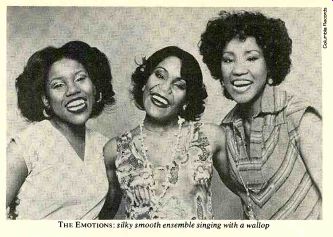
THE EMOTIONS: silky smooth ensemble singing with a wallop
Poor Donovan. Only a few years ago he seemed to be one of the few pop poets deserving of that title who could also claim a mass audience. Today he's a pale version of his old psychedelic self (even that self was pretty pale), and his new album is as enervating as a rainy month in the West of Ireland. He still paints in pastels, but now the colors have faded into barely distinguishable gradations of off-white. Even when he tries to liven things up, as in Sing My Song, the results are as jaunty as a boulevardier on lithium singing to his wilted boutonniere. His satire, in Kalifornia Kiddies, for example, has in place of savagery only the skittering impudence of a mouse running across the keys of a piano. But enough of this poetic imagery. Astral Angel and Brave New World are the kind of songs that gained him fame in the first place: heavily symbolic, poetic, and elfin. In the context of the late Seventies, however, they seem only naive, artless, and-worst of all-pointless. The production, by Mickie Most, is gorgeous throughout. If only Donovan had more to say these days about these days. P.R.
RECORDING OF SPECIAL MERIT
NICK DRAKE: Bryter Layter. Nick Drake (vocals, guitar); vocal and instrumental accompaniment. At the Chime of a City Clock; Fly; Poor Boy; Northern Sky; Sunday; and five others. ANTILLES AN 7028 $5.98.
Performance: Lapidary dream-songs
Recording: Excellent
Nick Drake was not just another professional ly introspective singer-songwriter. Before his early death (by suicide, I think) in 1974, he made three strange, lovely albums for Island Records that garnered him an intensely devoted cult-following that persists to this day.
"Bryter Layter" is a rerelease of one of those albums. Although Drake was the type of artist given to disappearing in the middle of a recording session and turning up days later registered under a pseudonym in some fleabag hotel, his actions were not concocted for the sake of a marketable image, nor was he given to parading his neuroses and private pains through the tracks of his records a la Dory Previn. There is an elusive, almost ethereal quality both to Drake's lyrics and to his whole compositional and vocal style. You're not always sure exact ly what he's driving at-you're not even sure he always knows-but in his swirling melodies and softly slurred lyrics there is a beauty and depth of feeling that transcend the usual banality of the singer-songwriter tribe. There is something ghostly about Drake's songs, a familiarity with other vistas we may be fortunate in not perceiving. He may not have been a genius and this album may be a little too emotionally reticent (though not dishonest or soulless) for some tastes, but three years after his death, when prefab dementia has become a major commodity, Nick Drake's reality is more compelling than ever.
-Lester Bangs
RECORDING OF SPECIAL MERIT
THE EMOTIONS: Rejoice. The Emotions (vocals); instrumental accompaniment. Best of My Love; A Long Way to Go; Key to My Heart; Love's What's Happenin'; Don't Ask My Neighbors; and four others. COLUMBIA PC 34762 $6.98, 0 PCA 34762 $6.98, PCT 34762 $6.98.
Performance: Thrice nice
Recording: Very good
This album generated waves of excitement among soul buffs the moment it appeared. No wonder. The three young ladies who make up the Emotions can pack more bounce and wallop into a four- or five-minute song than the collected patrons of a bustling after-hours disco can muster on a particularly good night.
The Emotions' spirited performance calls to mind the old Supremes of the early Sixties, but their style is strictly a product of the Seventies. Their complex vocal interplay, silky smooth ensemble singing, and melodically interesting songs are complemented by instrumental backings that enhance their drive with out overwhelming their finely blended sound.
A not-so-secret ingredient here is the talent of Maurice White, guiding spirit of Earth, Wind, and Fire. He produced this album, collaborated on some of the songs, and plays drums or sings on a few tracks. Though there is nothing here that is truly new in terms of musical for mat or content, "Rejoice" demonstrates what can be done within the limits of popular style when talent and imagination are applied. P.G.
-----------------
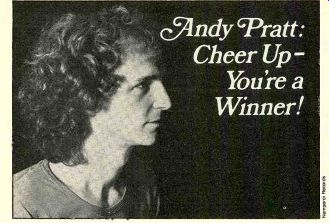
Andy Pratt: Cheer Up--You’re a Winner!
Do you want to . . get in control of your life? get in touch with the better part of your character? let love conquer all? Well, you can, if you believe Andy Pratt. He says that all that happened to him after he enrolled in the Boston Life Institute. "It's magic," says Pratt, who makes records as well as promises. "It changed my life." Enthusiastic converts usually write boring books or record ponderous albums. Not Pratt.
Even though his recent albums have been about his transformation, he sings about it without preaching. Pratt is a man with a past.
In the music business, he had what is known as a Bad Rep. He has been described as, among other things, confused, frustrated, and at loose ends, and his history bears these characterizations out. In 1973 he quit right in the middle of a successful tour because he was feeling, he said, "aimless, scared, and confused." When his band broke up, he very nearly had a nervous breakdown. Pratt would take an uneasy two or three years between albums back then, and he went through more therapy than you could shake a couch at. It all became just too much to handle in 1975 when his father died and Columbia Records suddenly dropped him. That's when he entered the Life Institute. It must have done something good for him, since he popped up last year with an astonishing, superb comeback album, "Resolution." And now he's followed that one up with "Shiver in the Night." You shouldn't need to know someone's psychiatric history to judge his artistry, but with Pratt they are too close to untangle. In the bad old days, he conveyed his pain in ev ery cut on his records. There was a tentative ness about his work, so that as you listened to side one you wondered if he would make it all the way through to the end of side two.
That's all different now. "Shiver in the Night" is so stunning, so positive, so-all right, I'll say it-so uplifting that it makes me shiver in the night (and day) to listen to it. The sorcery of producer Arif Mardin (who has also waved his wand over the Bee Gees and Judy Collins) has given Pratt's new album something very rarely heard on records: texture. The sound has been woven as if on a loom, in layer upon layer of orchestration, solo instrumentals, voice, and more voice, all carefully integrated. It's not a concept album, but each song is a collage of musical elements, as though Pratt and Mardin started out to make a simple soup but kept adding ingredients until they created a gourmet treat which nonetheless somehow manages to retain the basic flavor of the original recipe. For all its complexity, this is rock-and-roll in the purest sense. "Shiver" shimmers.
Plainly, Pratt is more comfortable, more relaxed with himself than ever before, for "Shiver in the Night" is loaded with love songs. They are addressed to various people, but ultimately they are all paeans of self-affirmation. One of the most exciting is Rain bow: "Deep inside there's a song so bright/ Take me higher in its rainbow flight / Oooh Jesus-I got a rainbow in my life. . . ." The most touching and eloquent song is the final cut, Born to Learn, a sweeping statement of commitment.
PRATT'S music is full of contradictions, full of tension: love lyrics are set to harsh chord arrangements and fast-tempo tunes, tender words are set to grand melodies, and the simple line "I wanna see you dance" is turned into a taunt. Yet there is a basic sweetness to all these songs, and not a touch of bitterness.
The album cover photo haunts me, though.
Pratt looks so pained, so vulnerable, that I was afraid to remove the plastic shrink wrap for fear he'd get hurt. Each time I pick it up I hope that this time he will have changed expression, that he'll be laughing, or at least smiling. Cheer up, Andy-you're a winner!
-Rick Mitz
ANDY PRATT: Shiver in the Night. Andy Pratt (vocals, piano); instrumental accompaniment. All I Want Is You; Rainbow; I Want to See You Dance; My Love Is So Ten der; So Faint; Keep Your Dream Alive; Landscape; What's Important to You; Mama's Getting Love; Dreams; Born to Learn. NEM PEROR NE 443 $6.98, NE-TP 443 $7.97, NE-CS 443 $7.97.
----------------
ENGELBERT HUMPERDINCK: Miracles.
Engelbert Humperdinck (vocals); orchestra. I Believe in Miracles; Look at Me; Without You; You Are There; What I Did for Love; and six others. Eric PE-34730 $6.98, 0 PEA-34730 $7.98, PET-34730 $7.98.
Performance: For fans
Recording: Good
One of the lesser glories of Western civilization here endows the world with another al bum of musical bon-bons. Humperdinck's ap proach to a song has an elephantine logic about it: if he can't goose it to life with his trunk, then he gingerly tips it over with one enormous foot. If all else fails he sits on it with an enormous thud and presumably thinks about peanuts-which is obviously what he's resorting to here in Without You and Look at Me. What he does to Marvin Hamlisch's show-stopping What I Did for Love from A Chorus Line should be enough to send Marvin's mother out with an elephant gun. P.R.
GEORGE JONES: I Wanta Sing (see Best of the Month, page 96)
RECORDING OF SPECIAL MERIT
DANNY KIRWAN. Danny Kirwan (vocals, guitars); Steve Emery (bass); Jeff Rich (drums); John Cook (piano). I Can Tell; Life Machine; Let It Be; Angel's Delight; Misty River; and six others. DJM DJLPA-9 $6.98.
Performance: Lovely
Recording: Good
Danny Kirwan was responsible for nudging Fleetwood Mac away from blues purism and toward the blatantly pop style they have now parlayed into big bucks. Since his departure from the band, he's become something of a cult figure, and justifiably so; he's an impeccable craftsman both as a guitarist and as a writer. There's more than a bit of Paul McCartney in his basic approach, and at the risk of committing critical heresy I'd venture to say he's probably got more talent than the estimable Buckingham/Nicks team that re placed him.
His new solo effort is more or less a con tinuation of his work on the two Fleetwood Mac LP's he fronted. The songs have cheerily friendly melodies that take a little listening be fore they sink in, the vocals are warm and ingratiating, and there are layers upon layers of shimmering guitar lines that never sound cluttered. It's a very laid-back, California kind of sound, but for once I mean that as a compliment-the overall hazy, dreamy quality of the record is immensely appealing, and unless you're the most hardened heavy-metal zealot you'll probably adore it. J. D. Souther, Dan Fogelberg, or any of the other Hollywood cowboys working in this same genre will never come within shooting distance of making music as good. Highly recommended. S.S.
PATTI LABELLE. Patti Labelle (vocals); vocal and instrumental accompaniment. Joy to Have Your Love; Funky Music; Dan Swit Me; You Can't Judge a Book by the Cover; and five others. EPIC PE 34847 $6.98, PEA 34847 $6.98, PET 34847 $6.98.
Performance: Strident
Recording: Good
Dissolution of the group called Labelle caused some of us to wonder why so many good things must come to an end. They were all guts and nerve, those girls-uninhibitedly outrageous. Who but Patti Labelle would have made her debut at the Metropolitan Op era by having herself lowered from the ceiling adorned in the plumage of a tripped-out, Jabberwockyish peacock? Patti was the last hot gal. While she was with the group, her bravura was tempered by the iron-edged restraint of Nona Hendryx, who wrote many of the trio's most memorable songs, and Sara Dash, who was the epitome of sensual softness.
Unfortunately, if Patti's first solo album is representative of what can be expected, the trio's break-up was all but disastrous. Patti was great with the group, but nine consecutive tracks of her relentlessly abrasive delivery might be compared to dining on a meal consisting of red peppers, brine-soaked fish, salt pork, and barbecued ribs, all liberally sprinkled with hot sauce. Taken in a single heavy dose, Patti's music goes down with great difficulty. She comes on with such a monochromatic tone that I hungered for the mellowing input of her former companions. If Patti wants to make it on her own, she's got to do better than this. P.G.
CLEO LAINE: Return to Carnegie (see Best of the Month, page 95)
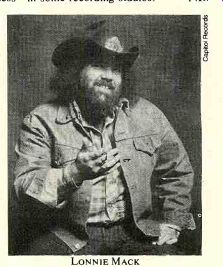
LONNIE MACK: Home at Last. Lonnie Mack (vocals, guitar); vocal and instrumental accompaniment. Running Wild; My House; Funky Country Picnic; Lay Some Loving on Me; Glad That I'm Home; Britches; and five others. CAPITOL ST-11619 $6.98.
Performance: Good
Recording: Excellent
Over the last decade, country music has been moving close, closer, closest to urban damn-Yankee pop, utilizing pop's forms without wholly surrendering to it while continuing to honor and refer to the grass-roots sentiments of country's primal audience. Dolly Parton is the most conspicuous recent example of a performer following this trend, and Lonnie Mack is another. Mack is a straight-ahead vocalist and songwriter with a smooth delivery.
Nashville probably has more proficient and flexible musicians than any other large city in the world, and Mack is backed here by some of the best of them, including legionnaires from the elite Area Code 615 group.
The arrangements on "Home at Last" are a mixture of polite yahoo and cosmopolitan country, some of it hokey, some of it a bit too studied, but all of it pleasurable nonetheless.
Running Wild is the crossover bid for top-forty pop-chart success, and The Other Side is the ringer from the classic-country-plot mold (man/woman drinking his/her life away in a local bar). David Briggs, of Area Code 615, arranged the sighing strings on the former tune; Stu Basore on dobro and Johnny Gimble on fiddle and mandolin provide the high spots on the latter. J. V.
SERGIO MENDES: The New Brasil '77. Sergio Mendes (keyboards); Brasil '77 (vocals and instrumentals); other musicians. Love City; Mozambique; Peninsula; P-Ka-Boo; and five others. ELEKTRA 7E-1102 $6.98, 0 ET8-1102 $7.98, TC5-1102 $7.98.
Performance: Yesterday's bialy
Recording: Okay
Eleven years ago, Sergio Mendes' "Brasil '66" album established him as one of the slickest producer-arranger-performers in the recording industry. It was a stunning album for its time, and even today it has a super-cool stylishness and elegant sheen, combined with a rakish Latin verve, that make it irresistible.
But, oh man, has custom staled and age withered his style! It has now calcified into some thing like a stale bialy, which can't be softened even by Stevie Wonder, sitting in on a performance of his own The Real Thing.
Mendes and his group of instrumentalists and singers hum, sing, and chant against that same damned plock, thruuum, chick-a-chick back ground that he's been repeating, in one variation or another, for over a decade. And it's boring. The monotony is unrelieved by the production, which features the same heightened reverberation that passes for "spacious ness" in some recording studios. P.R.
LONNIE MACK Polite yahoo and cosmopolitan country
CHARLEY PRIDE: She's Just an Old Love Turned Memory. Charley Pride (vocals); instrumental accompaniment. Rhinestone Cow boy; The Hunger; A Whole Lotta Things to Sing About; I'll Be Leaving Alone; We Need Lovin'; and five others. RCA APL 1-2261 $6.98, 0 APS I-2261 $7.95, APK I-2261 $7.95.
Performance: Above the material
Recording: Good
Charley Pride here maintains the high percentage of junk songs characteristic of his re cent albums, though to call things like We Need Lovin' and A Whole Lotta Things to Sing About "songs" is to stretch the language a bit. Rhinestone Cowboy looks good in this company, although Pride's cover isn't as interesting as Glen Campbell's original version.
And his cover of the one that's really good, The Hunger, is too straight-ahead to compare well to Waylon Jennings' version. What's left is an odd moment here and there of the smooth, pliant singing Pride does so well and some slightly too-smooth but mostly unobtrusive backing.
I don't know why Pride keeps pushing so many ricky-tick songs when he is so well equipped to deliver heavy-duty expressive ones, but here's another feast for junk-song junkies. Man does not live by Hostess Twinkies alone, Charley. N.C.
JONATHAN RICHMAN AND THE MODERN LOVERS: Rock 'n' Roll with the Modern Lovers. Jonathan Richman (vocals, guitar, saxophone); vocal and instrumental accompaniment. Ice Cream Man; Rockin' Rockin' Leprechauns; Roller Coaster by the Sea; Dodge Veg-O-Matic; Egyptian Reggae; Afternoon; Summer Morning; and six others. BESERKLEY PZ 34800 $6.98, PZA-34800 $6.98, PZT-34800 $6.98.
Performance: Moronic
Recording: Okay
Somebody ought to put this record in a time capsule as proof of just how desperate culture consumers, music fans in particular, got in the Seventies. Here we have a guy who once showed some real rock-'n'-roll ability but turned his back on it in order to write nursery rhymes and sing them in a cloying nasal whine with a living-room skiffle-group back-up.
Jonathan Richman's original Modern Lovers made one near-classic album, "The Modern Lovers" (Beserkley 0050), which is still available and features his certified classic Roadrunner. But eve back then he had a self-righteous strain. He imitated Lou Reed, but with the crucial and absurd difference that whereas Reed is an out-and-out misogynist, Richman felt downright smug about being rejected by women: since everybody laughs at me, I must be superior, he seemed to say.
I suppose that after beginning with such twisted logic an album like this makes sense.
Richman used to write almost nothing but songs about how he couldn't get girls. Now he's into total regression, basking in the ostentatious dopiness of such odes as Ice Cream Man and Rockin' Rockin' Leprechauns, in which he exhibits the mental prowess of a four-year-old. I look forward to the album in which he at length returns to the womb and offers his cracked-voice insights into the uterine mysteries.
-Lester Bangs
THE RUMOUR: Max. Rumour (vocals and instrumentals); other musicians. Mess with Love; Hard Enough to Show; Do Nothing Till You Hear From Me; Looking After No. 1; Airplane Tonight; and five others. MERCURY SRM-1-1174 $6.98, MC-8-1-1174 $7.95, MCR-4-1-1174 $7.95.
Performance: Good, but . . .
Recording: Good
It must be fun being Graham Parker and the Rumour. Parker gets the services of a superb back-up ensemble of the finest British-pub-scene refugees who do a bang-up job of complementing his terrific tunes and impassioned singing, and the Rumour get to do solo albums of their own material, thus avoiding the usual jealousy and competitiveness.
Anyway, the Rumour's first effort on their own is not as exciting as the two albums they've done with Graham, or even quite as consistent as the ones they made when they were Ducks Deluxe and Brinsley Schwarz (which are well worth checking the bargain and import bins for). It is, however, a solid piece of r-&-b that sounds more like the Band, surprisingly, than the Stax/Motown synthesis they had previously been pursuing, and Bob Andrews continues to shine as one of the most thoughtfully lyrical organists in all of rock. It seems silly to call them a "promising" band, as they've already more than fulfilled their promise with Parker, so let's just say that although "Max" is a fun record, it lacks the total commitment of their work with him. I hope their next one will be a little more intense. S.S.
LEON AND MARY RUSSELL: Make Love to the Music. Leon Russell (vocals, keyboards, guitar); Mary Russell (vocals); instrumental and vocal accompaniment. Easy Love; Joyful Noise; Now- Now Boogie; Say You Will; Make Love to the Music; Love Crazy; and three others. PARADISE PAK 3066 $7.98.
Performance'. Mechanical
Recording: Murky
Since the mid-Sixties, as pianist, singer, writer, arranger, producer, and organizer, Leon Russell has been responsible for some minor gems as well as a lot of paste. His 1971 re cording of his own tune, Delta Lady, is a lone, superb example of what the man can do with all his skills and talents when he is able to focus them.
Russell's finest achievement as an organizer was the Joe Cocker tour of the late Sixties, which was the peak of Cocker's brief and sad fame. In the decade since, Russell has re leased a number of solo albums on his own la bels, all of which contain at least one out standing cut. But that is just the puzzle, for he surrounds these successes with more mere filler than most other mortals would dare try to pass off. Perhaps he just wants to seem busy all the time. The riddle is whether we should wait for him to do something marvelous again or abandon the life-watch. Is he a flim-flam man or just slow to come to a boil? Unfortunately, the present outing doesn't provide any answers. There are tunes that ...
------------------
Compelling Millie Jackson
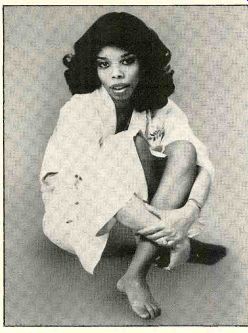
THE cover of Millie Jackson's latest album, I "Feelin' Bitchy," bears the admonition "Please audition before airing." That's polite enough but hardly sufficient to prepare an un initiated listener for the potent raunch that is Millie Jackson's standard fare. She might well be called the Cassandra of the Bedroom. She talks almost as much as she sings, prophesying doom for trifling women who spend so much time watching soap operas that they overlook their men's needs and making equal ly dire predictions for lazy men who do not extend the boundaries of their love-making technique.
What elevates Jackson's raunch above the merely obscene is its natural, even humorous, manner of expression. Her spicy comments are as spontaneous as a conversation over heard on a Saturday afternoon in a Black Belt beauty shop, replete with profanity, sexual references, and grammatical imperfections.
And she is as relentless as a telephone gossip.
Of all the popular soul artists on the scene, Millie Jackson most closely approaches the fundamental earthiness of the classic blues singers, translating their enduring man-woman themes into modern terms and adding the trappings of solid rhythm-'n'-blues.
"Feelin' Bitchy" is fully representative of her talents, with songs and commentary flowing together logically. Though Jackson has written much of her own material in the past, this album is enhanced by the songs of other soul, rock, and country writers. Somehow she manages to make it all fit into her own scheme.
While some might be titillated by the explicit sexual references of the long opening track, All the Way Lover, the real highlight of this set is the concluding number, Feelin' Like a Woman, which summarizes what Millie Jack son is all about. Here her singing talent is most apparent. Equipped with a voice that sounds like it's been soaked in whiskey over-
. . . the fundamental earthiness of the classic blues . .
night, Millie Jackson can transform even the simplest song into an intimate, compelling statement.-Phyl Garland
MILLIE JACKSON: Feelin' Bitchy. Millie Jackson (vocals); instrumental accompaniment. All the Way Lover; Lovin' Your Good Thing Away; Angel in Your Arms; A Little Taste of Outside Love; You Created a Mon ster; Cheatin' Is; If You're Not Back in Love by Monday; Feelin' Like a Woman. SPRING SP-1-6715 $6.98.
------------------------
...come close to being substantial, but again there's a lot of filler. Leon's wife, Mary, is a good soul singer, but if there was ever a field oversupplied with qualified artists, soul singing is it. "Make Love to the Music" is more an exercise in rhythm-and-blues than a statement or an expression of it. It's well performed, well produced, and well arranged, the work of solid professionals; but it's also hollow and stale, a textbook representation rather than the real, thing. Leon, old son, will it ever be worth the waiting? J. V.
THE SECTION: Fork It Over. Danny Kortchmar (guitars); Craig Doerge (keyboards); Le land Sklar (bass); Russ Kunkel (drums); vocal accompaniment. Suckers On Parade; L.A. Changes; Street Pizza; Hamsters of Doom; Bad Shoes; and four others. CAPITOL ST-11656 $6.98, 8XT-11656 $7.98, 0 4XT-11656 $7.98.
Performance: Witty
Recording: Very Good
Messrs. Kortchmar, Kunkel, Doerge, and Sklar are Los Angeles studio musicians; among them they have backed up just about every major or minor artist who ever cut a record in that town. It is perhaps surprising that the quartet has much energy left, having ploughed through thousands of sessions over the years, but studio men are a hardy breed.
The music on "Fork It Over" is an amalgam of pop, rock, light jazz, and what can only be described as "the West Coast sound." As played by the Section, it is pixilated and sometimes gently hilarious. They have fused all the arrangements they've ever heard or been required to play-from neo-folk to fake-symphonic-and transformed them into satires. Suckers on Parade and Hamsters of Doom are two especially satisfying examples.
The album is nearly all instrumental, but David Crosby sings wordless ooh-be-doo stuff on Magnetic Lady and James Taylor, an old chum and bandmate of Kortchmar's from the 1967 Flying Machine days, takes on the daffy lyrics of Bad Shoes. This album is well worth several hearings. J. V.
STRAWBS: Burning for You. Strawbs (vocals and instrumentals). Burning for Me; Cut Like a Diamond; I Feel Your Loving Coming On; Barcarole; Alexander the Great; Keep On Trying; and four others. OYSTER OY-1-1604, $6.98, 8T1-1604 $7.98, 0 CT1-1604 $7.98.
Performance: Nice
Recording: Good
Strawbs is somewhat less grandiose than usual here in an album that would have seemed great about four years ago when we were all, like, you know, more into rock. But actually this one is no slouch even in these troubled times. What you get is your basic Strawbs, which is mainly your Davids, Cousins and Lambert, without the whipped-cream topping we've come to expect lately. This one is melodious as all get-out, with fairly basic instrumentation that actually works for instead of against that quality, leaving you to put up only with the way their voices seem routed around some really classic adenoids. The words are off-center enough to make it interesting fairly regularly too, and all things considered I expect to play this one some on my own time. The only thing is, it'll have to be when I'm in the mood for something that sounds best fairly loud, which mood doesn't come as often as it used to when we were all, like, you know. . . N.C.
B. J. THOMAS. (see Best of the Month, page 97)
RECORDING OF SPECIAL MERIT
JOHNNY WINTER: Nothin' but the Blues. Johnny Winter (vocals, guitars); Muddy Wa ters (vocals); James Cotton (harmonica); "Pine Top" Perkins (piano); Bob Margolin (electric guitar); Charles Calmese (electric bass); Willie "Big Eyes" Smith (drums). Tired of Tryin'; TV Mama; Sweet Love and Evil Women; Everybody's Blues; Drinkin' Blues; and four others. BLUE SKY PZ 34813 $6.98, 0 PZA-34033 $6.98, PZT-34033 $6.98.
Performance: Excellent
Recording: Good
Johnny Winter was the victim of late-1960's hype in which he was cast as the guitarist, the one who would put everyone else out of business. Despite the inevitable negative results of the hype, he built up an audience over the years by issuing a stream of albums on which he played flashy guitar and growled his way through vocals. His albums have generally been facile but dreary-until this one.
Here Winter plays the post-World War II urban blues personified by Muddy Waters (who is along on this date), Elmore James, Howlin' Wolf, Little Walter, and others. For the first time in his recording career, Winter cuts out the fooling around and just plays, and much of what he does is perfectly fine. With the exception of Waters' Walking thru the Park, the material is by Winter, and he closely follows the models of the masters. He is nobly aided by pianist "Pine Top" Perkins, harmonica man James Cotton, and drummer Willie "Big Eyes" Smith, all veteran bluesmen. This is a surprising and uplifting Winter album, doubtless the best he has ever made.
J. V.
MECO: Star Wars and Other Galactic Funk. Meco (instrumentals). Title Theme; Imperial Attack; The Desert and the Robot Auction; The Princess Appears; The Land of the Sand People; Princess Leis's Theme; and-four others. MILLENIUM MNLP 8001 $6.98, 0 MLN8-8001 $7.98, MLN5-8001 $7.98.
Performance: Fun
Recording: Could be spacier
Well, everybody, here's your chance to dance your way through a movie. The movie is Star Wars and the beat is disco. You can close your eyes and pretend you're in outer space (or Hollywood at least) as most of the important themes are played. They're all imaginatively turned into very danceable disco that is also fun to listen to whether or not you've seen the movie. There are even some electronic comments from R2-D2, the lovable little robot, and a few terrific laser-weapon sounds. The title theme begins straight, but a disco beat sneaks in from underneath and pulls you right onto the dance floor. The Cantina Band episode has a Thirties feel to it sort of Lionel Hampton gone disco. But it is strange that the princess' name is spelled Leis, when all of us Star Warriors know that she is Leia Organa. Also strange is the relatively cramped sound of the disc. Surely "space" music demands more openness.
The flip side of the record is devoted to "Other Galactic Funk" (band one, Other; band two, Galactic; band three, Funk). Even with a long marching-band section that sounds like the Philadelphia Mummer's Parade going through a discotheque, this side is, I'm afraid, definitely other galactic junk. Stick to side one.
-Ed Buxbaum
OTHER RECOMMENDED DISCO HITS
ASHFORD & SIMPSON: Send It. WARNER BROS. BS 3088 $6.98.
CHOCOLATES: King of Clubs. Tom & JERRY TJS-4500 $6.98.
EDDIE HENDERSON: Comin' Through.
CAPITOL ST-11671 $6.98.
EVELYN CHAMPAGNE KING: Smooth Talk. RCA APL1-2466 $6.98.
MANDRILL: We Are One. ARISTA AB 4144 , $6.98.
(List compiled by David Mancuso, owner of the Loft, one of New York City's top discos.)
----------------
Judith Collins First 15
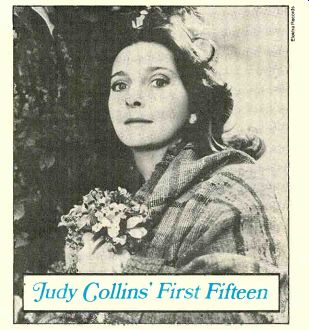
RIFLING through the Sixties and Seventies with Judith Collins, as one does listening to "So Early in the Spring, the First 15 Years," a retrospective collection from Elektra, is a vivid experience. Memories of places, people, events, politics come up with one rush after another. The people, especially: it turns out there's a whole string of them in my personal life, and probably in yours too, associated with something Judy Collins was singing at the time--Pretty Saroback in 1961, or Both Sides Now in 1968, or whatever. Judy Collins has always been there, it seems, through almost two tumultuous decades, and I now realize that I regularly heard her on the subject (whatever the subject was) and filed away a set of impressions and associations without pausing to consider what a constant of the times she was.
This retrospective album takes you by the shoulders and gives you a shake. You can't help reflecting on what a presence Collins has been when you hear such a concentrated ver sion of those fifteen years. The album is so rich in good tunes, compared to 90 percent of the other four-sided albums in captivity, that your mind doesn't wander when it's playing.
All her clinkers (a real dog about Vietnam stands out in my memory, as does almost one whole side of the album "Judith") are edited out of this one, of course. But the collection is not only selective about content, it is also carefully set up. Side one is old public-domain folk stuff; side two is "folk" music formally written down by early-Sixties troubadours and is mostly political; side three is about relationships and the "revolution" being more cultural than political in the old sense; and side four is about a lot of things-dreams, visions, personal growth, all probably summed up best in Houses: "Searching for my self . . . /Searching for my life." Side four is also entirely written by Judy Collins. And not only is the music carefully selected and ordered, but it is all carefully packaged; there are jacket photographs by Richard Avedon, and the liner notes were specially written by Judy herself.
Since she continued to record traditional folk songs throughout this period and since she recorded manufactured "folk" songs fairly early on, the organization of the album doesn't jibe with chronology until you get to side four, and that's only because Collins has been a late bloomer as a songwriter. The way it is organized is a good thing, though, if you want to indulge in the pastime of charting how Collins' singing style has evolved right under our noses. Pretty Saro of 1961 and Farewell to
---- a more ethereal, pastel, classical-leaning, queenly presence--
Tarwathie (the one where she's backed by whales), released eleven years later, are on the same side. The proximity makes it easier to hear how her style has drifted from a kind of earthiness toward a more ethereal, pastel, classical-leaning, queenly presence. You don't have to have heard her pronouncement earlier this year that she no longer considers herself "just" a folk singer to catch her drift.
She has gone from folk music in the basic sense (that is, homemade, which is to say made by generalists) toward a more urbane music (made by professionals, which is to say specialists), and her sound has changed just as her material has. She used to have a kind of bite, or verve, in her voice in the days of Pricklie Bush; now she's not only singing the kind of satin-shirt song Stephen Sondheim writes but is singing it in a way that puts it into soft focus, puts the sonic equivalent of gossamer veils and subtle lighting between her self and her audience. Strictly speaking, she has moved toward some idea of purity, which by definition involves becoming less personal, but she has not in the process exactly moved away from us. It is a most delicate and curious situation.
THE elusive nature of this relationship with the audience is echoed in the long, well-writ ten liner notes. A series of essays on what her life has been like, darting chronologically back and forth as the album gleanings in the collection do, they appear on the surface to deal with the surface of things, but by some devious means they manage to convey that Collins felt a lot-if not exactly what she felt-about the times and lives she passed through.
And listening to "So Early in the Spring," I find it so damned pretty and so well connected to the times of my own life that I conclude that, well, we all have to evolve in some direction, like it or not, and if Collins still sounded like the original "Maid of Constant Sorrow" we'd certainly find that unsatisfactory. Any way, there's no particular breach of integrity in the way she's drifted. She was the daughter of a blind minstrel, but she was trained in classical piano as a kid; a couple of teachers thought she might amount to something be fore she got hooked on folk music. It isn't too surprising that she'd eventually write winding, gothic-staircase melodies such as the one in Secret Gardens or (not included here) Che, and that they'd sound so nice with cellos.
She's also kept in touch with the times of her life. Like any good folk artist, she's part journalist. What has happened to her style over the years (with the technical exception that she actually held pitch a little truer when she had the old earthiness) is the folk process.
personified. This album, all things considered, is a class product from a class person, extremely pretty to listen to, and an emotion-
charged recapitulation of some of the most interesting times anybody ever lived through.
-Noel Coppage
JUDY COLLINS: So Early in the Spring, the First 15 Years. Judy Collins (vocals, guitar, piano); instrumental accompaniment. Pretty Polly, So Early, Early in the Spring; Pretty Saro; Golden Apples of the Sun; Bonnie Ship the Diamond; Farewell to Tarwathie; The Hostage; La Colombe; Coal Tattoo; Carry It On; Bread and Roses; Marat/Sade; Special Delivery; The Lovin' of the Game; Both Sides Now; Marieke; Send in the Clowns; Bird on a Wire; Since You've Asked; Born to the Breed;
My Father; Holly Ann; Houses; Secret Gardens.
ELEKTRA 8E-6002 two discs $9.98, T8-6002 $9.97, c0 C2-6002 $9.97.
++++++++++++++
Also see:
Source: Stereo Review (USA magazine)