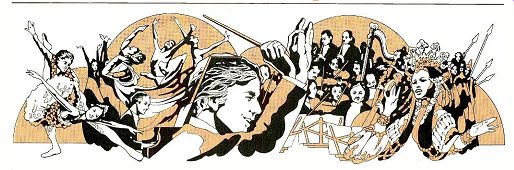
Mozart: Requiem Mass , Elder Statesman John Cage , Janaek: The Makropulos Case
Reviewed by RICHARD FREED DAVID HALL GEORGE JELLINEK PAUL KRESH STODDARD LINCOLN ERIC SALZMAN
ARNOLD: Three Shanties (see NIELSEN) RECORDING OF SPECIAL MERIT C. P. E. BACH: Wurttemberg Sonatas, Op. 2, Nos. 1-6. Bob van Asperen (harpsichord). TELEFUNKEN 6.35378 EK two discs $19.96.
Performance: Superb
Recording: Superb
Of Carl Philipp Emanuel Bach, Mozart exclaimed, "He is the father, we are the children." Haydn confessed a diligent study of his works, and Beethoven sought out his keyboard music not only for "sheer pleasure" but also as "something to be studied." Despite such fame during his life, C.P.E.'s reputation declined severely: only one collection of his keyboard music is now listed in Schwann, and it is a rare keyboard player today who presents his works to the public.
Bob van Asperen's splendid new recording of the six magnificent Wurttemberg Sonatas is, therefore, a more than welcome addition to the catalog, for it gives us a chance to hear the passionate utterance of a truly pioneer composer.
Written in the early 1740s, the Wurttemberg Sonatas are transitional works displaying an intriguing mixture of Baroque and Classical stylistic elements. The rich har monies, contrapuntal textures, and bold ...
-----------------
Explanation of symbols:
= open -reel stereo tape
= eight -track stereo cartridge
= stereo cassette
= quadraphonic disc
= digital -master recording
= direct -to-disc
Monophonic recordings are indicated by the symbol "M"; The first listing is the one reviewed, other formats, if available, follow it.
--------------
... rhythms of the Baroque are interlaced with sighing Empfindsamkeit melodies, provocative pauses, and sinuous lines. The music, almost spastic in its wild contrasts and bold rests, is an exemplar of the German Sturm and Drang movement.
Written in an idiom that invites a piano technique, the sonatas are fiercely difficult on the harpsichord despite having been written for that instrument. Only a superb sense of phrasing can overcome the problem of legato double notes on the harpsichord, and only a dramatic sense of scaling can hold so many disparate elements together in a musically cohesive single movement. Bob van Asperen has both. He also understands the true meaning of rubato, which allows him a disciplined freedom that enhances the many contrasts and pauses. Also beautifully worked out are Bach's plethora of unusual ornaments and the required improvised cadenzas in the slow movements.
The harpsichord used for this recording, a Rainer Schtitze modeled on a J. D. Dulken of 1745, is perfect for the music. The tone is rich and clear, and the damping system allows for an after -ring of the sound that helps the legato. Each register has its own individual characteristic sonority, which is effectively exploited by Van Asperen, and the ensemble sound is well blended and powerful. The combination of music, artist, and instrument add up to an album of the highest quality. S.L.
J. S. BACH: Cantata No. 140, Wachet Auf, Ruft Uns die Stimme; Cantata No. 148, Bringet dem Herrn Ehre Seines Namens.
Elly Ameling (soprano); Janet Baker (mezzo-soprano); Theo Altmeyer (tenor); Hans Sotin (bass); South German Madrigal Choir and Consortium Musicum, Wolfgang Gonnenwein cond. SERAPHIM S-60328 $4.98.
Performance: Slow and dull
Recording: All right
J. S. BACH: Chorale Prelude, Ein Feste Burg 1st Unser Gott (BWV 720). Frederick Grimes (organ). Cantata No. 80, Ein Feste Burg 1st Unser Gott. Diane Higginbotham (soprano); Jacqueline Pierce (mezzo-soprano); Gene Tucker (tenor); Daniel Pratt (baritone); Holy Trinity Lutheran Church Bach Choir and Orchestra, Frederick Grimes cond. Chorale Prelude, Nun Danket Alle Gott (BWV 657). Nancianne Parrella (organ). Lutheran vespers conducted by the Reverend A. James Laughlin, Jr. HOLY TRINITY CHURCH HTL 1979 $6.95 (post paid from Holy Trinity Lutheran Church, 65th Street and Central Park West, New York, N.Y. 10023).
Performance: Good
Recording: Badly balanced
Despite a cast of fine singers in excellent form, Wolfgang G8nnenwein's old-fashioned approach to Bach plunges this exuberant music into a funereal mood. Every thing is slow and stately, and the orchestra strives to make Bach sound like Brahms.
The wonderful urgency of the opening chorus of Wachet Auf, for example, is completely lacking. The tempo is far too slow, the excitement of the dotted rhythms is swallowed up by inarticulate playing, and the syncopated figurations lack drive. And so it goes for the entire record.
The Holy Trinity Church recording of the Reformation Cantata, No. 80, is rather special in that the album includes an entire Lutheran vespers service. Hearing the cantata in a liturgical context is of great interest, for one becomes aware of the use of the organ prelude, the processional, and the various elements of chant and recitation that were so intimately associated with the cantata. The performance is a spirited one, full of joy and strength. The soloists are a brave lot, with tenor Gene Tucker being especially outstanding. His voice is light and supple, and his interpretations reveal a deep understanding of Bach's difficult vocal style. The chorus sings clearly, but the various parts don't seem to blend because the singers are pushing, which in turn causes a rather wide vibrato, especially among the women. There are also balance problems with the instruments: the trumpets simply drown out everything else; the strings are all but lost, especially in the great orchestral gigue that surrounds the chorale verse "Und wenn die Welt voll Teufel war'." Whether the vespers service comes acr on the record as a religious service is questionable. Frankly, I find the recorded sound of a liturgy meaningless because so much depends on sight and atmosphere as well as sound. Nonetheless, here is the sound for those who feel otherwise. S.L.
J. S. BACH: Magnificat (BWV 243). Anna Tomowa-Sintow (soprano); Agnes Baltsa (alto); Peter Schreier (tenor); Benjamin Luxon (bass); Chorus of the German Opera, Berlin; Berlin Philharmonic Orchestra, Herbert von Karajan cond.
STRAVINSKY: Symphony of Psalms. Chorus of the German Opera, Berlin; Berlin Philharmonic Orchestra, Herbert von Karajan cond. DEUTSCHE GRAMMOPHON 2531 048 $9.98, 3301 048 $9.98.
Performance: Bach excellent
Recording: Excellent
There is a logic to this pairing: both works are spiritually intense, and at the time of the Symphony of Psalms the slogan "Back to Bach" was actually associated with Stravinsky's neo-Classicism. Nevertheless, it takes but a moment to recognize the essential differences between a composer who distills the faith and intense feelings of a whole era and civilization in a personal way and one who attempts to externalize and objectify personal and very private religious feelings as an artisan.
The Baroquisms in Bach's music, even the passionate form of the utterance, are not pure personal style but are characteristic of his age, part of the common musical speech. Bach's own contribution was his extraordinary mixture of scholarly virtuoso technique, extravagant exaggeration, some almost painful introspection, and a unique jumble of German, French, and Italian styles-all held together by the force of a personality that made no attempt at originality and yet achieved it at every moment.
(Such a mixture is supposed to be impossible, or at least unacceptable, according to the Romantic clichés that hang on in music criticism today.) Stravinsky, on the other hand, is all de liberate style, even in a work as deeply felt as the Symphony of Psalms. There are no real curlicues or ornaments here (Bach is full of them), only structure built on an idealized past. Bach, we might say, is an Aristotelian, finding form in things as they are;
Stravinsky is a Platonist, constructing things according to an Idea of pure form, abstracting essences like his Cubist painter friends.
These differences are reflected in the performances here. Karajan is a brilliant Bach conductor, and, assisted by an extremely fine and sensitive group of singers, he has recorded a crystalline and moving account of the Magnificat, one of Bach's great works. But Stravinsky's essences mean nothing to him; he doesn't have any feeling for the sharp edges, planes, and corners of the Symphony of Psalms. This is Stravinsky's most moving work, but you don't communicate its feeling by softening it, by trying to make it more tender, more lyrical. Oss
The sentiment is in the cutting edge, in the musical weight; it lies beneath the abstraction, under a tight, tense, suspended exterior. Karajan misses all this just as certainly as he grasps the essence of the Bach. E.S.
J. S. BACH: Suites for Orchestra, Nos. 3 and 4 (see Best of the Month, page 87) BEETHOVEN: Missa Solemnis in D Major, Op. 123. Edda Moser (soprano); Hanna Schwarz (contralto); Rene Kollo (tenor); Kurt Moll (bass); Hilversum Radio Chorus; Amsterdam Concertgebouw Orchestra, Leonard Bernstein cond. DEUTSCHE GRAMMOPHON 2707 110 two discs $19.96, 337 029 $19.96.
Performance: Very good
Recording: Good
There are several first-class recordings of the Missa Solemnis in the catalog, with the names of some of the world's most eminent conductors attached to them, but none can be called an absolute triumph. The reasons are more technical than musical: the work's complexities seem almost impossible to cap ture in realistic balance and perspective. Of the versions I have heard, I prefer Klemperer's (Angel S-3679) and Solti's ( London 12111), and listening to this second recording of the work by Leonard Bernstein has given me no reason to alter that judgment.
Bernstein's performance here, however, does have much to commend it. The Kyrie seems a shade too deliberate for my taste, but thereafter the music moves along at traditional tempos. It is a dignified and committed performance, free of excesses and undue theatricality. In contrast with Klemperer's more robust approach, Bernstein's is characterized by soft contours and rounded edges. The vocal and orchestral ...
----------------------------------
Giulini s Mozart Requiem
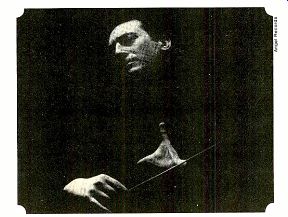
THE Mozart Requiem is a work with which Carlo Maria Giulini has especially identified himself, and his stunning new performance for Angel is one of the finest things he has given us in years. It is on a very grand scale and unabashedly dramatic, somewhat like the rather Don Giovanni-ish Karajan remake on Deutsche Grammophon (2530 705) that has been my stereo preference lately. But after hearing Giulini's, I find that Karajan's sounds oddly aggressive. In part this has to do with a certain hardness in DG's sonic focus, in contrast to Angel's more judiciously balanced richness, but it has more to do with the greater sense of involvement in the new version, and with Giulini's greater willingness to let the music breathe naturally and find its own shape. The trombone solo in the Tuba Mirum is less winningly played on Angel than on DG, but that is the only point, I think, that I can complain about here. The respective solo quartets are both quite good, but Christa Ludwig, even with an occasional mannerism, makes a much stronger impression than Karajan's Agnes Baltsa, and the Philharmonia Chorus, directed by the Vienna State Opera's Norbert Balatsch, is simply superb. There are other approaches to this frequently elusive work that may appeal more to certain listeners, but among recordings now available I can think of none more deeply felt or more satisfying than this one.
-Richard Freed
MOZART: Requiem Mass in D Minor (K. 626). Helen Donath (soprano); Christa Ludwig (mezzo-soprano); Robert Tear (tenor); Robert Lloyd (bass); Philharmonia Chorus and Orchestra, Carlo Maria Giulini cond. ANGEL SZ-37600 $8.98, 4ZS 37600 $8.98.
----------------------------------------
John Cage
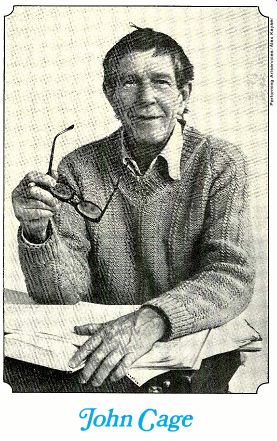
IT is not easy to think of John Cage as the elder statesman of American music, but that is what he is. Perhaps "statesman" is the wrong word for this intellectual anarchist without connection to any state-except states of being. "Philosopher-king" is more like it.
Cage is best known for having established the role of chance in contemporary music (and contemporary art generally).
But his early work was carefully composed in a delicate, brush -stroke style that owed a great deal to Oriental art. The best-known music from this period is in the big sets for prepared piano, but there are other scores, some of which are offered on a recent Tomato Records release. She Is Asleep is a two-part work consisting of a vocalise for voice and prepared piano followed by-are you ready?--a quartet for twelve tom-toms! This work is sandwiched on side one of the disc between two versions of A Room, the first for conventional piano, the second for prepared piano. All these works share a common rhythmic structure, and they are strikingly performed here by pianist Joshua Pierce, the Paul Price Percussion Ensemble, and Jay Clayton, "voice." Clayton is a jazz singer with a simple, clear, expressive sound that is singularly affecting and wonderful for this music, which impresses the listener by its profound simplicity and calm-far above the fray.
In the early Fifties Cage began, in the notorious Book of Changes, to use the ancient Chinese oracle book the I Ching and other devices to involve the element of chance in his music. Side two of the same release holds, along with a couple of short prepared -piano works from the Forties, the Two Pastorales of 1951 and the Seven Haiku of 1952, both prepared -piano pieces made in similar ways. The gentler, pulsating style of the Forties pieces is replaced here by something harsher, more angular; a soft, rhythmic landscape has become a Zen garden of rocks and rough stones.
By the Seventies Cage was using star charts as well as the I Ching to fix locations of notes. A two-disc Tomato release offers Nos. 1-16 of the thirty-two Etudes Australes of 1974 (an album of the remaining sixteen will be released soon). This is a kind of music of the spheres and orbs of the Southern Hemisphere: sparse, harsh, coldly beautiful. Pianist Grete Sultan plays them very neatly, and, like the other Tomato re lease, the album is nicely put together.
Cage, always true to his philosophical view of the world, would probably not object to noise in the grooves of his records. But the people at Tomato obviously do, and the Cagean silences here are probably as quiet as any you might find these days on American-made discs.
Cage's The Seasons, commissioned by Ballet Society for his long-time collaborator Merce Cunningham, was first performed in 1947 in-of all places-the Ziegfeld Theater in New York. Now available on disc from Composers Recordings, Inc., it is a rare example of an orchestral work by Cage. Given its date, its being based on an East Indian interpretation of the seasons, and its use of rhythmic patterning and orchestral color, one might expect it to be one of those rippling, pulsating pieces in the prepared-piano manner. But by and large The Seasons has a fragmented, detached quality that hovers between exoticism, Satie-ism, and a sort of proto-avant-gardism.
Lest this description be interpreted as a put down, let me say that the piece is quite memorable and, like all the best of Cage's music, quietly sensuous.
SIDE two of the CRI disc holds Charles Wuorinen's Two-Part Symphony. Both it and The Seasons were recorded live at Al ice Tully Hall in Lincoln Center in December 1978. The contrast between them is obvious: Wuorinen's work is as tense, high strung, and complex as Cage's is calm, laid back, and simple. And, for all its twelve tonery, the Wuorinen seems very close to traditional Western symphonic music. I don't think this impression results only from the comparison with Cage, and I don't think it is merely because our ears are getting accustomed to these sorts of sounds. Wuorinen, like many other composers of his generation, is working closer to the tradition all the time. For better or worse, this music sounds like updated Hindemith.
Both the Cage and the Wuorinen works receive impressive performances by an excellent orchestra devoted to new music un der the direction of the redoubtable Dennis Russell Davies. Both are well recorded too.
-Eric Salzman
CAGE: A Room (two versions); She Is Asleep; Seven Haiku; Totem Ancestor; Two Pastorales; And the Earth Shall Bear Again.
Joshua Pierce (piano, prepared piano); Jay Clayton (voice); Paul Price Percussion Ensemble. TOMATO TOM -7016 $8.98.
CAGE: Etudes Australes, Nos. 1-16. Grete Sultan (piano). TOMATO TOM -2-1101 two discs $11.98.
CAGE: The Seasons. WUORINEN: Two-Part Symphony. American Composers Orchestra, Dennis Russell Davies cond. COMPOSERS RECORDINGS, INC. CRI SD 410 $7.95.
-------------------------
...forces are in good balance, and the four soloists are nicely blended, with individual strengths noticeable at the top (Moser) and the bottom (Moll). Beethoven's extremely demanding part writing is well executed by the chorus, if not spectacularly so.
Technically, the results are not extraordinary. The Klemperer set of more than ten years ago offers warmer sound and greater immediacy, with brass and woodwind details more sharply registered. Further more, Kurt Moll is inaudible in his portion of "Et incarnatus est." A thorny challenge, this Missa Solemnis, but then it was never meant to be routine repertoire. G.J.
BEETHOVEN: Piano Sonatas: No. 1, in F Minor, Op. 2, No. 1; No. 2, in A Major, Op. 2, No. 2; No. 3, in C Major, Op. Z No. 3; No. 4, in E -flat Major, Op. 7; No. 5, in C Minor, Op. 10, No. 1; No. 6, in F Major, Op. 10, No. 2; No. 7, in D Major, Op. 10, No. 3.
Bernard Roberts (piano). NIMBUS W D/C 901 four discs $60 (plus $1.50 postage and handling from Audio -Source, 1185 Chess Drive, Foster City, Calif. 94404).
Performance: Poised and virile
Recording: Very clean
With six stereo sets of the thirty-two Beethoven piano sonatas currently listed, plus the historic mono set by Arthur Schnabel, and with Vladimir Ashkenazy's new cycle nearing completion, one may wonder about the need for a premium -price set of sixteen (instead of the usual thirteen) discs by a pianist who is little known outside of Eng land. Does the direct -to -disc recording, together with all the tender loving care that goes into manufacturing an audiophile product, give results unusual enough here to justify the cost? I have my doubts. Nevertheless, all but the last of the four taste fully produced four -disc albums have been released in England, and the first is now available in the U.S.
Forty-six -year -old Bernard Roberts is not a major figure on the international con cert scene, but he is well-known and highly respected in Britain, and his Nimbus Beethoven cycle is an outgrowth of his concert performances. Except for the Op. 7, the longest of the first seven sonatas, the allotment is one to a disc side here. Thus, the A Major and C Major from Op. 2 and the great D Major that concludes Op. 10 demand twenty-five or so continuous minutes of errorless playing apiece. For Mr. Roberts, or any other pianist for that matter, to meet such demands and still produce interpretations of character and depth is, I think, something of a minor miracle.
As the album notes point out, Roberts is a pianist somewhat in the Wilhelm Backhaus mold: there is very little caressing of phrase to underline lyrical expression, but there is a very straightforward rhythmic pulse, a big -scale treatment of the fast movements, a cool elegance to the dance-like pieces-as in the minuet of Op. 2, No. 1--and a fine poise to the slow movements.
On the other hand, I miss the poetry and humor that, say, Ashkenazy or Brendel brings to these early works. For all the big ness of scale and virility of Roberts' performances, they are for me a bit too square and rough-hewn.
As for sonics, the Steinway D comes through with crystalline clarity of tone and r t t a Impact and generally excellent balance throughout the range. The midrange seems a trifle glittery, at least on my playback equipment, but I am inclined to ascribe this to the somewhat hard acoustic character of the recording environment. The pressing of the discs is excellent-if still not quite the equal of the best Japanese product in terms of surface noise. D.H.
BERIO: Allelujah II. BBC Symphony Orchestra, Pierre Boulez and Luciano Berio cond. Concerto for Two Pianos; Nones.
Bruno Canino, Antonio Ballista (pianos, in concerto); London Symphony Orchestra, Luciano Berio cond. RCA ARL1-1674 $8.98.
Performance: Presumably right
Recording: Okay but hissy
Nones and Allelujah II date from the early Fifties, when new music was indeed new and startling. This is serial music in the post-Webern manner, but it is serial music of a very incisive sort. Allelujah II, in particular, makes a very striking impression in a concert hall, partly because its five instrumental ensembles are scattered all around the audience-an acoustical surround that is only slightly suggested in this two-channel recording. Here is a piece writ ten for quad, but, alas, the boom came and went without a four-channel record of it.
The concerto-written for Janice and Norman Rosenthal to play with the New York Philharmonic but actually premiered by Bruno Canino and Antonio Ballista, the artists on this disc-was composed almost two decades later, and the differences are quite striking. Instead of the very fractured, abstract surfaces of the earlier works, the concerto has a wall -of -sound quality-highly punctuated, articulated, built-up, even dramatized, it is true-that allies it much more to contemporary avant-gardism. Like its predecessors, however, it is very abstract and rather tough going.
I haven't seen the scores, so judgment of these performances is essentially meaning less. These are the composer's own readings, and, unable to separate work from performance, we must assume he knows what he wants and is able to achieve it! There's more hiss than we're used to these days (I'll bet the master tapes go back a few years), but otherwise the recordings as such are okay. E.S.
BORODIN: Polovtsian Dances (see DE LIUS) BRUCKNER: Symphony No. 7, in E Major.
WAGNER: Siegfried Idyll. Amsterdam Concertgebouw Orchestra, Bernard Haitink cond. PHILIPS 6769 028 two discs $19.96, 7699 113 $19.96.
Performance: Uneven Bruckner, lovely Wagner
Recording: Very good
BRUCKNER: Symphony No. 7, in E Major. Leipzig Gewandhaus Orchestra, Kurt Ma sur cond. VANGUARD VSD 71242 $7.98.
Performance: Good
Recording: Could use more presence
Bernard Haitink's 1967 Concertgebouw recording of the Seventh Symphony was one of the less satisfying of his complete Bruckner cycle, so it is not surprising that he would want to have another go at it. For good measure, the fourth-side filler is the Wagner Siegfried Idyll, the same piece Herbert von Karajan used to fill out his own remarkable 1977 reading of the Bruckner Seventh for Deutsche Grammophon. I will say straight out that Haitink has the edge on Karajan in Wagner's miniature master piece, communicating its tenderness with a conviction and warmth worthy of the late Bruno Walter in his prime. The Concertgebouw Orchestra's first-desk horn and wood wind players also deserve special plaudits here.
The Bruckner, though, is again disappointing throughout the first two movements. Haitink's reading is cool, measured, and carefully controlled, as is his wont, and the result, for my ears, is too bland, the beautiful sonics notwithstanding. Only in the scherzo do things really get going: the phrasing and rhythmic articulation have genuine vitality, and the music begins to show genuine character. This improvement continues through the finale, which is treated with both great verve and loving care in the fine details.
Kurt Masur's Leipzig Bruckner cycle continues apace on the Vanguard label, and having the Seventh Symphony on a single disc at a $7.98 list price is a tempting bar gain, even with the necessary turnover mid way in the slow movement. Moreover, there is nothing bland about Masur's handling of the opening movement: the arching first theme is superbly effective in phrasing and nuance. Interesting and convincing too is the treatment of the subsidiary material, which is brisk without being brusque. The slow -movement reading shows Masur's emphasis on legato flow, including the great climax, here rendered without the controversial cymbal crash employed in most other currently available recorded performances. The scherzo moves along with a fine swing and a telling feel for textural detail.
In the finale, however, there is a sharp contrasting of tempos, even sharper than in the opening movement. Masur gives a distinctly meditative treatment to the secondary thematic material and goes in for much tempo fluctuation in the development of the minor -mode unison theme derived from the opening bars. This free handling is fascinating, but it may not be wholly convincing to many-me included. As with the other recordings I have heard in this series, the sound is ultra-spacious, but regrettably at the expense of ensemble presence, and the result is a dilution of the music's inherent intensity and ruggedness, particularly in the two final movements. D.H.
COPLAND: Music for Solo Piano (see Best of the Month, page 87) COTEL: August 12, 1952: The Night of the Murdered Poets. Eli Wallach (narrator); Richard Hein (French horn); Ronald Gibbs (vibraphone, xylophone); Mark Goldstein (percussion); Dennis Masuzzo (double bass); John McCauley (piano). Piano Sona tI I. Morris Moshe Cotel (piano). GRENADIL LA GS 1051 $7.95.
Performance: Stirring
Recording: Poorly balanced
On August 12, 1952, twenty-four of Russia's leading poets, writers, and intellectuals, who happened to be Jews, were taken to the basement of Lubianka Prison in Moscow and executed. The purpose of this mass, murder was to destroy Jewish culture in the Soviet Union, a kind of final blow climaxing the liquidation of synagogues and Jewish schools, magazines, newspapers, and publishing firms. To commemorate that infamous event, composer Morris Moshe Cotel has set poems by the murdered poets and other texts related to the persecution of Jews in Stalinist Russia. The work begins with the last words of one of the poets, David Bergelson, "Earth, oh earth, do not cover my blood!" and culminates in an appeal to "let my people go" by the son of another of the victims, Peretz Markish. The score, cast in a restless atonal idiom, presents in broad strokes a raging, raucous background to the agony of the poetry and the polemics of the prose texts.
The work had its premiere in New York in 1978 with Richard Dreyfuss narrating and the composer conducting. The composer again conducts on this record, sponsored by the National Conference on Soviet Jewry, and Eli Wallach is the speaker. Wallach is a powerful performer but could have used some restraining direction. On the technical
side, there is an imbalance between the ac tor's voice and the stormy instrumental forces, which tend to drown him out from time to time. Nevertheless, this is a hauntingly impassioned performance. Side two is devoted to Cotel's Piano Sonata of 1976, a big, intricate work in which Cotel, an expert pianist, uses plucked strings, cluster bars, and other modern devices to convey the ferocity of his highly emotional music. P.K.
RECORDING OF SPECIAL MERIT
DELIUS: Songs of Sunset.
BORODIN: Prince Igor: Polovtsian Dances. Maureen Forrester (contralto, in Delius); John Cameron (baritone, in Delius); Beecham Choral Society; Royal Philharmonic Orchestra, Sir Thomas Beecham cond. ARABESQUE 8026 $6.98.
Performance: Distinctively Beecham
Recording: Good mid -Fifties mono
Although Delius specified soprano and baritone for his Songs of Sunset, all the recordings known to me have been made by altos.
Sir Thomas Beecham made an extraordinary recording of the work with Nancy Evans, Redvers Llewellyn, and the BBC Chorus in November 1946, but, as far as I know, it has never appeared in this country. Neither, until now, had his 1957 version on this new Arabesque disc; it may not be quite as magical as the older one, but it is magical enough, at the very least, to show what is missing in the prosaic performance under Sir Charles Groves (Angel S-36603). De-flans will not have to be advised to welcome this unexpected release as a treasure, and many who have not yet warmed to this com poser's choral writing may well find themselves converted in a single exposure. The sound on this long (29:20) side is quite good and a little smoother than on the 12 -minute Borodin side, which is perhaps a little brighter but also a little harsh; most of the choral contribution (in English) is far less clear than in the Delius. All that is offered here is the big set of dances that concludes the opera's second act. This, too, was a re make of something Beecham had recorded on 78s, but in this case the older version (mid -Thirties) is superseded in every respect. The Dowson texts for the Delius songs are printed with no indication of where the divisions fall, and no text is given for the Borodin. No matter. Beecham had few peers in performing colorful Russian music, and none at all, of course, in performing Delius. R.F.
K. AND F. DOPPLER: Valse di Bravura, Op. 33; Fantaisie sur des Motifs Hongrois, Op. 35; Rigoletto Fantaisie, Op. 38; Andante et Rondo, Op. 25. Per Oien, Robert Aitken (flutes); Geir Henning Braaten (piano). Bis LP -128 $9.98 (from Qualiton Records, Ltd., 39-28 Crescent Street, Long Island City, N.Y. 11101).
Performance: Ravishing
Recording: Excellent
DUKE: Five Songs for Soprano; Stopping were virtuoso flutists in the mid nineteenth century; they also composed, together, music for flute duo, and Franz wrote a half-dozen operas (one of them with Karl) and fifteen ballets. They were apparently as keenly interested in how they looked as in how they sounded, for when they performed together Karl played with his flute pointing to the left, thus being in perfect symmetry with his brother. Be that as it may, their music is in the highest salon tradition: light, graceful. ornately figured, and, above all, dazzlingly brilliant.
The performances here by Perpien and Robert Aitken are likewise dazzlingly brilliant. Many of the roulades are written in thirds, and their two instruments sound like one. As in much other salon music, sentimental rubatos aboind, and here, too, the flutists play with perfect ensemble. Every thing is discreetly accompanied by the gentle and attentive piano playing of Geir Henning Braaten. It's all fine for listeners who enjoy transcriptions, rondos, and sentimental waltzes.
The Rigoletto Fantasy is something you will either love or hate; there is no middle way with it. If you do like this sort of thing, the album is a joyous one to be played on special occasions; if not-but don't be too sure you won't without giving it a listen! And if you love it, Bis has two more volumes available. S.L.
RECORDING OF SPECIAL MERIT
The Doppler brothers, Karl and Franz, by Woods on a Snowy Evening; Ten Poems
---------------------------------------
---------------------------------------
Janacek' "Makropulos Case"
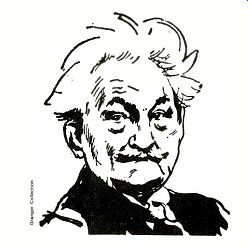
LFAREL CAPEK, author of the play The Makropulos Case, did not think it suit able for operatic treatment. "I've too high an opinion of music," he wrote to Leos" Jan - Leek when he learned of the composer's plan to make an opera of it, "and especially yours, to imagine it linked to such a conversational, highly un-poetical and garrulous play as my Makropulos Case. However, ... I don't regard the fiction of an eternal, or 300-year-old, person as my literary property, and therefore won't stand in the way of your using it as you see fit." In his excellent notes for London's new recording of the opera, John Tyrrell discusses in some detail Janadek's success in reducing the lengthy (though thought -provoking and hardly "garrulous") play to operatic proportions while adding elements of eloquence and compassion to enrich Capek's essentially ironic and skeptical view of the human condition. What resulted is an opera that remains quite conversational, but it is so enhanced by Janadek's orchestral idiom-with its flashes of haunting motivic fragments, stabbing reiterations, and constant unexpected turns-that interest never sags. If anything, the opera is under written; like Puccini, Janacek believed in concision. The action moves quickly, at times suddenly, but the transitions are convincingly managed. And, of course, Janacek was right: this absorbing story can be operatic-if it is reshaped by hands that combine its realism with a certain nightmarish quality.
The lead role of Emilia Marty--a woman who has miraculously lived for centuries and has experienced all human feelings but dried up emotionally in the process-is an ideal vehicle for Elisabeth Sitiderstram's unique interpretive art. Her performance on the new recording is simply the last word in dramatic illumination and kaleidoscopically colored singing. Her associates are first rate, particularly Peter Dvorsky, who brings passionate lyricism to the large role of Albert Gregor and manages the taxing musical requirements impressively. For the other roles, intelligence and ensemble spirit count for more than individual singing skills, but no member of the cast falls short of expectations, and the veteran tenor Beno Blachut does a brilliant cameo in the role of Hauk Sendorf, one of Emilia's lovers from the distant past.
Conductor Sir Charles Mackerras equals his triumph in the same composer's Katya Kabanova two years ago, securing magnificent playing from the Vienna Philharmonic.
He should be encouraged to give us more Janacek, whose music he serves with a revelatory dedication.
HAVE some reservations about the re cording perspectives. Unquestionably, the orchestral writing is the most fascinating musical element in this opera, and it must be kept in clear focus. Nonetheless, the vocalists must not be obscured, and in my view London's production team did not altogether succeed in achieving a balance in which the voices are sufficiently forward.
-George Jellinek
JANACEK: The Makropulos Case. Elisa beth Soderstram (soprano), Emilia Marty; Peter Dvorsky (tenor), Albert Gregor; Vladimir Krejcik (tenor), Vitek; VaclavZitek (baritone), Jaroslav Prus; Zdenek Svehla (tenor), Janek; Dalibor JedliCka (baritone), Kolenaty; Beno Blachut (tenor), Hauk-Sendorf; others. Chorus of the Vienna State Opera; Vienna Philharmonic Orchestra, Sir Charles Mackerras cond. LONDON OSA 12116 two discs $17.96.
-----------------------------
-----------------------------
New Mendelssohn symphonies
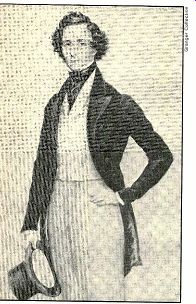
MENDELSSOHN'S Italian and Reformation Symphonies (Nos. 4 and 5, respectively) have hardly ever lacked distinguished recorded performances, and recent versions by Andre Previn (No. 4 only), Leonard Bernstein, and Gaetano Delogu are right up there with the best of their predecessors.
I am particularly taken with the Supra phon recording of the Czech Philharmonic under the baton of Gaetano Delogu, winner of the 1968 Dimitri Mitropoulos Competition. There is a wonderful elegance and crispness to his treatment of the opening movement of the Italian Symphony, with an almost chamber-music -like transparency of texture throughout. The Czech wind players have never sounded better. The second movement (the so-called "Pilgrim's March," marked andante con moto) is paced slightly faster than is usual, and Delogu adopts an intriguing detache phrasing for the second and third notes of the main theme. The Saltarello finale (marked pres to) is less hectic than in some recordings but no less effective. Delogu's reading of the Reformation Symphony is just as fine. The delectable scherzo is super-elegant, and I am delighted to hear the finale, based on the Ein' Feste Burg chorale tune, shorn of its bombast while retaining its vigor. The recorded sound is superb all the way, and I hope this level of quality is maintained in the forthcoming budget -price issue of the same recording on Quintessence.
Leonard Bernstein and the Israel Philharmonic players were in superb form for their live concert recordings of the Italian and the Reformation on Deutsche Grammophon. The presence of an audience (quiet as mice!) seems to have done a lot to warm the ambiance, which has seemed rather hard to me in many past recordings by this orchestra. Bernstein's way with the opening movement of the Italian is considerably less tigerish than on his 1968 New York Phil harmonic disc. The middle movements fare especially well, with lovely nuances in the "Pilgrim's March" and an exceptionally warm lyric feeling in the third movement.
The Saltarello is properly full of vim and vigor. In the Reformation Symphony, Bern stein takes a decidedly more dramatic, even militant view of the end movements com pared with Delogu. The scherzo is notable for the crisp work of the woodwinds. The recording job is first-rate.
ANDRE PREVIN'S performance of the Italian--recorded with the London Symphony on Angel-falls midway between Delogu's elegance and Bernstein's romantic warmth.
The reading is characterized by precision of execution and careful pointing of phrases throughout (in the opening movement particularly), yet the Saltarello is the most fiercely aggressive of the three. Like Bernstein and Delogu, Previn opts for the first -movement repeat of the exposition, thus giving us the lovely transitional music all too often lost in both concert and recorded performances. Instead of the Reformation Symphony, the second side of this disc holds three overtures, among which the best performance is of the not very interesting Ruy Blas. The Herbrides Overture is somewhat over -fast, and the Midsummer Night's Dream Overture (taken from Previn's 1977 complete recording of the whole work) is not quite poetic enough. But the symphony performance is outstanding, and, as with the other discs, the sonics are excellent.
-David Hall
MENDELSSOHN: Symphony No. 4, in A Major, Op. 90 ("Italian"); Symphony No. 5, in D Major, Op. 107 ("Reformation"). Czech Philharmonic Orchestra, Gaetano Delogu cond. SUPRAPHON 1110 2430 $8.98 (from Qualiton Records, Ltd., 39-28 Crescent Street, Long Island City, N.Y. 11101).
MENDELSSOHN: Symphony No. 4, in A Major, Op. 90 ("Italian"); Symphony No. 5, in D Major, Op. 107 ("Reformation"). Israel Philharmonic Orchestra, Leonard Bern stein cond. DEUTSCHE GRAMMOPHON 2531 097 $9.98, 3301 097 $9.98.
MENDELSSOHN: Symphony No. 4, in A Major, Op. 90 ("Italian'). Overtures: The Hebrides, Op. 26; Ruy Bias, Op. 95; A Mid summer Night's Dream, Op. 21. London Symphony Orchestra, Andre Previn cond. ANGEL SZ-37614 $8.98.
-----------------------------
...
by Emily Dickinson; Four Chinese Love Lyrics; Four Poems by E. E. Cummings. Carole Bogard (soprano); John Duke (piano). CAMBRIDGE CRS 2776 $6.98.
Performance: Brilliant
Recording: Excellent
Some day wider audiences will come to ap preciate the rich repertoire of the American art song. There are whole fields of such buried treasure waiting to be discovered.
John Duke, born in 1899, was a student of Bernard Wagenaar and-as what serious American composer hasn't been?--of the late Nadia Boulanger. He has been setting poetry, much of it American poetry, to music since 1920. At last count, he had written 210 art songs, along with choral works, chamber music, operas, and operettas--all within the limits of tonality, but surprisingly fresh and adventurous on their own terms.
Twenty-four of his songs are heard on this recording, brilliantly yet subtly interpreted by soprano Carole Bogard, and there isn't a lemon in the lot. Exceptionally apt are the astringent settings of ten poems by Emily Dickinson-some of them not yet suffering from overexposure in the popular anthologies. Every one has something more than the kind of recitative that passes for song in the smaller works of composers less sensitive than Duke to the requirements for making words sing. The first six were com posed in 1968, the last four in 1975, but as a set they form a seamless whole. So do the five songs for soprano based on excerpts from Sara Teasdale's From the Sea, which have a somewhat more Debussyan flavor, and the exceptionally delicate settings of a group of Chinese love lyrics. The program comes to a lilting close with earlier settings of four poems by E. E. Cummings, the best of which, with the already musical lyric of In just -spring, is as exhilarating as a sunny April day. The record company apologizes for the rather maddening absence of texts, blaming "excessive demands" from the copyright owners. You'd think they'd have the sense to realize that this might be the last chance some of these poems are going to have. P.K.
DVORAK: Symphony No. 8, in G Major, Op. 88. Chicago Symphony Orchestra, Car lo Maria Giulini cond. DEUTSCHE GRAMMOPHON 2531 046 $9.98, 3301 046 $9.98.
Performance: Richly inflected
Recording: Close focus
DVORAK: Symphony No. 8, in G Major, Op. 88. Amsterdam Concertgebouw Orchestra, Colin Davis cond. PHILIPS 9500 317 $9.98, 7300 611 $9.98.
Performance: Accent on volatility
Recording: Very good
Both the conductors and production crews offer distinctly contrasting views in these two new recordings. Carlo Maria Giulini's basic approach is intense and highly inflected throughout the entire work. His pacing of the first movement may seem a trifle over-deliberate, but it works in the context of the reading as a whole. The most striking passage is the elaborately nuanced section of the fourth movement just before the headlong close. The recording tends to rein-force every aspect of Giulini's view of the score, even to the point of some overemphasis of the brass and woodwinds in the first movement. The woodwinds are also well forward, though not obtrusive, in the trio of the delectable Sousedska-style scherzo, but I would have liked just a shade more stereo depth there.
Colin Davis takes a more extroverted view of the G Major's end movements and is, in my view, a mite hasty in his pacing of the first movement. He treats the minor -key outburst that precedes the slow -movement coda somewhat stodgily, but he makes up for it all in a brilliantly scintillating finale.
The sound represents the Concertgebouw and its orchestra at its very finest, rich in presence and ideal in ambiance. D.H.
FIBICH: Symphony No. 2, in E -flat Major, Op. 38. Brno State Philharmonic Orchestra, Jlrl Waldhans cond. SUPRAPHON 0 4 10 2165 $8.98 (from Qualiton Records, Ltd., 39-28 Crescent Street, Long Island City, N.Y. 11101).
Performance: Likable
Recording: Good
Some forty years ago Zdenek Fibich's Poeme was fitted out with English words and became a successful popular song, My Moonlight Madonna. In that form, it was probably the only music by this compatriot and contemporary of Dvorak to get much of a hearing in our country. Fibich's name is not in Schwann, but imported Supraphon recordings of his works, such as this new one, are sometimes available. Not too long ago there was a very attractive coupling of his Quintet in D Major for violin, clarinet, horn, cello, and piano with his Piano Trio in F Minor (1 11 1617), and a couple of decades back there was an earlier recording of the Second Symphony, conducted by Karel Sejna. I never got to hear the Sejna performance, which may well have been more persuasive here and there than the one conducted by Jiff Waldhans, but if Waldhans doesn't quite make the work irresistible, he does make it attractive enough to appeal to anyone with a liking for the Bohemian flavor manifested in the music of Suk and Foerster and some of the lesser works of Dvorak and Smetana.
The second of Fibich's three symphonies dates from 1893 (the same year as Dvorak's New World), when the composer was forty two and in love with Aneika Schulzova, the librettist for the last three of his seven operas. Motifs from a piano cycle commemorating his declaration of love are heard in the slow movement and finale, and the "motto" introduced in the first movement probably represents Aneika herself. The scherzo, which contains a theme similar to one in the corresponding movement of Felix Draeseke's hardly better-known Symphon ia Tragica, could do with a bit more animation than Waldhans provides (until the last bars), but otherwise this is a most agreeable performance, as likable as the music itself-and, one might say, as unexception al. Nothing to get excited about, perhaps, but enjoyable enough, especially with a cozy fire going on a damp, chilly day. The sound is adequate. R.F.
FARKAS: Ancient Hungarian Dances (see NIELSEN)
FOERSTER: Sonata Quasi Fantasia for Violin and Piano, Op. 117 (see Best of the Month, page 84)
HINDEMITH: Kleine Kammermusik, Op. 24, No. 2 (see NIELSEN) IBERT: Trois Pieces Breves (see NIELSEN) JANACEK: Music for Violin and Piano (see Best of the Month, page 84)
LEGRAND: The Umbrellas of Cherbourg, Symphonic Suite; The Go-Between, Theme and Variations for Two Pianos and Orchestra. Michel Legrand, Robert Noble (pianos); London Symphony Orchestra, Michel Legrand cond. CBS M 35175 $8.98, MT 35175 $8.98.
Performance: Soaking in sentiment
Recording: Excellent
The Umbrellas of Cherbourg was the big movie musical from France in 1963. What made it different was that there wasn't a word of spoken dialogue; the whole thing was sung. In fact, it was really a cinematic operetta, photographed in chic, soft -focus color in a formal Gallic style. People either loved it and wept shamelessly or hated its sentimentality-and especially the flowery, cloying, clinging score by Michel Legrand.
Nonetheless, the love song known here as I Will Wait for You became a hit all over the globe.
Now Legrand has recast the music into a suite for orchestra with harpsichord and jazz rhythm and brass sections. Those who hated the music in the first place (I could scarcely sit through it) will hate it in this form more than ever; those who swooned at the sound of the original will love this version also. Side two of the album is devoted to a theme and variations for two pianos and orchestra based on Legrand's score for The Go-Between, a 1971 movie that, like Umbrellas, won the Cannes Film Festival Grand Prize, though it did less well in release. The music in this case is more severe and even provides something of an antidote to the lush excesses of the first side of the disc. The whole album has been sumptuously recorded. P.K.
RECORDING OF SPECIAL MERIT
MAHLER: Symphony No. 5, in C -sharp Minor; Symphony No. 10, Adagio. London Philharmonic Orchestra, Klaus Tennstedt cond. ANGEL SZB-3883 two discs $17.96, 4Z2S-3883 $17.96.
Performance: Expansive
Recording. Excellent
The recently reissued Rafael Kubelik re cording of Mahler's Fifth (Privilege 2726 064) remains for me the most compelling version in the catalog, but of course so vast a work can sustain a variety of approaches.
Klaus Tennstedt's view of the work is per haps the most expansive of all, and yet there is no hint of self-consciousness in his new recording, and certainly no sense of dragging, even though he chooses tempos slower than everyone else's but Wyn Morris' (Peters International PLE-100/101) in nearly every one of the five movements. He invests his reading with a weight that not only sustains but actually calls for the broader pacing, so that I was hardly ever aware that he was taking the first two movements so much more slowly than Kubelik. Moreover, the level of playing Tennstedt draws here from the London Philharmonic compares very well with that of the Berlin, Philadelphia, and Chicago orchestras; the burnished brass and the bloom on the strings evoke the quality we associate with the Vienna Phil harmonic in Brahms and Bruckner.
Either Tennstedt or the recording engineer must have worried that the harp might be overlooked in the famous adagietto, for it is given almost solo prominence in the movement's opening, as if to assure us of its presence. Tennstedt's view of this movement may strike some listeners as curiously detached, but just as many, I'm sure, will feel that his relaxation of emphasis makes for the sort of free-floating serenity that provides the most appropriate transition from the intensity of the previous movements to the brightness of the finale. The adagio from the Tenth Symphony is splen didly done, utterly convincing without a trace of obviousness. The sound is excellent all the way through-rich, clear, without any tendency to overload. All in all, this now seems the strongest version of the Mahler Fifth after Kubelik's, and those who like a more expansive and voluptuous approach may even prefer the Tennstedt reading. R.F.
MARTINI: The Epic of Gilgamesh. Marcela Machotkova (soprano); Jiri Zahradni eek (tenor); Vaclav Zitek (baritone); Karel Prfiga (bass); Otakar Brousek (speaker); Czech Philharmonic Chorus; Prague symphony Orchestra, Jiri Belohlavek cond. SuPRAPHON 1 12 1808 $8.98 (from Qualiton Records, Ltd., 39-28 Crescent Street, Long Island City, N.Y. 11101).
Performance: Okay
Recording. Good
Bohuslav Martinfi's Epic of Gilgamesh, written in 1955 in Nice, is based on an Eng lish translation (the work is sung here in the composer's native Czech) of the Assyrian epic that is perhaps the oldest page--clay tablets, actually--in world literature. Mar tintl's once major reputation has faded now almost everywhere except in his native land, whence this recording comes. The setting evokes something long ago and far away, not only distant in time and space but also dreamlike, as if out of some psychic depths.
But, in spite of its rich atmosphere, the music is disappointing because it seems con stantly poised to soar vocally but never does. E.S.
MASSENET: Sapho. Renee Doria (soprano), Fanny Legrand; Gines Sirera (ten or), Jean Gaussin; Gisele Ory (mezzo-soprano), Divonne; Adrien Legros (bass), Cesaire; Elya Waisman (soprano), Irene; Rene Gamboa (baritone), Caoudal; Christian Baudean (tenor), La Borderie; Jean-Jacques Doumene (bass), Innkeeper. Chorale Stephane Caillat; Orchestre Symphon ique de la Garde Republicaine, Roger Boutry cond. PETERS INTERNATIONAL PLE 129/31 three discs $23.94.
Performance: So-so
Recording: Good
If anyone had told me a few years ago that I would be sitting here singing the praises of Jules Massenet, I would have laughed. But Sapho is a work of real charm and sentiment-and I mean that as praise. This is not what I'd call a great performance, but I enjoyed it even so.
Sapho was produced at the Opera-Comique in 1897-just at the height of the composer's career. The work has nothing to do with Greece but comes from a novel by Alphonse Daudet about contemporary French life. Sapho is the nickname of a beautiful artists' model who falls in love with a young provincial lately arrived in Paris to make his fame and fortune. Eventually he finds out about her past. There is a great spitting fight scene-complete with lurid old love letters, his discovery that she has had a child, and an exchange of invective that climaxes when she calls him "bourgeois." He walks out on her. She begs him to come back and he refuses. Eventual ly he finds he can't stay away from her and returns, but this time, while he sleeps, she steals away forever.
Sapho is one of Massenet's few contemporary genre pieces, and it makes one wish he had done more. It is a kind of sentimental French verismo, reminiscent in many ways of La Boheme (one thinks of Puccini and Massenet as a generation apart, but La Boheme appeared a year earlier than Sa pho). The difference is that Puccini concentrates on the picturesque color of Parisian Bohemian life and the counterpoint between the two pairs of lovers while Masse net focuses resolutely on the two main characters, Sapho herself in particular. She is a distinguished member of Massenet's gallery of operatic heroines. The portrait of a slum goddess turned femme fatale and now desperately trying to hold on to the one real love of her life is a strong one-worthy of an old Bette Davis movie! A good deal of the credit for the effectiveness of all this goes to Daudet and the librettists-this is way above most opera librettos in quality-but it is Massenet's set ting that commends it to our latter-day attention. Many clever remarks have been made about Massenet's mixture of Gounod and Wagner, of sex and sentiment, sweet ness and sensuality; certainly those are the principal elements of Sapho. I don't find that a cause for complaint. On the contrary, I sometimes wish he had avoided all pre tense to anything else; we would think of him as a greater master if he had. What is annoying is that there are constant intimations of higher things, of climaxes and pro found statements to come-but they never arrive. If we overlook this defect, if we re fuse to let Massenet raise our expectations with his skill and theatricality, then Sapho is a very satisfying work in the old-fashioned manner and contains one of the great female personages on the operatic stage.
I wish I had as much good to say about this recording. The playing and conducting are adequate, but the singing is, to put it kindly, mediocre. The tragedy of French opera has always been the state of French singing (and the difficulty of French style for non -French speakers). But we are not likely to have a better Sapho soon, and this one is better than none. E.S.
MASSENET: Werther. Placido Domingo (tenor), Werther; Elena Obraztsova (mez zo-soprano), Charlotte; Kurt Moll (bass), the Bailiff; Franz Grundheber (baritone), Albert; Arleen Auger (soprano), Sophie; Alejandro Vazquez (tenor), Schmidt; Lasz 16 Anderko (baritone), Johann; others. Cologne Children's Choir and Radio Symphony Orchestra, Riccardo Chailly cond. DEUTSCHE GRAMMOPHON 2709 091 three discs $29.94, 3371 048 $29.94.
Performance: Good
Recording: Excellent
This recording was realized through one of those intelligent collaborations between broadcast networks and major record companies that seem to flourish in Europe, particularly in Germany. Such ventures seem unthinkable here, but then our American companies lost their leadership position in the recording industry a long time ago. Cologne, where this particular recording was made, is not very far from Wetzlar, the original locale of Werther, but, Goethe not withstanding, this is a French opera, and Deutsche Grammophon's otherwise first rate production loses sight of that. There are no French singers in the cast, unless we so consider Arleen Auger, an American art ist of French ancestry who sings the role of Sophie very well.
I like the work of Italian conductor Riccardo Chailly, though. His leadership is dynamic and incisive, effectively counteracting the opera's sometimes excessive sentimentality. The orchestra is excellent, and Chailly lets it soar magnificently in the big moments but without overpowering the singers.
Placido Domingo's rich tenor sound and secure musicianship are always assets. He sings beautifully here throughout, scaling his tones to delicate dynamic levels whenever the music or the situation calls for it.
Though not an ideal choice for a French Romantic role, vocally Domingo is never less than pleasurable. I cannot say the same for Elena Obraztsova, though she is unques tionably an artist of the first rank. Her Charlotte has some moving and impressive moments, but few truly delicate ones. Her main problem, however, is excessive vibrato and tonal unsteadiness.
The sonorous Kurt Moll, as the Bailiff, stands out among the supporting singers, who are all competent or better except for the weak -sounding tenor who sings the part of Schmidt. Technically, the recording is beyond reproach, and the packaging con forms to DG's laudable standard Prospective buyers should note that another Werther is scheduled to be released, on Angel, in the near future, with Alfredo Kraus and Tatiana Troyanos in the lead roles. Mean while, Angel SCL-3736, with Nicolai Gedda and Victoria de los Angeles, though sonically less luxuriant, offers the kind of idiomatic rightness and consistent vocal excellence the present set does not. G.J.
MENOTTI: The Telephone. THEMMEN: Shelter This Candle from the Wind. Paula Seibel (soprano); Robert Orth (baritone, in Menotti); Louisville Orchestra, Jorge Mes ter cond. LOUISVILLE LS -767 $7.95.
Performance: Good
Recording: Good
Gian Carlo Menotti's clever little one-acter The Telephone may not have been in the headlines much since its Broadway premiere more than thirty years ago, but I am told it is one of the most frequently performed operas in college and semiprofessional theaters. The royalties it thus produces may go a long way toward assuaging the composer's wounds from the slings and arrows of his occasionally outraged critics.
Ben, a young man with marriage on his mind, cannot seem to get his message across to Lucy because she is always on the phone.
In desperation, he leaves and proposes the only way he can-by phone. While such a simple and innocent plot has a dated sound nowadays, the opera is a pleasantly entertaining example of a genre that extends from Pergolesi through Wolf-Ferrari to Menotti. With two pleasant and youthful-sounding singers and sympathetic conducting, this recorded performance stands up well against the recently reissued original (Odyssey Y2 35239, coupled with Menotti's The Medium), and with considerably brighter conics.
"Shelter This Candle from the Wind" is a line by Edna St. Vincent Millay, five of whose highly singable poems have provided the text for Ivana Themmen's orchestral song cycle. The songs are written in a high tessitura, with wide upward leaps reminiscent of Richard Strauss. They are in a conservative idiom, gratefully written for the voice, and deserve to be taken up by other recitalists. Paula Seibel performs them very
--------------------
A Problematic "Don Carlos"
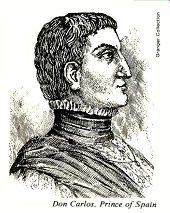
------------ Don Carlos, Prince of Spain
HERBERT VON KARAJAN'S Salzburg production of Verdi's Don Carlos has received much comment in the international press since it was first mounted in 1975. It has now reached us in recorded form on the Angel label, and I find it, like the Austrian maestro's previous Verdi adventures, quite problematic. His preference for the four -act version of the opera is not in itself objection able-it was sanctioned by Verdi himself, which is justification enough. Nor is this a case similar to Karajan's Otello (Angel SX 3809), with its uneven vocal contributions, or 17 Trovatore (Angel SX-3855), in which the singing is downright poor. The vocal performances in this Don Carlos range from good to outstanding. The problem arises from Karajan's own eccentricities of tempos and dynamics and from the strange audio perspectives imposed.
Karajan is obviously a sincere champion of Verdi's music, but he serves that music in unpredictable ways. His distended tempos frequently defuse tension (as in the scene between the king and queen in Act III, "Ardita troppo .") or rob the music of impetus (the queen's aria, "Tu, che le vanita," in Act IV). At times he is so determined to stress lyricism that rhythmic vitality is sacrificed (the introduction to Eboli's Veil Song in Act I, Scene 2). The recorded sound is often hazy, lacking in immediacy, and wayward in dynamics. Pianissimos are virtually inaudible at normal volume set tings, and the balances are questionable.
Jose van Dam is an artist who can raise the Friar's brief part to a commanding level, but here we must strain our ears to focus on his remarkable singing. And surely Verdi did not place six baritones on stage as Flemish deputies to have them deliver their heartbreaking message sotto -voce! I could cite other damning examples, but, in all fairness, Karajan also gives us moments of penetrating insight that reveal details less painstaking performances gloss over, in stances of phenomenal ensemble precision, a uniformly excellent orchestral execution, particularly by the Berlin Philharmonic brass section, and some magnificently theatrical climaxes.
THE singing, as I said before, is quite distinguished. Nicolai Ghiaurov no longer commands the vocal solidity he exhibited in his previous recorded portrayal of King Philip under Solti (London OS 1432) more than a dozen years ago, but his characterization has become more subtle and more moving with age, and it remains undeniably regal. Piero Cappuccilli is not a thrilling Rodrigo, but an intelligent and thoroughly satisfying one nevertheless. His long-breathed, piano rendering of the death scene is beautifully done, and he gets exemplary support from Karajan. Agnes Baltsa is simply a magnificent Eboli; more need not be said.
Ruggero Raimondi's performance as the Grand Inquisitor is more debatable. His smooth, rich cantante style, easily encompassing the high tessitura, ravishes the ear but fails to suggest the cruelty and fanaticism we associate with the character. Furthermore, this supposedly nonagenarian cardinal sounds decidedly younger than his kingly opponent. Even more questionable are Karajan's choices for Don Carlos and Elisabetta. Mirella Freni floats some wonderful phrases, but the climaxes of the first -
act duet and the "Tu, che le vanita" aria are too taxing for her essentially lyric voice.
Jose Carreras, in the title role, also strives for a volume that nature denied to his very appealing instrument, and he sounds definitely tight and uncomfortable above the staff. In the smaller roles the casting is nothing short of luxuriant. Jose van Dam's Friar has already been mentioned; Edita Gruberova, a major artist, shines as Tebaldo, a barely noticeable part, and Barbara Hendricks, as the Heavenly Voice, sounds just that.
IN sum, this Don Carlos is a worthy achievement partly compromised by directorial capriciousness. In comparison, An gel's earlier five-act version under Carlo Maria Giulini (SDL-3774) is better engineered, is firmly and less willfully con ducted, and offers a more appropriate pair of lovers in Montserrat Caballe and Placido Domingo. The other singers in the new set are either equal to Giulini's or, in the cases of Ghiaurov, Raimondi, and Van Dam, clearly superior.
-George Jellinek
VERDI: Don Carlos. Jose Carreras (tenor), Don Carlos; Mirella Freni (soprano), Elisa betta; Nicolai Ghiaurov (bass), King Philip II; Piero Cappuccilli (baritone), Rodrigo; Agnes Baltsa (mezzo-soprano), Eboli; Ruggero Raimondi (bass), the Grand Inquisitor; Edita Gruberova (soprano), Tebaldo; Barbara Hendricks (soprano), a Voice from Heaven; others. Chorus of the Deutsche Oper, Berlin; Berlin Philharmonic Orchestra, Herbert von Karajan cond. ANGEL SZDX-3875 four discs $36.92, 4Z4X 3875 $36.92.
-----------------------------
... well indeed. Only the disc surfaces mar the otherwise consistently high level of this release. G.J.
MILHAUD: La Chemin& du Roi Ren4 Op. 205 (see NIELSEN) NEDBAL: Violin Sonata in B Minor, Op. 9 (see Best of the Month, page 84)
RECORDINGS OF SPECIAL MERIT
NIELSEN: Wind Quintet, Op. 43. FAR KAS: Ancient Hungarian Dances.
IBERT: Trois Pieces Breves. ARNOLD: Three Shanties. Frosunda Wind Quintet. Bis LP -136 $9.98 (from Qualiton Records, Ltd., 39-28 Crescent Street, Long Island City, N.Y. 11101).
Performance: Vivacious
Recording: Close and crisp
NIELSEN: Wind Quintet, Op. 43. HINDEMITH: Kleine Kammermusik, Op. 24, No. 2. MILHAUD: La Chemin& du Roi Rene, Op. 205. Danish Wind Quintet. UNI CORN RHS 366 $10.98.
Performance: Idiomatic
Recording: Superb
What a delicious dilemma these two discs present! I'm sure they offer the two most persuasive versions of the Nielsen Wind Quintet available at present, and it just might be easier to find reasons for investing in them both than to choose between them.
The young Swedes in the Frosunda Quintet (only one member of which has reached the age of thirty) give a performance distinguished by spontaneity and vivaciousness, while their slightly senior Danish colleagues exhibit a bit more subtlety and polish-especially in the opening of the middle movement and toward the end of the last, the long set of variations on Nielsen's own hymn Min Jesus, Lad Min Hjerte. Both performances are superbly recorded, though the striking presence on the Bis disc comes from a focus so close that one hears a bit of key clatter from the clarinet. The pressings, from Germany's Teldec for Bis and from Holland's Philips for Unicorn, are both excellent. I think I would opt for the smoother and subtler work of the Danish Quintet, which also offers similarly first rate accounts of the wind -quintet classics of Hindemith and Milhaud, but many collectors might be happier with the somewhat more adventurous coupling on Bis. Ferenc Farkas' set of five Ancient Hungarian Dances has surprising substance and appeal, and Malcolm Arnold's jolly settings of three familiar sea shanties is no mere make weight, either; the Ibert, of course, is no less a classic in its own right than the longer works by Hindemith and Milhaud.
The names of at least three members of the Danish Wind Quintet, by the way, suggest rather distinguished musical lineage, though no information is given on any of them in the album notes. The flutist is Verner Nicolet, who may or may not be a member of the famous Swiss family, the oboist is Bjorn Carl Nielsen, and the clarinetist is Soren Birkelund, presumably the son of the famous flutist Poul Birkelund who took part in the first recording of the Nielsen quintet to reach our shores (on London) nearly thirty years ago. R.F.
NOV AK: Violin Sonata in D Minor (see Best of the Month, page 84) ORFF: Street Song (Gassenhauer)-Selections from Schulwerk. Tolz Boys' Choir; instrumental ensemble, Carl Orff cond. QUINTESSENCE PMC-7127 $3.98, P4C 7127 $3.98.
Performance: Authoritative
Recording: Good
The descriptions above were applied when this recording was first released here (as BASF HC 25122) and reviewed in the October 1975 issue of STEREO REVIEW; they still fit. Gassenhauer (Street Song) is simply the first of the twenty intriguing little pieces from Orff's Schulwerk that were selected for this sequence. The boys' choir takes part in only one number (Diminution Schrei), while fifes, recorders, and rhythm instruments of Orff's own design predominate in most of the others; one is performed entirely by clapping hands (the Klatschron do, or Rondoapplause). As before, I would like to have some pictures, or at least descriptions, of the instruments involved, but the Quintessence remastering is very successful, the new price is certainly attractive, and it is especially good to have this collection in cassette form. A nice surprise to slip into a preteen's rock pile. R.F.
PALIASHVILI: Absalom and Etery. Irakli Shushaniya (bass), King Abio; Liana Tatishvili (mezzo-soprano), Queen Natela; Surab Sotkilava (tenor), Prince Absalom; Zisana Tatishvili (soprano), Etery; Lamara Chkoniya (soprano), Marich; Shota Kiknadse (baritone), Murman; others. Large Chorus and Symphony Orchestra of USSR Radio, Didim Mirzchulava cond. DEUT SCHE GRAMMOPHON 2709 094 three discs $29.94.
Performance: Good
Recording: Good
Here is a real oddity: an opera from Soviet Georgia based on a Georgian legend and performed with dedicated enthusiasm by a native cast. I cannot help thinking it would make a singularly apt present for an opera lover who thinks he has, or at least knows, everything. The fact is, most of us know very little about the native cultures of the various Soviet republics, and the essay by Knut Franke that comes with this release is a handy primer on Georgian music.
The unhappy love of Prince Absalom for the beautiful commoner Etery is the subject of a folk legend that has many versions. The operatic treatment by Zakhary Paliashvili (1871-1953), a pupil of Sergei Taneyev, combines Oriental folklore with Western forms and traditions. Paliashvili's music is rather conservative for 1919, the year the opera was introduced, and the prevalence of unison writing (derivative from church traditions) tends to underline its conservatism.
Listeners familiar with the Oriental excursions of such Russian composers as Balakirev, Borodin, and Rimsky-Korsakov will recognize the style, but, unlike his better known compatriots, Paliashvili never de parts from it. Unison choruses, ornamented, melismatic vocal writing, and exotic instrumental colors are the essence of his music, which bears a certain similarity to the Armenian strains distilled in the works of Khatchaturian and Hovhaness. Much of the opera is hauntingly beautiful, though at times repetitious.
The performance not only sounds authoritative but is quite effective. Tenor Surab Sotkilava brings a poetic, melancholy style to the music of Absalom, and his mellow, lyrical tones recall such illustrious Russian predecessors as Sobinov and Lemeshev.
Etery is appealingly sung by Zisana Tatishvili. There are several other attractive voices among these unknown Georgian singers, and not one is downright unpleasant, though baritone Shota Kiknadse is at times unsteady in the important role of Murman, the villainous warrior whose magic spell separates the lovers, and Irakli Shushaniya's resonant bass wobbles a bit in his regal pronouncements as King Abio.
The chorus and orchestra are fine; the re corded sound, though entirely acceptable, is not up to DG's usual level in terms of clarity and immediacy. G.J.
RESPIGHI: Ancient Airs and Dances for Lute, Suites Nos. 1-3. Boston Symphony Orchestra, Seiji Ozawa cond. DEUTSCHE GRAMMOPHON 2530 891 $9.98, 3300 891 $9.98.
Performance: Flashy
Recording: Excellent
Ottorino Respighi was fascinated with the early music of his native Italy. He resurrected works by Monteverdi and Vitali, pre paring them for modern performance, and it was from ancient scores that he fashioned his dazzlingly orchestrated suite Gli Uccelli (The Birds). He also put together, at various times between 1917 and 1932, three suites based on Italian and French lute music of the seventeenth and eighteenth centuries, and these Ancient Airs and Dances are among the most charming of all his works.
The suites frequently turn up individually on discs, and the set has been felicitous ly recorded by Neville Marriner and Antal Dorati on earlier releases. On this album, with the Boston Symphony players at their most glowing and Ozawa responding with a special fervor to Respighi's gorgeously colored orchestration, the music is more ingratiating than ever. While Marriner stresses the antiquity of the material, Ozawa exults in the composer's exploitation of the. full resources of the modern orchestra; the results are ravishing. P.K.
SCHUBERT: Sonata in B -flat Major, Op. Posth. (D. 960). Lili Kraus (piano). VANGUARD VSD-71267 $7.98.
Performance: Mono moderato
Recording: Good
There is a rumor that Brahms once wrote a tempo marking Molto moderato ma non troppo. Well, Schubert actually did mark the first movement of his B -flat Major Sonata Molto moderato. As this performance--proves, even in matters of moderato there is such a thing as troppo, and even Lili Kraus cannot sustain the motto moderato troppo she begins with throughout the twenty -min ute movement. Lingering over the interpretive details, lovely as they may be, only weakens the structural foundations. The other three movements here are wonderful, Schubertian magic a la Lili Kraus. A stronger first movement would have created a much deeper, more unified impression of this glorious and difficult masterpiece for piano. E.S.
RECORDING OF SPECIAL MERIT SCHUMANN: Violin Sonata No. 1, in A Minor, Op. 105; Violin Sonata No. 2, in D Minor, Op. 121; Intermezzo from "F.A.E." Sonata. Jaime Laredo (violin); Ruth Laredo (piano). DESTO DC 6442 $7.98.
Performance: Eloquent, impassioned
Recording: Close up
Of all Schumann's major works, his violin sonatas are probably the least known. They have never caught on very well with the public and have had little attention even on records. The old Busch/Serkin mono re cording of the two sonatas is available on Odyssey (in Y3 34639), and the Musical Heritage Society offers them with Roman Totenberg and Artur Balsam on MHS 3414. I have not heard the latter, but I'm happy to have the new Desto: the performances here are both eloquent and impassioned, and the Schumann sonatas need just such champions.
The package is not quite Schumann's "Music for Piano and Violin (Complete)," as labeled. He composed two movements of a Third Sonata and a finale as well as- the intermezzo recorded here for the "Frei aber Einsam" Sonata produced jointly with Brahms and Dietrich for Joseph Joachim in 1853. (The annotation mentions none of these additional pieces and offers virtually no information on the works that are on the record.) The recording, which must have been made several years ago (I don't think the Laredos have performed together since 1974), is very close up, and such miking has a way of making roughnesses appear in even the smoothest string playing, as it does here from time to time. But neither this technical misjudgment nor the documentary lapses can reduce the effectiveness of the performances, which make a most ardent and appealing case for this music. R.F.
RECORDING- OF SPECIAL MERIT
STRAVINSKY: Les Noces. Jann Jaffe (soprano); Isola Jones (mezzo-soprano); Philip Creech (tenor); Arnold Voketaitis (bass); Paul Schenly, William Vendice, Andre -Michel Schub, Mary Sauer (pianos); Ravinia Festival Percussion Ensemble and Chamber Chorus, James Levine cond. L'Histoire du Soldat, Suite. Members of the Chicago Symphony Orchestra, James Levine cond.
RCA ARL1-3375 $8.98, ARK1-3375 ".98
Performance: Lively
Recording: Clear, pretty
It used to be said that Stravinsky's real popularity began and ended with the early bal lets, but that category must now be extended to include the remarkable and imaginative group of works that stand between Le Sacre du Printemps and his neo-Classical period. The familiarity of these pieces is even more surprising considering their un conventional forms. Stravinsky at least extracted a chamber suite from L'Histoire du Soldat, but Les Noces is a big vocal work that is inextricably tied to its astonishing four-pianos-and-percussion instrumentation. And still it is performed.
Music festivals and recordings provide the best ways for unusual works with un usual instrumental requirements to be heard. This album is labeled "Music from Ravinia, Vol. 2," the Ravinia Festival being the summer home of the Chicago Symphony. James Levine is its music director, and he here shows that he can conduct Stravinsky very well indeed. These are vivacious performances that have style and wit, and they have been recorded with admirable clarity and sensitivity. I will not vouch for the authenticity of the singers' Russian in Les Noces, which sometimes sounds as if their mouths are full of potatoes, and, as of ten happens, I have a little trouble with the sophisticated, preachy, overly cultivated tone of the women soloists. But these are minor flaws, and these exciting recordings rank with any others of these works now available. E.S.
STRAVINSKY: Symphony of Psalms (see J. S. BACH)
RECORDING OF SPECIAL MERIT
TANEYEV: Oresteia. Viktor Tchernobajev (bass), Agamemnon; Lidiya Galuschkina (alto), Clytemnestra; Anatoli Bokov (bari tone), Aegisthus; Nelli Tkatchenko (soprano), Cassandra; Tamara Schimko (soprano), Elektra; Ivan Dubrovin (tenor), Orestes; others. Chorus and Orchestra of the Byelorussian State Opera and Ballet Theater, Tatiana Kolomijzeva cond. DEUTSCHE GRAMMOPHON 2709 097 three discs. $29.94.
Performance: Good Russian provincial
Recording: Not bad
Now here is an oddity. Sergei Ivanovich Taneyev was born in 1856 and died in 1915 during World War I and just a year or two before the Revolution. He was a man of immense musical and general culture, a member of none of the schools or factions of Russian music, and regarded as something of a Westerner and an academic. The Oresteia, his magnum opus, is a very grand operatic setting of the Aeschylus trilogy. It seems to have been performed at the Maryinsky Theater in 1895 and then never again. Until now, that is, for here it is, rescued out of history's dustbin by a provincial Russian opera house, a talented woman conductor, and a German record company.
All the books--even the program notes accompanying this set-say the same things: that Taneyev had talent, taste, and immense skill; that he avoided all implication of Russianism; and that he was a severe and classical contrapuntalist without much charm or warmth of inspiration. I wonder whether any of these writers-including Deutsche Grammophon's annotator--actually heard this music. True, there is no fiery nationalism a la Mussorgsky or exotic color a la Rimsky or heart -on -sleeve sentimentality a la Tchaikovsky. But Taneyev's Oresteia is one long lyric outburst that is very much in the Russian mode and as deeply felt as anything else in the literature.
The melodic inspiration, the handling of the chorus, the solo writing for the voice, the orchestration, the setup and pacing of the scenes, the balance between dramatic scenes and lyric numbers are all handled with consummate artistry. There is nothing in this work that isn't worth listening to, and its best moments are not only inspired but well earned.
Taneyev's weakness is his strength. His very breadth of style and technique militates against the kind of instantly recognizable stylistic identity demanded by modern critical taste (this wasn't a requirement in the old days). And yet Taneyev is no mere imitator or facile eclectic; everything here has real character.
His other mistake was in choosing an un compromisingly classical subject-classical tragedy not a la Strauss/Hofmannsthal but a la Gluck, with a last act that has no dramatic movement. Taneyev's music sounds perfectly Russian to me, but it certainly be longs on the classical side of Russian art (so does the work of Tchaikovsky, Stravinsky, and lots of other Russians). Taneyev can also be grouped with those late -nineteenth century composers who tried to synthesize the achievements of Romanticism with a conscious revival of Classicism-Brahms, Busoni, and a few others. We understand this kind of eclecticism today-we are having a revival of it of our own-and it doesn't seem difficult for us to appreciate this work for exactly what it is: an odd, fascinating, dignified, and attractive side -path off the main road of operatic history-something between Gluck, Glinka, and Busoni! There is another discovery here besides the work itself. The conductor, Tatiana Kolomijzeva, is obviously a very gifted woman.
Working with provincial forces, she succeeds in bringing this long -dead work back to life. In order to enjoy authentic Russian opera one must endure Russian singing, not always a wonderful experience even in the best of circumstances. As usual, the men here are better than the women. In the big tenor role of Orestes, Ivan Dubrovin is a big -sound, meat -and -potatoes singer with more vocal brawn than beauty, more bravura than brains. Nevertheless, at the end, when the dramatic structure melts away, leaving nothing to sustain Orestes or the opera except Taneyev's deus exmachina music, Dubrovin holds up, well, heroically.
The chorus is excellent, the orchestra so-so, the cast adequate, and the recording quite good. There is a synopsis but no libretto-and it is sorely missed. E.S.
TELEMANN: Suite in A Minor for Flute and Strings; Concerto in C Major for Viola and Strings; Concerto in F Major for Three Violins and Strings. Severino Gazzelloni (flute); Cino Ghedin (viola); Felix Ayo, Arnaldo Apostoli, halo Colandrea (violins); I Musici. PHILIPS 9502 011 $9.98, 7313, 011 $9.98.
Performance: Good
Recording: Excellent
TELEMANN: Suite in A Minor for Flute and Strings; Concertos in C Major and C Major for Flute and Strings. James Galway (flute); I Solisti di Zagreb. RCA ARL1 3488 $8.98, ARKI-3488 $8.98.
Performance: Dashing
Recording: Muddy
For Telemann fanciers, here are two recordings of the perennial Suite in A Minor for Flute and Strings and a clutch of concertos for flute, viola, and violins. Both Musici and I Solisti di Zagreb are first class string ensembles and both play on modern instruments in an unabashedly twentieth-century fashion. The results in both cases are strong, clear, and straightforward. It must be pointed out, however, that while the use of notes inegales, old bowings, and added ornamentation is not essential to the performance of early music, the convention of double dotting the slow sections of an ouverture movement is indispensable.
Neither group subscribes to this last practice, and therefore both readings of the ouverture to the A Minor Suite are flabby and characterless. From that point on, though, the performances are generally very fine.
Severino Gazzelloni's flute playing is clear ly articulated and rhythmically vital; James Galway's is facile verging on the glib, though he does treat us to some fine orna mentation in the Air l'Italien of the suite and in the serenade -like slow movement of the G Major Concerto.
Turning to the second side of I Musici's offering, violist Cino Ghedin's interpretation of the slow movements of the Viola Concerto are too slow and fussily romantic to be effective. The fast movements are as crisp and starchy as they should be. The string playing in the Concerto for Three Violins is luminous, even though the music is slight. On the second side of I Solisti di Zagreb's collection, the G Major Concerto is marred by pushy tempos that make the piece sound rather more skittish than it re ally is. The C Major Concerto is a ravishing piece beautifully played, easily worth the whole album, especially if you are a Galway fan collecting his entire output. S.L.
THEMMEN: Shelter This Candle from the Wind (see MENOTTI) WAGNER: Siegfried Idyll (see BRUCK NER) COLLECTIONS CEREMONIAL OCCASION. Bliss: Music for an Investiture. Sharpe: Fanfare, Royal Jubilee; Fanfare, Nulli Secundus. Sharpe (art.): Ceremonial Occasion; Fantasia, Soldiers. Reed: The Music Makers. Johnson: Vivat Regina, Suite. Clarke: Prince Georg of Denmark. Beethoven: pfenstreich No. 2. Planquette/Rauski: Le Regiment de Sambre et Meuse. Bashford: Cavalry Walk. Starke: With Sword and Lance. Young: Kneller Hall Slow March. Sousa:
The Stars and Stripes Forever. Trad.: The Girl I Left Behind Me; Lilliburlero; The Buff Coat Hath No Fellow; Royal Scots Polka. Pipers from the Caledonian High landers; Band and Trumpeters of the Royal Military School of Music, Kneller Hall, Lieut. Colonel Trevor le M. Sharpe cond. UNICORN RHS 354 $7.98.
Performance: Stirring
Recording: Excellent
The better part of two years in a U.S. Army band left me with a permanent distaste for marching but a considerable interest in military music. Those who share my trumpet -and -drum addiction will find this a fascinating record, though admittedly uneven in musical quality and interest.
Kneller Hall has been the home base of British military music since 1857, and it is a pity that its musicians have appeared on records so seldom. This excellently recorded disc gives us some idea of their quality and a really fine view of the variety of tone color that can be derived from a military wind and percussion ensemble. The outstanding piece is the antiphonal Music for an Investiture (that of the Prince of Wales) by Sir Arthur Bliss. It is, of course, mostly fan fares, but the sheer sound of twenty-three trumpets, snares, and timpani is enough to build castles in your mind. The medley of national airs (including The British Grenadiers, St. Patrick's Day, Highland Laddie, and Men of Harlech) that makes up Colonel Sharpe's Ceremonial Occasion is diverting enough, and an eighteen -minute "History of the March" on side two includes an authentic -sounding Jeremiah Clarke trum pet voluntary (called here Prince Georg of Denmark), one of Beethoven's marches (played at an unusually fast tempo), an excellent With Sword and Lance by Herman Starke, and a rather idiosyncratic performance of Sousa's The Stars and Stripes For ever. None of this is really important music and some of it is pure dross, but the sounds are gorgeous, the rhythms infectious, and the power of evocation considerable.
-James Goodfriend
RECORDING OF SPECIAL MERIT
PETER CHRIST: Oboe Recital. Thompson: Suite for Oboe, Clarinet, and Viola. Persichetti: Parable for Solo Oboe. Schmidt The Sparrow; The Amazing Mr. Avaunt. Still: Miniatures for Flute, Oboe, and Piano. Peter Christ (oboe); Alan de Veritch (viola); David Atkins (clarinet); Gretel Shanley (flute); Sharon Davis (piano); Valeria Vlazinskaya (narrator). CRYSTALS 321 $7.98.
Performance: Excellent
Recording: Excellent
Some of the most delightful music for the oboe since the eighteenth century can be heard on this carefully assembled disc pro gram. Randall Thompson's Suite for Oboe, Clarinet, and Viola is a work of considerable charm, folksy in tone and generous in its melody and jaunty rhythms. Another aspect of the oboe's personality is drawn out in Vincent Persichetti's Parable for the oboe alone, in which a simple musical idea germinates and flowers absorbingly. William Schmidt offers settings for narrator and oboes of two poems by William Pillin. The Sparrow is about a case-hardened city bird who regrets nothing as she sings, in the "pale winter sunshine," of the supreme importance of love in her precarious life. Valeria Vlazinskaya is an ideally world-weary narrator, and the oboe music is superbly witty. So is The Amazing Mr. Avaunt that follows, a spoof on every cliché in the avant garde armamentarium. Completing the program in high spirits is William Grant Still's set of ingratiating miniatures based on folk tunes. The playing by Peter Christ and his colleagues displays throughout not only the strongest grasp of technique but a flexibility in moving from one musical idiom to another that is little short of aston ishing. Good sound, too. P.K.
CONSORTIUM CLASSICUM: Eine Kleine Nachtmusique. Rudolf von Osterreich: Serenade for Clarinet, Viola, Bas soon, and Guitar in B Major. MIME: Two Pieces for Flute and Guitar. Goepfert So nata for Bassoon and Guitar, Op. 13. J. Kreutzer: Trio for Flute, Clarinet, and Gui tar, Op. 16. TELEFUNKEN 6.42171 AW $9.98.
Performance: Elegant
Recording: Very good
In the 1960s the clarinetist Dieter Kliticker spent much of his time in the libraries of Europe looking for old musical scores. He traveled all the way from London to Lenin grad on his researches, and he turned up so many charming pieces of music that he decided to found his own ensemble, the Consortium Classicum, to play them.
On this new disc from Telefunken, guitarist Sonja Prunnbauer and members of the Consortium Classicum (Mocker, clarinet; Robert Dohn, flute; Kar -Otto Hartmann, bassoon; and Heinz-Otto Graf, viola) play some of the obscure but winningly crafted chamber works Klocker came upon in his travels-an eighteenth-century serenade, a sonata, and so on-all featuring the guitar as a solo instrument. There's a serenade by the Archduke Rudolph of Austria that won the approval of Beethoven; two pieces by Diabelli, the composer whose waltz gave rise to Beethoven's famous variations; a four -movement sonata by Karl Andreas Goepfert, a clarinet virtuoso who evidently knew as well the resources of the bassoon; and a trio by Joseph Kreutzer, no relation (as far as I know) to the fellow Beethoven named that violin sonata after, but no mean Viennese stylist in the chamber-music department. Unusual music of its time, exquisitely played and scrupulously recorded. But how unsettling to find a record called "Eine Kleine Nachtmusique" without Eine Kleine Nachtmusik. P.K.
RECORDING OF SPECIAL MERIT
DIGITAL SPACE-SPECTACULAR MUSIC FOR FILMS. Gould: Windjammer.
Williams: Star Wars. Newman: Airport.
Copland: The Red Pony: Morning on the Ranch. Bliss: Things to Come, Epilogue.
Reasa: Tribute to a Badman, Suite; That Hamilton Woman, Love Theme. Moross: The Big Country. Vaughan Williams: The 49th Parallel, Prelude. Walton: Spitfire, Prelude and Fugue. London Symphony Orchestra, Morton Gould cond. VARESE SARA BANDE 0 VCDM 1000.20 $8.98.
Performance: Stunning
Recording: Spectacular
Not all movie music is contrived to be absorbed subliminally, to punch up-perhaps all too often even to telegraph-events on the screen. From the beginning, serious composers have written seriously for motion pictures, and some of their efforts have found new life as concert suites and in re cordings of highlights. With the superb forces of the London Symphony and the startling fidelity of digital recording to enhance the results, Morton Gould has put together a stunning concert of film music.
Starting with Gould's own bracing main-title music for the sea epic Windjammer, the program is satisfying from start to finish.
No excerpt lasts longer than a few minutes, so the dull stretches that are the usual curse of soundtrack albums are automatically eliminated. The most sublime moments are in Copland's music for The Red Pony, the main title for The Big Country by Jerome Moross, the exalted epilogue from the remarkable score by Arthur Bliss for that prescient 1936 film of H. G. Wells' Things to Come, Ralph Vaughan Williams' prelude for The 49th Parallel (1941), and William Walton's music for Spitfire from 1934. To be sure, there are also less inspired passages from sentimental Hollywood efforts by Miklos Rozsa and Alfred Newman, and by this time some of us have had enough of John Williams' hard -breathing music for Star Wars. But it still adds up to a fascinating hour. P.K.
BRADFORD GOWEN: Exultation. Evett: Chaconne. Perle: Six Etudes. Cowell: Exultation. Keeney: Sonatina. Goossen: Fantasy, Aria, and Fugue. Adler: Sonata Breve; Canto VIII. Bradford Gowen (piano). NEW WORLD NW 304 $8.98.
Performance: Excellent
Recording: Very fine
Bradford Gowen was the winner of the 1978 John F. Kennedy Center/Rockefeller Foundation International Competition for Excellence in the Performance of American Music. According to a note on the cover, this record of Gowen playing his winning pro gram is being offered to the public in the hope that "audiences and managers [will] come to regard this music as part of the standard repertory, a literature still dominated by pre-twentieth century European music." This is a worthy aim, but it is one that this record is unlikely to help effect. A good deal of Gowen's repertoire is "still dominated by pre -twentieth century Euro pean music." The ghost of the eighteenth century hovers over the myriads of chaconnes, fugues, sonatinas, and sonata breves produced in this country-at least until recently--and the examples on this record are typical.
Several of these composers are obscure.
Wendell Keeney and Samuel Adler were among Gowen's teachers, and Frederic Goossen is his colleague at the University of Alabama. Perhaps that kind of relationship is as good a way as any to find repertoire, and I am sure that Gowen firmly believes in the music. But that is just what is so depressing. This country is full of music professors turning out perfectly competent, charming, even up-to-date music that Brad ford Gowen can and will play extremely well and that Rockefeller/New World will record-but hardly anyone will ever actually listen to. Deep sigh.
I do an injustice to Samuel Adler. His early Sonata Breve has character, and his recent, crashing, smashing Canto VIII, the one concession here to the avant-garde, is a brilliant timbral fantasy, quite liberated from the past. George Perle's Six Etudes are also striking and among that original composer's most satisfying music. They are more likely to make their way among the piano fraternity than any of the other works here-with, of course, the exception of the brief and witty Cowell Exultation, which is the only "authentic" piece of Americana here.
Gowen is, without a doubt, an excellent pianist, and he puts his soul, his heart, and his fingers into everything-regardless of style or musical weight. It is not Gowen or the music that I question but the meaning of the worthy and earnest foundation enterprise that makes it all possible. And just remember, Gowen's program was deemed the best of eighty-nine contenders. As I said, depressing. E.S.
PRO CANTIONE ANTIQUA: Medieval Music. Sacred Monophony; The Play of Herod. Pro Cantione Antigua, Edgar Fleet cond. PETERS INTERNATIONAL PLE 114 $7.98.
Performance. Supple
Recording: Alive
Listeners who have heard the New York Pro Musica recordings of The Play of Daniel and The Play of Herod or the more re cent Pro Cantione Antigua recording of Daniel under Mark Brown's direction (Argo ZRG 900) will find this new version of Herod on the austere side in comparison.
On those earlier recordings, various instruments and percussion devices were used to add color and drama to the original monophonic chant, which is not done here. Listeners may also miss the strong rhythms that were read into much of the music in those versions. Turning their backs on instruments and favoring the flowing, unmeasured approach of the Solesmes school, the Pro Cantione Antigua here gives us a Herod that is severe and un-dramatic. Accepted as pure plainchant (with some improvised counterpoint), however, the singing is superb. The vocal sound is beautifully produced, and the molded contours of the melodic line flow with endless grace and subtlety. This performance simply demonstrates another, totally different approach to early liturgical drama.
The collection of sacred chants on side one of the album is of great interest. It includes music from the Byzantine, Gallican, Mozarabic and Ambrosian traditions. Various rhythmic interpretations are tried, all of them explained in the scholarly jacket notes (the album is an Oxford University Press production). One 'can judge the purely musical results for oneself, but in any case the recording should be of great use to scholars and students, since the selections are all printed in the Medieval volume of the Oxford Anthology of Music. S.L.
SYLVIA SASS: Dramatic Coloratura. Bellini: Norma: Casta Diva . . . Ah! bello a me. Verdi: La Traviata: Ah, fors'e lui . . .
Sempre libera. Il Trovatore; D'amor sull'ali rosee. Macbeth: Vieni! t'affret ta! . . . Or tutti sorgete; La lute langue.
Ponchielli: La Gioconda: Suicidio. Sylvia Sass (soprano); National Philharmonic Orchestra, Lamberto Gardelli cond. LONDON OS 26609 $8.98.
Performance: Interesting
Recording: Very good
When I reviewed Sylvia Sass' first London recital (OS 26524) about two years ago, I was impressed but wondered if the young Hungarian soprano would eventually be come another Callas-or another Suliotis.
Callas' influence on Miss Sass is still evident in the present recital; though such in fluence can be constructive, it can also be dangerous if it leads an artist to take unwise risks. Thus far, the evidence indicates that Sass' vocalism is built on a sounder technical foundation than that of Elena Suliotis, another Callas disciple who is now, alas, artistically a burnt -out case.
Callas aside, Sass projects a great deal of individuality in her singing. She is an interpreter of considerable range, intelligently responsive to dramatic detail, and she knows how to imbue words with expression, even if some of her effects (such as the line "Ai trapassati regnar non cale" in Lady Macbeth's "La lute langue") seem over done. Her singing does not always sound spontaneous, but it is always guided by artistic instincts. Tonally, it is lovely in the midrange and even above it; the topmost register is brave but unrefined, and a waver often creeps into her sustained notesdt forte levels. Sass is unquestionably a major artist, but one still in the process of realizing her potential.
I have long admired Lamberto Gardelli's conducting, but here I find it curiously un helpful to the singer. As a result, the Norma scene has some tentative moments, and the "Sempre libera" lacks the feeling of abandon. Only in the Macbeth arias do conductor and singer meet fully in the spirit of fruitful collaboration. G.J.
RECORDING OF SPECIAL MERIT
RENATA SCOTTO: Arias. Verdi: Rigoletto: Caronotne: Tutte le feste. Donizetti:
Lucia di Lammermoor: Regnavanel silen zio; Mad Scene. Cherubini: Medea: O amore, vieni a me. Pergolesi: La Serva Pa drona: Stizzoso, mio stizzoso; A Serpina penserete. Rossini: Petite Messe Solennelle: Crucifixus. Renata Scotto (soprano); various orchestras, Gianandrea Gavazzeni, Nino Sanzogno, Tullio Serafin, and Renato Fasano cond. EVEREST 3460 $4.98.
Performance: Excellent
Recording: Good
It is interesting to compare the vocal personality of today's Renata Scotto, the ma ture dramatic interpreter of La Gioconda, Adriana Lecouvreur, Desdemona, Maddalena (Andrea Chenier), and similar roles, with the young coloratura specialist who appears on this souvenir of her operatic beginnings (Everest's reissue is drawn from complete operas initially released on the Mercury label about twenty years ago). Today's artist, although occasionally unpredictable in purely vocal terms, is a stage-wise performer with an assertive personality that commands attention and, usually, admiration. The dramatic skills she displays in these early recordings are rather conventional except for her lively sense of comedy in the Pergolesi excerpts. Illuminating rays of insight and individuality are not noticeable, but the vocal achievement is exquisite throughout: limpid tones of beautiful quality, pare intonation, accurate and fastidiously executed fioriture.
I recommend the disc wholeheartedly.
Nowhere can the Pergolesi arias be heard so charmingly done, and the familiar Verdi and Donizetti sequences rank with the best.
The sound is clean early stereo with good surfaces. "Tutte le feste," however, was carelessly edited, and the listings fail to identify composers or conductors and mis spell some of the titles. G.J.
---------------
Also see:
BEST RECORDINGS OF THE MONTH: Dexter Gordon: "Great Encounters" Czech Violin/Piano Sonatas, Copland: Music for Solo Piano; Orchestral Suites 3 and 4 , The Pretenders: A Hot Little Group , The Emotions: "Come into Our World"
Source: Stereo Review (USA magazine)