Classical music Briefs
AMONG record collectors who specialize in conductors, there are many who disdain to day's maestros, such as Marriner, Mate, Mehta. and Muti, and reserve their passion for conductors of the past Sir Thomas Beecham, Wilhelm Furtwangler, and Arturo Toscanini, for example, have long had avid cult followings Gathering strength at the moment is the cult of Fritz Reiner ( 1888 1963) A model of the Central European tyrant of the podium, Reiner was born in Budapest and educated there After filling a number of important musical posts in Germany, he came to the United States in 1922 Here he led the orchestras of Cincinnati and Pittsburgh and con ducted opera in San Francisco, Philadelphia, and New York He spent the last decade of his life as music director of the Chicago Symphony Orchestra, with which he made some of his finest records Reiner's recordings of Mussorgsky's Pictures at an Exhibition and Richard Strauss' Ein Heldenleben with the Chicago Symphony are among those re-mastered by RCA for its " 5" (read "point five") Series of audiophile recordings listing for $15.98 per disc Reiner's famous recording of the Verdi Requiem, which he made twenty years ago in Vienna with Leontyne Price, Rosalind Elias, Jussi Bloerling, and Giorgio Tozzi, has lust been reissued in London Records' mid-price Jubilee Series, listing for a mere $13 96 for two discs The Metropolitan Opera has gotten into the Reiner revival by choosing as the ninth in its series of Historic Broadcast Recordings performances of Strauss' Salome and Elektra conducted by Reiner Both are derived from tapes of Texaco-sponsored Saturday matinee broadcasts from 1952 Heading distinguished casts are Liuba Welitsch as Salome and Astrid Varnay as Elektra. They were the world's leading exponents of these roles in the mid-twentieth century, yet neither made a complete commercial recording of her interpretation When Strauss, who was a close friend of Reiner's, wrote to congratulate the conductor on the success of his Salome at the Met, he said of Welitsch. "What a pity we did not have this excel lent girl in Dresden, but your orchestral performance was magnificent in those days" The performances are authoritative, and the carefully re stored sound (mono, of course) is surprisingly good The four-disc set in a felt slip case will be sent to contributor's of $125 or more to the Metropolitan Opera Fund. 13.0 Box 930, New York, N Y 10023 If that is too seep for your budget, you might consider the forecasts that the next Central European tyrant of the podium to come back into vogue among connoisseurs of con ducting will be George Szell Born in 1897 in Budapest and, like Reiner, educated there, Dr Szell held important musical posts in Germany before coming to the United States, where he became permanent conductor of the Cleveland Orchestra CBS Masterwork's has been reissuing Szell's recordings with the Cleveland Orchestra at a great rate in the Great Performances series, no list price is specified, but the records cost only about $6 a disc.
-WL
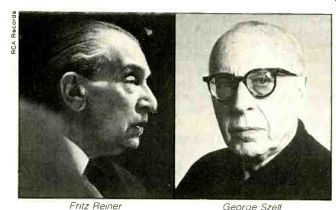
Fritz Reiner; George Szell
----
ON September 15 the American operatic soprano Leontyne Price will perform for the first time on Exxon's Live from Lincoln Center series telecast on the Public Broadcasting Service Appearing with the New York Philharmonic conducted by its music director Zubin Mehta, Miss Price will sing "Come scoglio" from Mozart's Cosi Fan Tulle, the Willow Song and Ave Maria from Verdi's Otello, and the Final Scene from Strauss' Salome, Mozart's Symphony No 41 and Strauss' Don Juan complete the program. Stereo simulcast will be available in some cities.
-----
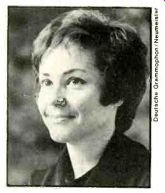
WHEN the fifteenth International Record Awards are given at the music festival at Montreux, Switzerland, this month, the Swiss soprano Edith Mathis will be singled out for a special award recognizing her contributions to the art of singing and the art of recording.
Initially an EMI artist, Miss Mathis made her US recording debut when the Seraphim series was launched in this country by Angel Records in September 1966 Since then many of her albums have been re leased here by Deutsche Grammophon and Philips.
In 1970, Miss Mathis appeared at the Metropolitan Opera, but she has performed little in this country Married to the conductor Bernhard Klee and the mother of two children, she prefers to sing in Europe in order to be close to her family. She has usually declined interviews by saying, "Must one give these? Surely it is enough Just to sing ".
Miss Mathis appears on Deutsche Grammophon's new set of Bach's Cantatas for Sundays after Trinity and on the first recording of Mozart's opera Apollo and Hycinthus, both released this summer. This year, which is the 250th anniversary of the birth of Haydn, she has been particularity praised by STEREO REVIEW'S critics for her work in Haydn's opera L'Infedelta Delusa (January) and an album of Haydn arias (March), both on the Philips label. She also sings in the new Philips recording of Haydn's The Seasons, reviewed in this issue in the "Best of the Month" section.
"Nobody buys records at list price," says Give on Cornfield of Orion Records. Like most small classical labels faced with serious distribution problems, Orion now offers records directly to consumers by mail order, but with one big difference Most labels of this kind charge their mail-order customers list price plus something extra for postage and handling, Orion, whose records list for $8.98, sells by mail at $8 post paid for one record, $15 for two, and $21 for three Write to Orion Records, P.O. Box 4087, Malibu, Calif 90265.
----
THE soprano who sang at the wedding of the Prince of Wales and Lady Diana Spencer last summer, Kiri Te Kanawa from New Zealand, has been elevated to the rank of Dame Janet Baker and Dame Joan Sutherland In the Queen's birthday honors this year Te Kanawa was made a Dame Commander of the Order of the British Empire Dame Kiri will open the season at the Metropolitan Opera on September 20 as the Marschallin in Strauss' Der Rosenkavalier. Later in the season she will sing the title role in a new production of Strauss' Arabella at the Met The BBC videocassette "The Royal Wedding," which includes Dame Kin's performance of "Let the bright Seraphim" from Handel's Samson along with the bridal procession and the marriage service, is being distributed by the Book-of-the-Month Club. Available in VHS or Beta format, the cassette runs for approximately 115 minutes It lists for $79.95 but is available to BOMC members for $62 50.
----
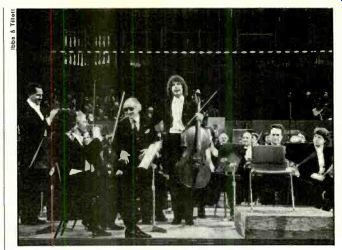
THE blind Spanish composer Joaquin Rodrigo (center) acknowledges the applause following the world première of his new cello concerto, which was performed by Lloyd Webber (right) and the London Philharmonic Orchestra con ducted by Jesus Leopez-Co boo (standing left) at the Royal Festival Hall in London earlier this year. The concerto was written specifically for Lloyd Webber, who is the brother of Andrew Loyd Webber, com poser of the musicals Jesus Christ Superstar and Evda.
RCA's recording of the new concerto with these same performers is available in England, but since the company has no plans to release it here, the disc is being imported by some American shops and by International Book and Record Distributors of Long Island City, N.Y The new concerto is not to be confused with Rodrigo's Concierto en Modo Galante for cello and orchestra recently re leased here by Angel in a performance by cellist Robert Co hen with the London Symphony Orchestra conducted by Enrique Bata. The latter is an older work dating from 1949.
Disc and Tape Reviews
By RICHARD FREED, DAVID HALL, GEORGE JELLINEK, PAUL KRESH, STODDARD LINCOLN, ERIC SALZMAN
= stereo cassette
= digital-master recording
= quadraphonic disc
= eight-track stereo cartridge
= direct-to-disc
= monophonic recording
The first listing is the one reviewed: other formats, if available, follow.
BARTOK: Mikrokosmos (complete). William Masselos (piano). MUSICAL HERITAGE SOCIETY MHS 834434, three discs $23.25 (plus $1.60 postage and handling from the Musical Heritage Society, 14 Park Road, Tinton Falls, N.J. 07724).
Performance Excellent
Recording Poor
As I remarked in reviewing another recent recording of the complete Mikrokosmos, these pieces are meant to be played as much as listened to. Bartok's remarkable set of six volumes of graded piano works starts with five-finger exercises and moves steadily to ward more complex dances, studies, and miniatures. Only by the time we hit Book V do we have pieces of sufficient scope and complexity to be worth listening to by themselves in concert or on a recording.
Anyway, such was-and, to some degree, still is-my opinion. But I will say that William Masselos is a pianist of such skill and authority that in his hands even the earliest and simplest of these pieces become genuine musical experiences. He even includes the extra exercises printed at the back of the first books and makes them sound like music. If you want to learn how even the simplest of musical ideas can be expressive, beautiful in shape, and meaningfully articulated, listen to this recording.
I have no hesitation in recommending these wonderful performances, but the re lease is badly marred by the poor quality of the recording and production. The piano tone is ugly and surrounded by distortion a buzz that may come from the poor quality of the disc itself. There are a few hideous edits, including one that drops a whole measure of music. The two-piano numbers are presumably overdubbed by Masselos himself, but who sings the vocal numbers? I could find no clue.
E.S.
BEETHOVEN: Piano Sonatas: No. 17, in D minor, Op. 31, No. 2 ("Tempest"); No. 19, in G Minor, Op. 49, No. 1; No. 21, in C Major, Op. 53 ("Waldstein"). Anthony New man (fortepiano). SINE QUA NON SUPERBA SA 2047 $4.98, C 2047 $4.98.
Performance: Fleet
Recording: Surface problems
BEETHOVEN: Piano Sonatas: No. 15, in D Major, Op. 28 ("Pastoral"); No. 21, in C Major, Op. 53 ("Waldstein"). Alfred Brendel (piano). PHILIPS 6514 III $10.98, 7337 111 $10.98.
Performance: Good as ever
Recording: Still very good
Anthony Newman plays a copy of a Conrad Graf fortepiano made by the Viennese piano-maker around 1810, the very sort of instrument available to Beethoven when he was composing his sonatas. While it is always interesting, and frequently illuminating, to hear such early pianos in the music of Mozart, Haydn, and Schubert, hearing a Beethoven sonata played on one raises the question of whether Beethoven wrote with the limitations of the instrument in mind or whether he was writing for an ideal key board instrument of the future on which his visions could be realized without compromise. Interesting arguments, to be sure, can be made for both views, but listening to Newman's performance gives me the impression that the Waldstein, at least, wants to burst its bonds. In any event, none of Newman's fleet performances of these sonatas add much to our knowledge of them, and the basically good recording is marred by some really nasty pressing flaws. If you want to hear Beethoven on a fortepiano, Malcolm Bilson makes a more persuasive case in his performance of the Tempest and Op. 10, No. 2, on Nonesuch (N-78008).
Evidently Philips is reshuffling Alfred Brendel's Beethoven sonata recordings to offer alternative couplings. This performance of the Waldstein, now coupled with the Pastoral, has been available with other material for seven or eight years on 6500 762 (the Hammerklavier and Les Adieux have been similarly repackaged on 6514 110, though both those performances also continue to be available as originally issued in different couplings), and Brendel's entire Beethoven cycle is still current in a thirteen-disc set (6768 004). The Waldstein is one of Brendel's several Philips remakes that I've found less fetching than his old Turnabout recordings: his performance on TV-S 34394 may have less presence sonically, but it has a sense of flow and affection missing in the remake. Vladimir Ashkenazy's London recordings of both the Waldstein and the Pastoral strike me as the most thoroughly satisfying of all current versions.
R.F.
BEETHOVEN: Piano Trio in B-fiat Major, Op. posth. (see R. GOLDMARK)
RECORDING OF SPECIAL MERIT
BERNSTEIN: Dybbuk, Suites Nos. 1 and 2. Paul Sperry (tenor); Bruce Fifer (baritone); New York Philharmonic, Leonard Bernstein cond. DEUTSCHE GRAMMOPHON 2531 348 $10.98.
Performance: Eloquent
Recording: First-rate
Leonard Bernstein's score for Jerome Rob bins' 1974 ballet inspired by the famous Shlomo Ansky tale of demonic possession and deathless love in an Eastern European Jewish community has undergone some changes for concert-hall purposes. Virtually all of the music heard in the original ballet is retained somewhere in these two suites, but the performance order has been changed as well as the titles of individual sections; the important Hebrew scriptural and liturgical episodes for tenor and baritone, ably sung here by Paul Sperry and Bruce Fifer, have been shifted to some extent and, in one instance, expanded. Ac cording to annotator Jack Gottlieb, the two suites concentrate on the "poetry of earth" and the "poetry of air," respectively. For myself, I would call the first suite the overtly dramatic one and the second the mystical
===============
Digital Bartok
Sketch of Bela Bartók by George Buday. c. 1938
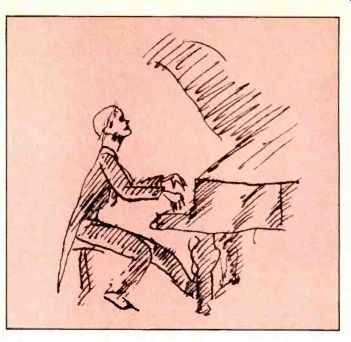
Could anyone, even Bela Bartok, ever have predicted that someday his one-act opera Bluebeard's Castle would have nearly as many recordings in the catalog as Mascagni's Cavalleria Rusticana? Yet this is precisely what the latest issue of Schwann reveals to our disbelieving eyes! Like all the other current versions, the newest one--a digitally mastered Hungaro ton recording--is in Hungarian. The two stars of the Bolshoi Opera, Yevgeny Nesterenko and Elena Obraztsova, here re-create their performances in the 1978 Moscow revival of the opera. The conductor, as on that occasion, is Janos Ferencsik, who has been championing Bluebeard's Castle for the past forty years with unparalleled authority (this is his third recording of it). It is impossible to overstate the conductor's importance in this case. Non-Hungarian singers may learn the Hungarian text phonetically, as these Russian artists have laudably done, but they must be guided by the conductor in the parlando rubato style of the music (singing freely across bar lines), which is based on Hungarian speech accentuations.
(Failings in this regard compromise the otherwise excellently sung Columbia re cording of the opera conducted by Pierre Boulez.) Ferencsik's poetic view of the opera is beautifully realized in this recording, the first Hungaroton digital disc to come my way. Bartok's magical sonorities are cap tured with richness and transparency nearly without exception; only in the episode of the third door (Bluebeard's treasury) did I think the recording failed to capture fully the music's scintillating sonorities. The singers are ideally suited to their roles in terms of vocal weight and color. Nesterenko's resonant bass encompasses Bluebeard's high-ranging music without too much effort, and his richly inflected tones express the character's strength, nobility, touch of cruelty, and immense suffering. Obrazt sova's powerful voice has no trouble with her part's tessitura either, nor does she fail to convey Judith's commanding and calculating personality. However, her heavy vibrato tends to obscure the pitch in Bartok's chromatic writing, and her diction is less clear than her colleague's.
In all, though, now that my long-time favorite recording (London OSA 1158, Istvan Kertesz conducting) has been deleted, I find this new one the most satisfying Bluebeard's Castle in the catalog. The recent London recording under Sir Georg Solti benefits from the more idiomatic singing of its Hungarian principals, but the hard-driven conducting is an occasional handicap.
-George Jellinek
BARTOK: Bluebeard's Castle. Yevgeny Nesterenko (bass), Bluebeard; Elena Obraztsova (mezzo-soprano), Judith. Hungarian State Opera Chorus and Orchestra, Janos Ferencsik cond. HUNGAROTON SLPD 12254 $15.98 (from Qualiton Records, Ltd., 39-28 Crescent Street, Long Is land City, N.Y. 11101).
--
VANGUARD has released in the U.S. what appears to be the first digitally re corded set of the six Bartok string quartets.
Performed by the Lindsay String Quartet, based at Manchester University, the set was recorded by the recently established Academy Sound and Vision label in the ideal acoustic setting of Rosslyn Hill Chapel in London. It is musically and sonically illuminating to the highest degree and easily ranks among the most distinguished Bartok quartet cycles currently available.
Though a dozen of its discs grace the British record catalog, the Lindsay Quartet has heretofore been represented in Schwann only by the Audio Fidelity issue of the Mozart and Weber clarinet quintets and, now deleted, a L'Oiseau-Lyre recording of the three Michael Tippett quartets. The Bartok album marks the culmination of a decade of intense study and performance of the cycle, much of it done in Hungary with eminent string players. For me the high point of the Lindsay set is unquestionably the magnificently assured, coherent, and truly beautiful reading of the Fifth Quartet. Here also the digital mastering-which under ideal conditions can provide exceptional illumination of sonic details-shows to best ad vantage. The most subtle timbres of Bartók’s pizzicato-glissando effects, magical harmonies, and muted sonorities are eloquently and elegantly limned.
I could catalog at length the manifold beauties and brilliance of the playing throughout the set: there is, for instance, the stunning work in the development section of the highly compressed Third Quartet, the splendid control in the desolate opening pages of the final movement of the Second, the heartbreak communicated in the last pages of the Sixth. I could also criticize or question matters of interpretation here and there. The whole of the First Quartet, for example, seems a mite too honeyed in this performance. And couldn't the final chord of the otherwise superbly played Fourth Quartet use just a bit more thrust to nail things down decisively? (The Juilliard Quartet's recording is instructive on this point.) But these are minor cavils in the face of a major accomplishment in both performance and production. The Eurodisc pressings are flawless. The package is an expensive one, but it is worth the price for anyone who wants fine interpretations of the Bartok quartets in state-of-the-art sound.
-David Hall
BARTOK: String Quartets Nos. 1-6. Lind say String Quartet. VANGUARD CO VA-25011/13 three discs $38.94.
===============
... and otherworldly one. The music's duality is expressed at the very opening by contrasting a tone-row outburst Bernstein derived from cabalistic numerology with an utterly elemental Yiddish-style slow round-dance theme fraught with menace and terror.
Both are subjected to stunning metamorphic treatment throughout the score.
There is no show biz in this music. Rather, I sense a very close relationship between it and the best pages of Bernstein's youthful Jeremiah Symphony. I do wish that the al bum notes had included a concordance of the ballet numbers and the movements of the suites, but the lack of it does not in any way affect the eloquence and brilliance of Bernstein's music. This recording is infi nitely finer than the rather raw and shallow-sounding one of the complete ballet score with the New York City Ballet Orchestra that the composer conducted for Columbia shortly after the 1974 premiere.
Bernstein and the New York Philharmonic are in top form here, and the production is simply superb. D.H.
BLOCH: Suite for Viola and Piano. HIN DEMITH: Sonata for Viola and Piano, Op. 25, No. 4. Yizhak Schotten (viola); Katherine Collier (piano). CR1 SD 450 $8.95.
Performance: Sensitive
Recording: Agreeable
Curiously, the current Schwann lists no re cording of the Bloch Viola Suite in its original form, and there seems to be none at all of the Hindemith Viola Sonata. Milton Katims' performance of the Bloch in its viola and-orchestra version, with the Seattle Symphony under Henry Siegl, is available on Turnabout (TV-S 34622), and Gabor Rejto plays the cello arrangement of it with pianist Adolph Ballet on Orion (ORS 6904). The Musical Heritage Society has circulated a performance of the viola-and-piano version by the late Ernst Wallfisch with his wife Lory at the piano (MHS 1486), and the same duo recorded some of Hindemith's works for MHS, but not, apparently, the sonata recorded here by Yizhak Schotten and his wife. The CRI release fills these gaps very handsomely. Both works are set forth with all the technical proficiency and sensitivity one could want, and the recording itself (made, incidentally, in the same city and by the same engineer as the aforementioned Katims recording) presents both instruments in the most agreeable perspective. Bloch's own charming note on his suite is printed in full; a publisher's note on the Hindemith sonata tells little about it and confuses the issue of the composer's other works for viola by scrambling some of the opus numbers. R.F.
BRAHMS: String Quartet No. 3, in B-flat Major, Op. 67 (see SCHUMANN)
RECORDING OF SPECIAL MERIT
FRANCAIX: Paris, a Nous Deux! Cora Canne Meijer (mezzo-soprano), Mistress of the House; Howard Crook (tenor), L'Arriv iste; Ruud van der Meer (baritone), the Guide; Tannie Willemstein (soprano), the Child; Jelle Draijer (bass), a Snob; Jaap Dieleman (bass), a Connoisseur; Nether lands Chamber Choir; Nelleke Geesink (piano); Netherlands Saxophone Quartet, Kerry Woodward cond. Little Quartet for Saxophones.
PIERNE: Introduction and Variations on a Folk Dance.
RIVIER: Grave and Presto. Netherlands Saxophone Quartet. NONESUCH H-71402 $5.98, H4 71402 $5.98.
Performance: Idiomatic
Recording: Good
Jean Francaix composed this saucy little opera-bouffe in 1954 to please his former teacher, Nadia Boulanger. Peter Eliot Stone, in his invaluable annotation here, ad vises that the title, Paris, a Nous Deux!, might be rendered " Paris, we'll have it out together," or " Paris, put up your dukes," but in the context of the plot, " Paris, here I come!" seems to suffice. The subtitle, Le Nouveau Rastignac, refers to the arriviste in Balzac's Comedic Humaine. As the reader will have inferred by now, the twenty seven-minute work is a comedy of manners, a spoof of snobs, social climbers, connoisseurs, and pretentiousness in general; the witty libretto was concocted by France Roche and Francaix himself. The saxo phone quartet and piano not only constitute the total instrumental complement in this work but are themselves figures in the drama. The performance is fresh, enthusiastic, and extremely musical. The three works for saxophone quartet on side two are more or less classics of this genre, and they could hardly be more persuasively set forth than they are here. Fine sound and full bilingual text for the opera; the only flaws are some misspelled names in the liner copy, and they are certainly not going to spoil anyone's listening pleasure. R.F.
RECORDING OF SPECIAL MERIT
GLASS: Glassworks. Instrumental ensemble, Michael Riesman cond. CBS FM 37265, FMT 37265, no list price.
Performance Evocative
Recording Up close
The continuing popularity of Philip Glass is nothing short of amazing. I have seen a record-store window filled with copies of this record, and he is certainly the only composer alive today whose personal popularity as a composer ("Composed and arranged by PHILIP GLASS" reads the album credit) sells tickets and records in numbers comparable to those of the most successful classical performers. "Glassworks"-is this the name of the album or of the work?--consists of six closely related movements ("Opening," "Floe," " Islands," "Rubric," "Facades," "Closing") scored for key boards (mostly electric organs), winds (saxophones, French horns, and clarinets), and strings (violas and cellos). The music is a curious combination of a very stately formality and a kind of evocative magic that is difficult to explain. Glass' music is strictly of our time in every respect except one: in feeling it suggests nothing contemporary at all but rather something bardic and far away (certainly one of the reasons it works so well in the theater). I think the popularity of Glass' music has little or nothing to do with his so-called "pop" connections but rather with people's yearning for deep feeling, stability, and connections with the continuity of human culture. And, whatever is not in the music, all those things are definitely and movingly there! The record, neatly made in a pop studio, has a dry sound-flat up against the speakers in effect. Strangely enough, this is part of its appeal, as though the performance were taking place not in some imagined concert space but right in the room with you, in your own head perhaps.
E.S.
R. GOLDMARK: Piano Trio in D Minor, Op. 1. HAYDN: Piano Trio in C Major (Hob. XV:27). BEETHOVEN: Piano Trio in B-flat Major, Op. posth. Western Arts Trio. LAUREL LR-I12 $9.98.
Performance Affectionate
Recording Very good
In its ten or twelve releases so far, Laurel Record has exhibited a devotion to the exploration of the less familiar works of cham ber music from both the past and the present. This recording of Rubin Goldmark's Op. 1 Trio appears to be not only the first of the work itself but the first of any music by this composer. It is neither an exciting nor in any way revelatory piece, but it is a richly enjoyable one, and it is high time we had a chance to hear some of this Goldmark's music. "This Goldmark" (1872-1936) was the American-born nephew of the celebrated Karl Goldmark; he studied with some noted pedagogues in Vienna as a teen ager and then in New York with Dvorak, to whom he dedicated this trio at the age of twenty. While his music enjoyed some trans-Atlantic circulation in his own time, he is remembered now primarily as a teacher who numbered among his pupils Cop land, Gershwin, Giannini, Haieff, Chasins, and Jacobi. The Op. 1 Trio shows, not surprisingly, the strong influence of Dvorak, a fine command of technical elements, and enough individuality to make it worthwhile hearing.
The obviously affectionate and very able performance here might well trigger an exhumation of some of Rubin Goldmark's other works. In the meantime, here it is to investigate and enjoy, together with a similarly ingratiating performance of Beethoven's lovable little one-movement follow-up to the mighty Archduke and a bright-eyed (if somewhat less distinguished) reading of one of Haydn's finest works in this form.
Exceptionally well-balanced and vivid sound, with surfaces as quiet as promised on the liner. R.F.
GRIEG: Ho/berg Suite, Op. 40 (see MOZART)
RECORDING OF SPECIAL MERIT
HANDEL: Ode for St. Cecilia's Day. Jill Gomez (soprano); Robert Tear (tenor); Choir of King's College, Cambridge; English Chamber Orchestra, Philip Ledger cond.
VANGUARD CI VA-25010 $12.98, 0 CVA-25010 $12.98.
Performance: Noble
Recording: Tops
One of the ironies of English music is that Henry Purcell never set the greatest of the poems written for the celebration of St. Ce cilia's Day, his contemporary John Dry-den's "From harmony, from heavenly harmony." The committee in charge of the celebration in 1687 assigned the text to Giovanni Battista Draghi, whose musical ineptitude has since been forgotten. Fortunately, however, some fifty years later Handel turned his genius to Dryden's text and gave it the setting it deserved.
The work's splendors are fully manifest in this performance by the Choir of King's College and the English Chamber Orchestra under the direction of Philip Ledger.
Robert Tear brings out the heroic qualities of the music, Jill Gomez soars to ethereal heights in effortless tones, the choir, one of England's finest, offers its usual combination of sumptuous sonorities and clarity of line, and the orchestral playing is flawless.
Last but not least, the recording engineers have perfectly caught the ambiance of the King's College Chapel. A triumph.
S.L.
HAYDN: The Seasons (see Best of the Month, page 64)
HAYDN: Piano Trio in C Major (see R.
GOLDMARK) HINDEMITH: Sonata for C-melody Saxophone and Piano (see PROKOFIEV)
HINDEMITH: Viola Sonata, Op. 25, No. 4 (see BLOCH)
KHATACHATURIAN: Trio for Clarinet, Violin, and Piano (see PROKOFIEV)
RECORDING OF SPECIAL MERIT
MOZART: String Quartet No. 17, in B-flat Major (K. 458, "Hunt"); String Quartet No. 21, in D Major (K. 5751. Panocha Quartet. DENON 0 OF-7004-ND $15.
Performance: Superb
Recording: Superb
This appears to be only the fourth record by the Panocha Quartet since the young Czech foursome began recording in 1974. It more than justifies the expectations inspired by the earlier releases and makes it even harder to imagine why so distinguished an ensemble has been heard from so little. Every thing in both these performances seems just about ideal. All four players display beautiful tone and eloquent but unselfconscious phrasing. There is a collective balance of vigor, delicacy, warmth, and elegance in which no element is allowed to exceed its Mozartean bounds and yet none gets less than its due. The superb performances are given superb sound and unbelievably silent surfaces. R.F.
MOZART: Serenade in G Major (K. 525, "Eine Kleine Nachtmusik").
TCHAIKOVSKY: Serenade in C Major for String Orchestra, Op. 48. Academy of St. Martin-in-the-Fields, Neville Marriner cond. LONDON JUBILEE JL 41010 $6.98, JL5 41010 $6.98.
Performance: Tchaikovsky better
Recording: Mozart veiled
RECORDING OF SPECIAL MERIT
MOZART: Serenade in G Major (K. 525, "Eine Kleine Nachtmusik").
PROKOFIEV: Symphony No. 1, in D Major, Op. 25 ("Classical"). GRIEG: Holberg Suite, Op. 40. Berlin Philharmonic Orchestra, Herbert von Karajan cond. DEUTSCHE GRAMMOPHON. 0 2532 031 $12.98, 3302 031 $12.98.
Performance: Elegant
Recording: Rich and well defined
Neville Marriner's pleasant, if not quite outstanding, performance of the Tchaikovsky C Major Serenade has been offered in two previous couplings and is still current on a full-price disc paired with Dvorak's String Serenade (Argo ZRG 848). While there is no more attractive version in the mid-price category, the Argo is still a better buy than the Jubilee because the Dvorak performance has more character than this bland Kleine Nachtmusik, whose 1969 sonics, moreover, show a dry and rather veiled quality (though the new Dutch pressing it self is impeccable).
Herbert von Karajan has recorded Eine Kleine Nachtmusik at least half a dozen times, but never, I think, so engagingly as in this new digital version, which combines some of the warmth of the Bruno Walter and Karl Bohm orchestral readings with the crisp elegance we associate with chamber-music versions. The Prokofiev and Grieg works appear to be new to Karajan's discography; both are every bit as winning and characterful as the Mozart, with the same affection, good humor, and-again-elegance in ideal balance. Collectors now are accustomed to all-Mozart, all-Grieg, and all-Prokofiev discs, but this combination of titles presents the sort of balanced contrasts one finds in an actual concert, and one could hardly hope for more satisfying versions of any of these works. The sound is wonderfully rich and well defined.
R.F.
PIERNE: Introduction and Variations on a Folk Dance (see FRANCAIX)
RECORDING OF SPECIAL MERIT
PROKOFIEV: Overture on Hebrew Themes.
KHATCHATURIAN: Trio for Clarinet, Violin, and Piano. Ted Hegvik (clarinet); Ferde Malenke (piano); West Chester String Quartet (in Prokofiev); Sylvia Ahramjian (violin, in Khatchaturian).
TOMASI: Le Tombeau de Mireille. HIN DEMITH: Sonata for C-melody Saxophone and Piano. Ted Hegvik (saxophones); Joe Goebel (tambourine, in Tomasi); Ferde Malenke (piano, in Hindemith). GOLDEN CREST 0 CRDG-4206 $9.98.
Performance Fine
Recording: Excellent
One of the secrets of good record making is interesting programming, and this Golden Crest release could be declared a winner on that ground alone. Here is the Prokofiev Overture on Hebrew Themes in its original form, as written for a group of chamber musicians in St. Petersburg. Here also are seldom-heard compositions with ethnic flavors by the Armenian composer Aram Khatchaturian, whose Clarinet Trio contains folk tunes as danceable as anything in his popular Gayne ballet score; by Henri Tomasi, whose duet Le Tombeau de Mireille was composed for shepherd's pipe and drum but left open to a variety of instrumental combi nations; and by Paul Hindemith, whose sonata, written in New Haven in 1943 during the composer's wartime exile, is rife with nostalgic references to the folk music of the Old World. The playing matches the com positions in both skill and charm, and the laudably unobtrusive digital recording is on the same high level as the rest of the enterprise. P. K.
PROKOFIEV: Symphony No. 1, in D Major, Op. 25 (see MOZART) RAVEL: Mother Goose (see Best of the Month, page 66)
RIVIER: Grave and Presto (see FRAN CAIX)
ROCHBERG: String Quartets Nos. 4, 5, and 6 ("The Concord Quartets"). Concord String Quartet. RCA ARL2-4198 two discs $19.96.
Performance: Superb
Recording: Very good
The cover of this double album of the pieces that George Rochberg wrote for the Concord Quartet has a very clever motif: a string-quartet weather vane. The image turns out to be very much to the point; one cannot listen to this music without wondering which way the wind is blowing.
As everyone must know by now, Rochberg is a former modernist, a twelve-tone composer who, after a period of quoting tonal music of the recent and distant past, has now openly taken to writing his own. To be more specific and more accurate, he has taken to composing in a style that is a com pound of Schubert, late Beethoven, and Mahler, with perhaps a bit of Bart6k and early Schoenberg thrown in. He is not very coy about this new direction. The Fifth Quartet, with its opening pizzicato march, its Mesto, its scherzo/waltz, and its fugal finale, is quite openly Beethovenian. The sprawling Sixth Quartet is Mahlerian in its gesture, its dimensions, its references to Beethoven and late Romanticism, even in its variations on the Pachelbel Canon and its huge, panoramic finale.
There is no doubt that a major reaction to avant-gardism is taking place right now.
This "post-modernism" is comparable to the neo-Classicism and Socialist Realism of the Twenties and Thirties, and it has been obvious for some time that it is part of a second big cycle in twentieth-century music. The question is whether the return to tonality, tradition, and accessibility is a kind of new conservatism. The answer is, not necessarily. Not unless you consider, say, Kurt Weill's music conservative. Or Stravinsky's. Or Philip Glass's.
But in Rochberg's case I think we are dealing with New Conservatism. The past he draws on is the great European Roman tic tradition, and he not only revels in it but is attempting to resurrect it in another, alien, time and place. Mind you, Rochberg's Concord Quartets are not reproductions but full-fledged new compositions of a high order of technical competence and imagination, though written almost entirely in the stylistic framework of another era. It is as if an architect were to design a modern apartment building using only the stylistic elements of the Pitti Palace and Versailles.
That there is an audience and an appreciation for Rochberg's music is obvious from the very release of this RCA double album and from Mark Sokol's enthusiastic annotation. Indeed, the music is not only skillful but affecting, and it is brilliantly played and recorded. But it is also anachronistic-even, I would say, a grave reproach to the masterpiece complex of "serious" musical culture in America. The ultimate subjects of these works are nostalgia, regret, and impotence with regard to both the past and present. That the music will accord very well with the mood and feelings of many members of the classical-music public I have no doubt--I know these feelings intimately myself-but that does not mean that I can sit and applaud and revel in it without the strongest misgivings. E.S.
SAINT-SAENS: Carnival of the Animals (see Best of the Month, page 66)
SCHUMANN: Piano Quintet in E-flat Major, Op. 44.
BRAHMS: String Quartet No. 3, in B-Bat Major, Op. 67. James Levine (piano, in Schumann); La Salle Quartet. DEUTSCHE GRAMMOPHON 2531 343 $10.98, 3301 343 $10.98.
Performance: Driven Schumann, fine Brahms
Recording: First-rate
SCHUMANN: Piano Quintet in E-flat Major, Op. 44; String Quartet No. 3, in A Major, Op. 41, No. 3. Thomas Rajna (piano, in quintet); Alberni Quartet.
BACH GUILD H M-83SD $5.98.
Performance: Quintet better
Recording: Very good
A note on the jacket of the Deutsche Grammophon album cites James Levine's long association with the La Salle Quartet and the work they perform together here. In 1953, at the age of ten, Levine began studying with Walter Levin, the La Salle's first violinist; at twelve he performed in public with the foursome, and three years later they played the Schumann quintet together for the first time. Add Levine's con ducting of the Schumann symphonies (RCA ARL3-3907) and his general distinction in chamber music, and one's expectations from this new recording must be high.
The playing is excellent, but I'm not sure this is a performance to live with. The opening is so stark and breathless as to suggest the "hyper" feeling some of us suffer after too much coffee on an empty stomach. One could put this down to Schumann's own characteristic impetuosity, but his Florestan side always shows a warm heart and some sense of inner radiance; not here, however. Yet the entire second movement is realized to perfection with genuine Schumannesque poetry. A similar warmth is felt again at the very end of the work, but these sections serve to throw the over-aggressiveness elsewhere into higher relief, and the initial hell-for-leather approach wears even less well because of this inconsistency, exciting as it may be for a hearing or two. The over-side Brahms is not only more of a piece but is a rather distinguished statement of the B-flat Quartet.
First-rate sound on both sides.
----------------
Portrait of Arnold Schoenberg by Max von Oppenheim
Schoenberg: "Verklarte Nacht"
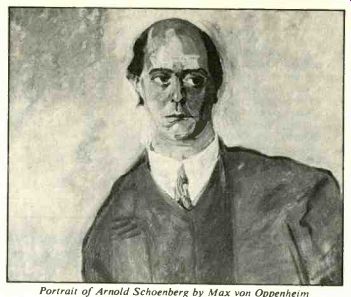
WHEN Arnold Schoenberg came to lecture at the University of Chicago in the mid Forties, some of the students in the audience were astounded to hear Cecil Smith introduce the founder of the Second Viennese School, the mentor of Webern and Berg, the developer of dodecaphony, the creator of the atonal Pierrot Lunaire and Five Pieces for Orchestra, as "the beloved composer of Transfigured Night." Schoen berg himself didn't appear surprised. After all, he had only recently, in 1943, revised the string-orchestra version of Verkleirte Nacht that he had produced in 1917, some eighteen years after he completed the original version for string sextet. In the expanded orchestral setting, this tone poem for strings has indeed been Schoenberg's most beloved work. Its opulent Romanticism and dramatic expressiveness have endeared it to listeners to whom the composer's very name is otherwise forbidding, and it has reached a still wider audience as the music for Anthony Tudor's ballet Pillar of Fire.
We seldom hear the sextet version now, either live or on records. More than three decades ago the Hollywood String Quartet and friends made a classic recording of it for Capitol with the benefit of the composer's own counsel. The only recording of the original version in the catalogs of late has been the one by the Ramor Quartet and associates on Turnabout (TV-S 37012), quite a good performance, if not the last word in expressiveness and not blessed by the most lustrous sonics. Now, however, Nonesuch has released a new one with very lustrous sonics indeed, and the performance has both the power and the sumptuousness to rival the impact of the most stunning orchestral ones. The players are six superb musicians who took part in last year's Santa Fe Chamber Music Festival: violinists Ani Kavafian and Yuuko Shiokawa, violists Walter Trampler and Heiichiro Ohyama, cellists Ralph Kirshbaum and Timothy Eddy. The intensity and sensitivity they exhibit here make theirs one of the most compelling statements of this music in either format-and suggest that this ensemble is a "natural" for new recordings of the great sextets of Brahms and Dvorak.
On the other side of the digitally mastered disc Trampler, Eddy, and violinist Daniel Phillips make a similarly persuasive case for Schoenberg's much later and less familiar String Trio, Op. 45. The trio, whose composition in 1946 was interrupted by a severe heart attack, is more terse and episodic than Verklarte Nacht (Schoenberg even labeled two of its five sections "episodes") and in a somewhat different idiom, but in its way it is no less directly expressive. It benefits enormously from the advocacy of these committed performers, in whose hands it seems not only a most appropriate discmate for Verklarte Nacht but a piece that demands wider circulation than it has enjoyed up to now. (In the album's exceptionally informative annotation, Leonard Stein, director of the Schoenberg Institute at the University of Southern California, advises that, like Verklarte Nacht, the trio has a sort of "program," not a literary but a more or less autobiographical one.
However, it does not make itself felt in the music as directly as that of Verklarte Nacht does, and awareness of it is hardly essential to one's appreciation of the work.) Both works are recorded with fine presence and virtually impeccable balance. The surfaces might have been a bit quieter and the editing of the printed material perhaps a bit tidier, but this is a very distinguished re lease nonetheless.-Richard Freed
SCHOENBERG: Verklarte Nacht, Op. 4 (original version for string sextet); String Trio, Op. 45. Santa Fe Chamber Music Festival. NONESUCH ED D-79028 $11.98.
------------------
Thomas Rajna and the Alberni Quartet give a less hectic, more consistent, altogether enjoyable performance of the quintet. It would have been more appealing if it had been paired with their recording of Schumann's Piano Quartet, Op. 47, as it was when it appeared here briefly as a CRD im port (CRD 1024), for that work was given a really exceptional performance, while the String Quartet in A Major has had stronger cases made for it. At $5.98 list, this release is still competitive, perhaps, with the Ser kin/Budapest (CBS MY 37256), but the disc of Opp. 44 and 47 by the Beaux Arts Trio and friends on Philips (9500 065) may be worth its higher price. R.F.
STRAVINSKY: Le Sacre du Printemps. Detroit Symphony Orchestra, Antal Dorati cond. LONDON 0 LDR 71048 $12.98, CI LDR5 71048 $12.98.
Performance Good to excellent
Recording Highly detailed
Antal Dorati's approach to Le Sacre has changed considerably over the years. The savagery of his 1954 Minneapolis performance for Mercury has been superseded by an interpretation that offers more in the way of tempo contrast, especially in the first three sections. In this new digital recording, moreover, it is obvious that one of the goals was to bring out every bit of inner texture and detail. Oddly enough, the "Evocation of the Ancestors," which had such terrific impact in the Minneapolis recording, comes off very tamely here, but the bass-drum transients in the "Glorification of the Chosen One" and at the end of the "Danse Sacrale" are likely to blow some fuses.
This is not the ultimate Sacre recording ( I still prefer the composer's own despite its shallow sound by today's standards), but musically it is certainly the best I have heard of the available digitally mastered releases.
D. H .
RECORDING OF SPECIAL MERIT
TCHAIKOVSKY: 1812 Overture, Op. 49; Romeo and Juliet, Fantasy-Overture. Tanglewood Festival Chorus; Boston Symphony Orchestra, Sir Colin Davis cond. PHILIPS 9500 892 $10.98, 7300 921 $10.98.
Performance Grand and glorious
Recording Very good
Colin Davis is generally regarded as a "serious" conductor, not the kind to associate with such as the Tchaikovsky 18/2 Over ture. But, after all, he did do pretty well commercially some years ago with a "Last Night of the Proms" pops-concert album for Philips. So why not give the good old 1812 the full treatment? And that is what it gets here--chorus (superb, by the way), organ, cannon, church bells, the lot. For all the grand and glorious noise, though, this is an essentially musical performance as well as being a dandy demo item for sound buffs.
On more serious ground, Davis and the Bostonians also give us a ripely turned out, in tensely lyrical Romeo and Juliet with good, rich sonics. A surefire release!
D.H.
TCHAIKOVSKY: String Serenade in C Major. Op. 48 (see MOZART)
TCHAIKOVSKY: Symphony No. 6, in B Minor, Op. 74 ("Pathetique"). Los Angeles Philharmonic Orchestra, Carlo Maria Giulini cond. DEUTSCHE GRAMMOPHON 0 2532 013 $12.98, 0 3302 013 $12.98.
Performance: Poised
Recording: Somewhat dry
TCHAIKOVSKY: Symphony No. 6, in B Minor, Op. 74 ("Pathetique"). National Philharmonic Orchestra, Carlos Nita cond. LODIA 0 LOD 778 $17.98, LOC 778 $17.98 (from Brilly Imports, 155 North San Vicente Boulevard, Beverly Hills, Calif. 90211).
Performance Vehement
Recording Impressive
These two digitally taped readings of the Pathitique stand at opposite poles both interpretively and sonically. In the first movement Carlo Maria Giulini insists on poise and an almost classic chasteness in the expository sections, building to a fine climax at the denouement. His 5/4 movement is exquisite of nuance, but he doesn't quite hit the true Russian quickstep pace that makes the great march movement really go. An eloquent yet un-sentimentalized reading of the final adagio reveals unmistakably the architectural focus of Giulini's conception, and the somewhat dry character of the sonics tends to underline his essentially objective view of Tchaikovsky's utterance. Arturo Toscanini was also objective in his view of this score, but he was not afraid to go all out with drama when the occasion demanded.
Argentine-born Carlos PaIta, as his Lon don Phase-4 discs already attest, is not exactly moderate in his readings of the Ro mantic repertoire, and in this superbly re corded Pathitique he runs true to form.
"Wild" is how I would describe the end movements here; Karajan's 1949 Vienna Philharmonic recording is the only other reading I can recall as being in quite the same vein. There are times in the first movement where things almost get out of control-in the development and in the overbearing brass just before the reprise of the lyrical theme-and the ensemble is not always altogether unanimous in the early pages of the exposition proper. Pam does bring a fine feeling of momentum to the 5/4 movement, and the march is splendidly taut and spirited.
Digital recording has its benefits, to be sure, but of the more than twenty-five recordings of the Pathitique listed in the current Schwann catalog, my choice for the best balance of poise and passion is still Vladimir Ashkenazy's analog disc on London (CS 7170).
D.H.
TOMASI: Le Tombeau de Mireille (see PROKOFIEV)
WOLF: Lieder (see Collections-Elisabeth Schwarzkopf)
COLLECTIONS
MIRELLA FRENI AND LUCIANO PA VAROTTI. Verdi: La Traviata: o cara. I Vespri Siciliani: Bolero. Massenet: Werther: Pourquoi me reveiller. Ponchielli: La Gioconda: Cielo e mar. Donizetti: La Filk du Regiment: Convien par tir. L'Elisir d'Amore: Chiedi all'aura. Meyerbeer: L'Africana: 0 Paradiso. Hato: Mefistojele: L'altra none. Mascagni: L'Amico Fritz: Cherry Duet. Mirella Freni (soprano); Luciano Pavarotti (tenor); Orchestra dell'Ater, Leone Magiera cond. LONDON JUBILEE JL 41009 $6.98, JL5 41009 $6.98.
Performance: Good, but . . .
Recording: On location
If you like operatic recitals taped before an audience that greets every selection with heartfelt applause and lusty bravos, you will definitely enjoy this joint concert by the two most celebrated citizens of Modena, Italy.
It was recorded in 1980 in Modena's Teatro Comunale before an understandably vocif erous gathering of friends and neighbors, with the orchestra conducted by Leone Magiera, another local boy.
The program is familiar terrain for both singers, especially for the tenor, who has re corded all these selections before (sans pro longed applause). Both artists are in good voice, and that means singing as lovely in tone and as accomplished in technique as one can find anywhere nowadays. Mirella Freni's artistic contribution is nearly always exemplary. Luciano Pavarotti allows an otherwise fine "Pourquoi me reveiller" to be spoiled by a rather inelegant ending, however, and slips into careless phrasing in other instances as well.
Thanks to the clarity of the recording we know that the orchestra is undersize, and its performance is not distinguished.
-G.J.
RECORDING OF SPECIAL MERIT
ELISABETH SCHWARZKOPF: To My Friends. Wolf: Storchenbotschaft: Fuss reise: Elfenlied; Bei einer Trauung; Jdger lied; Selbstgestandnis; Heimweh; Nixe Binsefuss; Mausfallenspriichlein; Nimmer satte Liebe; Lebe Wohl; Das Verlassene Magdlein; Auf ein Altes Bild. Loewe: Die Wandelnde Glocke. Grieg: Ein Schwan.
Brahms: Meidchenlied; Therese; Blinde Kuh. Elisabeth Schwarzkopf (soprano);
Geoffrey Parsons (piano). LONDON OS 26592 $10.98.
Performance Exceptional
Recording. Excellent
"A labor of love on all sides . .. my and Walter's last record...."--so reads the artist's description on the cover of this album. Walter Legge, Elisabeth Schwarzkoprs husband and the producer of all her recordings, died two months after completing this last one. The program reflects Legge's life long enthusiasm for Hugo Wolf and honors Schwarzkoprs mastery as a Wolf interpreter. Her voice is in remarkable shape at sixty-two plus and suffers only-slightly-in comparison with its own earlier beauty. Be sides, the selections were cleverly chosen to focus on the singer's impressive and enduring attributes without needlessly exposing certain unavoidable limitations.
The Wolf songs are all based on texts by Edvard Morike, a humane, sophisticated, and remarkably modern poet for his period (1804-1875). Schwarzkopfs artistry is most compelling in the subdued passions of Heimweh and Lebe Wohl, in the tragic dejection of Das Verlassene Maldlein, and in the worldly wisdom of her old favorite, Nimmersatte Liebe, in which she can still find fresh nuances. Those who have always objected to the artful and calculated elements in Schwarzkopfs singing will probably cite a few examples here as signs of excessive mannerism. Some of Morike's poems (Storchenbotschaft, Mausfallen sprlichlein) do invite the kind of cutesiness that makes lieder such an easy target for parody, but I have always admired Schwarzkopfs art sufficiently to accept occasional exaggeration.
The Carl Loewe song here could almost have been written by Wolf, the three Brahms miniatures are not too significant, and Grieg's En Svane does not sound right in German, but Schwarzkopf makes a good case for all of them. It is not only the soprano's long-standing admirers who will treasure this release. Geoffrey Parsons is Schwarzkopfs perfect collaborator, and the technical production is a worthy swan song for Walter Legge.
G.J.
RECORDING OF SPECIAL MERIT
WALTER VAN HAUWE: Recorder Solo-Music for the Recorder from the Middle Ages to the Twentieth Century.
Anon.: lstanpitta Isabella. Bassano:Ricer cata Sesta. Van Eyck: Joy Flees Me; Eng lish Nightingale. Marais: Les Folies d'Es pagne. Shinohara: Fragments for Tenor Recorder. Ishii: Black Intention. Walter van Hauwe (recorder). VANGUARD VSD-71251 $7.98.
Performance: Remarkable
Recording: Excellent
Although I expected to be thoroughly bored by this disc of music for solo recorder, I was completely mistaken. There is a haunting quality about the instrument that is captivating, and it seems to be effective for a wide range of music, as is shown by the varied medieval, Baroque, and contemporary selections here.
Walter van Hauwe is an excellent technician and a remarkable musician. He can drive the rhythms of an estampie, produce dazzlingly brilliant variations, and then charm you with the calls of a nightingale.
Perhaps his most amazing feat is in Makilshii's Black Intention, where he plays two recorders simultaneously as well as using his voice and a tamtam. The pieces by Ishii and Makoto Shinohara exploit the instrument to its extreme limits, but they are effective and fascinating, and with them Van Hauwe certainly brings the recorder into the latter half of the twentieth century.
Highly recommended.
S.L.
Also see:
Source: Stereo Review (USA magazine)