PLUS CA CHANGE ...
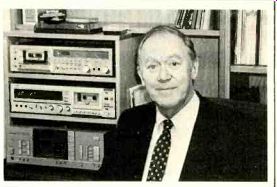
WHEN I went to the Consumer Electronics Show in Chicago this summer, I knew that I would soon be succeeding William Anderson as Editor in Chief of STEREO REVIEW. Consequently, at the show I kept thinking about how things have changed in the audio field and in this magazine since I joined the staff back in 1965.
At that time most new recordings were released simultaneously in mono and in stereo, the latter usually costing a dollar extra. Our critics reviewed both. We also had a separate section for reviews of prerecorded tapes-all open-reel, of course, because the cassette had just been introduced and was not yet of hi-fi quality.
In this country in the middle Sixties the audio industry was dominated by American manufacturers. The important names among them included Acoustic Research, Bozak, Dynaco, Eico, Electro-Voice, Empire, Fisher, Harman Kardon, Heath, Jensen, Koss, K LH, Lafayette, Marantz, McIntosh, Pickering, Scott, Shure, and Stanton. Only a few European products, such as turntables by Dual and Garrard, were common in the installations of our readers, and Japanese manufacturers were just entering this market.
The first hi-fi show at which I represented the magazine was in Los Angeles, and compared with CES today, it was a rather sedate affair. Exhibitors, dealers, and members of the press stayed at the Ambassador Hotel, and the exhibits were set up in the cottages around it. There a manufacturer could demonstrate how his product sounded-usually with classical music.
Queen Elizabeth made the Beatles members of the Order of the British Empire in 1965, but rock records were not considered proper fare for carefully nurtured hi-fi components.
Today new audio products are demonstrated to dealers at the gigantic twice-yearly Consumer Electronics Shows in a context that includes watches, calculators, X-rated videotapes, computers, TV sets, and telephone-answering machines. The physical scope of this summer's show was overwhelming.
At first most of the excitement seemed to revolve around video, its hardware and its software (tapes, discs, and games). Star Wars and The Empire Strikes Back seemed to be on every screen. But using The Empire Strikes Back, the NAD demonstration showed the quality of the sound that could be gotten from a video source. And throughout the show there was plenty for the audiophile to focus his ears on, now usually demonstrated with Vangelis or Melissa Manchester. The products in the De sign and Engineering Exhibition were so beautiful they made me want to go home.
junk all my equipment, and start over from scratch.
Elsewhere in this issue my colleagues re port on what they saw at CES. This is some thing that has not changed in the years I've been with the magazine. We have tried al ways to provide our readers with guidance to what's happening in the audio world, re porting today on digital audio discs and stereo TV just as we reported on solid-state amplifiers and new cassette tapes back in the Sixties. We've tried to do this in simple language that does not require an engineering degree for comprehension.
We've also tried to write about music without snobbery, neither giving extra points to one kind of music because it is rarefied and classical or to another because it is up-to-the-minute and hip. We've tried to encourage our readers to increase their musical pleasure by increasing the kinds of music they listen to.
This approach to equipment and music has worked for the magazine in the past. My colleagues and I intend to continue to apply it, and we hope it will keep working well enough to keep you listening.
by WILLIAM LIVINGSTONE.
----------
Also see:
CES 1982--The latest hi-fi trends and product introductions.
Source: Stereo Review (USA magazine)