- EDITORIAL: Facts of Life ... from a Publisher's Perspective
- AUDIO NEWS: What's new on the audio market
- MAIL: Feedback from the audience
- BOOK REVIEWS: GEC Tube Data Modern; High-End Valve Amplifiers
- AUDIO AIDS: Improving DVD and Video
- NEW CHIPS ON THE BLOCK--AKM Semiconductors; Analog Devices AD1885; Micronas MAS 3509D
- GLASS SHARD: Taming High Line Voltage
- TEST TRACKS: Readers' favorites to test audio systems
Above list: those with links on different page; the others are below ...
==================
EDITORIAL
The Facts of Life for Magazine Publishing
By Edward T. Dell, Jr.
This first issue of a new magazine seems a good occasion to review for readers just what is required for a healthy periodical.
This one, with its pedigree already established, combining as it does 31 years of predecessor publications, is nonetheless totally dependent on three major ingredients-as well as a fourth one.
Readers are all too often seen as passive check writers (or credit-card authorizers) whose only function is to send money. No publisher ever speaks disparagingly of subscriber revenue, but that is not the only--or even the primary--function of a reader.
Readers are, collectively, a kind of community. Their knowledge and experience forms a pool of information, which is ideally enhanced and added to by the publication's content. Inevitably, however, their total knowledge exceeds any amount of content published by the magazine. I have found it uncanny that a very large number of the articles we have published over the years has stimulated some response from one or more readers, which enhance the topic, sometimes adding to it substantially-or possibly shrinking it sometimes when the information is incorrect.
Good magazines flourish when readers share their ideas actively. A publisher al ways hopes that readers share his or her passion for the subject, not as partisans with religious impulses, but with a desire for the truth of question and an effective understanding of what is usually a search for answers.
Some readers become authors. In truth, authors are only an advanced form of reader. Their interest in the topic has developed experience, and intensified curiosity and probably plenty of experimentation, which is coupled with the desire to share their findings-and their pleasures.
Authors are more complex than that. Motives vary a great deal. Seldom can writing for a periodical be for money. Most editors pay at rates that would be illegal under rules for the minimum wage.
Writing for publication has an aura made of components that are not always easy to identify. Fortunately for editors, the sight of one's work on the printed page, disseminated widely, has a lure that continues to attract authors almost as inevitably as bees to flowering blossoms. I have often speculated that writing for publication, either in books or periodicals, has a relation to yearnings for immortality. The objectification of seeing your thoughts in physical form outside yourself seems to have a permanence in the midst of life's flux that is reassuring.
All humans, at one time or another, think about mortality and wonder if what they do will make any difference to the world they live in.
Authoring has other appeals. It records a journey, over time building a record.
Sometimes it is a stumble which, fully seen, can be updated and corrected. Writing is often a journey rather than a destination. But it is the meat and drink for the editor who is fortunate indeed in his authors--most of the time.
The great preponderance of consumer magazines must have advertisers to exist.
Many consumers resent advertisers, mistrust advertising, and have dire thoughts about the oligarchs in big corporations who purchase advertising space or time. I confess to having had similar thoughts about advertisers when I began this enterprise. I believe no avocational magazine can be healthy or successful without advertising.
The money is, of course, very helpful.
In a country the size of the U.S.A., the cost of acquiring a new subscriber is very high, often exceeding the price of the first year's subscription. All publishers are happy if a promotion effort response reaches 2%, and many are done for numbers less than that.
For magazines such as this one, however, we need advertisers because they are part of the life blood of a good avocational publication. The goods they offer are vital to the success of the experimenter, the craftsman, and the builder. One of the great developments in magazine technology since the 1960s is the explosion of narrow-interest publications. This development has been a godsend for enthusiasts and smaller entrepreneurs who can get their messages to pre-selected interest groups much more inexpensively.
It often happens that the advertiser in a magazine of this type is a reader who be came so interested in the pursuit of good sound that he or she ended up setting up a business. This has happened to many readers of our predecessor titles. This is somewhat risky for the individual, since rarely does a passion for an idea exist in the same body with good business sense.
Perhaps that is why many small enterprises begin as partnerships.
Deciding the advertising/editorial con tent ratio is a critical decision for a magazine's health. The Postal Service limits advertising content in periodicals class publications to 70%. Most publishers keep the ad content between 50 and 60%. Our periodicals have normally kept ad levels at around 40% and often lower. This issue carries 41 pages of ads out of a total of 124.
This should make it clear to readers that active response to a periodical's advertisers can increase the editorial content.
These three ingredients, then, make up the proper recipe for a successful, interesting, and enduring magazine. Years ago I began a manuscript for what I hoped would become a book on how to start and publish a magazine. My first absolute requirement for a successful one was a passionate love for the subject.
My passion for good sound carried me along despite long hours of endless work, very slow growth, and even resorting to co-opting members of my young family.
The task of producing a magazine is easier today as far as mechanics are concerned, but I think passion is still fundamental. People who publish magazines for the money produce products that readers generally merely tolerate, always hoping to find some kind of satisfaction in the pages somewhere, nibbling on little hors d'oeuvres amid a sea of ads.
I still find magazines whose editor and publisher, I am sure, look forward to coming to work each morning. They stir the imagination, they surprise, they stimulate, they amuse. I am happy to report, somewhat immodestly, that I still enjoy that prospect myself.
-E.T.D.
============
Audio News
NEW MARSHALL ELECTRONICS MICROPHONE
Marshall Electronics has introduced a new condenser microphone for the home recording enthusiast, the MXL 603. Now you can record piano, guitar, vocals, and other instruments used in the home on a stereo cassette recorder, VCR, DAT, or computer. The mike has a 20mm gold deposited diaphragm with a frequency response of 20-25kHz, operates from a 48V phantom power supply or portable battery box, has a 3 pin XLR for an output connector, and is compatible with standard recorders or computer boards with the addition of various adaptors. Marshall Electronics, (310) 390-6608.
SOVTEK 6C45p
Originally designed for military communications and radar for the Russian armed forces, the 6C45p is now available from New Sensor.
The 6C45p is a high mu single triode with a low plate resistance and a very high transconductance. The input noise resistance is 100 ohm, and the input/output capacitance and the dissipation are nearly 8W, making this tube an ideal candidate for preamp, driver, and signal processing applications. It is also capable of sinking some current, and can be considered a little power amp with gain. New Sensor Corporation, info@sovtek.com, FAX (212) 529-0486.
DEHAVILLAND ARIES AMPLIFIER
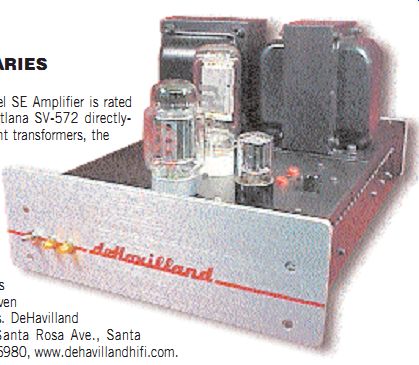
DeHavilland's new Aries Model SE Amplifier is rated at 40W RMS. Using the Svetlana SV-572 directly heated triode, and Electra-Print transformers, the Aries SE is designed to drive medium-efficiency compact loudspeakers, such as B&W, Sonus Faber, Revel, and Totem. The Aries features hardwired audio circuitry and variable feedback from 0.7dB. Available with optional stepped attenuators, the Aries has sufficient gain to be driven directly from most CD players. DeHavilland Amplifier Company, 1701 Santa Rosa Ave., Santa Rosa, CA 95404, (707) 527-6980, www.dehavillandhifi.com.
CEA ONLINE GUIDE
To help shoppers buy, connect, and maintain electronic devices, the Consumer Electronics Association (CEA) is offering an objective, comprehensive source of information. This service, Switched On, The Complete Guide to Buying and Connecting Consumer Electronics, is located at www.ce.org/switchedon. CEA tapped industry experts, audiophiles, and technology gurus for its information, organizing the specifics by product categories including audio, autosound, computers, home theater, mobile, telecom, and video.
PSB SPEAKERS
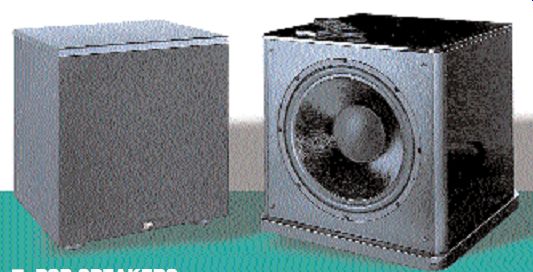
PSB Speakers is renewing its Stratus Series with a new subwoofer, the Stratus SubSonic 7, and two updated center channel systems, the Stratus C5i and Stratus C6i. The SubSonic 7 employs a 15” driver coupled to a "BASH" amplifier that delivers 330W RMS, 600W dynamic power, and 1200W dynamic peak-power. The C5i and C6i both employ a pair of new 1” neodymium-magnet aluminum-dome tweeters with the distinctive Stratus phase plug, replacing the poly-flare and fabric tweeters in the earlier Stratus centers. In the C5i, the new tweeters are coupled with dual 5 ¼” polypropylene-cone, rubber surround woofers, while in the C6i, the tweeters are matched with two larger (6 ½”) polypropylene-cone rubber-surround woofers.
Both new centers are available in black ash or high-gloss finish, and the SubSonic 7 is avail able in black roughcast finish. PSB Speakers, (860) 542-1234, pbspeakers.com
DYNAUDIO SUBWOOFER
Dynaudio has introduced the Contour Theater Series Subwoofer, a 210W actively powered Contour Subwoofer employing a proprietary 12” woofer and offering extremely deep bass response with a high level of speed, accuracy, and precision to intensify the Home Theater experience. Level, phase, and switchable crossover frequency (80Hz, 95Hz, and by pass) control can be adjusted on the sub woofer's back panel, and single-ended inputs are supplied for direct connection from an A/V digital preamplifier with a dedicated sub woofer output. The Contour Sub uses an infra sonic high-pass filter set at 15Hz, 12dB per octave. The unit's low-pass crossover slope is 24dB per octave, and the subwoofer's frequency response is rated at 18Hz-120Hz [±5dB] with a maximum SPL of 110dB at 1m. The cabinet employs a 31mm baffle in a front-ported bass reflex enclosure and is rigid and optimized for the 12” woofer. Dynaudio, www.DynaudioUSA.com.
BELL MAGNET COVERS
Jensen Vintage Speakers has re-issued the Bell Magnet Cover for all "R" series ALNICO magnet speakers. The bell is retro-fittable for speakers already in the field and can even be used on original Jensen ALNICO magnet speakers. The Jensen Bell cover is designed to give the speaker the sleek look made famous during the 50s and 60s when Jensen speakers were being used by popular guitarists worldwide. Vintage enthusiasts now have the ability to restore their amplifiers to their original appearance and sound.
Jensen Vintage Speakers, CE Distribution, 6221 South Maple Avenue, Tempe, AZ 85283, (425) 744-1053, (480) 755-4712, www.cedist.com.
B&K MODEL 885
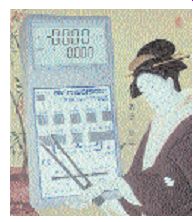
B&K Precision Corporation announced the addition of the Model 885 Synthesized In-Circuit LCR/ESR Meter to its growing line of test and measurement products. The new, lightweight, battery powered, hand-held unit can be used to test components at frequencies up to 10kHz, and was designed for both component evaluation on the production line and fundamental impedance testing from bench-top applications. The Model 885 offers a large variety of measurement parameters and a wide range of test conditions. It features DC resistance measurement, rechargeable battery/AC power, 0.5% basic accuracy, a large dual LCD display, fully auto/manual selection, and quick response. It comes complete with an instruction manual, battery, SMD Surface Mount Probe, and carry case. B&K Precision Corporation, 1031 Segovia Circle, Placentia, CA 92870-7137, (714) 237-9220, FAX (714) 237 9214, www.bkprecision.com.
Keep audioXpress informed about your company and its products and/or services by sending in your press release and product information. "Audio News" is the perfect place to introduce your company's latest products and announce business news. Send press releases to:
audioXpress--Audio News Editorial Dept.
PO Box 876 Peterborough, NH 03458 Fax (603) 924-9467
E-mail: editorial@audioXpress.com
LANSONICTM DAS-750
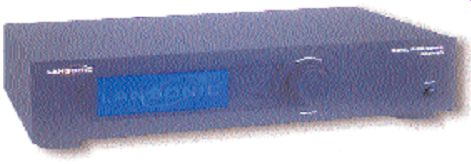
Lansonic, a division of Digital Voice Systems, Inc., has debuted an MPEG-based audio product, the Lansonic DAS-750 "Digital Audio Server." This component is available in a variety of hard drive storage capacities to centrally store music, and combines proven Ethernet computer networking technology with high performance audio circuitry to provide simple and convenient access from virtually any place on a Local Area Network (LAN). The DAS 750, using the MP3 digital format, enables listeners to archive personal album and CD collections all in one location and to store, select, and enjoy thousands of digital quality stereo music selections virtually anywhere on any audio system in a net worked home or office. Also, the system's multi-user net work capability allows several people to simultaneously listen to different music in different rooms. Digital Voice Systems, One Van de Graaff Drive, Burlington, MA 01803, (781) 270-4546, FAX (781) 270-0166, www.lansonic.com.
====================
Book Reviews
GEC Audio Tube Data
Reviewed by Larry Lisle

GEC Audio Tube Data: Data and Amplifier Designs KT66, KT77, & KT88, Old Colony Sound Lab, PO Box 876, Peterborough, NH 03458, (603) 924-9464, FAX (603)924-9467, $16.95.
It wasn't that long ago, back in the "golden age," that the only tube manuals most people knew about were the RCA and the GE. They were the ones sold or given away by your friendly neighborhood tube and electronic parts distributor (Remember them ?). If a tube wasn't in one of those manuals, we never thought about using it, which was why RCA and GE made their manuals so widely available in the first place! Well here's at least one way in which the present "silver age" is superior: There's a lot of tube data readily available, thanks to the efforts of the publishers of reprint editions. Of course this material was around in the old days, but it didn't do us any good if we never heard of it.
An excellent example of a reprinted tube data book is GEC Audio Tube Data.
It begins with a preamble, written in 1979, comparing audio valves to semi conductors. I knew some of this information, but there was some I had never read before.
EUROPEAN STYLE
The book continues with specifications for the KT66. If you're not familiar with European tube data sheets, you're in for a surprise. The American manuals just don't compare. For example, not only is total distortion provided under various operating conditions, but intermodulation distortion information is listed as well-and the method is specified. No less than eight sets of curves are included for just one tube type.
GEC Audio Tube Data continues with several complete amplifier circuits for the KT66. It provides complete data, curves, and parts lists for the circuits as well! If you don't happen to have a couple of KT66s on hand, the book offers plenty of ideas that can be used with other tubes.
The next section follows the same for mat in 38 pages of data for that wonderful tube, the KT88. I've long been a fan of the 6L6 and its relatives when it comes to beam tetrodes, but to think that no one could improve upon them in the years after their introduction (in 1936) isn't a good bet. The KT88 is still in production and probably will be available for a long time.
There is too much information in this book to cover in detail, so I'll just mention a cute little 30W ultralinear amplifier that produces only 1% distortion with no feedback. A complete description of the circuit is given, along with a parts list.
One aim of the European tube books is for the hobbyist to build-and be happy with-circuits using the manufacturers' tubes. The circuits tend to be easy to make without much in the way of test equipment and without hard-to-find components.
I DIDN'T KNOW THAT
A number of other circuits are also de scribed, including a 400W giant that uses multiple pairs of output tubes. Interestingly, the book points out that, with in creasing pairs of output tubes, it becomes easier to balance the current between the halves of the push-pull circuit. I never thought of that.
These days, there's a lot of interest, especially among amateur radio operators, in "old fashioned" AM transmitters and good audio. This book might be exactly what they're looking for.
The section closes with an appendix on intermodulation in ultralinear amplifiers. Did you know that the triode connection doesn't give the lowest inter mods, except below 10W ?
I didn't. I haven't done anything with ultralinear amps in a while but I'm going to have to look into this.
The section dealing with the KT88 is followed with similar information on the characteristics of the KT77. Following this, though, is information on the PX4 and the PX25 triodes. Information on these tubes is just not available in a lot of places! In fact, information on any of the tubes mentioned is certainly not common.
Sooner or later, this little book will also go out of print. You might not be interested in building a push-pull KT88 or a single-ended PX25 amplifier now, but you might be kicking yourself later on if you don't pick up a copy of GEC Audio Tube Data while you can.
Modern High-End Valve Amplifiers Reviewed by Larry Lisle
Another very interesting modern book about tube amplifiers has just been published. It's Modern High-End Valve Amplifiers by Menno van der Veen of the Netherlands, (available from Old Colony Sound Laboratory, PO Box 876, Peterborough, NH 03458, 603-924-9464, FAX 603-924-9467, custserv@audioXpress.com, $59.95).
This book has a different slant than many tube amp books, emphasizing the use of a toroidal output transformer, but most of the material applies to conventional IE core transformers as well. The wealth of material here about transformers is not available elsewhere in such a readable format. There's also a lot of math, but unless you choose to design and build your own transformers, you can skip these parts and still understand the important points of each chapter. The book also contains many circuits that you can simply copy or analyze from the accompanying text.
In this review I'll concentrate on the first part of the book, the theory part, since I think it will be of the most inter est. The second part puts the theory into practice in a number of very interesting amplifiers for a variety of power levels and purposes.
EARLY CHAPTERS
The book begins with a couple of pages about the author, who says he has written 360 articles for Dutch audio magazines, and whose work has appeared in many American publications, including Glass Audio. The introduction outlines the organization of the book and states its purpose as a "textbook as well as a do-it-your self guide." Chapter 1, titled "Why Valve Amplifiers ?" begins with a comparison of tube and transistor amplifiers and comes down strongly on the side of tubes. This is followed by a brief section that answers the question, "How do valves work ?"--covering about four pages and cutting very neatly to the heart of tube amplification.
The author then goes on to discuss various types of valves, why an output transformer is needed, and the topology of a basic push-pull and basic single-ended amplifiers, and closes with a bibliography of books and articles relevant to the chapter. A complete bibliography is also found n the appendix.
In Chapter 2, which discusses output transformer specifications, the author does an excellent job of making a complex subject quite understandable and reducing the specifications sheet to the following: the turns ratio, the primary inductance, the primary leakage inductance, he effective internal capacitance of the primary, the total resistance of the prima y winding, and the total resistance of the secondary windings. He closes with spec sheets of transformers he has designed, which will be used in circuits in later chapters.
Chapter 3 starts with a description of he variable nature of loudspeaker impedance. The author continues with a discussion of triode, pentode, and ultra linear configurations and the effect of these on plate resistance. He then explains the damping factor in a very clear and concise fashion. If you've wondered about damping factor but been afraid to ask, the answers are here. The chapter includes with a discussion of the -3dB high-frequency limit. The author shows it's dependent on the tube configuration (triode, ultralinear, pentode) and speaker impedance.
MATH SKILLS
Chapter 4, "The Output Transformer in the Complex Domain," is just as complex as it sounds, but van der Veen does an excellent job of making the material usable by the average DIYer. He starts by showing the current through a coil, such as a transformer primary, produces an opposing current. He then explains real and imaginary components at different frequencies, phase angles, and different phase distortions.
A phase difference in the sound coming from a speaker system that's the same at all frequencies is of no concern (we're not talking feedback here); it's when different phase responses occur at different frequencies that problems arise. He says that, with a good transformer, this won't happen until well above the audio range, and you won't notice any degradation of transient behavior. However, in the real world there are some limitations: with pentodes, errors may just creep in at the upper end of the audio range; in the ultra linear mode it is still possible to stay in the error-free domain if you use the proper coupling; the best behavior is obtained with triodes or triode-configured tubes.
I've never read a better presentation of this material than the author provides here.
For light reading, turn to Chapter 5 for "Frequency-Domain Calculations for Toroidal Output Transformers." The author really gets into the math of transformers. Although he uses only algebra, the equations become quite complex, and he recommends the use of a computer for complete solutions. He also suggests some simplifications that will give good approximations. It's well to remember that you don't always need to solve equations to get information from them. Just knowing that increasing "this" causes "that" to go down, for example, is often all you need to know.
Chapter 6, "Theory of Overall Negative Feedback," is full of information, but, again, there's some serious math involved. Here's a sample of what you can calculate: How the phase splitter and pre amp can significantly restrict the frequency range to less than that obtainable when only the output tubes and trans former are considered; how a given amount of negative feedback changes the transfer function; how stabilization in the frequency domain prevents ultrasonic oscillation; and how series grid resistors re ally work.
FINAL CHAPTERS
Chapter 7, "Output Transformer Low-Frequency Tuning," considers the low-frequency behavior of a tube amplifier. This is an important chapter. Although there's some math, you don't need to solve the equations to understand the main points.
Did you know that if you use a transformer with a very large primary inductance, the bass actually might sound weaker ? This is because there's less distortion in the bass with a large trans former, and bass distortion has a different effect on our ear/brain system than does mid- and high-frequency distortion. The author leaves it to you to decide whether extra harmonics of low bass tones are desirable or not, but points out that you should never use oversized transformers with guitar amplifiers because the warm sound character produced by a trans former with a small primary inductance is a major factor in producing the specific guitar sound. If you like bass, you'll need to read this.
In Chapter 8 the author describes "Special Output Coupling Techniques" and deals with special transformers, such as those with cathode feedback windings, separate screen grid windings, and unity coupled transformers, and how to use them.
Chapter 9, "Single-Ended Toroidal Out put Transformers," will be of great interest to many readers, but contains a major gaffe in a circuit diagram: a 300B is shown with a cathode. I'm sure the author is aware that a 300B contains only a filament, grid, and plate, so perhaps he uses the cathode symbol as a kind of short hand or stylized way of drawing a schematic (the cathode resistor and capacitor being connected to an imaginary cathode for clarity, instead of to the center tap of a transformer or resistor across the filament). Maybe it's just a gaffe that snuck in while the book was in production and nobody caught it.
In Chapter 9, the author designs an amplifier output stage using a 300B. If you're planning to build such an amp, this material can be very useful, since everything is presented clearly. "With the calculation tools given here, you can choose any combination (of parameters) you like." He then discusses the design of a trans former for single-ended output stages and says the factors obey the law of "conservation of aggravation" because most of the factors represent diametrically opposed requirements.
The author then extensively discusses low-frequency behavior, high-frequency behavior, high-frequency behavior and fine-tuning, insertion loss, maximum allowable primary direct current, and, finally, phase distortion and differential phase distortion. This is well worth reading if you're planning any single-ended amplifier projects.
The rest of the book is devoted to building practical amplifiers; including both high-end and guitar applications. There is a wealth of information on practical de sign and construction that will be of benefit to anyone building amplifiers. This is an excellent book and will be useful whether you are considering using toroidal transformers or plan to stick with conventional models.
=========
Audio Aid
Improving DVD & Video Performance

I recently bought a budget Sony DVD player, connecting the sound directly to my stereo preamp. In an effort to obtain all that the DVD player could offer, I did the following:
1. Applied lead foil to the tops of the RF shielding cans covering portions of the DVD player circuitry and adhered a damping layer inside the metal cabinet.
This removed vibration-induced hash from high-frequency audio.
2. Re-converged the tube of the 27” Zenith color TV to improve sharpness.
3. Studied the schematic for the TV set-I have always received excellent treatment from the Zenith service personnel, who offer very good literature at fair cost. This material also documents the adjustment of the gun cutoff volt ages and gains, using the remote in the service mode. This welcome re source is thoroughly described in the manual.
The picture quality of my Sony computer monitor leaves commercial TV in the dust, so, to even up the situation, it seemed that a little tweaking in the TV set was in order. Editor's note: Use extreme caution in working on a TV chassis! Make sure the unit has been unplugged for at least 4 hours.
-Ed.
It appears that Zenith uses surface mount devices where possible, and electrolytic capacitors where large values are needed. Due to the well-documented faults of electrolytics, I decided to help them with film-capacitor bypasses.
Zenith uses electrolytics in the following situations:
• To couple audio signals between devices and to the output jacks.
• To couple video signals between devices and to the high-voltage gun drivers on the picture tube.
• To provide AC grounds in amplification stages and filters.
• To filter the DC power-supply voltages.
I settled on paralleling small-value electrolytics with 0.027µF polyester caps, and using 0.47µF caps on the large electrolytics, to simplify my Digi-Key order. I used 300V caps for the high voltages at the gun drivers. I don't have the skill to remove and replace components from delicate foil traces, so I leave that option to more adept readers.
I drew up a list of subject caps from the schematic and removed two PC boards from the set. I carefully identified the electrolytics and soldered their helper caps onto the back of the boards, which I then reinstalled. So far, everything was fairly easy, if painstaking.
I carefully re-converged the picture tube. If you don't have a test-pattern generator, DVDs that serve the same purpose are available. I always end with converging one dot in the center of the picture, which I view with a 15× magnifying glass.
This close, no white dot is seen, but rather a series of vertical bars of the three colors.
Adjust the 4-pole and 6-pole tabs (well documented in your service literature) to line up the bars and give them equal height at the same locations in the dot (an ellipse, up this close). Tweak the focus control, then button up the set.
Now you can adjust the usual options, such as tint, color intensity, and brightness, using the remote from the comfort of your couch.
Is this all worthwhile ? For the audio, a very strong yes. Music and voice, even over the set's own speakers, are very enjoyable, free from hashy highs and spitty voices, and containing enough musical overtones to give a hint of high end sonics.
For the video, a resounding yes. Although the Zenith is still not a computer monitor, stunning gains are present.
More complete realization of the broadcast television standards makes for a delightful picture as viewed from a sofa. Picture sharpness is hugely improved, and colors are rendered with delicate shadings and hues. Details are clear and crisp, particularly on the black/white DVD version of " Casablanca," but also on broadcast program material, a big winner from these changes.
This has been a great adventure--easy and inexpensive to achieve--and has resulted in picture and sound quality only surpassed by very expensive monitors ... and HDTV.
Darcy E. Staggs; Orange, Calif.
===========
New Chips on the Block
Analog Devices AD1885 Codec
By Charles Hansen
The Analog Devices AD1885 AC'97 encoder-decoder (codec) is bundled with third-party applications for the latest iteration of its v2.0 Sound-MAX motherboard sound system. The AD1885 provides stereo analog I/O on PC motherboard and peripheral devices as part of a high quality PC audio signal chain. The AD1885 includes high-fidelity A/D, DAC, and sample-rate converters, as well as power amplifier and programmable gain blocks.
Technology from partners Sensaura and Staccato Systems delivers more realistic audio for Internet, voice-recognition, audio-synthesis, and 3D-gaming applications to the complete spectrum of PCs.
Sensaura handles the 3D positional audio functions, employing a reverb based model that requires less computational power than the reflection model.
Staccato Systems supplies wavetable audio-synthesis that supports General MIDI (GM) and Downloadable Sounds (DS) standards.

The AC'97 features include variable sample rate audio, multiple codec configuration, and external audio power-down control. The AD1885 has greater than 90dB dynamic range, four analog line level stereo inputs, a mono mike input with 20dB preamp, two analog line-level mono inputs for speakerphone and PC BEEP, a high-quality digital CD input with ground sense, stereo line-level out puts, and power-management support.
Enhanced features include full-duplex variable sample rates, supported from 7040Hz to 48kHz with 1Hz resolution. Up to three codecs can be chained on a single 5-wire interface. Jack sense pins pro vide automatic output switching. A mo bile low-power mixer mode, extended 6 bit master and headphone volume controls, digital audio mixer mode, and Phat Stereo 3D stereo enhancement are also included.
Analog Devices: www.analog.com or 781-329-4700, Norwood, Mass.
Sensaura Ltd: www.sensaura.com or +44-20-8848-6636, Middlesex, UK Staccato Systems: www.staccato.com or 650-254-1971, Mountain View, Calif.
AKM Semiconductor AK4101, AK4102, and AK4103
By Charles Hansen
AKM Semiconductor (www.akm.com) announced three digital-audio transmitters to support the emerging 192kHz dig ital-audio sampling rates. The chips sup port standard formats such as the con sumer audio S/PDIF and pro audio AES/EBU. The AK4101 8-channel transmitter has four RS-422 differential drivers integrated on a single chip. This device is ideal for digital mixers, set-top boxes, surround sound applications, and effects processors with multiple digital outputs. The small 44-lead LQFP package allows for a very space-efficient board layout. A common clocking scheme and programming interface reduces the component count.
The AK4102 4-channel transmitter provides two output channel pairs, an S/PDIF, and an AES/EBU output using only one device. The AK4103 offers a stereo transmitter in a 24-lead VSOP package.
The device family allows eight audio input formats, including IIS, Right Justified, Left Justified, and Master/Slave modes of operation with 16- to 24-bit word sizes. These devices, which are compatible with industry-standard audio receivers, can operate with a microprocessor or in stand-alone hard-wired mode.
Contact Richard Kulavik at 888-256 7364, or icinfo@akm.com for prices and engineering samples.
Micronas MAS 3509D MP3 Decoder
By Charles Hansen
The successful introduction of the MP3 flash player midway through 1997 established a new digital-audio standard. It also marked the introduction of the Micronas MAS 35xx audio processor family.
Micronas is now the world leader in MP3 decoder-ICs. Their MAS 3507D MP3 de coder powers many of the first-generation MP3 players.
Music titles compressed in MP3 format are downloaded from the Internet onto home PCs and, from there, transferred to a portable MP3 audio listening device. The MP3 player has an integrated or plug-in flash memory chip with a capacity of 32 or 64MB. This is sufficient for a playing time of 30 to 60 minutes. The compressed data is decoded and played back in real time.
The latest Micronas codec, the MAS 3509F, adds several capabilities. It integrates the D/A converter, headphone-out put amplifier, S/PDIF I/O support, and clock-generator circuitry that previously required the separate DAC 3550A chip. A DC/DC converter provides dual supply voltages that you can independently con figure within a 2.0 to 3.3V range. The converter includes a programmable-thresh old, low-battery (<0.9V) warning indicator.
Unlike the earlier chip, the MAS 3509F also encodes analog mike and stereo-line inputs to a 16-bit A/D adaptive-differential PCM stream with 60dB signal-noise ratio, which Micronas calls FM-radio quality.
(The quality-limiting Secure Digital Music Initiative, SDMI, prevents higher fidelity.) The MAS 3509F runs up to 70MHz with a lower average power consumption of 65mW, and dynamically scales its RISC and DSP CPU core operating frequency to the incoming sample rate.
Micronas' "Perfect Audio" covers a set of various baseband features to enhance audio quality. Thus, the MAS 3509F is equipped with a virtualizer (pseudo-3D sound synthesis), an equalizer (parametric or 5-band graphic), dynamic bass boost, and automatic volume control.
Micronas supplies IC products and software for the key digital-audio coding processes and associated applications.
Table 1 lists the IC products that are currently available. You'll find more detailed information in the individual product descriptions at micronas.com.
In response to the continuing miniaturization of equipment, Micronas also supplies its digital-audio ICs in a particularly small housing (ball grid array, BGA).
The chief applications for Micronas' video and audio IC families are television receivers, covering a broad performance range:
MP3 devices--MP3 players with a flash memory (Smart Media Card, MMC, Compact Flash Card), Clik! (Iomega), or Microdrive, audio home servers.
MP3 integration in existing devices--e.g., CD players, mobile telephones, car radios, in-seat audio systems for cars, minivans, and public transport.
Voice recording and playback-language trainers and electronic dictionaries.
TABLE 1
AUDIO DECODERS
MAS 3507D MP2/3 decoder, voice codec
MAS 3509F
Single-chip MP3, AAC decoder, voice decoder, A/D and DAC integrated Dolby Digital decoder
MAS 3528E Decoder for AC3 and MPEG-1 layer 2, A/D, DAC, power management G.729 codec
MAS 3504D G.729 encoder/decoder
D/A CONVERTER DAC 3550A
D/A converter IC for data rates from 8-50kHz
=============
Test Tracks
Featuring reader-submitted music selections used to test audio systems.
1. Taj Mahal, Recycling the Blues and Other Related Stuff, Columbia 31605 (LP), " Texas Woman Blues," "Sweet Home Chicago," "Cakewalk in to Town." This is my favorite recording for judging the natural reproduction of the human voice. The Pointer Sisters provide back-up vocals on the first two tracks, and Taj ac companies himself with only a resophonic guitar ("Sweet Home Chicago"), acoustic bass ("Texas Woman Blues"), or tuba ("Cakewalk in to Town"). The sparse arrangements allow you to easily hear the quality of the voice or instrument being reproduced. The acoustic bass is great for judging bass response and speed.
2. Cassandra Wilson, Blue Light 'Til Dawn, Blue Note CDP 0 777 7 81357 22 (CD), "Come on in my Kitchen." Today's best jazz vocalist ? I love the unique quality of her voice and the very unusual instrumentation on this break through CD. In addition to Cassandra's voice and hand claps, I listen for the re production of the acoustic bass, transients of the plucked mandolin, and impact of the drum tracks on this fine Robert Johnson cover.
3. Leon Parker, Belief, Columbia CK 67457 (CD), "Close Your Eyes." Another spare instrumentation (acoustic bass, alto sax, and drums) allows you to clearly hear how natural the reproduction is. Can you identify when Leon switches to playing with his hands during his short drum solo ?
4. Ricki Lee Jones, Pirates, Warner Bros. BSK-3432 (LP), "We Belong Together." Dynamics! The soft to loud range on this track is a challenge for hi-fi audio systems. The explosive drum break and cymbal crash are some of the most realistically recorded percussion I've heard.
5. Hampton Hawes Quartet, All Night Sessions, Volume 1, Contemporary OJCD-638-2 (S-7545) (CD), "Jordu." This is the first of three volumes from a legendary 'til daybreak LA recording session with Jim Hall (guitar), Red Mitchell (bass), and Bruz Freeman (drums) in addition to Hawes on piano. It is very difficult for an audio system to get piano right with the percussive attack and decay, and complex harmonic overtones. This is one of my favorite piano recordings. I also like the quality of the stereo on this recording, which allows the instruments space with in a defined room.
6. Aaron Neville, Warm Your Heart, A&M 75021 5354 2 (CD), "It Feels Like Rain," " Louisiana 1927," "Everybody Plays the Fool." One of rock's most unique and beloved voices sings great songs by John Hiatt, Randy Newman, and others. In addition to the quality of Aaron's falsetto, I like to listen for the deep bass and Ry Cooder's slide guitar ("It Feels Like Rain"), massed vocal choir ("Louisiana 1927"), and the variety of percussion ("Everybody Plays the Fool").
7. Take Six, Take Six, Reprise 0-25670-1 (LP), "Goldmine," "Get Away Jordon," "Mary." Who doesn't enjoy the virtuosity and verve of this gospel/jazz a cappella sextet ? Even though the recording is somewhat "processed," the vocal qualities of each singer still come through. I listen for how well a system can keep the six vocal lines distinct and deliver the rhythmic drive of these tracks.
Paul Spiegal; South Pasadena, Calif.
Let's hear from you. Simply describe your seven favorite pieces (not to exceed 1000 words); include the names of the music, composer, manufacturer, and manufacturer's number; and send to "Test Tracks," Audio Amateur, Inc., Box 876, Peterborough, NH 03458. We will pay a modest stipend to readers whose sub missions are chosen for publication.
============
Also see:
GLASS SHARD: Taming High Line Voltage