Reviewed by RICHARD FREED, DAVID HALL, GEORGE JELLINEK, PAUL KRESH , STODDARD
LINCOLN, ERIC SALZMAN
J. S. BACH: Violin Concerto in E Major (BWV 1042); Violin Concerto in A Minor (BWV 1041); Concerto for Two Violins in D Minor (BWV 1043); Air from Suite No. 3, in D Major (BWV 1068). Henryk Szeryng (violin); Mau rice Hasson (violin in BWV 1043); Academy of St. Martin-in-the-Fields, Neville Marriner cond. PHILIPS 9500 226 $8.98, 7300 537 $8.98.
Performance. Neat
Recording: Good
This is a typical good twentieth-century performance: the works are neatly and accurately executed, the tempos are steady, and the dynamics are well worked out. Bach's music, so strong that it will tolerate almost any stylistic approach, comes off very well. However, no performance practices from the past are reflected here, nor is any individuality or personal artistry brought to the music. It is, pure and simple, a modern, objective rendering of the notes. There is more to the music than this. S.L.
----
Explanation of symbols:
= reel-to-reel stereo tape
= eight-track stereo cartridge
= stereo cassette
= quadraphonic disc
= reel-to-reel quadraphonic tape
= eight-track quadraphonic tape
Monophonic recordings are indicated by the symbol
The first listing is the one reviewed; other formats, if available, follow it.
----------------
BEETHOVEN: Irish, Scottish, and Welsh Folksongs. Sweet Power of Song; Love With out Hope; Glencoe; Let the Night My Blushes Hide; Farewell Bliss, and Farewell Nancy; Sion, the Son of Evan; The Sweetest Lad Was Jamie; The Return to Ulster; the Shepherd's Song; Auld Lang Syne. Accademia Monteverdiana, Dennis Stevens cond. VANGUARD SVR 365 SD $8.98.
Performance: Sophisticated
Recording: Excellent
BEETHOVEN: Folksong Settings. God Save the King; Sir Johnie Cope; My Harry Was a Gallant Gay; A Health to the Brave; By the Side of the Shannon; O Sanctissima; The Miller of Dee; The Soldier; Since All Thy Vows; La Biondina in Gondoletta; Charlie Is My Darling; I Am Bowed Down with Years. Accademia Monteverdiana, Dennis Stevens cond. NONESUCH H-71340
Performance: Expressionless
Recording: Unbalanced
Considering that Beethoven arranged these folk melodies for voices and piano trio with no knowledge of the texts, it is a miracle that the final product is as good as it is. The melodies are, for the most part, strongly British, while the accompaniments are strongly Beethoven. Sometimes the marriage works, but sometimes there seems to be grounds for divorce or at least separation.
Although both of these records were made by the Accademia Monteverdiana and employ the same personnel, the results are unaccountably vastly different. The Nonesuch disc embodies a parlor performance in the worst sense of the word. It is polite and expressionless, and the music seems to have no meaning to the singers. Despite the fact that the singers overpower the trio accompaniment, the words are hard to understand. The Vanguard disc, on the other hand, contains a better selection of music and the performance is great fun; the singers seem to be into the texts, which come out clearly. The recorded sound is bright, and the balance between instruments and voices is excellent. S.L.
BEETHOVEN: Piano Concertos Nos. 1-5; Choral Fantasia, Op. 80 (see Best of the Month, page 81) RECORDING OF SPECIAL MERIT
BRITTEN: Saint Nicholas, Op. 42. Robert Tear (tenor); Bruce Russell (treble); Andrew Davis, Ian Hare (pianos); Cambridge Girls' Choir; King's College Choir, Cambridge; Academy of St. Martin-in-the-Fields, David Willcocks cond. SERAPHIM S-60296 $4.98.
Performance: Rewarding
Recording: Excellent
Benjamin Britten's St. Nicholas, which had its premiere at the first Aldeburgh Festival in England back in June 1948, is certainly not the Santa Claus of Christmas cards and department-store displays. The patron saint of sail ors, children, and pawnbrokers is depicted in this cantata as the friend of widows and orphans who brings back to life three pickled boys about to be eaten at a banquet, ransoms the daughters of a needy father from a life of prostitution, and saves the sailors on a ship bound for Palestine from drowning in a storm, all through the power of prayer. These completely unauthenticated but convincing leg ends about the saint's works, as well as the story of his humble birth, rise to eminence in the church, and martyr's death, are most skill fully woven into Eric Crozier's text, and Britten's score, with its pulse-quickening waltz tune sung by the children to celebrate the birth of Nicholas, its exalted hymns, rich choral passages, and dazzling orchestral tapestry, is good to have back on records. There was an excellent mono version on London for some years, recorded at the Aldeburgh Festival of 1955 with Peter Pears and David Hemmings as the soloists and the composer conducting several children's choirs and a festival orchestra, but the Seraphim stereo treatment is musically every bit as rewarding and technically far more advanced. Saint Nicholas is not a merry work, but it is a very moving one.
P.K.
RECORDING OF SPECIAL MERIT
BEETHOVEN: Piano Sonata No. 18, in E-flat
CIMAROSA: Il Matrimonio Segreto. Dietrich Major, Op. 31, No. 3 (see Best of the Month, Fischer-Dieskau (baritone), Geronimo; Julia ) Varady (soprano), Lisetta; Arleen Auger (soprano), Carolina; Julia Hamari (mezzo soprano), Fidalma; Alberto Rinaldi (baritone), Count Robinson; Ryland Davies (tenor), Paolino. English Chamber Orchestra, Daniel Barenboim cond. DEUTSCHE GRAMMOPHON 2709 069 three discs $26.94.
Performance:Very good
Recording: Excellent
Domenico Cimarosa (1749-1801) was only a few years older than Mozart, but he was far more famous in his lifetime: a musician who held honored positions at the courts of Naples and St.. Petersburg. In 1792, when Antonio Salieri briefly fell out of favor with the Viennese Imperial Court, Cimarosa was his temporary replacement. (Mozart, who had died only a few months before, was never in the running.) It was, in fact, in Vienna that II Matrimonio Segreto was introduced, with enormous success. To this day it has proved to be the most durable of Cimarosa's sixty-odd operas.
Matrimonio Segreto is no stranger to records. The version on Everest 422/3, which is still in the catalog, dates back to a Cetra original of around 1950, decently sung but sonically outdated, and the now deleted Angel 3549 offered a fine cast of young singers who appeared in Piccola Scala's 1955 revival: Graziella Sciutti, Eugenia Ratti, Luigi Alva, Fran co Calabrese-all subsequently headed for distinguished careers. Deutsche Grammophon's new recording is the first in stereo; its cast is of comparable excellence, and it seems to be complete-which the Angel set was not.
It is safe to say that opera buffa reached an apex in Cimarosa's IlMatrimonio Segreto be fore Rossini (who was born in 1792) swept everything before him with his Il Barbiere di Siviglia. Cimarosa possessed a fine gift for melody and a flair for concerted ensemble finales that rivaled Mozart's, and he knew how to provide witty and stimulating orchestral sup port without its getting in the way of the singers. In this opera, he also had the benefit of an excellent libretto by Giovanni Bertati (whose Don Giovanni text had been liberally borrowed from by the resourceful Lorenzo da Ponte).
A prosperous merchant named Geronimo has two daughters. Carolina, the younger, is secretly married to Paolino, an employee of her father. Lisetta, the older, is intended to marry a titled gentleman, Count Robinson.
Carolina and Paolino hope that once Lisetta's marriage is arranged, Geronimo will be in a benign enough mood to accept their marriage too. Count Robinson arrives and instantly falls for the wrong sister-and thereby hangs the opera.
The music sparkles in the best buffa fashion, but Cimarosa also wrote some exception ally tender scenes for Carolina and Paolino.
Balancing these romantic elements with the traditional buffa ingredients is a delicate task Daniel Barenboim brings off only partially: he provides vigor and momentum for the comic scenes, but he does not unbend sufficiently to capture all the lyricism in the music. Still, he gets exceptionally neat ensemble work from his singers and draws an exquisite tone from his orchestra.
The singing is on a high level, and only the recitatives make me wish for a more authentic Italian sound. Julia Varady as the haughty Lisetta offers the most successful characterization with her Donna Elvira-like music. Arleen Auger's vocal skill is no less impressive, but she does not make all the interpretive points in the charming aria "lo meschina vo alla buona." Julia Hamari's "problem" is different: her tone is too sexily appealing to suggest the buffa character of the aging Fidalma.
The men are also good, if not ideal. Ryland Davies sings stylishly, with clean articulation in the florid passages, but his light tone tends to lose steadiness under pressure. Rinaldi handles the predicament of Robinson with skill and intelligence, though not with the tonal smoothness Franco Calabrese imparted to the role in the old Angel set. Least convincing is Dietrich Fischer-Dieskau. He does get into the spirit of his comic part, but his vocal gestures are overdone and artificial-sounding.
However, a performance in which Dietrich Fischer-Dieskau is the least effective cast member must have a lot going for it. This one surely does, and it is engineered and annotat ed to perfection. G.J.
DVORAK: Serenade for Strings in E Major, Op. 22 (see VAUGHAN WILLIAMS)
GLAZOUNOV: Symphony No. 5, in B-flat Major, Op. 55; From the Middle Ages, Suite, Op. 79. Moscow Radio and Television Symphony Orchestra, Vladimir Fedoseyev cond. CoLUMBIA /MELODIYA M 34522 $6.98.
Performance: Sumptuous
Recording: Excellent
Alexander Glazounov, who was Rimsky-Korsakov's pupil and a sworn enemy of dissonance (he walked out on the 1916 premiere of Prokofiev's Scythian Suite), had written four symphonies by the time he was thirty. Like his symphonic poems, his suites, and his bal let scores, the symphonies abound in melody and ingratiating orchestrations, but they con vey little of substance and go nowhere. His Symphony No. 5, a boisterous work with hard-breathing climaxes, attractive tunes that never flower, and a never-ending finale full of rhetoric and stomping rhythms, plumbs no depths either, even though it's referred to in the Soviet Union as "Glazounov's Eroica" because it sounds so big and expansive and ambitiously constructed. The fact is, it's not easy to tell one of this composer's nine sym phonies (he never finished the ninth) from any of the others, though each makes a pleasant commotion while it is going on. At the moment, this is the only recording of any of them listed in Schwann.
From the Middle Ages is a work of more charm, if not more substance. Its finale is in tended to suggest, as annotator Phillip Ramey puts it here, "trumpets summoning the troops . . . a procession of priests chanting and blessing the soldiers, their march blending with the priestly intonation, ending in a climax of popular enthusiasm as the priests' chants gradually die away." I mean, if you care for that sort of thing. . . . P. K .
HAYDN: Orlando Paladin (see Best of the Month)
HAYDN: Symphony No. 88, in G Major; Symphony No. 99, in E-flat Major. Concertgebouw Orchestra, Amsterdam, Colin Davis cond.
PHILIPS 9500 138 $8.98, 7300 534 $8.98.
Performance: Neat
Recording: First-class
Neither of these Haydn masterworks has lacked for distinguished recorded performance over the years, Bernstein's and Reiner's of No. 88 and Szell's and Bernstein's of No. 99 being my preferences among those avail able singly. But the combination of super-fine ensemble work from the great Dutch orchestra, a perfect blend of masculinity and refinement in Davis' conducting, and a beautiful re cording job by Philips puts this new issue right up in the same class. Any choice will probably depend on matters of stylistic taste, preference in recorded sound, and pairings.
D.H.
RECORDING OF SPECIAL MERIT
HAYDN: Symphony No. 100, in G Major ("Military"); Symphony No. 103, in E-flat Major ("Drum Roll"). Academy of St. Martin-in
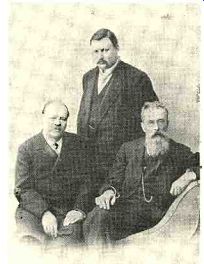
Glazounov
(center) with composer compatriots Lyadov and Rimsky-Korsakov the-Fields,
Neville Marriner cond. PHILIPS 9500 255 $8.98.
Performance: Fresh and crisp
Recording: Exemplary
If Philips has it in mind to give us an extensive Haydn symphony cycle from Neville Marriner and his crack body of players, this disc presages a truly outstanding and exciting achievement-even considering the many other distinguished recorded performances that these masterpieces have enjoyed over the years.
While I sense somewhat more drama in the Military Symphony than Marriner does, particularly in the introduction, the music as a whole has a wonderful transparency of texture and rhythmic vitality under his baton, and the reading is most enjoyable and stimulating. But it is the Drum Roll-my own favorite of the Haydn symphonies-that is the real prize here. There is drama aplenty from start to finish, in the wonderfully somber coloration of the opening pages as well as in the pacing of the slow movement that lends the music an almost Beethovenian inevitability.
Not only are these performances marvels of elegance, elan, and precision, but the re cording fits them flawlessly, with just the right blend of space and presence throughout. The Philips playing surfaces are exemplary. D.H.
---------------
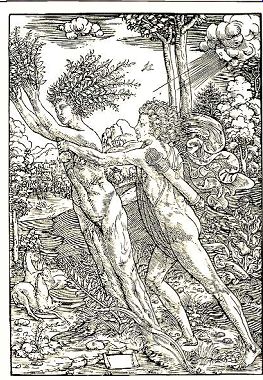
Woodcut by Jacopo Ripanda of Bologna, c. 1500.
Gagliano's "La Dafne"
ALTHOUGH this record runs just over an hour, it contains all of Marco da Gagliano's 1608 "music-drama" La Dafne. The range of emotions traversed in this comparatively short time is remarkable. The work has a conventional poetic-pastoral setting populated by the usual nymphs, shepherds, and classical deities. The mood at the beginning is one of horror occasioned by a frightful monster, but when Apollo slays the monster the mood turns to triumphant joy. The nymphs and shepherds laugh as Venus (Venere) and Cupid (Amore) banter about the power of love, but they are first astonished and then grief-stricken as they watch the love-crazed Apollo (victim of one of Cupid's darts) pursue their own dear Daphne-and turn her into a laurel tree for refusing him.
All of this is presented in monody interspersed with delightful choruses; the magnificent libretto is by Ottavio Rinuccini, who was also the librettist for Monteverdi's more celebrated L 'Otfeo. Monody can be tiresome, as many a seventeenth-century listener suffering from "tedio del recitativo" would attest. But Gagliano was a master of the style, and his unexpected twists of melody, daring use of harmony, and careful attention to the text are of constant interest. We are also fortunate in having here a cast of excellent singers who understand the style and project the words with clarity and feeling.
Nigel Rogers is one of the outstanding current practitioners of the monodic style. He has a light, agile voice and a gift for word coloration that enables him to portray Apollo's shifting emotions effectively. Perhaps the high point of the opera is his lament "Un guardo, un guardo appena." Rogers' or namentation of the two stanzas beginning "Non curl la mia pianta" is hair-raising and can hardly be equaled among singers today.
Barbara Schlick is also excellent, and her performance of Cupid's little aria "Chi da' lacci d'amor" is an especially fine example of the monodic art. Others deserving special men tion are Ian Partridge, for his narration of Daphne's transformation into a tree ("Quan do la bella ninfa"), and David Thomas, for his virile description of Apollo's battle with the dragon.
The choral singing is a pleasure to hear, and the dance quality of the homophonic writing is contagious. Moreover, the same clarity is maintained in the few polyphonic passages. I especially recommend the exquisitely deco rated trios beginning "Tu non curl" in the final ensemble. Solo ornamentation is one thing, but to hear it so boldly and neatly done in ensemble work is rare indeed.
THE singers are accompanied by a pithy-sounding ensemble of original instruments, which give incredible color and zest to the ritornellos and choruses. The continuo support, alternating between harpsichord and organ, is at once imaginative and discreet, never en cumbering the vocal lines. La Dafne is a masterpiece to which this performance does full justice. In terms of historical accuracy, performance quality, and the inherent value of the music itself, this is probably the best re cording of seventeenth-century Italian opera currently available.-Stoddard Lincoln
GAGLIANO: La Dafne. Norma Lerer (soprano), Dafne, Venere; Barbara Schlick (soprano), Amore, First Nymph; mite Kollecker (soprano), Second Nymph; Nigel Rogers (ten or), Apollo, Ovidio; Ian Partridge (tenor), Tirsi; David Thomas (baritone), First Shepherd;
Berthold Possemeyer (tenor), Second Shepherd. Monteverdi Choir of Hamburg; Camerata Accademica of Hamburg, Jurgen Jurgens cond.DEUTSCHE GRAMMOPHON ARCHIV 2533 348 $8.98.
----------------
HOVHANESS: The RubitiyAt of Omar Khayyhm; Sunrise; Meditation on Orpheus; And God Created Great Whales; Fantasy on Japanese Woodprints; Floating World. Douglas Fairbanks, Jr. (narrator, in Rubdiydt); Carmen Carrozza (accordion, in Rubodycit); orchestra, Andre Kostelanetz cond. COLUMBIA M 34537 $7.98, MT 34537 $7.98.
Performance:Good
Recording: Very good
Most modern music goes its austere, cerebral, experimental way; Alan Hovhaness goes another. The Massachusetts-born composer, now well into his sixties, has rummaged through a variety of styles in search of his own, which has echoes of Asia Minor, India, and Japan. He once destroyed a thousand of his works, but he has been prolific in replacing them with new ones, many of them strikingly imaginative and adventurous in their way, all highly seasoned and sometimes unabashedly emotional. Andre Kostelanetz has long felt a special affinity for this accessible music some of the pieces on this program are reis sued here from earlier discs-and he does it justice. In fact, it was Kostelanetz who commissioned Hovhaness to tackle The Rubciiyot of Omar Khayycim, which gets its recorded premiere in this collection. It is, alas, on several counts the most disappointing item on the agenda. First, there is the orchestral setting it self, drenched in cheap sonic perfume, which might have striven to be the musical equivalent of a colorful Willy Pogany illustration of Omar's Persia but in performance is redolent of the cosmetics counter at a five-and-ten.
Then there are the readings by Douglas Fair banks, Jr., who is allowed to emote like an old-time elocution student.
The rest of the material, however, makes the album worth acquiring. Sunrise is a magical impressionist interlude, an aubade evoking dawn on some enchanted island. Meditation on Orpheus is a tone poem in a somber mood, suggesting less the joyous bard than the bereaved widower of Euridice. And God Created Great Whales, an intricate blend of music suggesting great heaving currents underseas and actual recorded "songs" of whales, holds up as a hypnotic listening experience. The Fantasy on Japanese Wood-prints, for xylophone and orchestra, is a mood piece of extraordinary delicacy. And Floating World, with its "mysterious procession of past civilizations and heroes, breaking off in a cry," is one of the composer's best-realized tonal pictures. P.K.
RECORDING OF SPECIAL MERIT
JOSQUIN DES PRES: Motets, Chansons, and Instrumental Music. Missa La Sol Fa Re Mi; Miserere Mei, Deus; Tu Solus Qui Facis Mira bilia ; Sanctus de Passione; Qui Velatus Facie Fuisti; Absalon, Fili Mi; Planxit Autem Da vid; El Grillo; Fortuna d'un Gran Tempo; Allegez Moy; Ile Fantazies; La Plus de Plus; Je Ne Me Puis Tenir d'Aimer; La Bernadina; Adieu Mes Amours; Scaramella; Inviolata, Integra et Casta Es Maria. Capella Antigua of Munich, Konrad Ruhland cond. ABC/ SEON AB-67017/2 two discs $13.98.
Performance: Excellent
Recording: Excellent
Of all the albums devoted to the music of Josquin des Pres, this is certainly the most comprehensive and, in general, the best per formed. The repertoire is well chosen to re veal Josquin in all of his genres and moods.
The Capella Antigua of Munich is a devoted group of singers and instrumentalists who began studying and performing together as students about twenty years ago. Their readings demonstrate the maturity of their achievement in such factors as ensemble, blend, and clarity of line. The sound is perfect for this music, for the vocalism is designed to cut through rather than to create the typically modern homogenized choral sound. Color and fullness are achieved through instrumental doubling (by original instruments). Since the group formed its vocal style at a time when smoothness and a fine legato were considered the ideal, some listeners might miss a sense of articulation in its work. In El Grillo, for instance, the forces at hand seem rather ponderous. But certainly the moving performance of Je Ne Me Puis Tenir d'Amour, first played by instruments and then repeated by voices, proves the validity of a suave, continuous sound. The album is a must for Renaissance lovers and is highly recommended for anybody who wishes to delve into the riches of this greatest of the Renaissance masters.
S.L.
RECORDING OF SPECIAL MERIT
LECOCQ: La Fille de Madame Angot. Mady Mesple (soprano), Clairette; Christiane Stuzmann (mezzo-soprano), Mademoiselle Lange; Bernard Sinclair (tenor), Ange Pitou; Charles Buries (tenor), Pomponnet; Michel Roux (baritone), Larivaudiere, Buteux, Le Cabare tier; other soloists. Chorus of the Theatre National de ('Opera; Orchestra of the Theatre National de l'Opera Comique, Jean Doussard cond. CONNOISSEUR SOCIETY CS2-2135 two discs $15.96.
Performance: Scintillating
Recording: Stunning
Charles Lecocq was born in poverty in Paris in 1832. Although he had a crippling bone con dition and walked on crutches all his life, he became one of France's most successful com posers of light opera. His early operettas were failures, but by the time La Fille de Madame Angot had its Brussels premiere in 1872, Lecocq was making it big. The operetta ran for 500 performances in Brussels and packed them in at the opera houses of 103 French cities and twenty-four world capitals, including New York, where it was sung in both French and English. Seventy years later Leonid Mas sine fashioned a delightful ballet for the American Ballet Theatre to a suite put together from the music of this operetta and other Lecocq scores; it is in that form that modern audiences are chiefly acquainted with Lecocq's music (London reissued a lovely re cording of the suite in its Stereo Treasury Se ries a few years ago).
La Fille de Madame Angot is a curious mix ture of sexual intrigue and revolutionary poli tics, and it is the political aspect of the libretto that probably prompted the revival of the piece by the Moscow Art Theater in the Soviet Union back in 1920 and led to a Soviet re cording some decades later. There are few other operettas in the repertoire where plotters plan the overthrow of a government to the swaying strains of waltzes, rondeaus, and a "chanson politique." The plot in question is an attempt to bring down the leaders of the ...
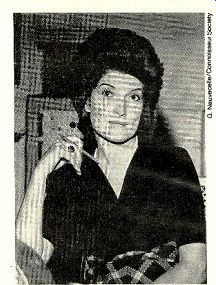
MADY MESPLE A model daughter for Madame Angot
... Directoire, the government that functioned in France between the Reign of Terror following the French Revolution and Napoleon's ascent to power. The heroine is Clairette Angot, the daughter of a Parisian fishwife; the scene is the old Paris market, Les Halles. There is a satirical balladeer named Ange Pitou who is inciting the people against the government, and an actress named Mademoiselle Lange, herself a crypto-conspirator and double agent. The deceptions, jealousies, and intrigues of the piece proliferate to the accompaniment of a series of alluring and colorful ballads, choruses, and set pieces, including a spectacular third-act ballet, and everything sorts itself out in a smashing finale at a ball.
The delights of the piece unfold irresistibly on these discs. All the music is here, and the essentials of the dialogue are delivered in that typically rapid-fire opera comique style. Mady Mesple, a soprano of considerable charm and with a firm grasp of the style, makes a model Clairette. Christiane Stuzmann is equally convincing in her mezzo role as the wily Mlle. Lange. On the masculine side, the two tenors vie for our admiration and both of them earn it. Others deserving of mention in a large and superbly directed cast are Michel Roux as La rivaudiere, the banker, and basso Gerard Chapuis as the police agent Louchard. Conductor Jean Doussard brings off the entire production with marvelous panache. La Fille de Ma dame Angot really needs an accompanying libretto but has been released without one. As compensation, though, there are Eric Salzman's thorough background notes and plot summary to help the listener keep up with things, which move along from start to finish with exhilarating Gallic velocity. P.K .
LISZT: Hungarian Rhapsodies: No. 1, in F Minor; No. 4, in D Minor; No. 6, in D Major ("Carnival in Pest"). Rakaczy March; Hungarian Battle March. Philharmonia Hungarica, Willi Boskovsky cond. ANGEL CI S-37277 $7.98.
Performance: Spirited
Recording: Fine
Willi Boskovsky shows a surprising flair for all five pieces recorded here, and he is abetted with enthusiasm by the Philharmonia Hungarica. The three rhapsodies (No. 4, as usual, is not the one to which Liszt gave that number but No. 12 of the piano set) are presented with still more panache by Antal Dorati and the London Symphony Orchestra on Mercury SRI 75089, but the dated sound on that disc cannot compare with the fine, up-to-date son ics on the new Angel. Boskovsky's inclusion of the two marches, otherwise unavailable on record , is a further recommendation. R.F.
MAHLER: Songs from Des Knaben Wunderhorn. Der Schildwache Nachtlied; Verlorne Miih'; Trost im Ungliick; Wer Hat dies Lied lein Erdacht?; Das Irdische Leben; Des Antonius von Padua Fischpredigt; Rheinlegend chen; Lied des Verfolgten im Turm; Wo die Schonen Trompeten Blasen; Lob des Hohen Verstandes; Revelge; Der Tambourg 'sell. Jessye Norman (soprano); John Shirley-Quirk (bass); Concertgebouw Orchestra, Amsterdam, Bernard Haitink cond. PHILIPS 9500 316, $8.98, 7300 572 $8.98.
Performance: Good to excellent
Recording: Excellent
This latest recording of the orchestral Wunderhorn songs of Mahler follows the general practice of omitting Es Sungen Drei Engel and Urlicht, which appear in the Third and Second Symphonies, respectively. Like the two major competitive collections, Schwarzkopf/ Fischer-Dieskau/Szell on Angel and Ludwig/ Berry/Bernstein on Columbia, this one has its strong and weak points. I am inclined to recommend acquiring and holding the new Phil ips issue together with the Angel recording, since they are complementary. This involves not only matters of performance style Fischer-Dieskau is more overtly dramatic in his approach than Shirley-Quirk-but also the voice assignments, which are reversed on these two discs in Wer Hat dies Liedlein Er dacht ? and Lob des Hohen Verstandes. More over, the haunting Wo die Schonen Trompeten Blasen is done in the usual solo soprano version on the Philips disc, while Schwarzkopf and Fischer-Dieskau treat it as a duet.
By and large, it is Jessye Norman's exquisitely controlled and beautifully inflected performances that take the honors here. Shirley-Quirk improves in the later songs, giving a delightful Fish Sermon (Des Antonius von Padua Fischpredigt) and a grisly, grimly poignant portrayal in the concluding Drummer Boy, but he is unable to handle the nasty upward leap at the opening of Der Schildwache Nachtlied, and he exhibits a distracting vibrato throughout much of the great Revelge (one must turn to Fischer-Dieskau to experience the searing impact of this last song). As in all his Mahler performances, Haitink leads his superb orchestra in a flawless collaboration, and the solo trumpet work at the end of Lied des Verfolgten in Turm is a veritable miracle. Superb recorded sound. D.H.
MENDELSSOHN: A Midsummer Night's Dream: Overture, Op. 21; Incidental Music, Op. 61. Lilian Watson (soprano); Delia Wallis (mezzo-soprano); Finchley Children's Music Group; London Symphony Orchestra, Andre Previn cond. ANGEL O S-37266 $7.98.
Performance: Good to excellent
Recording: Very good
As Raphael Fruhbeck de Burgos did on his 1969 London disc, Andre Previn includes here every scrap of Mendelssohn's music for A Midsummer Night's Dream. In some in stances it's a nice bonus, but in others it is just plain distracting without Shakespeare's text or some form of connecting narration.
The excellence of the recorded sound, beautifully transparent yet amply full-bodied (even more so in four-channel playback), is a big plus for the new Previn disc, as is the superb wind playing of the London-Symphony first deskmen in the scherzo and the nocturne.
The songs and choruses come off nicely, too, most particularly "You spotted snakes," in which Delia Wallis' brief mezzo part adds a note of special distinction. Previn's use of children's voices instead of the usual female choir is a real inspiration, definitely adding to the other-worldly feeling that Mendelssohn's score needs but doesn't always get. My only reservation about the performance is that the overture is played just a little bit too neatly to be altogether comfortable. Of the modern re corded versions, I like best the dash and youth of Kubelik's.
D. H .
RECORDING OF SPECIAL MERIT
MENDELSSOHN: Piano Trio in D Minor, Op. 49; Piano Trio in C Minor, Op. 66. Beaux Arts Trio. PHILIPS 6580 211 $8.98.
Performance: Elegant
Recording: Improved
These elegant performances, of the two Mendelssohn trios were recorded when Daniel Guilet was still the Beaux Arts' violinist. Is sued exactly ten years ago (about the time Guilet was succeeded by Isidore Cohen, the present partner of the group's original pianist and cellist, Menahem Pressler and Bernard Greenhouse) on Philips' short-lived World Series budget label, they have been treasured by collectors lucky enough to have picked up PHC-9082 while it was available. The very welcome reissue is in Philips Universo series, whose price on the other side of the Atlantic is comparable to that of the defunct, domestically pressed "World Series," but is the full $8.98 in this country. In this case the price is more than justified by the quality of both the performances and the sound, the latter having been improved in the new Dutch mastering to eliminate the wiry edge on the violin and pro vide an altogether richer and warmer acoustic frame. The surfaces are absolutely silent, and the cover is now graced with one of Mendelssohn's own water colors. Among the surprisingly few current versions of either of the two works, none is quite so persuasive as these, and there happens to be no other single-disc release offering this sensible pairing of titles. Highly recommended. R.F.
MENDELSSOHN: Symphony No. 4, in A Major, Op. 90 (see SCHUMANN)
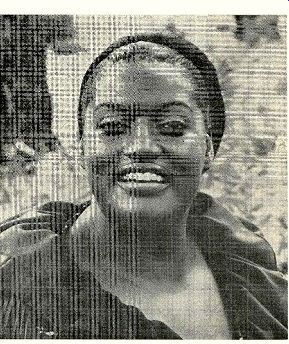
JESSYE NORMAN: Exquisitely controlled, beautifully inflected Mahler songs
L. MOZART: Musikalische Schlittenfahrt; Bauernhochzeit; Sinfonia Burlesca. Ensemble Eduard Melkus. DEUTSCHE GRAMMOPHON ARCHIV 2533 328 $8.98, 3310 328 $8.98.
Performance: Lively
Recording: Bright
All three of these works qualify as "entertainment music" pure and simple. They were conceived in a spirit of unpretentious fun, and the two bigger ones were actually introduced in an Augsburg tavern during Carnival in January 1756, about two weeks before the birth of Leopold's famous son. The edition from which the Musical Sleigh Ride is performed is the one by Ernst Fritz Schmid that was used by Carl Gorvin in his earlier Archiv recording with the Berlin Bach Orchestra (APM 14084), but some sections are repeated here, and there are some additions: a fanfare from Josef Starzer's ballet Roger et Bradamante by way of prelude, a whip complementing Leopold's sleigh bells, and sound effects of yelping dogs and neighing horses. While I find the fanfare and the whip agreeable, the animal sounds seem gratuitous at best, and become irritating after more than a single.-.hearing. The same must be said of the human whistling and shouts of "Yahoo!" in the Peasant Wedding.
This work has less to recommend it than the Sleigh Ride, anyway, though the sounds of the hurdy-gurdy and the bagpipe are enjoyable.
Substance is much more apparent in the ten minute Sinfonia Burlesca, a curious chamber work for two violas, two cellos, and continuo (bass, bassoon, and harpsichord), whose outer movements seem to echo-or parody-one or more of Bach's Brandenburg Concertos.
The playing throughout the three works--on period instruments or modern copies-is lively, pointed, and for the most part highly polished (Melkus himself plays viola in the Sinfonia Burlesca, as well as solo violin in the Sleigh-Ride), and the sound is bright and well balanced. R.F.
PURCELL (arr. Stokowski): Dido and Aeneas: Dido's Lament (see VAUGHAN WILLIAMS)
RACHMANINOFF: Songs (see Collections Nina Koshetz)
RECORDING OF SPECIAL MERIT
RAWSTHORNE: Symphony No. 1; Symphonic Studies. London Philharmonic Orchestra, John Pritchard cond. HNH 4044 $7.98 (from HNH Distributors, Ltd., P.O. Box 222, Evanston, Il. 60204).
Performance: Persuasive
Recording: Exemplary
Alan Rawsthorne (1905-1971), a member of the same generation of English composers as Walton, Tippett, and Lennox Berkeley, re mains (like Berkeley) a still largely unknown quantity beyond the borders of his own country. In ours, he enjoyed some celebrity in the 1950's for his Practical Cats, an orchestral score to accompany recitation of T. S. Eliot's verses, and went unnoticed as the composer of numerous excellent film scores. Even in England, where his First Symphony was hailed in 1950 as "a major event in English musical life," the work waited more than twenty-five years for its first recording. It is a serious, compelling work, in which one seeks in vain for models. Rawsthorne's is an individual style. The Symphonic Studies, com posed just before World War II, has been his most successful work, and not without reason. In content, contrasts, and craftsmanship, it is one of the most stunning works of its kind, and it ought to be part of the so-called standard repertoire by now_ Since it is not, we have all the more reason to be grateful to HNH for the opportunity to enjoy it and the symphony in these very persuasive performances under John Pritchard. The sound is exemplary and so are the surfaces. R.F.
ROSSINI: Overtures: The Barber of Seville; La Cenerentola; La Gazza Ladra; L'Italiana in Algeri; Semiramide; William Tell. Royal Philharmonic Orchestra, Carlos Paita cond. LONDON SPC-21164 $7.98.
Performance: Bracing
Recording: Very good
In terms of covering the "basic" bases, this is probably the most attractive single disc of Rossini overtures available at present, and the performances themselves are invariably fine.
I miss the tricky syncopated bit Peter Maag and George Szell attempted (successfully) in La Gazza Ladra, but Paita's bracing presentations offer a nice balance of subtlety and brilliance, with unusual attention to detail and unusual clarity in the reproduction (free of the close-up exaggerations that have marred 96
some earlier Phase 4 releases). My ideal Ros sini overture collection is still Maag's inexpensive disc of four big pieces (Semiramide, Tell, Gazza Ladra, and Cenerentola-London STS-15030) plus Neville Marriner's imaginative package of eight generally lighter ones (Philips 6500 878), but for anyone limiting himself to one disc of Rossini overtures, Paita's is the one I'd recommend. R. F.
RUDHYAR: Tetragrams, First Series.
WEIGL: Night Fantasies. Dwight Peltzer (piano). SEREN us SRS 12072 $6.98.
Performance: Excellent
Recording: Okay
Daniel Chenneviere, born in Paris in 1895, immigrated to this country in1917 and took the name Dane Rudhyar. Like Edgard Varese, with whom he has much in common, Rudhyar was disillusioned with European civilization and came across the ocean looking for a New World-literally and figuratively. Like Varese he broke with European tradition and forged an independent, highly dissonant modern style. Rudhyar was (is?) basically a philosopher and mystic, and his craggy, uncompromising music is the expression of a visionary mind. Tetragrams, the first of several series of works with that name, was written in the 1920's; the sections are titled "The Quest," "Crucifixion," and "Rebirth." The intensity and originality of this music is undeniable-it is related to the block-like forms of Varese and Ruggles but is even more uncompromising. This is music of a very limited range, but it is powerful nonetheless-a mountain with a fire underneath.
Karl Weigl came to America from Europe too, but there his similarity to Rudhyar ends.
Born in Vienna in 1881, Weigl was brought up in the last flowering of the old Romanticism, and his musical style is very Old World. The Night Fantasies was written in 1922 in the style of a quarter-century earlier. It is rich, artful, and Romantic, and it is nicely played here by Dwight Peltzer, who does equal justice to Rudyhar's contemporaneous, but so very different Tetragrams. E.S.
SCHUMANN: Fantasiestiicke, Op. 12 (see Best of the Month, page 80) SCHUMANN: Papilions, Op. 2; Three Romances, Op. 28; Kinderszenen, Op. 15; Blumenstiick, Op. 19. Claudio Arrau (piano). PHILIPS 6500 395 $8.98.
Performance: Idiosyncratic
Recording: Very good
Claudio Arrau's comprehensive survey of Schumann's major solo piano works appears to be approaching completion with this issue.
As with Arrau's other Schumann interpretations, I react to this latest disc with mixed feelings. The first two of the Romances, with their relatively free-flowing lyricism, are right up Arrau's alley, but I find his tendency to highlight contrasts between episodes unsettling in those works, such as Papillons, that are chains of short pieces. The emphasis on intensity of detail at the expense of continuity runs against my aesthetic grain. Kinderszenen fares nicely here, however, particularly in the Traumerei, and Arrau effectively captures the capricious aspect of the Blumenstiick. Big, full-bodied piano sound throughout. D.H.
SCHUMANN: Symphony No. 4, in D Minor, Op. 120. MENDELSSOHN: Symphony No. 4, in A Major, Op. 90 ("Italian"). New Philharmonia Orchestra, Riccardo Muti cond. ANGEL 0 S-37412 $7.98.
Performance: First-rate Mendelssohn
Recording: Very good
SCHUMANN: Symphony No. 1, in B-Hat Major, Op. 38 ("Spring"); Symphony No. 4, in D Minor, Op. 120. Vienna Philharmonic Orchestra, Zubin Mehta cond. LONDON CS-7039 $7.98, 5-7039 $7.98.
Performance: Fourth superb, First uneven
Recording: Excellent
Carl Reinecke, who adored Mendelssohn and became one of his successors as conductor of the Leipzig Gewandhaus Orchestra, was fond of saying that the Italian Symphony embodied all one needed to know about the art of orchestration. Muti's performance brought this to mind because there is nothing of the picture-postcard approach in it, no thought of al lowing the work's charm alone to carry it.
Many listeners accustomed to a more extroverted approach will be surprised by the degree of substance revealed here in addition to the superb craftsmanship that has always been taken for granted in this well-beloved work. Muti's sense of proportion and balance never fails him. Everywhere the momentum is natural and unforced, phrases are molded with unselfconscious mastery, an elegant clarity of texture is maintained-and both the orchestra and the engineers come through admirably. Many of the virtues of Muti's Mendelssohn are to be found in his Schumann, but his identity with the idiom of the latter composer is simply less complete-and in the coda of the finale the elegant clarity gives way to a hard-driven scramble.
We have not had many opportunities to hear the Vienna Philharmonic play Schumann's symphonies. London/Decca in the 1950's sent Carl Schuricht to Paris to record the Second and Third, and the same company's more recent tries with the Philharmoniker under Georg Solti were dismaying examples of miscasting. Mehta is clearly a happier choice in this material: he has inherited a natural feeling for the music from his teacher Josef Krips, and the orchestra evidently loves playing it for him. Admirable as Muti's Fourth is, there can be no question that Mehta's is more Schumannesque; lyrical sections are caressed, dramatic ones prodded, but neither in excess, and one has the feeling that Mehta is not so much shaping phrases himself as simply encouraging the delighted musicians to express themselves. The effect is at once spontaneous and poetic. If only the overside account of the Spring Symphony were so consistently fine! Here the two inner movements are outstandingly successful, with gorgeous playing from the cellos and the various winds in their little solos, but the two outer ones are curiously bland. All the right motions seem to be made, yet the first movement never really comes to life and the last is distressingly unsmiling, as if Mehta had been intimidated by Schumann's remark that he did not want the finale to be taken "too frivolously." Had the outer movements of the Spring Symphony un der Mehta been as successful as the inner ones and the entirety of his Fourth, this would have been one of the finest entries in the Schumann discography. As it is, my allegiance to Klemperer in the First (Angel S-36353) remains unshaken, and the most satisfying coupling of Nos. 1 and 4 remains Karajan's (Deutsche Grammophon 2530 169), even though neither is recorded so richly as Mehta's and neither offers the peculiar eloquence the Vienna Philharmonic brings to this music. R.F.
SIBELIUS: Symphony No. 1, in E Minor, Op. 39; Scenes Historiques, Op. 25. Bournemouth Symphony Orchestra, Paavo Berglund cond. SERAPHIM S-60289 $4.98.
Performance: Good
Recording: Good
As a Finnish conductor of distinction, Paavo Berglund would be expected to know his Sibelius, and it is a thoughtful reading of the First Symphony that he offers here. The orchestra is responsive, especially the first-desk clarinet, but the music needs more string power than it gets. Perhaps the rather reverberant acoustics of the Bournemouth hall have a dissipating effect. What really goes well here are the three picturesque pieces of the first series of Scenes Historiques, composed at the end of the century to illustrate tableaux from Fin land's history (Finlandia was part of this se ries but was published separately). The solemn opening piece, the rhetorical middle movement, and the bolero-like finale (Festivo) seem to bring out the best qualities of the Bournemouth Orchestra, and the recorded sound thoroughly enhances the whole. This is currently the only budget-price stereo (or quadraphonic) disc of the Sibelius First, and even with reservations it's an excellent buy. D. H.
RECORDING OF SPECIAL MERIT
J. STRAUSS, JR.: The Gypsy Baron Entrance March; New Vienna Waltzes, Op. 342; Emperor Waltzes, Op. 437; Fairy Tales from the Orient, Waltzes, Op. 444; In a Viennese Park, Polka Frangaise, Op. 336; Perpetuum Mobile, Op. 257; Tritsch-Tratsch-Polka, Op. 214. .1. STRAUSS, SR.: Chinese Galop, Op. 20. Boston Pops Orchestra, Arthur Fiedler cond. DEUTSCHE GRAMMOPHON 2584 008 $8.98.
Performance: Affectionate
Recording: Shimmering
Ever since his first recording of Wo die Zitronen Bliih'n with the Pops on a Victor 78 some time around 1935, Arthur Fiedler has been one of our most reliable suppliers of satisfying Johann Strauss, and this latest pack age is especially valuable for what it adds to the Waltz King's current discography. Neu Wien is one of the pieces cited in the Desor miere-arranged ballet Le Beau Danube, but it has not been available in its own delicious complete form since the retirement of the early Camden transfer of Fiedler's 1939 recording. Marchen aus dem Orient, one of Strauss' least-known works, has not been represented on records in any form, apparently, since Marek Weber's heavily cut and modestly re-
scored version of the early 1930's. Both qualify as the most worthwhile sort of discovery.
The polka labeled "In a Viennese Park" looked like another discovery, but it turned out to be the very familiar Im Krapfen wald'l-a title usually not translated at all, but ...
----------------
SOLOMON’s Dedicated Beethoven
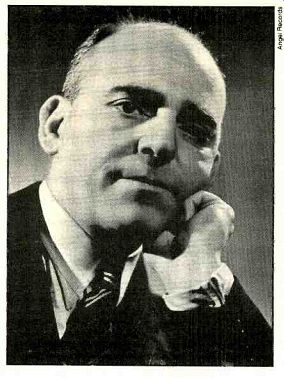
SOLOMON is seventy-five years old now, and he hasn't performed in nearly twenty-two years. It seems that many who have heard of him but never heard him have assumed that his use of his given name alone signified the outlook of a showman, and so, without actually experiencing his playing, they have formed an entirely erroneous impression of one of the greatest musicians of this century.
Few pianists have been less concerned with showmanship, few more self-effacing in their total dedication to the music they perform. A conductor who lived across a narrow London street from Solomon some thirty years ago once told me he would hear him practicing on the day of a recital, right up to the time he had to leave for the hall-and then hear him going over the music again, after the recital, some times till day began to break. He was always striving for perfection, never satisfied that he had come near enough. Vox, in its Turnabout Historical Series, recently gave us the first American release of Solomon's magnificent account of the Brahms B-flat Concerto, with lssay Dobrowen conducting ( THS-65071, reviewed in STEREO REVIEW last October); now it is gratifying to find both Vox and Seraphim giving us some of the Beethoven sonatas with which the pianist was even more closely associated.
Solomon's Beethoven emphasized the music's Classical roots at least as much as its Ro mantic thrust; he never gave the impression of chiseling an epic out of resistant granite, but went for the clean line and the essential meaning. These sonata recordings, made a few years before a stroke brought a premature end to his career in 1956, show all the Solomon virtues: accuracy, clarity, great elegance, great heart, total adjustment of his own musical personality to that of the com poser. And there is no shortage of passion and intensity, either, as we hear in the Waldstein and Hammerklavier-the latter surely one off the most memorable performances ever of that work. The sound is a little plummy, but more than respectable. The remarkably poetic and dignified performance of the Moonlight is the one that is split for turnover (after the second movement) in the now standard "sandwich" on Seraphim. I hope the remainder of the eighteen Beethoven sonatas Solomon recorded are forthcoming, and that they are so distributed as to avoid "sandwiches" altogether--but, in any case, get hold of these records and get closer to Beethoven.
-Richard Freed
BEETHOVEN: Piano Sonata No. 8, in C Minor, Op. 13 ("Pathathique"); Piano Sonata No, 14, in C-sharp Minor, Op. 27, No. 2 ("Moon light"); Piano Sonata No. 23, in F Minor, Op. 57 ("Appassionata"). Solomon (piano). SERA PHIM 60286 $4.98.
BEETHOVEN: Piano Sonata No. 21, in C Major, Op. 53 ("Waldstein"); Piano Sonata No.28, in A Major, Op. 101; Piano Sonata No. 29, in B-flat Major, Op. 106 ("Hammerklavier"); Piano Sonata No. 30, in E Major, Op. 109; Piano Sonata No. 31, in A-flat Major, Op. 110; Piano Sonata No. 32, in C Minor, Op. 111. Solomon (piano). VOX/TURNABOUT THS 65068/65070 three discs $11.94.
-----------------------
... sometimes rendered "In the Doughnut For est." (How odd for a German record company to omit the original German titles of these works!) The lengthy liner notes are in English only and offer just another rehash of the back ground of the waltz and the Strauss family's contributions.
The documentary lapse aside, though, the disc is a winner. Veteran collectors intrigued by Neu Wien. Marchen aus dem Orient, and Father Strauss' enchanting little Chinese Galop might wish for an entire package of similarly unfamiliar items (we could do with a re cording of O Schoner Mai!, the Motoren Walzer. Gunstwerber, etc.), but everything here is done to a sumptuous turn, and the shimmering, un-gimmicky sound is a further plus. R . F.
RECORDING OF SPECIAL MERIT
R. STRAUSS: Don Quixote. Samuel Mayes (cello); Joseph de Pasquale (viola); Philadelphia Orchestra, Eugene Ormandy cond.
RCA ARL1-2287 $7.98, ARS1-2287 , $8.95, ARK1-2287 $8.95.
Performance: Gorgeous
Recording: Vivid
The big Strauss tone poems are not as popular now as they used to be-the craze for Mahler has ousted them from the niche reserved for late-Romantic large orchestral works. Also Sprach Zarathustra, popularized by its use in the movie 2001, is an exception, of course, but it is more like Mahler than typical Strauss.
Don Quixote also has special qualities, its size being tempered and clarified by the relative simplicity of the musical ideas and form (variations), the use of solo instruments (cello and viola) as protagonists, and by the surprising warmth and humanity of the music.
The new Philadelphia Orchestra recording is a gorgeous, autumnal rendition lit up by the glowing solo performances of two musicians associated with the orchestra: Samuel Mayes, formerly first cellist, and Joseph de Pasquale, currently first violist. The orchestral sound is overwhelming, and Ormandy, who has a real feeling for this music, imparts a sense of drama and sustains the big line. E.S.
RECORDING OF SPECIAL MERIT
VAUGHAN WILLIAMS: Fantasia on a Theme by Thomas Tallis.
DVORAK: Serenade for Strings in E Major, Op. 22.
PURCELL (arr. Stokowski): Dido and Aeneas: Dido's Lament. Royal Philharmonic Orchestra, Leopold Stokowski cond. DESMAR DSM 1011 $7.98.
Performance: Warm, vital
Recording: Splendid
Until the very day of his death at the age of ninety-five last September, Leopold Stokowski was involved in bringing his special genius to bear on recorded performance--in a number of instances in his later years with works hardly ever associated with his concert or previous recording repertoire, such as the lovely Dvorak Serenade for Strings included here.
The noble Vaughan Williams Tallis Fantasia is by itself enough reason for acquiring this disc. Stokowski's reading of the work ranks with Sir Adrian Boult's virtually definitive version on Angel. The Stokowski treatment of the music is broad and perfectly con trolled, free of fussy dynamics and tempo alteration, and the Desmar recording is altogether superb, especially in achieving the all important differentiation of perspective among the three contrasting bodies of strings.
Stokowski's way with the Dvorak Serenade is quite different from the intimate view espoused by many others. He treats the score more in the manner of Tchaikovsky's master piece in the same mode, aiming for fullness of sound. The result is a rather leisurely first movement, a waltz movement with wonderful "lift," and a scherzo that is easygoing to be gin with but lyrically very intense in the trio section. The lyrical stress is also evident throughout the larghetto, but in the finale Stokowski attacks the music with an almost Toscaninian fierceness-and gets absolutely brilliant results. Desmar's recording matches the performance in effectiveness.
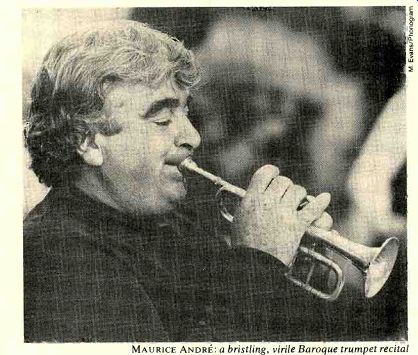
MAURICE ANDRE: a bristling, virile Baroque trumpet
recital
Though Stokowski's transcriptions of early music have been criticized as overblown, such is not the case with the Dido and Aeneas lament, scored for strings alone with cello solo. Lyric intensity tempered with disciplined playing prevails here. All told, the record is a treasurable sound document from the last year of a long and remarkable musical life. D.H.
WEIGL: Night Fantasies (see RUDHYAR)
COLLECTIONS RECORDING OF SPECIAL MERIT
MAURICE ANDRE: Baroque Trumpet Concertos and Sonatas. Vivaldi: Concerto in C Major for Two Trumpets, Strings, and Harpsichord (PV 75). Viviani: Sonata No. 1, in C Major, for Trumpet and Organ. Torelli: Concerto in D Major for Trumpet and Strings.
Strilzel: Concerto in D Major for Trumpet and Strings. Telemann: Concerto-Sonata in D Ma or for Trumpet, Strings, and Harpsichord. Maurice Andre (trumpet); Hedwig Bilgram (organ); Mauritz Sillem (harpsichord); English Chamber Orchestra, Charles Mackerras cond. DEUTSCHE GRAMMOPHON 2530 792 $8.98, 3300 792 $8.98.
Performance: Sparkling
Recording: Sparkling
Here is a brace of splendid Baroque trumpet concertos and sonatas to set the spine a-tingling. The music is especially fine, ranging from a well-known Torelli concerto to the obscure, fascinating sonata by Giovanni Buon aventura Viviani. Telemann enthusiasts will be delighted by the Concerto-Sonata, which is strong and offers a particularly powerful slow movement.
Maurice Andre is in top form, as usual, and keeps the music rhythmically virile and clean.
He also indulges in the stunt of playing both parts in the Vivaldi. Charles Mackerras whips the English Chamber players into militant ritornellos and accompaniments that emphasize the unique quality of Baroque trumpet music. It all bristles and sparkles appealingly. S.L.
GIACOMO ARAGALL: Italian Opera Arias. Puccini: La Boheme: Che gelida manina. Tosca: Recondita armonia; Elucevan le stelle. Manon Lescaut: Donna non vidi mai. Donizetti: Don Pasquale: Cercherb lontana terra. L'Elisir d 'Amore: Una furtiva lagrima. Lucia di Lammermoor: Tombe degli avi miei . . .
Fra poco a me ricovero. Cilea: Adriana Le couvreur: La dolcissima effigie. Giordano: Fedora: Amor ti vieta. Verdi: Luisa Miller: Quando le sere al placido. Don Carlo: Io la vidi. Rigoletto: La donna e mobile. Il Trova tore: Ah si, ben mio. Giacomo Aragall (tenor); Orquesta Sinfonica de Barcelona, Gianfranco Rivoli cond. LONDON OS 26499 $7.98.
Performance: Good or better
Recording: Unspectacular
This is not a particularly imaginative program but it serves to display Giacomo Aragall's manly and agreeable spinto tones to good advantage and to confirm his high rank in to day's tenor hierarchy. His is a dark-hued
+++++++++++
The Boy Who Was Obsessed with Liszt
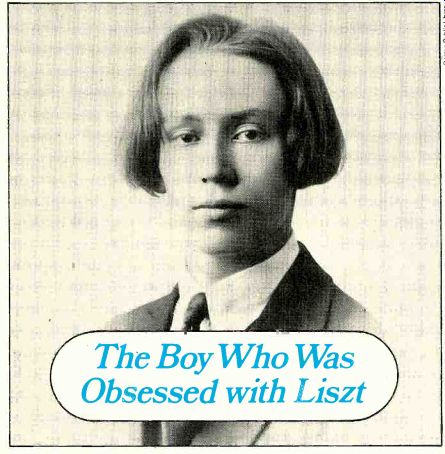
CONSIDER this scenario for a movie or tele vision serial. In Budapest (where else?) a little boy learns to sing before he can talk and picks out tunes on the piano at age two (and the following year on the harmonica as well).
At five (by which time he is not only taking formal piano lessons but is also composing) he tells the dentist who asks him to stick out his tongue and say "La": "That's not 'La' you said-that was 'Fa'! The boy makes his recital debut at the age of six and is the subject of a six-year study eventually, .documented in a book called The Psychology of a Musical Prodigy. He be comes interested in various academic and philosophical pursuits and considers a professional career in chess, but at twelve, a few months before making his orchestral debut with the Berlin Philharmonic, he is given a copy of Liszt's Sonata in B Minor, to which he responds with such intensity that, as he is to recall later, "It was the deepest, most pro found experience I ever had. I became ill--I got a fever." He becomes obsessed with Liszt, whose music (including orchestral scores) he plays at sight-in a style older musicians who knew Liszt tell him is identical with the departed master's own.
Eventually he comes to America, where his first recital creates a furor and leads immediately to the scheduling of two more, following which he is described as "uncannily gigantic . . . even in these days of super-pianists." It is suggested that he must be the rein-carnation of Liszt. But after a dispute with his manager and an interruption of his career, he is reduced to sleeping in the. subway. He is rescued by an older woman who undertakes to manage his career in exchange for marriage. That contract proves too tough to keep up. Still, there are to be no fewer than eight subsequent marriages. There are random un publicized recitals in Europe and America over the years, but thoughts of a career are abandoned. The man does not even own a piano, he never practices, and his hands
shake-but when they touch the keys there is no question that his old mastery has never left him. When he turns seventy-five his first record is released-three years after the recording session in which his fingers last touched the keyboard.
This hastily sketched outline is a true story, told in greater detail by Gregor Benko in his annotation for the International Piano Archives' record of works of Liszt played by Ervin Nyiregyhazi ("NEAR-edz-hah-zy," according to what I understand of Hungarian pronunciation). Nyiregyhazi has led an in credibly dramatic life, in which the nine marriages account for only a small part of the color, and it all seems somehow a "natural" consequence of the influence of the Lisztian demon that has possessed him since the age of twelve. One of the reasons his career didn't stay afloat, according to Benko, was that audiences, much as they admired his "astonishing dynamic range" and his overall power, were not prepared to accept his, style of playing, a free and intense "grand manner" that goes back to the heyday of Romanticism as exemplified by Liszt himself-and that has come to be regarded with suspicion and/or derision in our antiseptic age. This extraordinary, enthralling, and rather heartbreaking disc shows that we have been missing some thing unique and wonderful.
ONE side is given over to the Deux Legendes-St. Francois d'Assise (La Predication aux Oisebux) and St. Francis de Paule Marchant sur les Flots. The sound is execrable (taping was done on primitive equipment at a San Francisco recital in May 1973), but the very shortcomings in the reproduction contribute to the eerie sensation that the mu sic is coming from Franz Liszt himself, trans mitted from some Great Beyond by way of a magical but imperfect broadcasting arrangement. "Magical," in any event, is the only word for the performances, which come from deep inside the music, realizing the fantasy and exaltation in these scores to a degree quite beyond anything else preserved in the form of a recording. The color, the range, the sense of span are simply incredible. (Nyiregyhazi told Benko "he felt he had at last been able to do those compositions justice, and would not be persuaded to perform them ever again.") The other side, taped under studio conditions in Los Angeles in September 1974, re quires no allowances for sound quality, which is in fact extremely realistic. The big piece on this side is the B-Minor Ballade of 1853, given a staggeringly large-scale performance, but one in which the rumblings and thunderings are proportionate to the design of the piece rather than an end in themselves. The effect is not one of aural bombardment, but of pure poetry, with a sense of limitless resources of power judiciously held in reserve. The other works here are Sunt Lacrymae Rerum, one of the last and most unusual pieces from the third year of the Annees de Pelerinage, and two short pieces from Liszt's penultimate year-the nocturne En Reve and the Russian folk-song setting Abschied. To each of these Nyiregyhazi brings a compelling and illuminating mastery that must indeed be instinctive: how can such insights, such total identification with the material, be taught or learned?
Nyiregyhazi’s last wife-whom he loved, he told Benko, "even more than I love Liszt"-died a short time after the 1974 session, and the pianist has not played at all since then. On the strength of what is heard on this disc, I most earnestly wish he might be coerced into returning to the studio to tape at least another dozen sides-beginning with the B Minor Sonata. Whether that happens or not, we can only be grateful for the IPA's enterprise in producing this astounding and treasurable documentation of a unique keyboard artist.
-Richard Freed
LISZT: En Wye; Ballade No. 2, in B Minor; Sunt Lacrymae Rerum, en Mode Hongrois; Abschied; Deux Legendes. Ervin Nyiregyhazi (piano). INTERNATIONAL PIANO ARCHIVES/ DESMAR IPA I 1 1 $6.98.
-------------------
... voice with a free and ringing top. The technique is good; forcing the tone is rarely necessary, with the result that nearly everything in this familiar fare is well sung, and some ("Donna non vidi mai" and "Amor ti vieta," for example) are very beautifully sung indeed.
There is sensitivity in the tenor's work: his voice is intelligently used, with equal effectiveness at various dynamic levels.
On the debit side I must point to some un certain intonation here and there and some nuances of phrasing that are short of ultimate refinement. There is a certain emotional sameness, too, perhaps unavoidable in studio recitals where aria follows aria without true dramatic involvement. And this disc does not display the extensive repertoire that the annotations credit to Aragall. Where are the arias from La Favorita, Catarina Cornaro, Lucrezia Borgia, and the rest instead of these familiar chestnuts so many other tenors have done (and quite a few have done better)? Still, there is much to enjoy here. The orchestra is adequate, the conductor discreet, but the sound is a bit erratic in terms of balances.
G.J.
NINA KOSHETZ: Russian Romances.
Rachmaninoff: All Things Pass Away; Loneliness; Sing Not to Me, O Beautiful Woman; The Island; How Sweet the Place; It Was Yesterday; Lilacs; Daisies; At Night; To the Children; Christ Is Risen. Tchaikovsky: None but the Lonely Heart; At the Ball. Arensky/Koshetz: Waltz. Nina Koshetz (soprano); Celius Dougherty (piano). Trad.: Dark Eyes. Sadero: Amuri Amuri. Nina Koshetz (soprano, piano).
INTERNATIONAL PIANO ARCHIVES/DES MAR IPA 116 $7.98.
Performance: Outstanding
Recording: Dated but listenable
There is a fascinating bit of musical history captured here. Nina Koshetz (1894-1965) was a celebrated Russian soprano in the pre-1918 era. After she came to the United States in 1920 (with the aid of Prokofiev), her operatic appearances became infrequent, but her con certs were regarded as special events. In time she became the authoritative voice for a distinguished group of émigré composers:
Rachmaninoff, Prokofiev, Gretchaninoff, Medtner, Stravinsky, Tcherepnin. All these associations dated back to before the Revolution; in fact, Rachmaninoff-with whom Koshetz was romantically linked-dedicated the six songs of his Op. 38 to her in 1916.
The contents of this disc were recorded by the publishing house of G. Schirmer, Inc. in 1939, toward the end of Koshetz's career. By then the voice was that of a mezzo-soprano still bright and vibrant on top, but with a rich and resonant mid-range. Except for shortness of breath, there was no weakening of artistic resources: the timbre was still velvety and al luring, the intonation unfailing, the technique remarkable. (Felia Litvinne, herself the pupil of Pauline Viardot-Garcia, had been her teacher.) The haunting mezza-voce effects in Lilacs and the subtle, poignant, expressive nuances in At the Ball are but two rewarding instances to note among many.
Celius Dougherty, with whom the singer apparently failed to reach interpretive agreement at these sessions (according to the liner notes), is nonetheless a very capable accompanist. The sound is good for its age, and the annotation by Francis Crociata is rich in perti nent detail. G.J..
====================
Also see:
Source: Stereo Review (USA magazine)