WINNING WYNTON
Think of One: Wynton Marsalis CBS/Sony 35DP 75.
Performance: A+ Recording: B+
Source: Digital
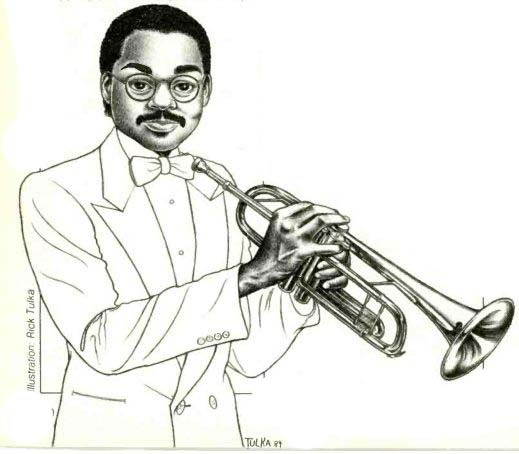
This is just a musically marvelous record. The ensemble, which consists of Wynton on trumpet, Branford Marsalis (Wynton's brother) on soprano and tenor saxes, Kenny Kirkland on piano, Jeffrey Watts on drums, and Phil Bowler and Ray Drummond on bass (in different selections), is really a joy to listen to-not just because they play to each other, but because they can get the listener into it as well. This quintet is, to my mind and at this point in time, unique. They just feel each other and the music to such an extent that they're almost a throwback--in spite of the performers' youth. The attraction in this record, of course, is Wynton. Both this recording and his Trumpet Concertos are at the top of the charts. He's a recent multiple-Grammy winner--correctly so, too, for Wynton's playing is as impeccable as his attire.
The recording is a multi-mike job done in the standard pop fashion, i.e., with isolation of instruments and very little natural ambience. However, it must be said that no excesses were used here, and the natural quality of the instruments has not been "aided" by marvelous electronic "enhancements." Aside from a slight edge to the trumpet (microphone peak), a lack of extreme top, a slight brightness on the cymbals (mike peak again), and a little clangy jazz piano, air and atmosphere are the most noticeably lacking desirabilities; would that this disc had been made just like M & K's Darn That Dream. On the positive side, the gutty sound of the acoustic bass is just thrilling-and listen to the wonderful muted trumpet in "Melancholia." Branford Marsalis on soprano and tenor saxes is also outstanding.
This CD, a Japanese purchase, is short on English notes (13 pages of Japanese to five of English), and there are many goofy misspellings, at that.
Considering how much CDs sell for, someone should pay more attention to graphics in their production. In addition, the record runs only 44:31--standard for an LP, but rather short for a format that can hold 72:00.
-C. Victor Campos
Trumpet Concertos. The National Philharmonic Orchestra, Raymond Leppard; Wynton Marsalis, trumpet. CBS MK 37846.
This CD recording contains the Haydn, Leopold Mozart and Hummel trumpet concertos, certainly among the most popular in the repertoire of trumpet virtuosos.
Wynton Marsalis, a young trumpeter with roots in New Orleans jazz, is simply sensational in his playing of these works. He has solid, assured fingering and a very clean touch. His tonal resources are endless, offering a big, resonant sound that is very full and richly expressive. He has complete mastery of technique, and his pyrotechnical display of trumpet virtuosity in the finale of the Hummel concerto is simply a marvel. Raymond Leppard and the National Philharmonic Orchestra furnish a most sympathetic accompaniment.
On this recording, made in England, Michael Gray and Stuart Eltham (two of EMI's most prestigious recording engineers) have given us a superbly clean, beautifully balanced sound. The Marsalis trumpet is properly brazen, with a lot of weight, but it is never coarse or overly aggressive. It is balanced just the proper distance in front of the orchestra; the sound of the trumpet never swamps the orchestra, and vice versa. The orchestral sound is equally well balanced and very clean. The overall sound is made more realistic by being recorded with a particularly warm, spacious ambience. An outstanding recording.
-Bert Whyte
Haydn: Trumpet Concerto in E Flat Major; L. Mozart: Trumpet Concerto in D Major; Hummel: Trumpet Concerto in E Flat Major. The National Philharmonic Orchestra, Raymond Leppard; Wynton Marsalis, trumpet. CBS/Sony 38DC 70.
Performance: A Recording: B+
Source: Digital
This is another success in the attempts of CBS's Joe Dash to promote crossover artists (this recording tops the sales charts). Wynton Marsalis, a recent Grammy winner, bears careful watching and listening to, too. A mere 22 years old, he is destined to become the foremost trumpeter of this century and much of the next. Born in New Orleans, trained at Juilliard and the Berkshire Music Center, his formal education is in classical music, his heritage in jazz.
His performance here is virtuosic to a point where it can hardly be faulted.
True, his maturity, particularly with this type of music, can only grow, but this in no way diminishes the musical acumen shown here. Some of the playing is simply fantastic listen, for example, to the tonguing at the finale of the third movement of the Haydn. The Mozart and the Hummel are also played outstandingly well. Raymond Leppard, as we've come to expect and take for granted, conducts an outstanding accompaniment. It did almost throw me, though, to find that the notes, almost all in Japanese, refer to Hummel, throughout, as "Fummel." (Editor's Note: This CD sample was purchased in Japan, hence the Japanese notes; Bert Whyte's, above, was not.) This CD, from a digital original, is a step in the right direction for CBS, without the problems that have occasioned complaints about other CDs from the label.
The overall pickup appears to be three main, very flat microphones and two more for ambience. The recording, made at EMI's Abbey Road Studios, suffers from that studio's acoustics.
Abbey Road is not the best studio, but at least it doesn't impart too many of its poor qualities, aside from an indistinct and almost one-note bass reinforcement which is tubby enough at times to overwhelm the lower strings. There is also a gritty quality to the string sound that is more the string sections of the National Philharmonic (read here: pickup) Orchestra showing their poor ensemble than the quality of the recording itself. It may also be partly the result of large numbers of digital permutations en route from the recording session to CD. My most serious complaint, however, is the trumpet pickup; it's just too loud. When the orchestra plays softer than mezzo-forte, the trumpet tends to overwhelm it. The trumpet was spot-miked, and the mike used has an upper midrange peak of a magnitude that's impossible to ignore. The high notes, particularly, tend to be painful, and the instrument's timbre changes drastically in the upper registers.
These complaints are really minor in view of how much better this recording is than the usual CBS efforts. A really worthwhile CD, recommended for any embryonic digital collection.
-C. Victor Campos
I Robot: Alan Parsons Project
Mobile Fidelity Sound Lab MFCD 804.
Mobile Fidelity Sound Lab glides into Compact Disc waters with the release of four titles, among them the Alan Parsons Project's synthesizer-powered vessel, I Robot. This initial Mobile Fidelity Original Master Recording release features both accurate sound, taken from the original analog master tapes and digitalized, and the kind of packaging audiophiles and music lovers crave, with complete liner notes and full credits.
I Robot, originally released on the Arista label in 1977, is a prime choice for digital remastering. It is a concept album featuring a shipload of special effects, from synthesizer gimmickry to spectacular massed voices united in eerie moans and hosannahs. The production is by Alan Parsons with partner Eric Woolfson in the executive spot, and it is splendid.
There is a palpable sense of depth in this CD, from the heavily synthesized title number which opens the disc and introduces the album's theme, to the final cut, "Genesis," with its uplifting choral conclusion. Parsons is fond of moving sound in great swells from back-to-foreground and vice versa. "I Robot" opens with synthesizers noodling in the distance which gradually swell into the foreground with great power. A single soprano voice becomes one with this great wave of sound, drowning in it, while rumbling, synthesized bass notes sink into the listener's consciousness, stirring up sympathetic ripples in the bloodstream. "I Wouldn't Want to Be Like You," which follows directly, offers a magical aural experience as an electric piano shimmers slightly from left to right channels, almost below the level of awareness, so that the effect seems not so much heard as felt.
Unfortunately, all this electronic expertise is lavished on some fairly mediocre material. Songs like "The Voice" and "Day After Day" are dragged to the bottom by uninspired melodies and tedious repetition. The concept of the album-the rise of the machine and the decline of man-gets only intermittent support from the material, although the choral effects of "Total Eclipse" and "Genesis" are amusingly reminiscent of the soundtrack of 2001: A Space Odyssey.
Get this one to show off your CD player; it's a trip, but not a satisfying voyage into pop entertainment.
-Paulette Weiss
An Innocent Man: Billy Joel
CBS CK 38837.
If you are at all cognizant of current pop music and haven't been living in the bush in New Guinea, you probably know that An Innocent Man is Billy Joel's valentine to an earlier, more innocent age, the '50s. In keeping with the tone of the music contained within, this album sports deceptively simple production values. The instrumentation is mostly acoustic, with a refreshing splash of saxophone throughout. Producer extraordinaire Phil Ramone keeps the vocals and instrumentals largely clustered in the phantom center channel, but he knows how to emphasize a bit of honky-tonk piano ("Christie Lee") or add reverb to a finger snap ("An Innocent Man") for just the right effect. The alternation from left to right channels of the doo-wop background vocals in "The Longest Time," for instance, is subtly masterful.
Although the original analog recording is quite good, with a real sense of depth and good instrumental placement, CBS's CD version is even better.
It is as though a light veil has been lifted: An overall sense of clarity emerges, adding an extra dimension to what was a perfectly acceptable recording. Nuances of sound and quiet details that may have been missed in the original disc come to light on this CD. The delicate violin accents on "This Night" (with chorus compliments of Ludwig von Beethoven, no less)
gain substance without losing their fragility. The great, blatting tenor-sax touches on "Easy Money" and "Careless Talk" gain presence, as does Toots Thielemans' honey-rich harmonica on "Leave a Tender Moment Alone." The horns used so generously throughout gain crispness and definition, most notably in the sharp alto punctuation and squeals on "Easy Money." The CD also totally eliminates the distortion that shows up on some sibilants on the analog disc.
An Innocent Man is not a showcase of digital magic, though; it is a good clean-up job, an example of the subtle but discernible difference modern technology can bring to the music you already value. If you are among the millions of Billy Joel fans worldwide--even if you do live in the mosquito infested wilds of New Guinea-it might be worth it to own a clean copy of An Innocent Man that will last long after Joel's references to things of the past have become totally obscure.
-Paulette Weiss
Rumours: Fleetwood Mac
Warner Bros. 03010-2.
Performance: A
Recording: A
Source: Analog
This CD is absolutely recommended. Rumours, released when Fleetwood Mac was at its peak, has always been a great recording and, particularly when it was originally available, found its way into many stores as a favorite demo. While the analog version left some things to be desired, specifically poor pressings and some distortion in loud passages, this is not true of the CD. For example, in the LP, the bass guitar in "Chain" always sounded bloated and fuzzy. On this CD, the bass is a pleasure to hear, even though absolute dynamics just make 25 dB. But the entire recording, even through headphones, is absolutely clean; you can even hear the switching in of the left track at the beginning of "Second Hand News." Although the original was multi-mike, multi-track and overdubbed, the mixing is superbly accomplished, and all the effects are very tastefully done, with no distortion as a result-nothing obnoxious here. This is what good multi-track is all about, and hopefully this CD will start the vindication of the digital audio disc. Crummy music, lousy recording and obnoxious effects buttered up with distortion is what we've come to expect-CD or analog-and that's no way to vindicate a new, potentially crystal-clear medium.
Played back on the Dual CD-120, compressed and equalized as the original is, I don't care. This is one great experience, and I had to listen again and again. This CD I don't want to lose.
- C. Victor Campos
Bop Till You Drop: Ry Cooder
Warner Bros. 03358-2.
Performance: C Recording: B+
Source: Digital
This is not one of Ry Cooder's best.
It seems more an effort to make up an album than a desire to do it right.
Although the recording is much better than an analog, in that the presentation is very clean and there is no distortion as we describe the word, there are some points at which the microphones pop due to proximity.
Some of the vocals sound disturbingly hollow, and a few of the bands have clearly evident over-compression. In "Look at Granny Run Run" and "Don't Mess up a Good Thing," the equalization changes and the sibilants on the vocals and cymbals become intolerable-especially on a CD, where it is just unnecessary.
The best part of this album is the last song, "I Can't Win," a spiritual-inspired composition with Bobby King as the lead singer. The real star, given no credit, is Chaka Khan, who delivers a whomper.
At 39:50, this CD doesn't justify its cost on the basis of time . .. or anything else.
-C. Victor Campos
Cargo: Men At Work
CBS CK 38660.
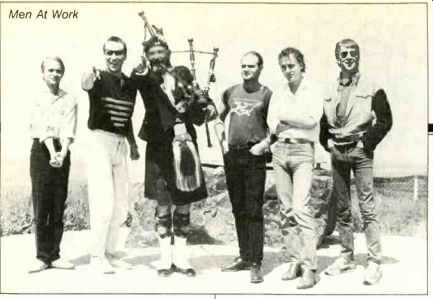
I admit to a slight psychological bent toward the vastly improved sound in every CD I hear. Even with this bias, I must confess that occasionally the discernible improvement in sound is minor and not worth the significantly higher cost of CD over LP. Men At Work's Cargo is such a case.
Although the lack of surface noise is an improvement and there is a minor extension in dynamic range, this album has not been packaged to deliver the full range of clear sound that makes digital reproduction worthwhile. Whether it was the decision of producer/engineer Peter Mclan, or of the group, or--more likely--of the two jointly, the production values of this disc are often murky. This seems not to be a matter of production or engineering skills, but one of aesthetic choice. When an instrument or special effect is allowed t6 stand clear (the sharply etched electric-piano intro of "It's a Mistake" and the rising wind and distant church-bell opening of "Dr. Heckyll & Mr. Jive"), the reproduction is flawless. The ability to create clear instrumental presences is obviously within the producer's grasp, as is his ability to create a sense of both spatial movement and depth; choice was definitely the factor here.
Colin Hayes' distinctive vocals are often double-tracked, reverbed, or homogenized into the backup vocals, and almost always squashed into a mass of indistinct instrumentation. He's like the strawberry in strawberry preserves: More substantial than :he surrounding goop, but buried in and a part of it nonetheless. For song after song, drummer Jerry Speiser is permitted to overuse his cymbals in a repetitious pattern that lends a smeared quality to the overall sound. Even the flutes on "No Restrictions," the final cut, are recorded so that their special, silvery tonal quality is lost, and they are wasted in the mix. The outcome is a performance that is not much improved or clarified by digitalization.
-Paulette Weiss
Warren Bernhardt Trio '83.
Digital Music Products CD 441, $20.00. (Digital Music Products. Inc.. Rockefeller Center Station, P.O Box 2317, New York, N.Y. 10185.)
This CD recording is of a simple piano trio-piano, acoustic bass. and percussion-but it is one of the most stunningly accurate recordings I have ever heard.
The recording engineer, Tom Jung, was with Sound 80 Studio in Minneapolis, and he thus had early access to the 3M digital recorder. He certainly qualifies as one of the mos: experienced digital recording engineers in the business. Now Tom has founded his own label, Digital Music Products, which, uniquely, will issue recordings only in CD format and in chrome, real-time-duplicated cassettes.
Warren Bernhardt may not be a major musical talent, but he has nice technique, and his touch is very clean and articulate. With Eddie Gomez on bass and Peter Erskine on drums, a varied program of mostly original material is offered.
The sound of the piano is just breathtaking in its realism: Utterly clean, with a sparkling, crystalline sound and superb transient attack.
The harmonic structure is clearly revealed; every tonal nuance and shading is perfectly delineated. Simply put, it is the cleanest, most natural piano sound I have ever heard. The acoustic bass and the percussion are equally well recorded. On several cuts, the bass is played arco, at times in an extremely high register. Cut eight, "Four Part Improvisation," has some percussion that will knock your socks off. Again, super-clean, sharp, explosive, weighty sound.
Tom tells me he used a pair of the new Shure condenser microphones on the fairly close-up piano pickup. "A real sleeper," he says about these mikes, and he used a Mitsubishi X-80 digital recorder.
The sound on this CD is so good, it is just great for testing preamplifiers, amplifiers, and-especially-loudspeakers. Tom Jung has several other recordings in his catalog and more in the works. Obviously, this label will bear watching.
Don't miss this one!
-Bert Whyte
Sonny Stitt: Moonlight in Vermont
Denon 38C38-7046.
Performance: ?
Recording: D
Source: Digital
This recording started superbly, with real-sounding drums. I mean, they were just about perfect-and then the sax came in at such a level it ruined the whole record for me (soloist's ego?). Plus, the transitions were not only audible but disconcerting. Sometimes I think soloists should play alone (in recordings) and leave music-making to others, or learn the Bach Partitas or Sonatas for Solo Saxophone or What Have-You.
If it weren't for this, I'd have loved this record. But the transitions: Slider up, slider down-now he's here, now he isn't! It annoyed me to the point I was not able to listen all the way through. Sorry about that. Ball's in your court.
-C. Victor Campos
--------------------------
Vintage magazine ADs:
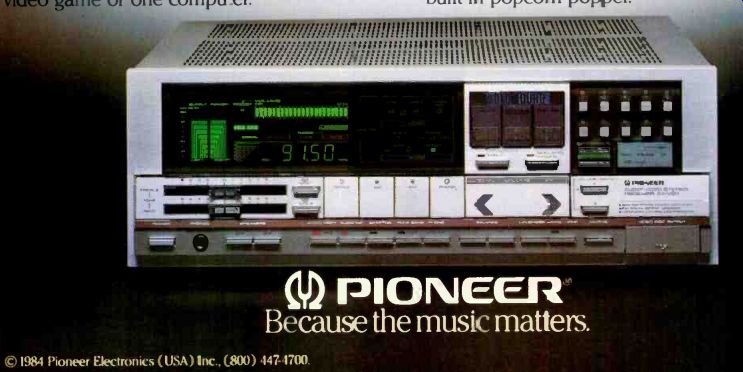
PERHAPS THE ONLY PIECE OF HOME ENTERTAINMENT EQUIPMENT THAT CAN'T BE CONTROLLED BY THE SX-V90 RECEIVER....
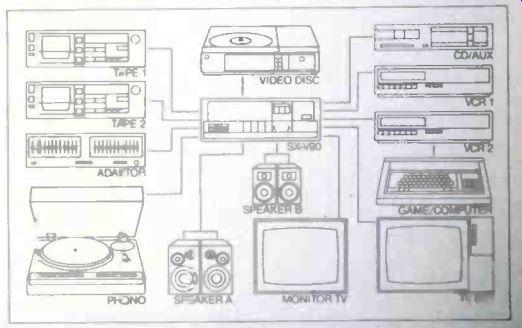
One look at the diagram to the right should convince you that the SX-V90 audio receiver isn’t merely an audio receiver.
In fact, it might just be the most revolutionary piece of equipment in the entire home entertainment revolution.' Because it serves as a control center for more pieces of audio and video equipment than any other competitive product of its type.
Through the SX-V90, you can channel two VCRs (of any format), one TV monitor, one regular TV, one video disc, one compact disc, two cassette decks, two turntables, and one video game or one computer.
But not only does the SX-V90 have the best connections in the business, it also has ingenuity.
Because as well as reproducing video sourced signals (such as MTV), it creates simulated stereo imaging from any mono signal (such as regular TV). In short, is turns your television into a stereo.
As for the quality of the stereo, with its advanced DDD tuner technology, and 125 watts of power per channel minimum (at 8 ohms, from 20-20,000 Hz with no more than 0.005% THD), the SX-V90 ranks at the top of audio receivers.
Which is a very important point.
Because there's no sense in investing in a control center, only to have it sound like it has a built-in popcorn popper.
PIONEER --Because the music matters.
1984 Pioneer Electronics ( USA) Inc..
-------------------
The new '84 Ford Tempo.
Technology never felt so comfortable.
The inside story.
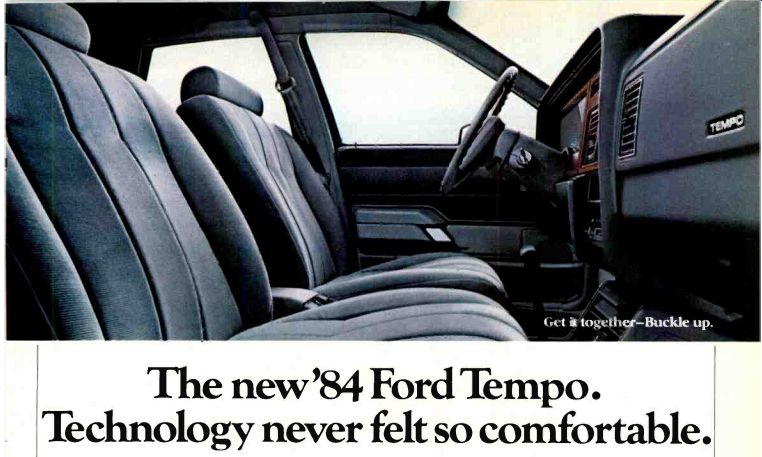
Tempo's interior is a computer-refined compartment for five. Computer designed placement of seats, door, roof and window areas afford maximum space efficiency.
Even Tempo's front wheel-drive configuration was designed to provide more interior mom. Since t here is no drive shaft, there is no large hump to rob valuable floor space.
In fact, Tempo actually has more rear room than a Mercedes 3001). Nor driver's convenience, controls are all placed within easy reach. For added ease, wipers and washer, directionals, high beams and flash-to-pass are located on the steering column itself.
Technology that works for you.
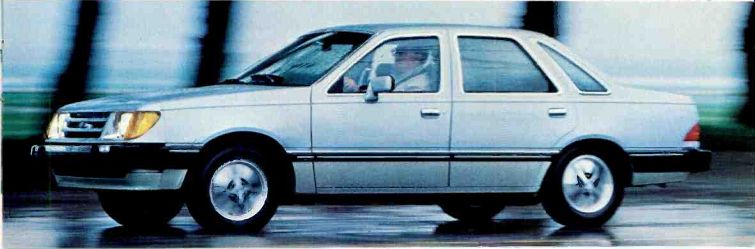
Outside, a unique aerodynamic shape channels the wind over and around Tempo to help increase fuel efficiency. It also directs the airflow, reducing overall lift for improved stability and directional control.
Its front-wheel drive delivers al I-weather traction, while its four-wheel independent suspension provides a smooth ride.
Plus, Tempo has the world's mast advanced automotive computer, the EEC-IV. It processes up to 250,000 commands per second. Coupled with Tempo's 2300 I ISC (High Swirl Combustion) engine, you get quick power response from a standing start and at cruising speed.
Best-built American cars.
When we say "Quality is Job 1," we are talking about more than a commitment. We are talking about results. A recent survey concluded Ford makes the best-built American cars. The survey measured owner-reported problems during the first three months of ownership of 1983 cars designed and built in the U.S. And that commitment continues in 1984.
Based on EPA Index.

Have you driven a Ford... lately?
-----------------
Experience the car audio system that can raise your standard of listening: Panasonic Supreme Elite.
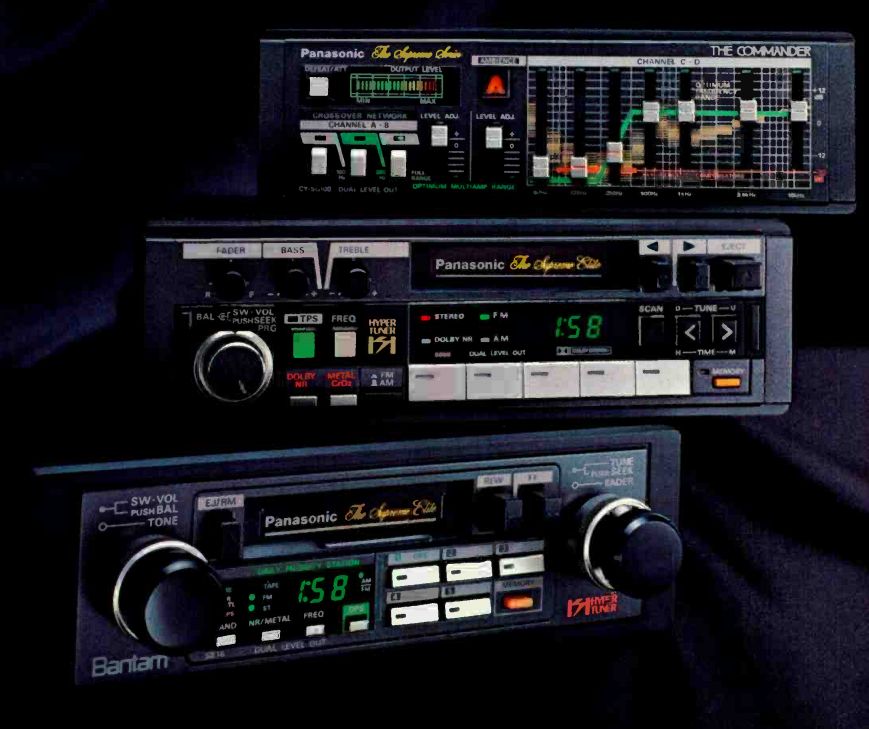
Panasonic brings you a remarkable stereo component system for your car: the Supreme Elite.
Each component was engineered with advanced sound technology. Technology that provides this car audio system with some of the most sophisticated features on the road today.
The Supreme Elite Cassette/Stereo Receiver (CO-S958) features the Panasonic Hypertuner that expands FM sensitivity-allowing you to enjoy a greater reception range than conventional FM tuners.
Other features include electronic tuning with digital display for station frequency and time of day as well as an auto-reverse cassette player with locking fast forward/rewind.
If you're looking for a more compact unit, most of Maximum Power Output: 100W (4 x 25W) at 1 kHz, these advanced features are also offered in the Bantam mini-chassis Supreme Elite Cassette/Stereo Receiver (CO-S818). To shape the performance of a Supreme Elite Cassette/Receiver to your own car, you can integrate either unit with the 100 Watt Panasonic Commander Equalizer/Amplifier (CY SG100). This component also features Ambience. To virtually surround you with sound.
So, if conventional car audio has been your usual standard of listening now you can raise that standard with Panasonic Supreme Elite.
Panasonic car audio--The driving force
-----------------
(Audio magazine)
More music articles and reviews from AUDIO magazine.
Also see:
Classical Record Reviews / Compact Discs (may 1984)
Classical Record Reviews (Jul. 1990)
Sony D-5, Portable COMPACT DISC PLAYER (March 1985)
= = = =