by George W. Tillett
OUR LAST SURVEY of the quadraphonic scene was back in July, 1973, and not a great deal has happened since then. There are still three main contenders-CBS and Sansui on the matrix side and RCA/JVC with their CD-4 system. E-V has virtually dropped out of the race, having transferred their patents to CBS, who has also picked up the Scheiber patents.
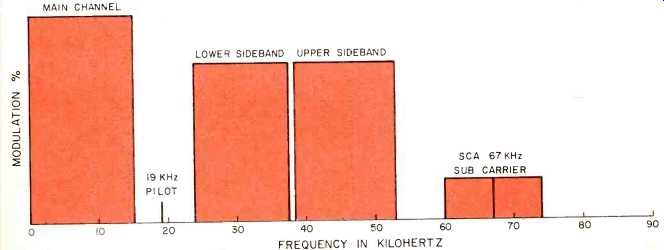
Fig. 1-Present stereo frequency distribution.
Although the majority of receiver makers have opted for SQ (there are now more than 100 licensees), the tendency is to make provision for both--or all systems--which seems a sensible thing to do! As far as records are concerned, the score is 360 SQ (includes releases from Columbia, Connoisseur, Vanguard, Project 3, et al. and Sansui QS 160 (ABC, Ovation, Black Jazz, Quad Spectrum, Dunhill, BASF. et al). JVC has released a good number in Japan, but the combined total of JVC and RCA discs available here is less than 30, although many more are promised for release just about the time this article hits the editor's desk. (A JVC-circulated list published subsequent to the writing of this article shows 188 CD-4 discs released in this country from all sources. Ed.)
Many FM stations have been broadcasting matrix records (sometimes without mentioning it; two broadcast engineers told me the matrix discs sounded better than the regular two channel version), but the situation with CD-4 is still unresolved. The Electronic Industries Association formed a committee to study the problems involved in broadcasting discrete records, and they are evaluating 10 different systems from Quadracast.
Zenith, RCA, GE, and others. One of the best, in my opinion, is the Quadra cast system, also known as Dorren after its inventor. It has been tested over San Francisco's K-101 and a Toronto station as well. Like the other proposals, the Dorren system could be described as an extension or variation of the present multiplex stereo system. Figure 1 shows the baseband distribution of the stereo signal. The main channel, on the left, contains both left and right audio modulation, L + R, and the upper and lower side bands (38 to 53 kHz and 38 to 23 kHz) carry the difference information, L R. There is a pilot signal at 19 kHz which is used by the tuner to generate the missing 38 kHz carrier and so resolve the L + R and L R signals by addition and subtraction to yield the left and right channel signals. The SCA subcarrier, on the far right in the figure, is centered on 67 kHz and this is used to provide special services and background music to subscribers who use an appropriate receiver or adaptor.
The presence of this SCA signal is a source of exasperation to proponents of four-channel broadcasting because the FCC insists that there must be provision for it.
We will now see how the Dorren system tackles the problem. Figure 2 shows the basic arrangement. The main channel is in the same place but it now carries the sum of all four signals (Lf, Lr, RE and Rr). The 19-kHz pilot is retained, as is the suppressed 38-kHz subcarrier-but there are now two sets of upper and lower sidebands in quadrature. In other words, the second set leads the first by 90 degrees phase. It is then possible for a suitable detection circuit in the receiver to resolve them.
The first pair of sidebands contains the following signals (Lf + Lr Rf Rr) and the second pair contributes (Lf Lr Rf + Rr). So far so good.
(You probably wondered whether that algebra you learned in school would ever be of use!) Now, at 76 kHz there is another subcarrier with upper and lower sidebands and they carry additional difference information (Lf Lr + Rf Rr), and so the net result is four equations that end up as four separate signals. The 76-kHz carrier (4 times the 19 kHz pilot) is suppressed. As you can see, that SCA subcarrier now finds a home at 95 kHz-where it can be locked to the 19-kHz pilot (5 x 19 = 95). Some critics have said that the Dorren scheme would contravene FCC regulations as there is information above 75 kHz-in other words, out-of-channel radiation. In fact, this is not so as the FCC rules stipulate merely that sidebands between 120 kHz and 240 kHz from carrier frequency must be attenuated by 25 dB or more. However, the extended bandwidth will certainly pose problems for some receivers, especially the less expensive kind.
Chips
Both JVC and CBS have designed and introduced IC "chips" for their decoders (strictly speaking, the JVC unit is a demodulator). The CD-4 device is made by Signetics and is a 16-pin, dual-in-line unit. Two are required with a few discrete components for a complete demodulator, and the printed board size is only four by three inches.
ANRS noise reduction is incorporated, and the signal-to-noise is quoted at 48 dB. Phono RIAA equalization is also built-in, and the gain is around 50 dB at 1 kHz.
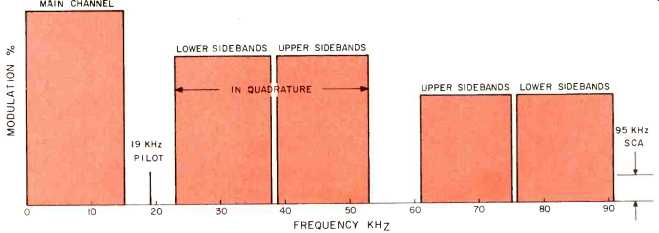
Fig. 2-Quadracast frequency distribution.
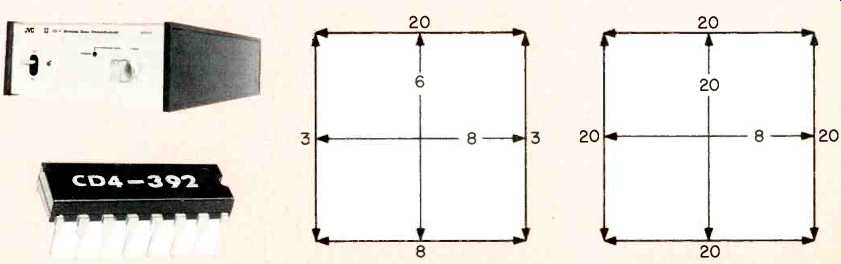
Fig. 3-Two of these ICs, plus a few small components, can replace JVC's
4DD-5 unit above.
Fig. 4-Separation in dB achieved by non-logic SQ matrix.
Fig. 5-Separation in dB achieved by full-logic SQ matrix with blending.
The SQ chips were jointly designed by CBS and Motorola, and three types are available so the designer has a choice of non-logic or three kinds of logic systems. Figure 4 shows separation of the basic matrix using a single chip. Left-to-right separation is high but front to back is relatively low and so this circuit will only be used with inexpensive equipment. Figure 5 shows how the separation is increased when a complex logic circuit is used and front to-back separation is now 20 dB, i.e.
left-front to left-rear or right-front to right-rear. This configuration is called full logic with blending. It might seem strange to use "blending" when the name of the quadraphonic game is separation, but it's really quite logical (sorry!). The blending in this instance combines a portion of the left-front signal with the right-front signal and vice versa for a center-front soloist.
The same is done for a center-rear soloist in the rear channels. Since a center-front signal appears out-of phase at the two rear-channel outputs of the decoder, blending causes this signal to subtract or decrease at the rear. The result is an increase in center front to center-back separation-at the cost of a slightly lower left-to-right separation. If the designer wishes, the blend function can be made variable as determined by the program material.
In the absence of either a center-front or center-rear sound, the blend circuit is inoperative so there is full left-to right separation. A sound appearing either at center-front or center-rear will activate the blend circuit causing the front-to-rear separation to increase.
An FET is used as a "dynamic resistance" and obviously the associated time constants must be chosen with care to avoid "pumping" action. If the designer wishes, he can use the blend circuit on the front channels only as there is rarely any significant information at the center-rear, although Walter Carlos (Switched on Bach) would not agree! In the early days of quadraphonic sound-only two years ago really-we had a number of critics who said, "It was a gimmick hatched up by the record companies" (although the sales figures showed that they were all doing very nicely anyway), that it "did not improve the quality of reproduction-that stereo was not perfected" (neither was mono) "so why go to the extra expense," and so on. Well, many of these voices are now silent and even the most conservative, the most respected music critics concede the advantages of quadraphonic sound. This stage has not been reached in Europe (with the possible exception of West Germany). In England, all the music publications regularly review quadraphonic discs and the large EMI Company voted for SQ a long time ago, but other companies like Philips, Decca and DGG are still uncommitted.
A few months ago, Dr. Steinhausen, former vice president of DGG, had this to say: "Up to now, we have tried, with great success, not to bring the concert hall itself into the limited confines of one's own four walls, but rather the music of the concert hall.
To convey the impression of the concert hall is a physical problem which can be solved only adequately even with four channels; but to convey the music of the concert hall is an artistic task which is technically capable of being carried out fully with two channels.
The attractiveness of the effect which an unobtrusive mixture of ambience from the rear can achieve is not disputed, but many consider it out of all proportion to the expense involved .. . again if this ambience is exaggerated, it can very quickly lead to a distortion of the sound picture and to paralysis of the artistic mind.
"The transparency of definition of the sound picture, which is often limited in the concert hall and is normally enhanced in stereo recordings, is based on the fact that ideal clarity of sound exists only in close proximity to the sound source. Normally, in a concert hall this area of proximity has no seats. As a result, the recording microphones are set up in positions where no member of the audience could sit. The sound picture which emerges initially is usually clear and dry and its hard contours need to be carefully softened. This is done by the corresponding careful addition of ambience-that is, through the addition in indirect constituents of the sound picture. An important aspect of the art of the sound engineer lies in achieving the best mixture of direct and indirect sound. If the indirect constituents are exaggerated, the result can produce a `swimming pool' acoustic and an increasingly mono type of sound picture. In good recordings, the concert hall is therefore manipulated as if it existed just for one listener seated in an ideal position, and the art of recording begins where the concert hall leaves off.
"The second possible application of quadraphony is to create up to four different sound sources, each issuing different, though artistically related information. This is not in itself new: musical literature contains a few wellknown examples, and one wonders why there are not more. It could be because the composer rightly fears prohibitive performance difficulties--and here a multi-channel reproducing medium could help. However, it could also be that most composers have not so far looked to technical complexity for the expression of their artistic thoughts and have mainly regarded dispersal of sound as no more than a gimmick ... We shall have to wait to see whether artists can find and develop a new art form here; whether technology has discovered new territory or is driving an empty artistic truck to a dead end." Those were Dr. Steinhausen's thoughts in November, 1972 as published in The Gramophone. At that time, I believe some of his misgivings were justified but since then we have had ample evidence of the artistic merits of quadraphony as opposed to the gimmickry. The Bernstein Mass, E. Power Biggs and the organ of St.
George's Church, Ormandy and the Philadelphians, the Leipzig Gewandhaus and the Beethoven series, Somary with the English Chamber Orchestra, Boulez and the New York Philharmonic-all testify to the musical values of the medium. But Dr. Steinhausen is right when he criticizes composers for not making the best use of the multichannel recording techniques. There are Henry Gant, Walter Carlos, Subotnick, Walter Crumb, and a few others who do well, but we ought to have more operas, more drama, and large-scale orchestral works composed for this exciting new medium. In London, the BBC has been recording in quadraphony for some months and I am told that the tapes made of the Promenade concerts in the Albert Hall are fabulous. So is a performance of Oedipus Rex, which is called an experimental quadraphonic drama.
Ambionics
Ambionics has been widely publicized in the British audio magazines as "superior to both stereo and quadraphonic sound." It is sponsored by the National Research Development Corporation, Professor Fellgate and others at Reading University, and an electronics company--IMF (not connected with the U.S. company with the same name). Full details are not available, probably due to patent difficulties, but it appears to be a matrix system linked to the use of four microphones in a double-coax or tetrahedral array.
This would have merit for the recording of music with a concert hall reference but it was stated that certain effects could be obtained by the use of what are called "outrigger" microphones.
The system was being demonstrated at the recent Sonex Audio Show in London, where it was listed as the major attraction.
I must say straight away that the results were most disappointing. The room was fairly large, holding about 300 people, and not only was there a sense of confusion similar to that caused by out-of-phase effects but there was hardly any location. Voices sounded totally unreal, some appearing to emanate from 30-foot mouths! I spoke to a number of people who confirmed these impressions; in fact, I found no one who was in any way impressed. To be fair, the organizers did point out that they were not happy about the sound either and that much better results could be obtained from smaller, more domestic size rooms elsewhere in the hotel. Unfortunately, I was unable to attend this demonstration.
Looking back to the first public demonstration of quadraphonic (matrix) sound at the RCA studios in New York held under the auspices of the AES, I well remember that this was hardly an unqualified success either. But on the other hand, the organizers were a little more diffident about it-there was none of the ballyhoo associated with am bionics. Therefore, I will suspend judgment. Incidentally, the Sonex demonstration must be one of the first large-scale affairs to use a cassette recorder and overall sound quality was excellent. The particular recorder was a Nakamichi, which costs a small fortune in England.
=========
Future Sound Shock, Enoch Light. Project 3 PR-5077QD, SQ, QS, or CD-4.
Enoch Light was one of the first to realize the potentialities of quadraphonic sound. This record is a fine one for demonstrations and includes One Note Samba, Baubles, Bangles, and Beads, and The Girl From Ipanema, played by "the world's finest wind and percussive musicians."
*** The Second Coming, Rudolph Johnson. Black Jazz BJOD-11, QS. Features The Water Bearer and Time & Space, as well as the title piece. Kent Brinkley on bass, Doug Sides on drums, Kirk Lightsey piano, and Johnson on tenor sax.
*** Two Concertos for Organ and Orchestra, Rheinberger. E. Power Biggs and the Columbia Symphony conducted by Maurice Peress.
CBS MQ-32297, SQ. The New York Times said it was "perfectly gorgeous" and, for one, I agree with the good, grey Times.
Rheinberger is not as well known as he should be in America. Born in 1839, he was appointed organist at the Chapel of St. Florian, in Vaduz, Liechtenstein, when he was only seven years old.
*** World's Greatest Jazz Band, Yank Lawson & Bob Haggart. Project 3 PR-5033, SQ and QS. Needs no introduction to lovers of Dixieland! Selections include Sunny, Panama, and Limehouse Blues.
* * * Four-Channel Dynamite, Enoch Light. Project 3 PR-5068-QD, QS or SQ. Described as "new arrangements and recording concepts of world famous hit songs," this disc includes Cecelia, Penny Lane, and Chicago.
* * * Persuasive Percussion. Command CQD-40000, QS. This appears to be a four-channel version of the old stereo disc featuring Terry Snyder and his All Stars. Among the selections are I'm In The Mood For Love, I Love Paris, and I Surrender, Dear.
* * * Big Band Hits of the Thirties, Enoch Light & the Light Brigade. Project 3 PR-5049, CD-4. Among the bands saluted are Glenn Miller, Tommy Dorsey, Woody Herman, and Harry James. Enoch puts you right in the middle-a good demonstration record, though.
* * * Experience, Dick Shory Ovation QD/2, QS. This is really a demonstration record or a sampler and it contains extracts from a number of quadraphonic records, including Bonny Kolac's Hold Onto Me, Days of Wine and Roses by Mancini, and Rich Mountain Tower. Also featured is a cut entitled Men In Motion which describes the evolution of motion from walking to space flight-a sort of audio montage.
* * * Early American Vocal Music, The Western Wind. Nonesuch HQ-1276, CD-4. The subtitle is "New England Anthems and Southern Folk Hymns. A nice, spacious spread of sound.
* * * Bach Organ Favorites, Vol. 5, E. Power Biggs. CBS MQ-31424, SQ. The organ is the Flentrop instrument in Harvard's Busch-Reisinger Museum and the works played include the Fantasy and Fugue in G Minor and the Prelude and Fugue in B minor.
* * * String Quartet No. 2 (Lily), Leon Kirchner and the Lenox String Quartet. CBS M-32740, SQ. One of the Modern American Music Series. Lily is a part of a theatrical piece commissioned by the New York State Opera and it can be played as a chamber music composition. In the stage version, lighting effects are used to heighten the drama. However, the recording has some interesting location effects (the original uses tape recorders off stage). The string quartet is more conventional but not for those accustomed to Haydn, Mozart, et al.
* * * Mancini Salutes Sousa RCA Quadradisc APD1-0013, CD-4. The Mancini orchestra was augmented by "the cream of Hollywood's musicians" for this recording and they certainly play with élan. All or most all of the popular tunes are there--Semper Fidelis, The Thunderer, and El Capitan. During the playing of Stars and Stripes Forever, jet planes are heard flying past-adding to the parade ground atmosphere.
More Classical Reviews.
=========
Also see:
iar--Classroom to Studio (Aug. 1974)
THE GRAMOPHONE: Basis for an Industry (Jun. 1974)
Audio in General (with ADs)
= = = =