SMALL LOUDSPEAKER systems, and here we mean systems of one-cubic-foot or less, have improved enormously over the past few years, and many of those tested in our survey would prove quite acceptable to the most critical listener. Compared with full-sized systems, the main deficiencies are a reduced power handling capacity and lower output below 100 Hz or so. Sensitivity tends to be a little less too--nothing we can do about that but judicious use of the amplifier bass control can often improve balance although care must be taken to avoid overloading and consequent distortion. Placing the speakers in the corner positions will also improve the low-end response.
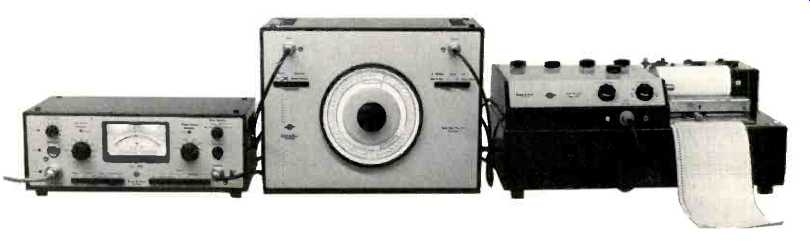
How were these speakers tested? First, they were given full-scale listening tests using a variety of program material which included speech, jazz groups, and symphony orchestras. Two high quality reference systems were used, an AR LST monitor and a dynamic-electrostatic combination. Comparisons were made with particular reference to smoothness, overall balance, and freedom from coloration. These tests, which involved a listening panel, took a considerable amount of time (and patience) and then the speakers were measured in the laboratory using mostly B&K equipment as shown above. Here the tests included tone--bursts, frequency response, distortion, dispersion, and sensitivity.
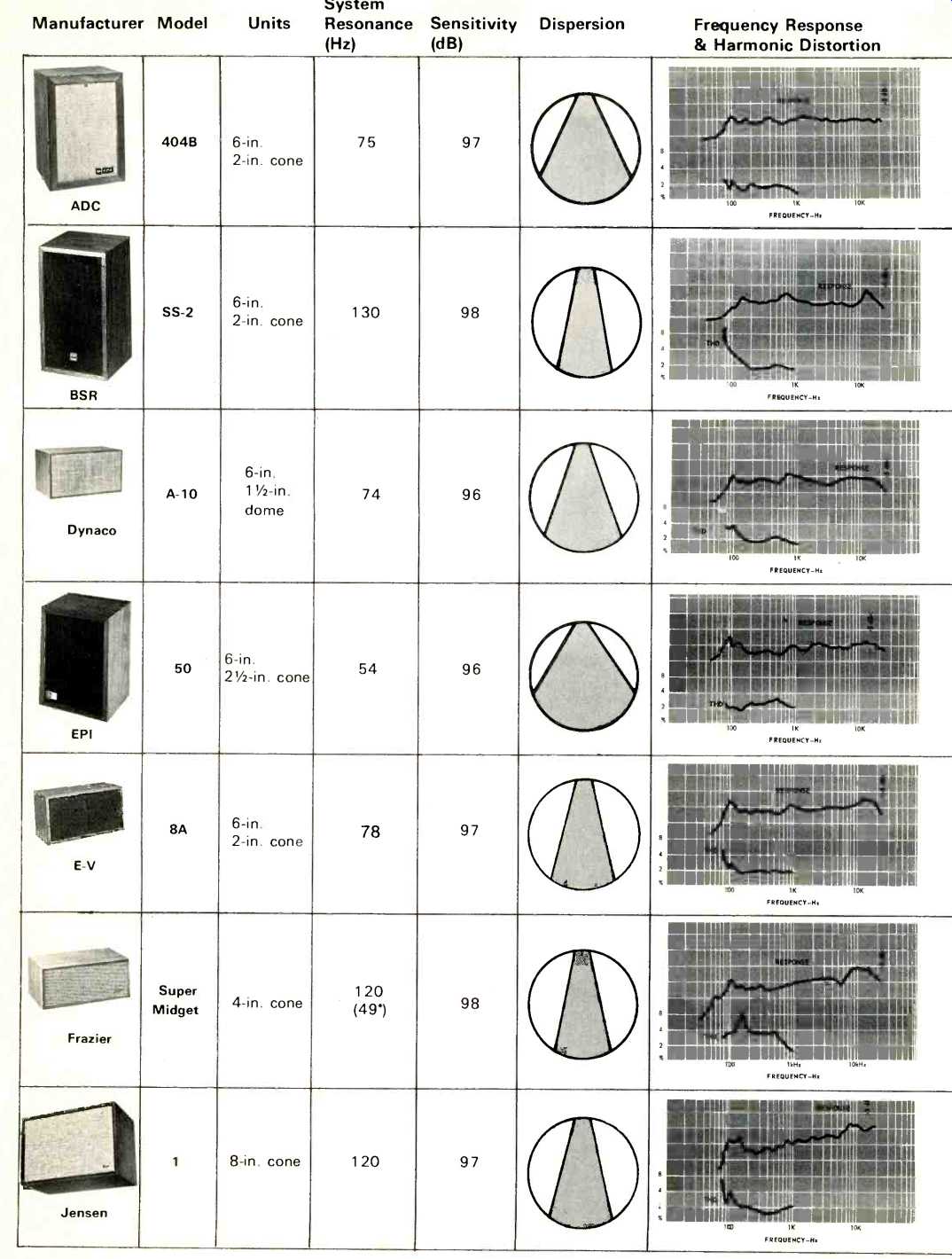
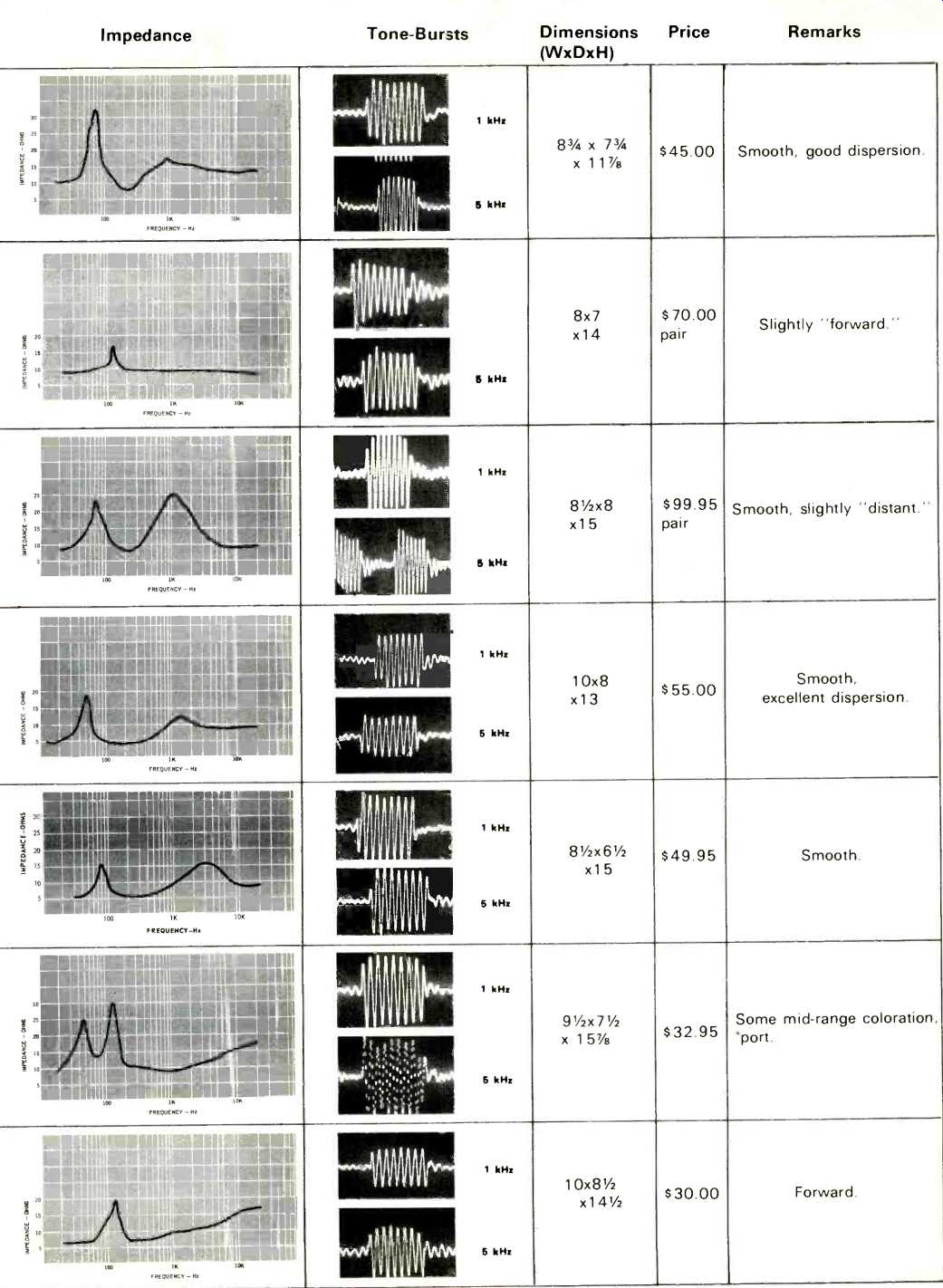
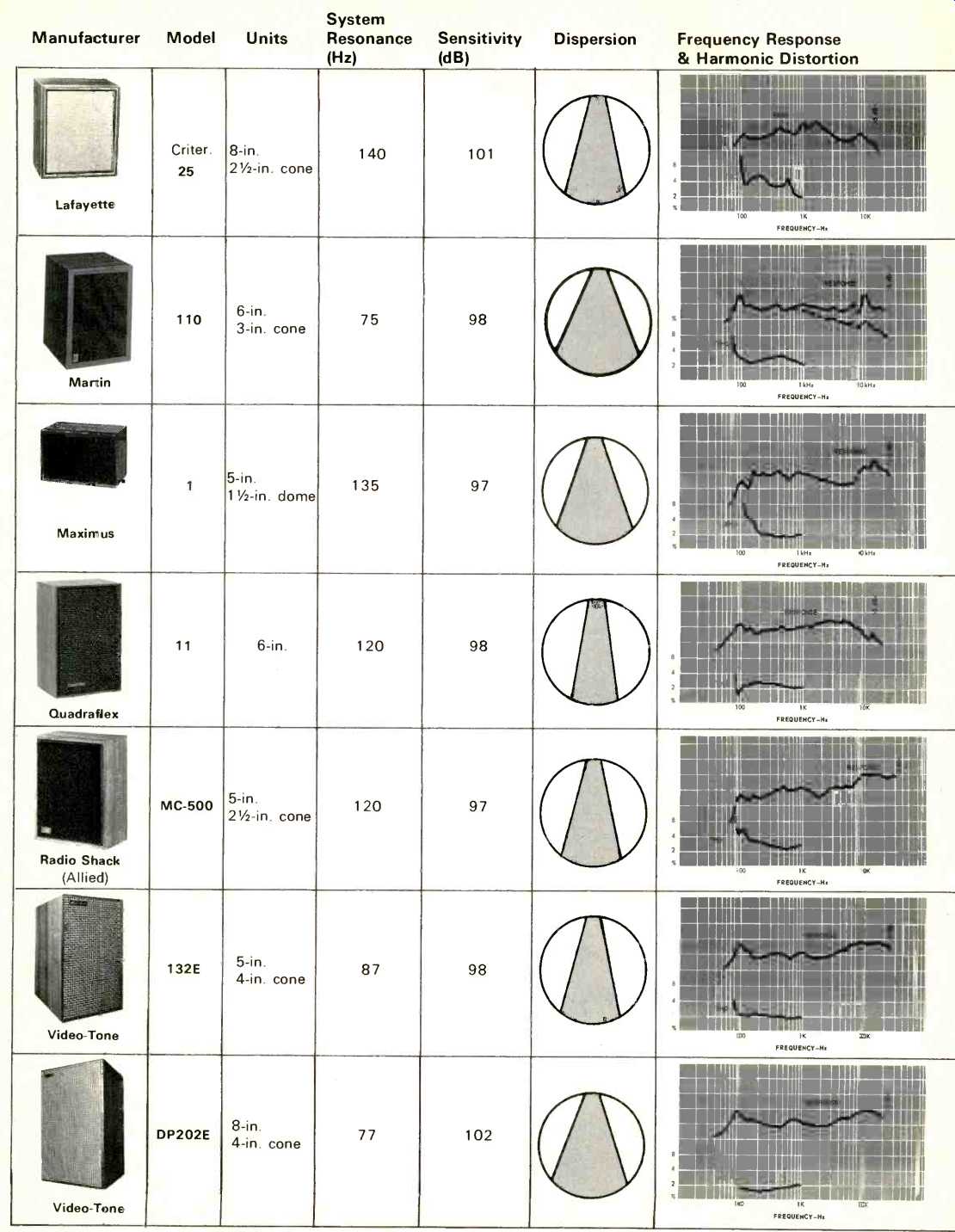
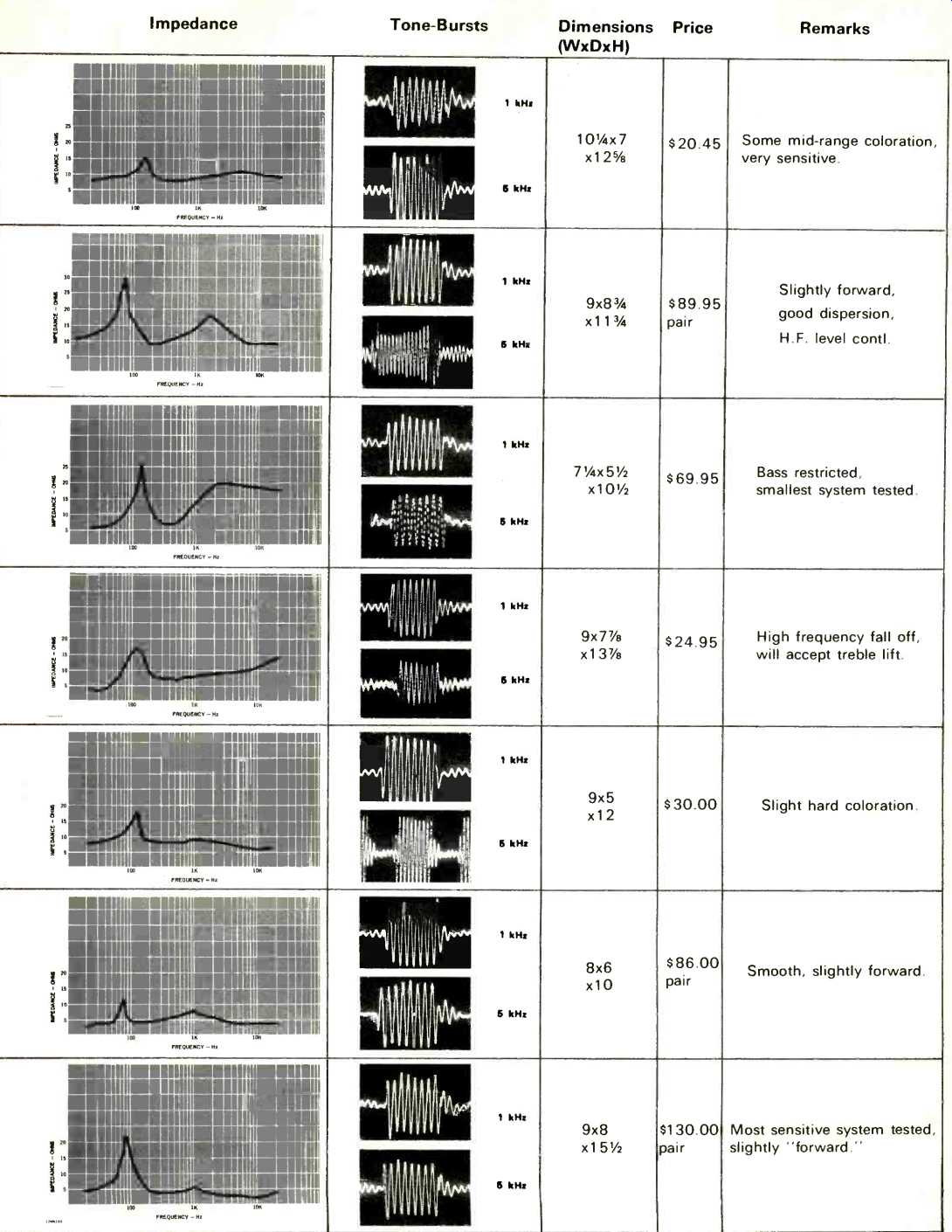
The results are tabulated on the following pages. As might be expected, the most expensive systems came out the best. These were the ADC 404B, EPI 50, Dyna A-10, Martin 110, and two Video-Tones. The Quadraflex 11 at $24.95 and the Lafayette 25A at $20.45 must be considered excellent value for money. The former needs a little treble lift to achieve balance and the latter both bass and treble adjustment.
Glossary
System Resonance: This is the fundamental frequency at which the bass speaker has its natural resonance in the enclosure.
Bass output usually falls sharply below this frequency although output can be boosted if the speaker unit has a linear excursion at low frequencies. All the systems tested are totally enclosed except the Dyna A-10 which has a resistance loaded port and the Frazier Super Midget which has two 6-by-1/2-in. ports.
Sensitivity: Power output was measured one meter away with one watt input at 400 Hz.
It is expressed in decibels SPL (Sound Pressure Level). A more recent standard stipulates pink noise instead of a single tone frequency, but cross-checks showed that the 400 Hz. tests give a reasonable correlation.
Dispersion: Polar radiation plots were made from 5 to 10 kHz and the information was used to make the small diagrams which show relative patterns.
Frequency Response: Following our usual custom, measurements were made with pink noise which is less affected by room acoustics than sine wave signals.
Distortion: This was measured with a 5-watt input signal and the low frequency limit was 80 Hz. Distortion at this point (mostly doubling) indicates to some extent what bass lift can be applied.
Tone-Bursts: These show the response when a signal is suddenly removed. A perfect speaker with a massless diaphragm having no inertia would respond immediately with no ringing or hangover. The two frequencies are A, 1 kHz, and B, 5 kHz.
Impedance: The impedance of a system may be a nominal 8 ohms at 1 kHz or 400 Hz but will vary throughout the band. Many amplifiers give trouble with loads lower than 4 ohms.
-----------------
= = = =
(Source: Audio magazine.)
Also see: Editor's Review (sept. 1972)