AUDIO Equipment Profiles: H. H. Scott Speaker System S-11; Marantz Amplifier Addendum; Model 15; Wharfedale Compact Speaker W-20

H. H. SCOTT S-11 SPEAKER SYSTEMS
Scott has been in the business of manufacturing speaker systems for some time now. Our previous investigations have shown that they have been highly competitive in their respective price categories. This newest sample is intended as the top-of-the-line model.
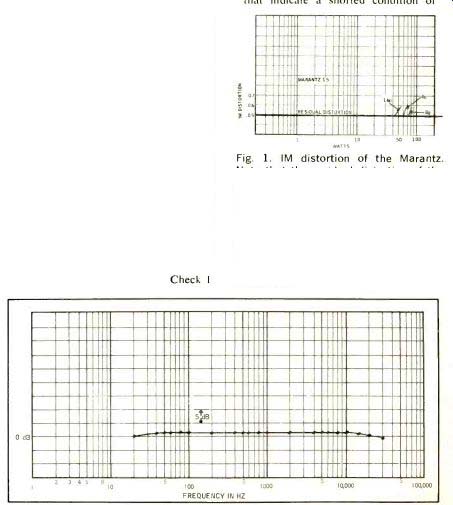
Fig. 1. IM distortion of the Marantz. Note that the residual distortion of the test set-up is shown. With 8and 16 ohm loads we could only drive the amplifier out of the residual by pushing it well beyond the rated power.
Fig. 2. Below is the power response of the Marantz 15 amplifier. 0 dB = 65 watts across 8 ohms. The manufacturer rates the amplifier as a 60-watt performer.
The S-11 is a three-way system employing three separate drivers. It is contained in a walnut enclosure that measures 14.5 by 24 in. with a depth of 11.5 in. This is the large end of what has come to be called "bookshelf sized." The cabinet is attractively finished on all four sides so it may be used either in an upright or reclining position. At the rear are the knurled-nut connectors and a three-position treble-tilt switch.
The woofer is 12 in. in diameter, is highly compliant, with a long voice-coil throw. This combination is best handled with acoustic suspension and that is what Scott has done.
Two smaller cone speakers disperse mid-range and high frequencies. The driver configuration when the unit is standing tall places the woofer on bottom, the tweeter in the middle, and the mid-range unit toward the top. Even though the woofer and mid-range are thus placed far apart, we were unable to detect any tendency for sounds such as voice to separate into parts. In fact, we were pleased by the excellent blending.
When we first played music with the S-11's we were strongly impressed by the clarity of reproduction. This favorable mark only increased as listening time wore on. These Scotts are as clear a musical sound as we would want.
The testing of speakers remains a highly subjective business. While we can (and do) check frequency response, transient response, and harmonic distortion we find only partial correlation between what our calibrated microphone (a special Syncron S-10) hears and what musical listening tests reveal.
Frequency sweeps were unusually smooth over the entire range of the system. It is flat from mid-range ±5 dB to 48 Hz with usable response extending easily to 36 Hz. At the upper end our ±5-dB tolerance gave us response beyond 20 kHz where our microphone calibration ends. Significant rolloff appears to begin above 22 kHz. All of this is well beyond what our ears know.
Transient response is quite sharp with little hangover. Harmonic generation is extremely low down to 100 Hz rising only to moderate levels an octave lower.
This gives some clue to the pleasure we experience in listening to the S-II systems. But only a small clue. We've mentioned the clarity, there is also the over-all balance. There is perhaps a slight tilt in favor of the middle highs (something that is also partly characteristic of our listening room) but it was not at all objectionable. Quite the contrary, it imparted a degree of forward "up-close" projection that was "right." At our first listening, the bass end seemed rather unpretentious. It took a bit of listening to reveal that it is all there; it's just not out of proportion to the rest of the balance. You won't hear bass you are not supposed to hear.
Perhaps we could have wished for greater control of highs than the three position switch allows. At 10 kHz there is about 3 dB of boost or cut if the switch is moved from its normal position. In most rooms this is really enough to compensate for over- or under-furnishing. But an extreme case could be beyond the adjustability of the system leaving a somewhat bright or dull sound remaining. Since the S-11 is leaning toward the bright side itself we suspect that the only real difficulties would ensue from use in a tiled-floor and wood paneled room that was also rug-less and sparsely furnished. Since that is a pretty tough environment for any speaker we cannot criticize Scott too greatly.
The S-11 is $149.95. Twice that will deliver a stereo pair that will do justice to the finest sound source. We would like to think that we are quite fussy about the kind of sound we want. Certainly these Scotts fulfill our demands without need of qualifications. So, if you seek the best possible sound and also a compact speaker system, then the Scott S-11 is likely indeed to fill the bill.
Check 1 Addition Too late to do anything about it we discovered that the last line of the Profile on the Shure V-15 II was left out. The Shure is a lovely cartridge and what was intended was "That says a lot and it says all that needs to be said."
Ed.
DEPARTMENT OF (FURTHER) AMPLIFICATION
In January we published an Equipment Profile test report on the Marantz Model 15 solid-state power amplifier. Shortly after the report went to press, we found that our IM test setup was incorrectly calibrated. After calibrating and improving the distortion of our generators we re-tested the Marantz Model 15, which, fortunately, we were still holding. The differences between the second evaluation and the one reported in January were of such magnitude as to warrant this additional report.
For one thing, the schematic has now been made available for publication. Since the Model 15 is actually two separate amplifiers, with two separate power supplies, only one amplifier of the stereo system is shown.
Note that we made an error of assumption in the first report. The lamps that indicate a shorted condition of ...the output are not part of the fast protective circuit, though they do dissipate the excess power, due to the shorted condition (that otherwise would have to be dissipated in the output power transistors). An electronic circuit employing Zener diodes and transistors in a switching configuration is the fast acting safety device that protects the output and driver transistors.
The schematic shows the delay system used to prevent any turn-on thump in the speakers. A very good feature, we think.
We could not find an instance, again, in which the amplifier did not exceed the manufacturer's published specifications.
Marantz has not published specifications for IM distortion. The results we found and published in January, we thought superb. But we have found as we said that the curves published then were in error. The new tests showed readings that were identical to the residual of our meters up to the rated power of the amplifier for each of the 3 impedance loads.
Note that the residual reading of our test setup was 0.05 percent. IM at 4 ohms (the worst case) was 0.06 percent at 70 watts. Below that power level it dropped rapidly to the test set up residual distortion, (See Figure 1) so, while we cannot call the Model 15 a distortionless amplifier, we can say that we are unable to measure it.
There was an error in the illustration of power response. A corrected version appears as Figure 2. We did not intend to imply that the amplifier will not deliver (as the illustration showed) its full rated power over the 20-20,000 Hz range.
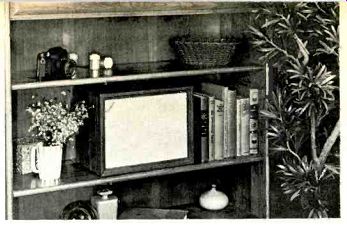
Fig. 4. The compact Wharfedale W-20 speaker system.
This is a great amplifier; one of the best we ever tested. It is superb sounding too, and it seems to be indestructible. Neither short, nor open, nor capacitive loads disturb it in the slightest. Overload recovery, even after a direct short, is virtually instantaneous.
At a price of $395.00, the Marantz Model 15 is for those seeking a stereo amplifier representative of the best that there is. Check 2 Wharfedale W-20 Speaker System Bigger sound seems to be getting smaller and smaller these days. At least that is the conclusion that can be drawn from this tiny pair of speakers from the venerable house of Briggs. The Wharfdale W-20 is all of 14-in. wide, 9 3/4-in. high, (or you can turn it on its side) and 8 1/2-in. deep. That is bookshelf-sized by anybody's standards.
Speakers are meant to be heard-so we've given these W-20's a lot of listening. We brought other knowledgeable ears into our listening room; they were consistently fooled into believing that it was other (larger) speaker systems that they were hearing. That kind of sound can't come out of that size box.
Let's forget about that tired phrase, "good for the money." That gives you little idea of the actual quality of a product. (After all, a twelve-inch speaker that sells for $4.95 might be surprisingly good value as a replacement speaker but it could never qualify as a "hi-fi" speaker; not as we understand "hi-fi.") The W-20 is good value, no doubt about that. But more important, it is a musically listenable speaker. That has nothing to do with its cost which is all of $49.95. Of course, simply the fact that you can begin to consider a speaker in that category as musical is quite remarkable.
The sound is quite wide range, particularly in the bass. No artificial boom, but good solid fundamental bass. The high end too, is well out there and in good balance. There is a rear-panel tweeter control (this is a two-way system) that will tailor the top end to room acoustics. The all-important mid-range is perhaps a bit rough. Not harsh or spitty-just lacking that silky smoothness that we demand from the finest speaker systems.
The Tests
Calibrated microphone tests run out-of-doors indicate some of the reasons for this speaker's qualities. Bass response goes well down to 50 Hz. Below that it just keeps going down into silence.
The mid-range shows minor swoops and dips from 2-6 kHz, then smooths out again and continues out to about 14 kHz where it begins to sharply drop off.
Efficiency is low. These are speakers that are best driven from an amplifier capable of 18 or more watts per channel. This, we suppose, is the price that must be paid for the extended bass response. There is a good musical balance here. The overall effect, therefore, is that there is more extended response than actually exists. This is one reason, we believe, for the satisfaction we feel with these little units.
In fact, we are overjoyed with them.
They represent a genuine value in a truly small speaker. Certainly they are not the last word in musical realism but they do present a good simulation.
We can, therefore, in all good conscience suggest that the Wharfedale W-20 is recommended for whatever use you may have.
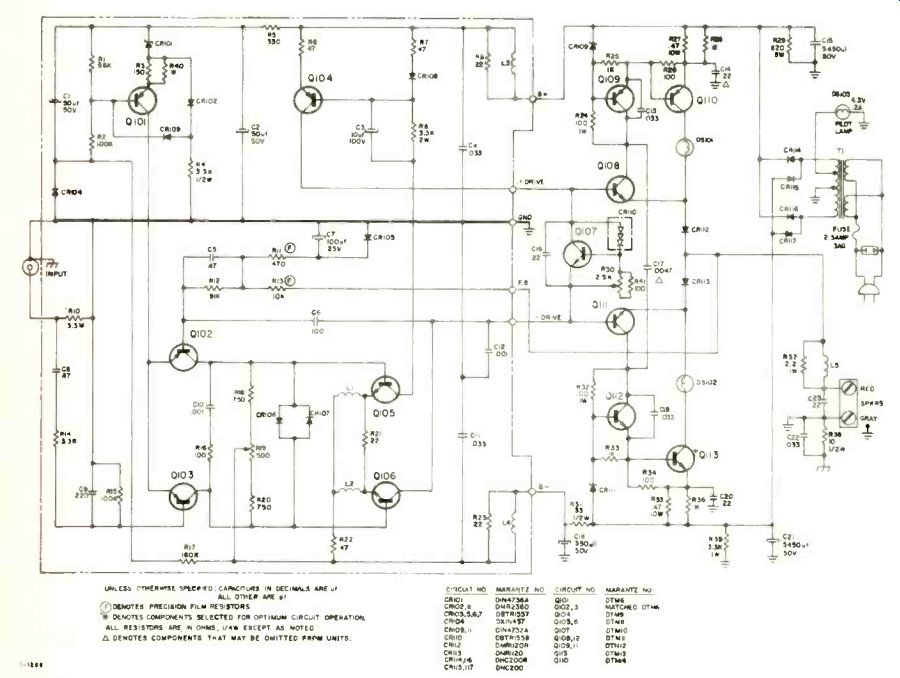
Fig. 3. This schematic represents one complete half of the stereo Marantz
15.
Also see:
AUDIO Music Reviews: The AUDIO Music and Record Review Section: Classical, Light Listening, Jazz and All That, About Music