C. G. McPROUD
Practically ANYONE Who plays records has longed for some means of playing then in specific orders which are not readily available on any record changer on the market. Old timers will remember the Capehart, which played first one side of a record and then the other, then went on to the next record and played both sides of it.
This sort of a changer was almost a necessity in the days of the 78's, when a side was only 4 minutes at most.
And in those days, they were pressed in sequences which permitted the listener to play a complete 12-record album in the order intended. The current Lincoln does the same thing.
Then there were a few others in the turnover field which played both sides, but their cost was prohibitive.
Not that the Capehart was inexpensive-the mechanism alone was something like $585--it also had the disadvantage of playing with a stylus force of around 6 ounces, which is 170 grams. Imagine what that would do to a stereo LP! It took about 25 seconds to go through a change cycle, and if you touched the record during the change, the monster was likely to bite a piece out of it.
The advent of the drop changer heralded a switch in the pressing sequence of multi-record albums. In a three record album, for example, sides 1 and 6 are on the same disc, 2 and 5 are on the next one, and 3 and 4 on the last. You stacked them on the spindle with side 1 on first, then side 2, and then side 3. After playing the three sides, you simply turned the whole batch over and went through the remaining sides. All well and good, as long as you did not still have some of the older albums with the 1-2, 3-4, 5-6 sequences. Even with a single disc on which a symphony occupies the two sides, you have to turn the record over after playing one side.
With LP's, that no longer was so important, of course, because you could go to the kitchen every twenty minutes for a glass of water at the changeover time.
There was one way in which you could play a complete three-record opera-simply buy two albums and stack them up in the right way. But a few rounds of that and you could afford to have a small boy change them for you.
A Solution to the Problem Last November we were privileged to view the Seeburg Automatic Music System, originally intended as a background-music installation for restaurants, offices, or other places where high-quality music reproduction was desired on a programmed basis. Nearly everybody associates the name Seeburg with "juke boxes," which, because of their earlier boomy reproduction gave rise to the term "juke box" as a description for particularly boomy sound. This model, however, was a revelation.
With its normal speaker systems-theatre-quality units employing a healthy woofer and a horn tweeter with an 800-Hz crossover-the reproduction was easily equal to what we have come to expect from a high-quality component system in our homes. On top of the main cabinet (which measured 31 3/4 in. high, 40 in. long, and 261/4 in. deep and which weighed 277 pounds), was a small metal box 14 3/4 in. long, 7 in. high, and 8 1/4 in. deep.
This remote selector unit was connected to the main cabinet by a 15-wire cable. On the box were 30 push buttons and eight signal lights, and except for putting This remote-selector unit was connected to the main cabinet, no further contact with the latter was required.
Everything was controlled from this metal box.
Inside the large cabinet was a mechanism such as that shown in Fig. 1 together with all the necessary amplifiers and control equipment for the entire system. A complete description of the amplifying system alone would require about as much space as this magazine, since it consists of (in each channel) a three-transistor pre-equalizing amplifier, an audio control amplifier with squelch circuitry, and the five-transistor power amplifier. This doesn't sound so complicated, but there are several refinements that do mix it up a bit before the sound finally reaches the speakers.
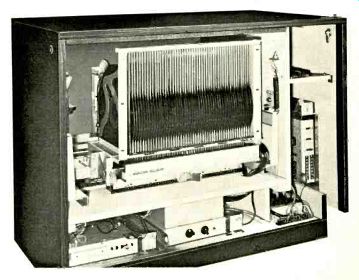
Fig. 1. The Seeburg Automatic Music System.
For example, it is possible to set up three separate programs, each selectable by a single push button. Program 2 plays at a certain volume, while programs 1 and 3 may be set to play at different levels. Suppose program 2 was for dance music in a restaurant beginning after dinner; program 1 was for the cocktail hour, and program 3 for the dinner music. Each would require a different volume setting, although the over-all volume is controllable from the push-button box. The important thing is that the maximum level can be set on two of the programs, and can not be exceeded, if such is the desired condition. This facility tends to complicate the system to a certain extent.
The Select-O-Matic Mechanism The heart of the whole system is, of course, the mechanism-the Select-O-matic. This is quite an elaborate device which accommodates 50 records placed in padded slots, and which plays either side of any one of them upon command. The handling is gentle, the pickup arm is counterbalanced dynamically so that when one holds the mounting of an arm out of the mechanism in the hand and moves it violently up, down, or sideways, it remains in the same position. Stylus force is furnished by a spring, and is adjustable from 134 to 21/2 grams, and anti-skating compensation is even provided. The pickup itself is a two-stylus stereo cartridge, and each time a record is played a small brush dusts the stylus off afterward.
In normal use in a restaurant, for example, three programs are set up on the machine, each in a multiple of 5 records. Thus program 1 might have ten records, program 2 could have twenty, and program 3 the remaining twenty.
Pressing one of the program selector buttons starts the playing of the desired program, and all the records in the selected program will play, first one side and then the other. After the completion of the program, it will start over again and play the program once more. This will continue as long as the particular program button remains depressed. However, if a record in another program is wanted, it is simply selected by depressing the lettered button followed by the numbered button identifying the desired record. If it is wanted immediately, pressing the reject button will initiate the change. If not, the machine will play the desired record at the finish of the one being played in the program, or at the first silent space between cuts, if it is a record with a number of selections separated by pauses. Then after changing to the desired record and playing it, the mechanism will search for another one selected out of the program. If no others have been selected, it will resume playing the program.
If, however, one sets up a number of records outside of a program, and then decides to cancel them, this may be done by pressing the cancel button, and all records previously set up out of the program then playing will be canceled, and one can start over again if one wishes.
One other feature is an advantage for background music installations. While the Select-O-Matic mechanism normally operates at 33 1/3 rpm, when playing normal LP records, it is arranged so that when records with a 2-in. center hole are encountered, the motor speed is halved and the playing is at 16 1/3 rpm. Background records are available cut at this speed, and with the larger center hole, so that when the spindle encounters the center of an LP record, it is held in one position, and the turntable rotates at 33 1/3 rpm. If it goes further in with its centering cone, it actuates contacts which change the motor speed to provide the required 16 2/3 rpm.
The play motor drives the turntable through a belt onto a heavy flywheel, and the motor itself actually turns at 78 rpm, being a multi-pole synchronous type. For the lower speed, it turns at 36 rpm. The motor is reversible, since the direction of rotation of the record must be reversed when changing from one side to the other.
A second motor, also reversible, but of the capacitor type, is used for the scanning operation.
Memory Systems The selection of records to be played is not a mechanical process, but instead is done by means of two sophisticated memory core banks, and one, two, three, or any number of sides up to the maximum capacity of 100 may be preselected.
Since each playing of a record erases the magnetic polarity of the core which had previously been impressed with a signal. the second memory system is used to reset the programmed groups at the completion of playing of the program set up. As the last record side of a given program is played, the second memory system rewrites the same program into the memory core bank, and this continues each time a program is completed.
System for home use? Well, why not? we argued. Of course, it is a little expensive-about $2300 with the two speaker systems included. But for home use, we continued, why not eliminate the amplifiers and the speaker systems, since anyone likely to want such an elaborate record changer would probably already have an excellent hi-fi system. So maybe that gets us down to, say, $1000. Perhaps we could simplify the selection electronics and the switching and reduce it still more, we thought, eliminating the fancy housing, and perhaps simplifying the selector box. We would hope that the selection method could remain so that one could play a three-record opera by pressing C1, C3, C5, C6, C4, and C2, for example, and then sit down and enjoy the next two hours of opera.
Well-we are to get our hope. Several models have been created for the home market, and by the time this is in readers' hands, they will have been shown at the Washington High Fidelity Show. Of greatest interest to the serious audio huff is the component model which contains the Select-O-Matic mechanism with its memory system controlled by a telephone dial and four pushbuttons-on, off, reject, and cancel. The 100 sides may be selected in any order, so that the listener can actually program his listening for some 33 hours of continuous playing. Since any side may be selected by dialing two digits, and since they will be played in the order in which they were selected, any pressing sequence can be accommodated. The index booklet has ten pages, each with five pockets which hold numbered cards on which you list the records you have put in the slots. Thus you have a reference which enables you to select just the side you want without having to resort to your own memory. The elaborate three-program system is eliminated, reducing the over-all cost considerably. Any number of remote selector stations can be connected, since they are parallel-wired.
Another model, also shown in Washington, accommodates the same number of records, but uses a mechanical selection system which does not offer the flexibility of the dial-selection component model. It is housed in a cabinet, and equipped with an FM tuner and two loudspeaker systems as a complete packaged stereo "theater." Now the record listener can store his entire collection in these models--assuming he has no more than 50 records. Of course, he could connect two, three, or more of the component units to his system, and then store all his records, playing any one of them simply by dialing. This could well be the record listener's Utopia--and Seeburg's too, if the idea catches on.
JE
+++++++++++++
Also see: