by JOSEPH GIOVANELLI
Television Interference
Q. I live within 200 feet of an aircraft control tower. Any time I am watching television, and when this tower is transmitting instructions to aircraft, the television sound is completely blocked out.
What I do hear are such things as: "Clear to land." "Report left down wind." What corrective action can be taken to eliminate this source of interference?
-Sp/5 John Hauron, APO San Francisco, California.
A. I am not sure that I can help solve this interference problem. The front-end circuitry of television receivers has never been what it ought to be in terms of selectivity. Therefore, strong, off -frequency signals simply enter the set and overload its front end.
Disconnect the antenna from the set and note if the interference is still present.
If it is, there are two courses of action which must be tried.
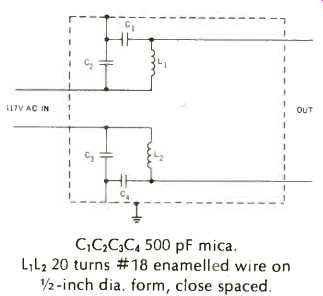
Fig. 1--Line filter.
First, you will have to try filtering the a.c. line, inside the receiver itself. Small r.f. chokes can be placed in series with each side of the line, and all four sides of the r.f. chokes should be bypassed to chassis ground. See Fig. 1. The capacitors used should be mica and their values should be at least 500 pF. I repeat that the components making up this filter should be mounted inside the set, preferably in a shielded box, with the shield grounded. If the components are mounted outside the television set, it is extremely likely that the lead between the line filter and the set itself will be sufficiently long as to pick up signal, and passing it into the receiver.
If the interference is not caused by line-cord pickup, it is probably the result of insufficient shielding of the TV set's circuitry. Line the entire cabinet with tinfoil and return this foil to chassis ground at several places. Be sure to wedge some foil around the channel selector knob. I have observed that this shaft is sometimes not at r.f. ground potential, and can act to pick up unwanted signals.
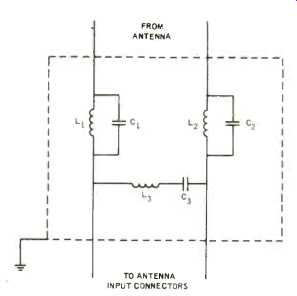
Fig. 2--Interference trap. Circuits tuned to interfering signal.
Of course, if disconnecting the antenna does eliminate the interference, you will
need another approach. Parallel resonant circuits should be inserted in series with each antenna lead. A series resonant circuit should be shunted across the antenna circuit. See Fig. 2. If the antenna circuit employs a simple monopole, or whip, only one parallel circuit is required. The series resonant circuit is connected between the antenna and ground.
These resonant circuits should be placed as close to the actual TV tuner's input terminals as possible. This is necessary in order to eliminate unwanted pickup by the length of lead between the TV tuner and the interference traps.
These circuits are tuned to the frequency of the control tower's transmitter.
The resonant circuits should be placed in a metal box, with this box grounded to the television set's chassis. Some experimentation might be necessary in order to locate the best ground point-making the shield most effective.
It is possible that interference may be introduced into your television set not by just one, but by a combination of the various factors dealt with in this discussion. Therefore, to eliminate this interference, you would have to employ a combination of the remedies suggested in this article.
=============
ADs:
SANSUI HITS THE DECK

If you already own a Sansui receiver, you might be tempted to buy the new SD -7000 tape deck for our name alone ... but we'd rather you didn't.
Because there are better reasons: for instance, the automatic reverse doesn't just reverse ... it also repeats if you want to hear the same tape over and over, and it rewinds automatically if you just want to hear the tape's first side. Not only that, it gives you a choice of triggering methods; either foil strip or an "inaudible" 20 Hz. tone signal. And our exclusive Sleep Switch lets you set the Super-Deck to turn your entire hi-fi system off when the tape is over. We put "inaudible" in quotes back there, because if you can't hear it, it's your speaker's fault not Super-Deck's.
The SD-7000's frequency response goes down past 20 to 15 Hz. and up again to 25,000 Hz. at the top end.
In point of fact, you'll hear a little more of everything with this deck, thanks to its 60 db signal-to-noise ratio, and its low record -play distortion (only 1.2% at zero VU) .. most deck manufacturers won't even quote distortion figures for their machines.
Naturally, there's more. All transport controls are feather touch solenoids with logic -circuit delays to prevent tape spill and breakage (remote control optional). Hysteresis synchronous capstan motor, 4 -heads. And lots more.
$679.95 worth, in all, and more than enough to fill a four page brochure full of features, fact and specifications.
But then, could you expect any less from SANSUI?
----------------
Altec
They're built a little better.
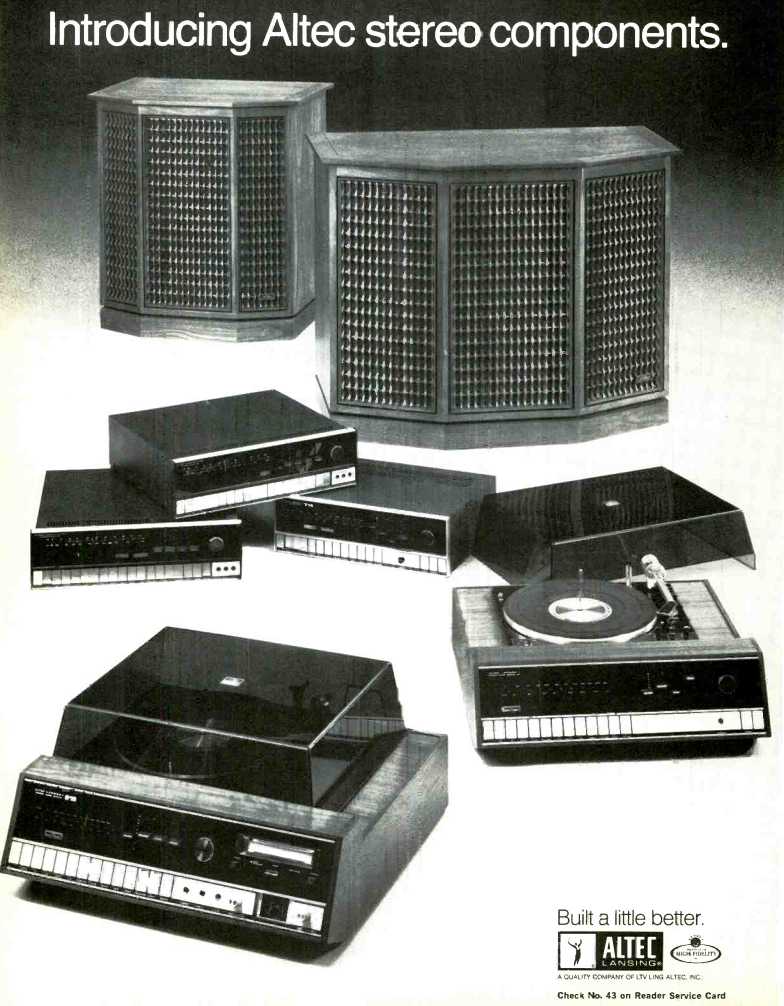
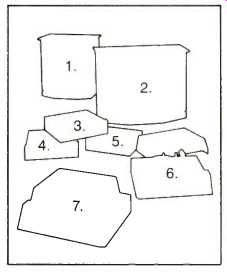
1. Altec's new 2875A Granada Bi-amp Speaker System incorporates the all -new 800 Hz Electronic Crossover Bi-amp which delivers 60 watts RMS to a new Dynamic Forces 15 -inch woofer and 30 watts RMS to the high frequency driver.
2. Altec's new 2873A Barcelona Bi-amp Speaker System incorporates a 500 Hz Electronic Crossover Bi-amp and new 411-8A Dynamic Force woofer. Mids and highs are reproduced through a 25" sectoral horn and new Symbiotik Driver.
3. Altec's new 724A AM/FM Stereo Tuner Pre -Amplifier features the new Varitronik tuner with 4 FET's for the highest sensitivity and stability.
4. Altec's new 725A AM/FM Stereo Receiver is rated 60/60 watts RMS. It includes the new Varitronik FM Tuner with 4 FET's, a combination of Butterworth and crystal filters, all plug-in modular circuitry and 10 other performance features.
5. Altec's new 714A AM/FM Stereo Receiver delivers 44/44 watts RMS (180 watts IHF music power) and features 3 FET's, 2 crystal filters, plus a volume range switch, black-out dial and spring loaded terminals for speakers.
6. Altec's new 911A Stereo AM/ FM Music Center has 44/44 watts RMS (180 watts IHF music power). Plus, it incorporates the most sophisticated components including an FM tuner section with 3 FET's, 2 crystal filters and IC's. Garrard's best automatic turntable and a Shure "High Track" cartridge.
7. Altec's new 912A Stereo AM/ FM Cassette Music Center delivers 44/44 watts RMS (180 watts IHF music power) more power than any other music center on the market. Plus, this model features a front-loading Staar cassette tape recorder for stereo playback and recording from any source.
Exclusive Dynamic Force Concept
Altec has developed a new type of low frequency speaker.
It features a long voice coil with edge wound pre -flattened copper ribbon wire and a magnetic structure of extremely high flux field. (Note this unusually strong magnetic field controls the motion of the cone to an extent not normally found in infinite baffle systems.) This uniquely designed unit is capable of producing a Dynamic Force of up to 16 lbs. With this unusually large force capability, as much as twice the compression can be produced than is normal in acoustic suspension speakers. The result is greatly improved low frequency transient performance, better linearity, extended low frequency response and reduced distortion while maintaining medium efficiency.
Altec's 770A Electronic Crossover Bi-Amplifier
This highly sophisticated electronic component features a very fine bass amplifier rated at 60 watts RMS electronically crossed over at 800 Hz or 500 Hz to an equally fine high frequency amplifier rated at 30 watts RMS. The use of any passive crossover is eliminated and thus the damping effect of each amplifier is utilized to its utmost. The result is a much tighter transient response and an improved overall sound quality. Note also that with the 770A, IM distortion is inherently decreased to its lowest possible point--virtually unmeasurable under the normal IHF method.
Exclusive Varitronik Tuner
This new tuner uses 4 FET's (field effect transistors). Three of them provide amplification while the fourth operates as an oscillator. By using FET's, any cross modulation problems experienced with bi -polar transistors is eliminated. The exclusive Varitronik tuner also uses 4 double Varicaps instead of the conventional mechanical tuning capacitor to achieve a better balanced circuit performance. Mechanical to electronic conversion required for Varicap tuning is achieved by a specially designed potentiometer which provides linear tracking and accurate calibration of the FM scale. Low distortion, high stability and high sensitivity are also characteristic of this new tuner.
Altec Direct-Plug-in Modular Circuitry
The use of plug-in modular circuitry is incorporated into the design of each and every new Altec stereo component.
In addition to the obvious benefits of simpler production and faster servicing, the maximum use of plug-in modular circuitry allows the highest possible degree of consistency and uniformity in performance from product to product.
Maximum reliability is inherent in its design simplicity.
And a new high in quality control is achieved.
The Altec Acousta-Voicette Stereo Equalizer
The new Altec Acousta-Voicette accurately "tunes" the frequency responses of your complete component system and even your listening room to a flat acoustical response at your ears. By utilizing 24 full -adjustable, critical bandwidth rejection filters per channel, it puts all frequencies into perfect balance. For the first time, you can hear the original acoustic environment of the recording hall-and not the acoustics of your listening room.
Altec's new stereo components are especially designed to work with the new 729A Acousta-Voicette, and they're built with separate accessory jacks as shown to the left.
For a free copy of the new Altec catalog, write to:
Altec Lansing, 1515 S. Manchester Ave., Anaheim, CA 92803.
--------------
Dual
Now that you know you want a Dual, the next question is which one?

It's not an easy decision to make. There's such a wealth of precision built into every Dual that even the testing laboratories can measure only small differences in performance among the Dual 1215 at $99.50, the 1209 at $129.50 and 1219 at $175.00. This raises an interesting question for you to consider: What are the important differences to you among these three Duals? Let's consider them in turn.
Even our lowest priced turntable, the 1215, boasts features any turntable should have (and few do). Its low -mass counterbalanced tonearm accepts the most sensitive cartridge available today and tracks flawlessly as low as 3/4 gram.
Tracking force and anti -skating settings are ingeniously synchronized, so one setting does for both. The cue control is silicone -damped, and eases the tonearm onto the record more gently than a surgeon's hand.
The hi -torque motor brings the heavy 3 3/4 pound platter to full speed in less than a half turn, and maintains that speed within 0.1% even if line voltage varies widely.
And it even has a control to let you match record pitch with less fortunate instruments such as out-of-tune pianos.
Even a professional doesn't need more.
But you may want more. In which case the 1209 offers some refinements that are both esthetically pleasing and add something to performance.
For example: its tonearm tracks as low as a half gram. Its anti -skating system is calibrated separately for elliptical and conical styli. Its counterbalance features a 0.01 gram click -stop. And its motor is hi-torque and synchronous.
Now what could the 1219 add to this? The only true gimbal suspension ever available on an automatic arm.
Four identical suspension points, one ring pivoting inside another.
And the Mode Selector, which shifts the entire tonearm base down for single play, up for multiple play so that the stylus will track at precisely the correct angle (15°) whether playing one record or a stack.
The tonearm is 8 3/4" long, and the 12 inch dynamically balanced platter weighs 7 pounds.
So the question really isn't which Dual is good enough, but how much more than "good" your turntable has to be.
If our literature doesn't help, perhaps a visit to your dealer will.
United Audio Products, Inc.,120 So. Columbus Ave., Mt. Vernon, New York 10553.
Dual
----------------
Sony
The emancipation of sound

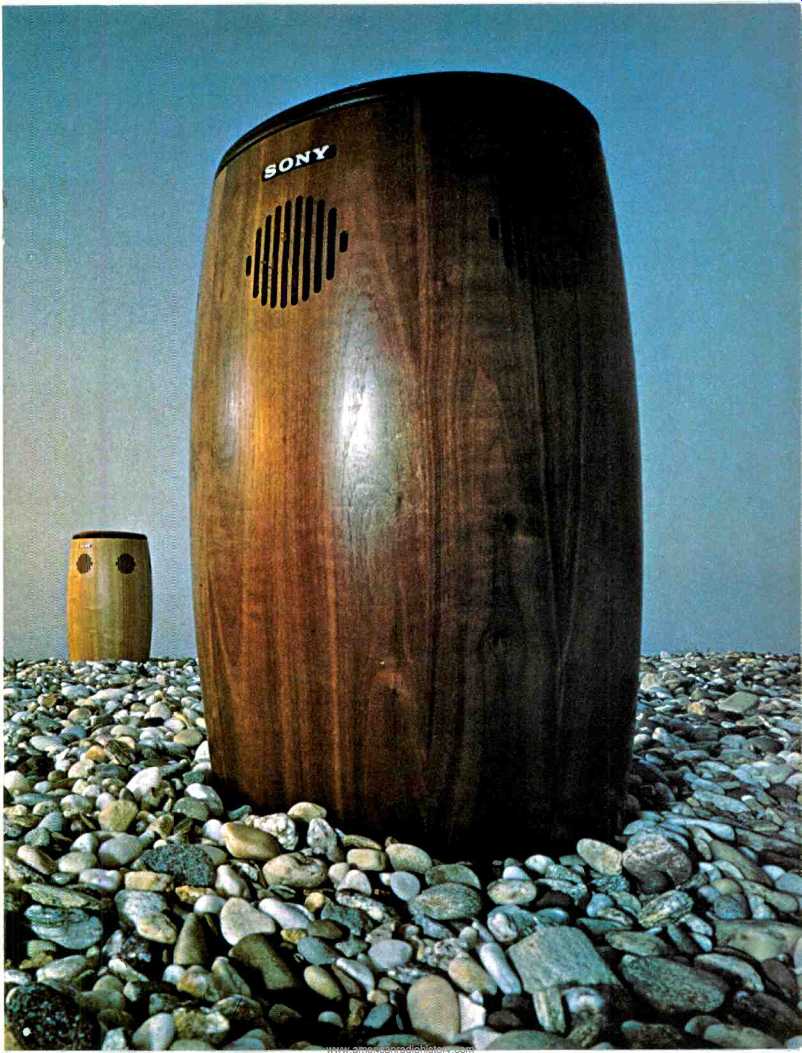
We have abolished the preconceptions and prejudices of speaker design. Those which lave stood between you and the subtle, inner detail of the musical texture.
We have cut the figurative fence, demolished the literal box. We have conceived an utterly unique system. One which is omni-directional and truly gives you the feeling of clear, open sound.
The speakers are the new Sony Omni-Radials. With them, you'll hear the same, ultra-realistic stereo effect no matter where you sit in the room, and no matter where you place them.
And all the sound quality you expect from Sony. Clean, clear powerful bass from six acoustic suspension drivers with special silicone polymer suspensions (for unusually long, linear cone excursions). An individual dispersion dome over each driver cone distributes the highest frequencies evenly throughout a full 360 degrees and from floor to ceiling.
The compound -curved cabinet contributes to the system's sound quality: its constantly varying diameter prevents build-up of standing wave resonances within the enclosure and provides extra rigidity to prevent panel resonances.
The Sony Omni-Radials are beautiful to behold. Their rich, open pore ash or walnut finishes blend into any decor. With reversible cushions removed you can use them as convenient end tables; with the cushions in place (black or red side up) they're comfortable seats.
23-5/8 inches high by 15-15/16 inches diameter at middle.
Sony SS-9500, $149.50. (Suggested list.) Sony Corporation of America, 47-47 Van Dam Street, Long Island City, New York 11101.
The new omni-radials from SONY
---------------
Empire

High Powered, Wide Angled, and Beautiful
Wait till you hear the difference this true stereophonic design can offer, the kind of sound no box can deliver. In Empire's world famous stereo cylinder, the woofer faces down for bass so "live," it gives you goose bumps.
Our full presence mid frequency driver makes you feel you're listening to a live performance, while the ultra-sonic tweeter provides crystal clear response all the way to 20,000Hz. Then Empire's wide angle lens diverges the highest of these high frequencies through 160° arc, more than twice that of ordinary speakers.
This lets you use your Grenadiers anywhere. They need not be placed .. in corners or against walls.
You don't have to sit where "X" marks the stereo spot.
The Grenadiers are functional. They have no ugly grill cloths; handsome finish goes all the way around and the marble top is meant to be used.
So if you are thinking about getting a great speaker system, take a good look at these Empire beauties. The Royal Grenadiers are probably the most powerful speakers in home use today.
These magnificent 3 way systems can handle up to 125 watts of power per channel without overload or burnout. No orchestral crescendo will ever distort or muddy their great Grenadier sound.
Royal Grenadier 9000M/II, hand rubbed selected walnut veneers and imported marble top. $299.95.
Empire's newest Grenadier Model 6000 stands 24 inches high and has a diameter of 18 inches. The 3 way system can handle 75 watts of power, is priced at $99.95 (with imported marble top $109.95), and is available in walnut or dark oak finish. Frequency response from 30-20,000 Hz.
Write for a free Guide to Sound Design for 1971: Empire Scientific Corp., 1055 Stewart Avenue, Garden City, N. Y. 11530.
EMPIRE
=============
(Audio magazine, sept. 1970)
= = = =